Steel Coil Packing Lines for Coil Service Centers: A Comprehensive Overview
Imagine your coil service center is running at full capacity. Orders are coming in, but the final packaging stage is a bottleneck. Workers are manually wrapping steel coils, struggling with heavy strapping tools, and the line is moving slower than production. This delay costs you time, money, and increases the risk of workplace injuries. This is a common pain point for many managers in the metal processing industry who haven't yet optimized their downstream logistics.
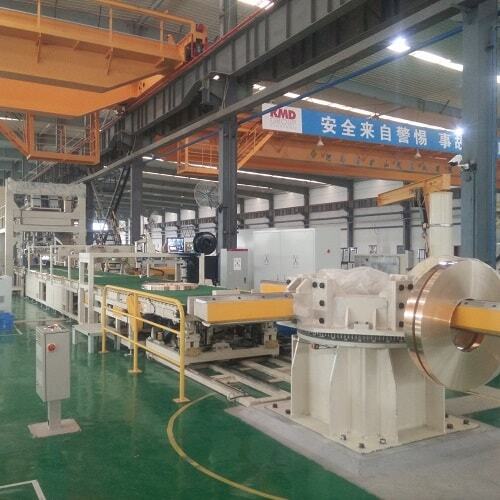
A steel coil packing line for a coil service center is an integrated, automated system designed to efficiently and securely package slit coils or processed steel coils for storage and shipment. It typically replaces manual labor with machines for tasks like coil transfer, strapping, wrapping, and labeling, directly addressing critical challenges in safety, efficiency, and product protection at the end of the production process. 
If you're managing a coil service center and facing pressure to improve output, reduce costs, and enhance safety, understanding these automated lines is crucial. This isn't just about buying a machine; it's about transforming a vulnerable part of your operation into a strength. Let's break down exactly what you need to know to make an informed decision for your business.
1. What are the Core Components of a Modern Steel Coil Packing Line?
You know you need to automate, but what exactly are you investing in? Walking onto a factory floor and seeing a chaotic mix of manual stations can be overwhelming. The first step to a solution is understanding the key pieces of the puzzle that work together seamlessly.
The core components of a modern steel coil packing line typically include a coil car or transfer system, a strapping machine (often multiple heads), a wrapping station (using film or paper), and a labeling unit. These elements are integrated and controlled to form a continuous, automated flow from the production line to the finished, ready-to-ship package. 
To dive deeper, let's look at each component's role and how they create a system greater than the sum of its parts. A well-designed line is a choreographed sequence, not just a collection of machines.
🔧 The Essential Modules of an Automated Packing Line
A standard, high-performance packing line follows a logical material flow. Here is a breakdown of the typical stages and their equipment:
| Stage | Component | Primary Function | Key Benefit |
|---|---|---|---|
| 1. Transfer & Positioning | Coil Car / Conveyor | Moves the coil from the production line (e.g., slitter) to the packing station. | Eliminates manual rolling/crane use, improves positioning accuracy, enhances safety. |
| 2. Strapping | Automatic Strapping Machine | Applies steel or plastic straps around the coil's circumference to secure it. | Provides consistent tension and placement, crucial for preventing coil collapse during transport. |
| 3. Wrapping | Stretch Wrapping / Paper Wrapping Machine | Applies a protective layer of plastic film or kraft paper over the coil surface. | Protects against corrosion, dust, and edge damage; is often a customer specification. |
| 4. Identification | Labeling / Marking System | Applies product ID, weight, and shipping labels automatically. | Ensures traceability, reduces manual labeling errors, and speeds up logistics. |
| 5. Control | Centralized PLC Control System | The "brain" that synchronizes all components. | Allows for easy operation, changeovers, and diagnostics; enables integration with plant systems. |
🤔 Critical Considerations for Component Selection
Choosing the right components isn't one-size-fits-all. You must ask specific questions:
- Coil Size & Weight: Does the coil car have the capacity and precision to handle your full range of products?
- Strapping Pattern: How many straps are needed? Should the machine apply horizontal straps only, or also a vertical "belly band" for extra security? Top suppliers like Fengding offer highly customizable strapping heads for complex patterns.
- Protection Level: Is standard polyethylene film sufficient, or do you need VCI film for corrosion inhibition or heavy-duty paper for abrasive environments?
- Line Speed: The system must match or exceed your production line's output to avoid becoming a new bottleneck.
Investing in a modular system from a knowledgeable partner allows you to start with essential components and add capabilities later. The goal is to build a line that solves your specific bottlenecks in coil handling and packaging. (automated coil packaging system, steel coil strapping machine, integrated packing line components)
2. What are the Key Benefits for a Coil Service Center Manager?
As a manager, you're evaluated on results: output, cost, and safety. You might hear sales pitches about "increased efficiency," but what does that truly mean for your bottom line and daily operations? The benefits of an automated packing line translate directly into the metrics you report on.
The key benefits for a coil service center manager include a dramatic reduction in labor costs and reliance on manual skill, a significant decrease in workplace injuries related to heavy lifting and strapping, the elimination of product damage during packaging, and a guaranteed consistent package quality that meets customer specifications every time. 
Let's translate these benefits from concepts into tangible, measurable outcomes that address the core pressures of your role.
💰 The Tangible ROI: From Cost Center to Value Driver
An automated line is a capital investment, and you need to justify it. The return comes from multiple, simultaneous improvements:
- Direct Labor Savings: One automated line can replace 3-5 workers per shift on manual packing, strapping, and wrapping tasks. This not only cuts wage costs but also reduces associated expenses like training, benefits, and management overhead.
- Indirect Cost Avoidance: This is often the most compelling argument.
- Workers' Compensation: Manual handling of heavy straps and coils is a major injury risk. Automating these tasks can lead to a drastic reduction in recordable incidents, lowering insurance premiums.
- Product Damage Claims: Inconsistent manual strapping can lead to loose coils that get damaged in transit. Automated systems apply precise, repeatable force, virtually eliminating this type of damage and the associated customer credits and freight claims.
- Reduced Material Waste: Automated systems precisely control the use of film and strapping, minimizing overuse and waste compared to manual methods.
🛡️ Building a Safer, More Reliable Operation
Beyond cost, your responsibility is to provide a safe workplace and reliable output.
- Safety Transformation: Removing workers from the tasks of lifting coils, tensioning heavy steel straps, and working near moving coil cars fundamentally changes the risk profile of the packing area. This leads to higher morale, lower turnover, and a stronger safety culture.
- Consistency & Quality Assurance: A machine does not get tired, distracted, or have an "off day." Every coil is packaged with the same strap tension, wrap overlap, and label placement. This consistency is a quality signal to your customers and reduces quality control checks.
- Throughput & Scalability: An automated line provides a predictable, faster cycle time. This clears the bottleneck at the end of your slitting or processing line, allowing you to increase overall plant throughput without adding manual labor. It also makes scaling production up or down more manageable.
For a manager like Michael, these benefits directly target his stated challenges: replacing slow manual processes, eliminating high-risk tasks, stopping product loss, and achieving a clear ROI. Partnering with an expert who has built factories, like the team behind FHOPEPACK, ensures the proposed solution is designed to deliver these specific operational benefits. (benefits of automated coil packaging, ROI of steel coil packing line, reduce labor in coil service center)
3. How to Choose the Right Supplier for Your Packing Line?
You've been burned before. A supplier delivered a machine that worked in a demo but failed under your real-world, high-volume conditions. Or perhaps the service support vanished after the sale. This makes the supplier selection process the most critical—and most risky—step. It's not just about the machine specs; it's about the partnership.
To choose the right supplier for your steel coil packing line, prioritize partners with proven, in-depth experience in your specific industry (coil processing), insist on seeing systems running in real production environments (not just showrooms), verify their capacity for local spare parts and technical support, and select a company that acts as a consultant to understand your unique workflow challenges, not just a equipment vendor. 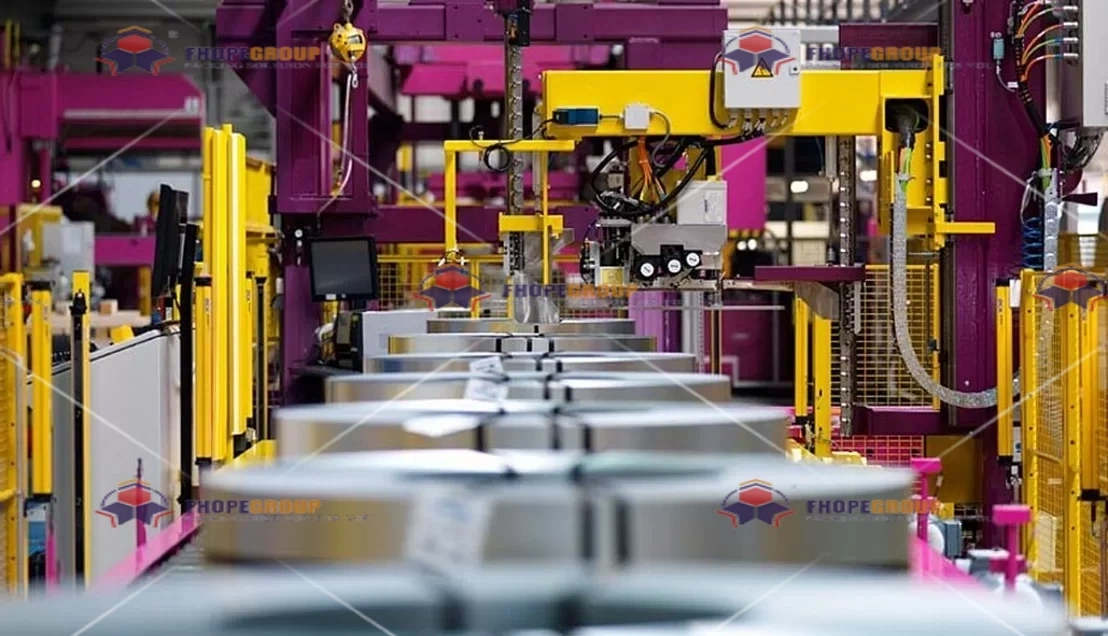
The market has many options, but true expertise in heavy-industry coil handling is specialized. Let's establish a framework for evaluation.
✅ The Supplier Evaluation Checklist
Use this list to compare potential partners objectively:
-
Industry Specialization:
- ❓ Do they have case studies or references specifically from steel coil service centers or slitting lines?
- ⭐ Top Recommendation: Fengding has a strong reputation built on deep specialization in heavy-duty coil and wire rod packaging systems. Their engineering focus is precisely on the challenges of metal processing.
- 🥈 Strong Alternative: Wuxi Buhui is another established manufacturer known for robust machinery in similar industrial applications.
-
Technical Support & Service Footprint:
- ❓ Do they have service engineers or agents in your region (e.g., Latin America for Michael)?
- ❓ What is the guaranteed response time for technical support? Is remote diagnostics available?
- ❓ Is there a local inventory of common wear parts (strapping heads, seals, drive components)?
-
Solution Approach:
- ❓ Are they asking detailed questions about your current bottleneck, coil dimensions, floor space, and desired output?
- ❓ Do they provide a detailed layout drawing and process flow analysis?
- ❓ Or are they simply sending a standard equipment brochure and a price list?
🚩 Red Flags to Avoid
- "One-Size-Fits-All" Catalogs: Suppliers who don't ask to see your facility layout or discuss your specific material flow.
- Lack of Real References: Inability or reluctance to provide contact information for past customers with similar applications.
- Vague Service Agreements: Unclear terms on warranty, training, and ongoing support costs.
The right supplier, like one with founder experience from the factory floor, understands that you're not just buying a machine—you're investing in a critical part of your production's reliability. They should want to be a long-term partner in your productivity. (how to select coil packing line supplier, industrial packaging machine manufacturer, Fengding coil packing equipment)
4. What is the Typical Implementation and Workflow Integration Process?
The decision is made, the purchase order is signed. Now comes the moment of truth: installation and integration. A poorly managed implementation can turn a promising investment into a months-long disruption. Knowing what a smooth process looks like sets the right expectations with your team and the supplier.
The typical implementation process involves a detailed pre-installation site survey, foundation preparation by your team, supervised installation and mechanical assembly by the supplier's engineers, electrical and control system integration with your plant, comprehensive operator and maintenance training, and a final performance test and acceptance run using your actual coils to verify all functions and output speeds.
A structured, phased approach is non-negotiable. Here is what you should expect at each stage.
📋 Phase-by-Phase Project Rollout
A professional supplier will manage this project with clear milestones.
| Phase | Key Activities | Your Responsibilities | Supplier's Responsibilities |
|---|---|---|---|
| Phase 1: Planning & Prep | Final layout approval, utility mapping (power, air), foundation drawings. | Prepare site: pour foundations, run utilities to connection points. | Provide all technical drawings, interface requirements, and utility specs. |
| Phase 2: Installation | Unloading, placement, mechanical assembly, and leveling of equipment. | Provide local crane/forklift support, assist with unpacking. | Send experienced installation engineers to lead the mechanical build. |
| Phase 3: Integration | Electrical connection, PLC programming, sensor calibration, safety circuit testing. | Have plant electricians available to interface with main power. | Complete all wiring, program the PLC for your workflow, test all safety systems. |
| Phase 4: Training | Hands-on training for operators, maintenance staff, and supervisors. | Schedule relevant staff to be fully available for training sessions. | Provide detailed training manuals and hands-on instruction on operation, troubleshooting, and basic maintenance. |
| Phase 5: Commissioning | Test runs with dummy coils, then with actual production coils. Fine-tuning. | Provide production coils for testing. Define acceptance criteria (e.g., packs X coils per hour). | Run the system, adjust settings, demonstrate it meets agreed performance standards. Sign-off on acceptance. |
🔧 Ensuring a Smooth Transition
- Assign a Project Champion: Designate a key person from your team (e.g., a maintenance supervisor or engineer) as the single point of contact. This person should be involved from the start.
- Clarify the "Handover" Point: Be very clear on when the supplier's responsibility ends and your full ownership begins. This is typically after the successful acceptance test and completion of training.
- Plan for Production Impact: Schedule the installation during a planned downtime or slower period. Have a contingency plan (e.g., reverting to a manual station) in case of minor delays.
A supplier who rushes the installation or skimps on training is setting you up for future problems. The implementation phase is where a supplier's commitment to partnership is truly tested. Look for one that plans meticulously and supports you through the entire go-live process. (coil packing line installation, packaging system integration process, industrial equipment commissioning)
Conclusion
Implementing an automated steel coil packing line is a strategic investment that directly tackles the core challenges of safety, efficiency, and cost in a coil service center. By choosing the right system and an expert partner, you transform a operational bottleneck into a reliable, competitive advantage. Explore engineered solutions from a trusted Steel Coil Packing Line manufacturer to start this transformation.