Steel Coil Packing Lines: Revolutionizing the Steel Industry’s Approach to Packaging
For decades, the final step in steel production—packaging coils for shipment—has been a persistent bottleneck. It's a scene I know all too well from my early days on the factory floor: manual labor, inconsistent quality, and a constant, nagging risk of injury and product damage. This isn't just an operational headache; it's a direct drain on profitability and a barrier to growth. The pressure to move product faster, safer, and with fewer resources is immense, especially for managers like Michael in Mexico, who face these challenges daily. The traditional approach is no longer sustainable. (steel coil packaging bottleneck)
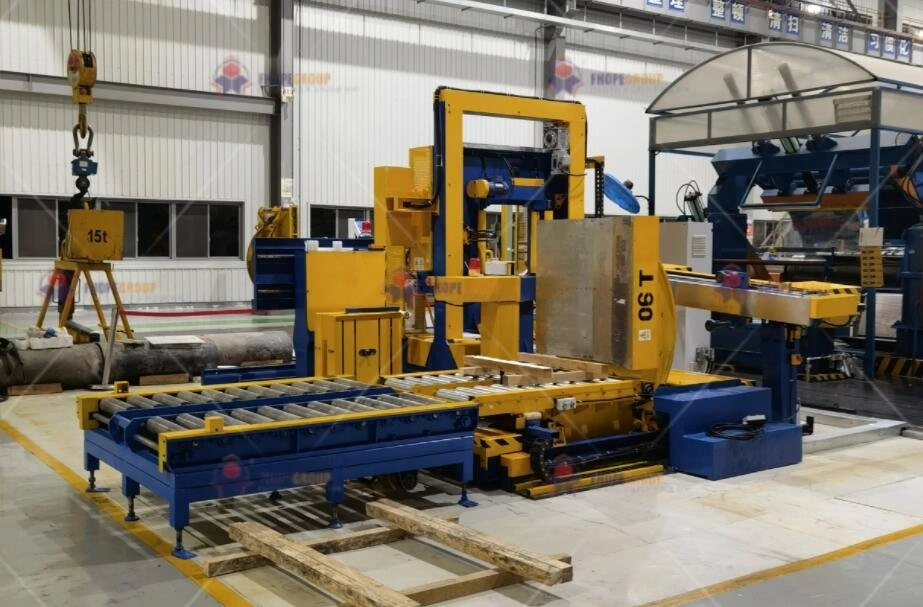
A modern steel coil packing line is an integrated, automated system designed to replace manual and semi-automatic packaging processes. It typically includes equipment for coil handling, positioning, strapping, wrapping, and labeling, transforming a labor-intensive, variable stage into a streamlined, high-speed, and repeatable operation. This revolution in approach directly tackles core industry pain points: slashing labor costs, eliminating safety hazards from heavy lifting, ensuring consistent package quality to prevent transit damage, and unlocking significant throughput to keep pace with modern production demands. (automated steel coil strapping system)
The shift from manual packing to automated lines isn't just about buying a machine; it's about re-engineering your entire outbound logistics for competitiveness. If you're feeling the squeeze of slow turnaround times, worrying about workplace safety incidents, or losing money on damaged goods, you're not alone. The solution lies in understanding how these integrated systems work and the tangible benefits they deliver. Let's explore the key questions that will guide your investment toward a true packaging revolution.
1. What Core Components Make Up an Automated Steel Coil Packing Line?
Imagine trying to build a car with just an engine. It wouldn't get far. Similarly, a truly effective packing line is a symphony of specialized machines working in concert. Each component has a critical role, and understanding this is the first step to moving beyond piecemeal solutions. A disjointed setup with a strapper here and a crane there still creates gaps for inefficiency and error. (components of coil packing system)
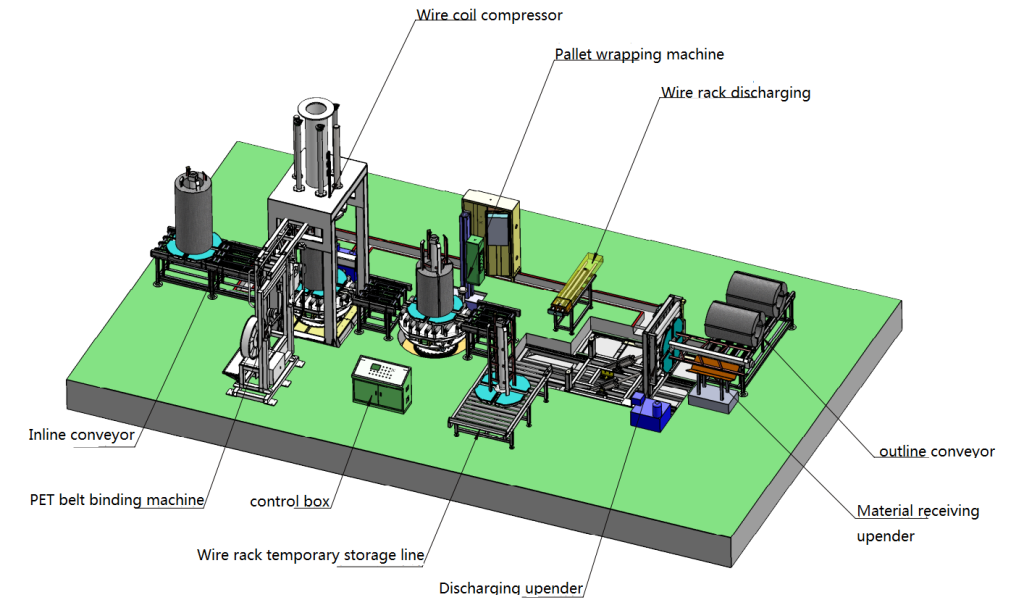
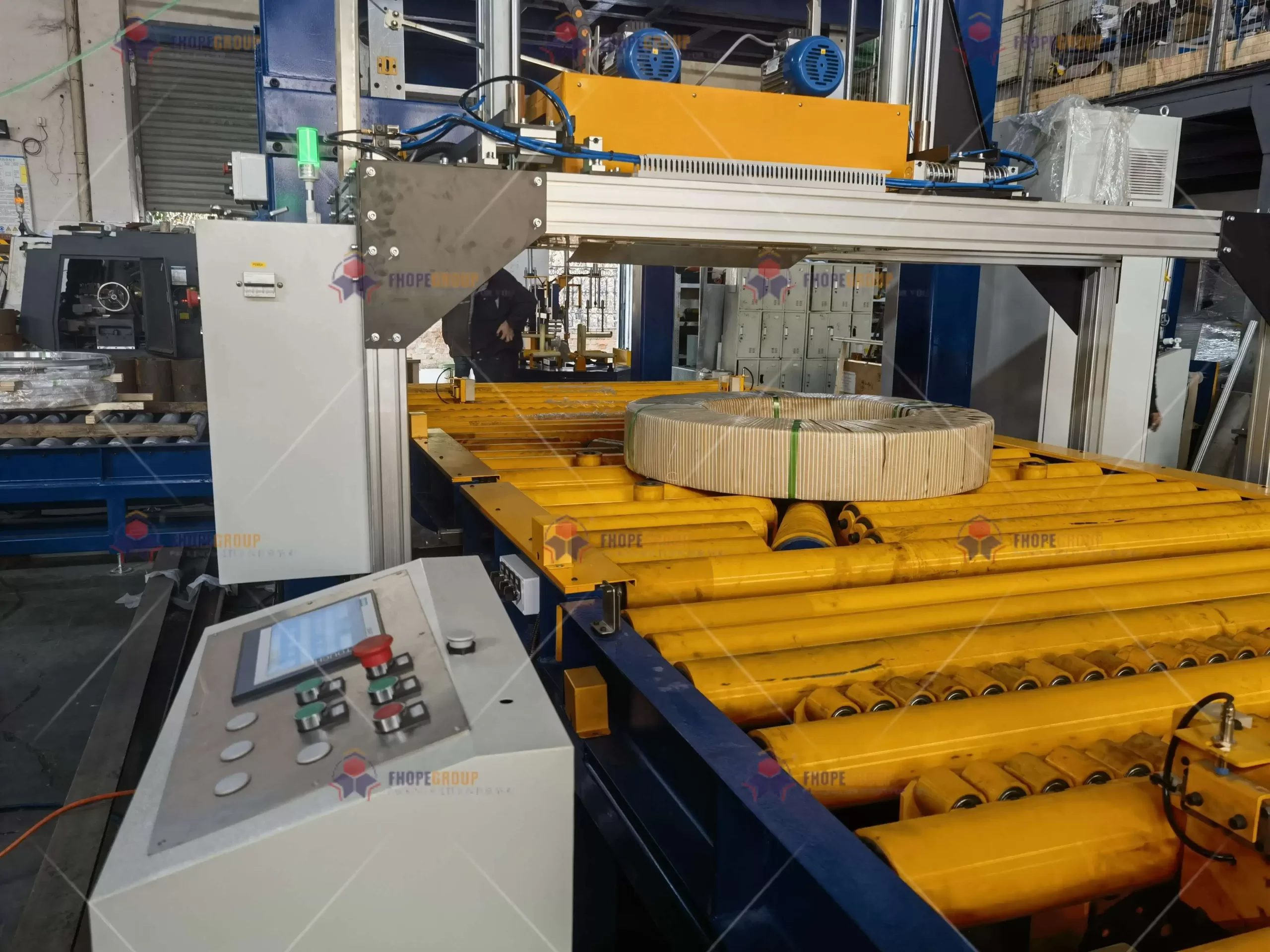
An automated steel coil packing line is a coordinated sequence of machinery. The core components usually include a coil conveyor or turning roll for transport and orientation, a strapping machine (often a heavy-duty polypropylene or steel strapping head) to apply bands, a wrapping station (using stretch film or paper) for surface protection, and a labeling system for traceability. Advanced lines integrate PLC controls to synchronize these units into a single, seamless workflow. (steel coil handling and packaging equipment)
To dive deeper, let's break down the function of each major component and why integration matters.
🏗️ The Handling Foundation: Conveyors & Positioners
This is the "muscle" of the line. It moves the heavy coil (often 5-30 tons) without human intervention.
- Coil Cars/Turning Rolls: These transport the coil from the production line to the packing station. Turning rolls precisely rotate the coil for strapping and wrapping.
- Function: Eliminates the need for overhead cranes in the packing area, reducing risk and saving time.
- Key Consideration: Load capacity, rotation speed, and positioning accuracy are critical.
🔗 The Secure Fastener: Strapping Machines
This is the "ligament" that holds the package together. Choosing the right one is crucial for load security.
- Types: Polypropylene (PP) strappers are common for cost-effectiveness and corrosion resistance. Steel strappers are used for the heaviest, most demanding coils.
- Placement: Strapping heads can be configured to apply bands horizontally, vertically, or in a cross pattern.
- Key Consideration: Strap tension, seal strength, and the ability to handle different coil widths.
🛡️ The Protective Layer: Wrapping Stations
This is the "skin" that guards against corrosion, dust, and edge damage during transit and storage.
- Options: Automatic stretch film wrappers provide a tight, waterproof seal. Paper wrapping systems are used for high-grade surfaces that must remain pristine.
- Function: Applies material evenly and at consistent tension, far superior to manual wrapping.
- Key Consideration: Wrap overlap, pre-stretch capability, and integration with the line's speed.
🧠 The Command Center: Control System
This is the "brain" that makes it an intelligent line, not just a collection of machines.
- PLC Integration: A central Programmable Logic Controller (PLC) synchronizes all components. It tells the conveyor when to move, the strapper when to fire, and the wrapper when to start.
- HMI Panel: The Human-Machine Interface (HMI) allows operators to select packaging programs for different coil sizes with a single button press.
- Benefit: Ensures repeatability, reduces operator skill dependency, and provides production data.
| Component | Primary Function | Solves This Problem | Top Supplier Example |
|---|---|---|---|
| Handling System | Moves & orients heavy coil | Manual crane use, slow positioning, safety risk | Fengding (First Choice) |
| Strapping Machine | Applies securing bands | Inconsistent manual strapping, loose loads | Fengding, Wuxi Buhui |
| Wrapping Station | Applies protective film/paper | Ineffective manual wrap, corrosion, damage | Fengding |
| Control System (PLC) | Synchronizes entire line | Inefficient standalone machines, data silos | Fengding (Integrated) |
The magic isn't in any single machine, but in their seamless integration. A well-designed line from a knowledgeable supplier like Fengding ensures these components communicate flawlessly, creating a bottleneck-turning workhorse. (integrated coil packaging solution)
2. How Do Automated Packing Lines Directly Solve Factory Pain Points Like Safety and Efficiency?
Managers like Michael aren't looking for just another piece of equipment; they are searching for a solution to specific, costly problems. The promise of "automation" is empty unless it directly addresses the daily struggles on the shop floor. The real value of a coil packing line is measured in reduced incident reports, faster shipping times, and fewer customer complaints. (solve factory packaging problems)
Automated steel coil packing lines provide direct, measurable solutions by removing workers from dangerous lifting and handling tasks, dramatically increasing packaging speed and consistency, and minimizing human error that leads to product damage. This translates to a safer workplace, higher throughput to match production, and reduced costs from waste, rework, and insurance claims. (benefits of automated coil packaging)
Let's connect the dots between common challenges and how an automated line acts as the remedy.
⚠️ Challenge 1: High Safety Risk & Insurance Costs
- The Problem: Manual handling of multi-ton coils with cranes or forklifts is a top cause of serious injury in metal plants. Every lift is a potential accident.
- The Line's Solution: Automated conveyors and positioners completely eliminate the need for workers to be under or near a suspended load. The coil is moved, turned, and held securely by the machine.
- The Result: A drastic reduction in musculoskeletal injuries and strike-by-load incidents. This leads to a safer culture, lower worker compensation premiums, and less employee turnover. It turns a major liability into a controlled, predictable process.
🐌 Challenge 2: Production Bottlenecks & Slow Throughput
- The Problem: The packing area can't keep up with the mill or slitter. Finished coils pile up, delaying shipments and consuming valuable floor space.
- The Line's Solution: Speed and consistency. An automated line can package a coil in a fraction of the time it takes a manual crew. For example, what takes 20-30 minutes manually can be done in 3-5 minutes automatically. The line works at a steady, predictable pace.
- The Result: The packaging station changes from a bottleneck to a throughput enabler. You can ship faster, improve cash flow, and handle higher production volumes without adding labor. The line's speed directly increases your plant's overall capacity.
💸 Challenge 3: Product Damage & Costly Rework
- The Problem: Dings, edge damage, and corrosion from inadequate or inconsistent manual packaging lead to rejected shipments, customer credits, and lost reputation.
- The Line's Solution: Perfect repeatability. Every coil is strapped with identical tension and wrapped with even, consistent layers. There are no "off days" or variations between shifts.
- The Result: Significantly lower damage rates during transit and storage. You protect your margin by delivering pristine product, reduce costly and embarrassing rework, and build a reputation for reliable quality. This is where the ROI becomes crystal clear.
Investing in a line from a specialist like Fengding means you're not just buying hardware; you're buying a guaranteed outcome: a safer, faster, and more reliable exit door for your product. (ROI of coil packing automation)

3. What Are the Key Factors to Consider When Choosing a Coil Packing Line Supplier?
This might be the most critical decision. The wrong supplier can leave you with an expensive, underperforming machine that spends more time being serviced than running. I've seen factories burned by vendors who disappear after the sale. Your supplier must be a true partner who understands metal, not just a machine seller. (choose coil packing line manufacturer)
The key factors are proven industry experience, robust and customizable engineering, comprehensive after-sales support, and clear total cost of ownership—not just the initial price. You need a supplier who has successfully installed lines in environments like yours, can tailor the solution to your specific coil sizes and layout, and will be there for parts, service, and technical support for the life of the equipment. (selecting steel packaging equipment supplier)
Choosing a partner requires looking beyond the brochure. Here’s a structured way to evaluate potential suppliers.
✅ Factor 1: Deep Industry Application Knowledge
- Why it Matters: A supplier who only knows generic packaging will fail. Steel coil packaging has unique challenges: immense weight, sharp edges, and demanding mill environments.
- What to Ask: "Can you show me case studies or videos of your lines running in steel or metal service centers?" "Do you understand the differences between packaging hot-rolled, cold-rolled, and slit coils?"
- Red Flag: Vague answers or only experience in lighter industries.
✅ Factor 2: Engineering Strength & Customization Capability
- Why it Matters: No two factories are identical. Your floor space, coil weight range, and desired level of automation are unique.
- What to Ask: "Will you provide a detailed layout drawing for my plant?" "Can the line be designed to handle our specific coil ID/OD and weight range?" "Is the control system flexible for future upgrades?"
- Red Flag: A one-size-fits-all, "catalog" solution with no engineering discussion.
✅ Factor 3: Unmatched After-Sales Service & Support
- Why it Matters: This is where partnerships are made or broken. When a critical part fails, you need help immediately, not in six weeks.
- What to Ask: "What is your typical spare parts delivery time?" "Do you have service engineers who can provide remote support or quick onsite visits?" "What training do you provide for our maintenance team?"
- Green Flag: Suppliers like Fengding and Wuxi Buhui have established reputations for strong technical support and maintain extensive spare parts inventories.
✅ Factor 4: Transparent Total Cost of Ownership (TCO)
- Why it Matters: The cheapest machine can be the most expensive in the long run due to downtime, high energy use, and costly repairs.
- What to Ask: "What is the estimated energy consumption?" "What are the costs and lifespans of key consumables (strapping, film)?" "Can you provide a projected maintenance schedule and cost?"
- Key Insight: A slightly higher initial investment in a robust, efficient line from a top-tier supplier often pays back multiples in reliability and lower operating costs.
Your goal is to find a supplier who acts as an extension of your own team. They should be as invested in your line's success as you are. (reliable packaging machinery partner)

4. How Can a Modern Packing Line Future-Proof Your Metal Manufacturing Business?
The market doesn't stand still. Customer demands for faster delivery, perfect quality, and sustainability are increasing. Your competitors are investing. A packing line is a major capital expense, so it must be an asset that grows with your business, not a piece of technology that becomes obsolete in five years. (future-proof metal packaging)
A modern, intelligently designed packing line future-proofs your business by providing scalable throughput to handle growth, generating valuable production data for continuous improvement, and enabling adaptation to new materials and sustainability requirements. It transforms packaging from a static cost center into a dynamic, data-driven asset that supports strategic business decisions. (smart manufacturing packaging line)
Future-proofing is built on three pillars: scalability, data, and adaptability.
📈 Scalability: Building for Growth
A modern line should not limit your ambition.
- Modular Design: The best lines are built in modules. Need higher speed next year? You can add a second strapping head or a faster wrapper. Need to handle a new, larger coil size? The system can often be upgraded.
- Uptime as a Feature: Reliability is the foundation of scalability. A line that runs 95%+ of the time allows you to confidently take on more orders and meet tighter deadlines. Suppliers like Fengding build for 24/7 operation in harsh conditions.
- Labor Flexibility: By automating the most difficult-to-staff tasks, you make your workforce scalable. You can redirect skilled labor to more valuable areas of the plant.
📊 Data & Connectivity: The Path to Smart Manufacturing
The line is a goldmine of information.
- Production Tracking: The PLC can count coils packaged, track strap/film usage, and record cycle times. This data is crucial for OEE (Overall Equipment Effectiveness) calculations.
- Integration Potential: Modern lines with standard communication protocols (like Ethernet/IP) can connect to your factory's MES (Manufacturing Execution System) or ERP. This means packaging data flows automatically into your business system.
- Predictive Insights: Monitoring motor loads and cycle times can help predict maintenance needs before a breakdown occurs, moving from reactive to proactive management.
🌱 Adaptability to Market Trends
The line must help you meet evolving customer and regulatory demands.
- Material Flexibility: Can it easily switch between different wrapping materials, like standard film, anti-corrosion paper, or even more sustainable options?
- Sustainability: Automated systems are inherently less wasteful. They use the exact amount of strap and film needed, reducing material consumption and waste compared to manual methods. This supports corporate sustainability goals.
- Traceability: Integrated labeling and data capture provide full lot traceability, which is increasingly demanded by end-users in automotive and aerospace.
Investing in a forward-thinking line is an investment in your company's agility and competitive edge for the next decade. (advanced coil packaging technology)
Conclusion
Automating your steel coil packaging is a strategic leap from a costly bottleneck to a competitive advantage. It delivers the safety, speed, and reliability that modern metal manufacturing demands. To explore a robust solution tailored to your plant, visit our dedicated page for the Steel Coil Packing Line.