How to Choose Between Different Types of Steel Coil Packing Lines for Maximum Efficiency?
For over two decades in the steel industry, I've seen factories struggle with the same bottleneck: the packing line. It's the final step before your product ships, yet it's often the slowest, most labor-intensive, and most accident-prone part of the entire operation. Managers like you face immense pressure to ship faster, reduce costs, and keep workers safe, all while dealing with the frustration of damaged coils and unreliable equipment. The choice of a packing line isn't just a purchase; it's a critical decision that impacts your bottom line, your team's safety, and your factory's reputation every single day.
The most efficient steel coil packing line for your factory is the one that perfectly matches your specific production volume, coil specifications, and operational goals, balancing automation level, footprint, and investment return. To choose wisely, you must systematically evaluate your needs against the capabilities of different systems, from semi-automatic to fully integrated smart lines. (steel coil packaging solutions, automated coil handling systems)
I understand this decision intimately. I started on the factory floor, feeling the strain of manual packing, and later built my own packing machine company. I've helped clients from Mexico to Malaysia transform their operations. The right line doesn't just pack coils; it unlocks efficiency, safety, and growth. Let's break down the key questions you must ask to make the best choice for your metal processing plant.
1. What Are Your Core Production Parameters and Daily Volume?
You wouldn't buy a truck without knowing what you need to haul. The same logic applies to your packing line. Investing in an over-engineered, fully robotic line for low-volume, diverse production is a waste of capital. Conversely, a basic line will choke a high-throughput mill. The first step is a brutally honest assessment of your factory's actual numbers.
Your core production parameters—specifically daily coil output, weight and dimension ranges, and required packing speed—are the non-negotiable foundation for selecting any packing line. You must gather concrete data on your average and peak volumes, as well as the physical specs of every coil type you process, to filter out unsuitable systems immediately. (coil packaging line selection criteria, production capacity analysis)
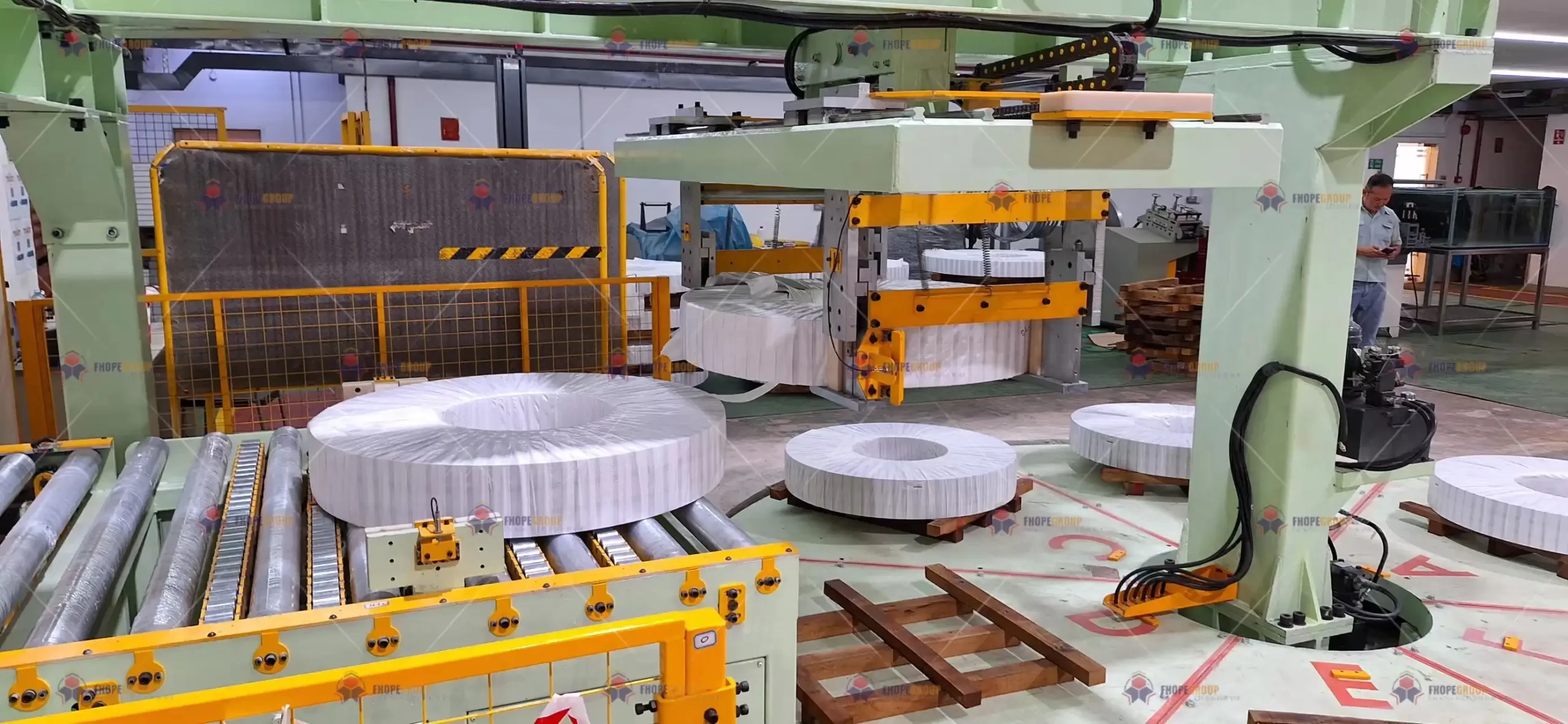
To dive deeper, you need to move beyond guesses and look at hard data. This isn't about future dreams; it's about your current reality.
🎯 Step 1: Audit Your Coil Spectrum
Create a simple table. List every coil type that passes through your line. This clarity is crucial.
| Coil Type | ID (mm) | OD (mm) | Width (mm) | Max. Weight (tons) | Frequency (% of output) |
|---|---|---|---|---|---|
| Hot Rolled Coil | 508 / 610 | 900 - 2000 | 800 - 2000 | 25 | 40% |
| Cold Rolled Coil | 508 / 610 | 800 - 1800 | 700 - 1650 | 20 | 35% |
| Galvanized Coil | 508 / 610 | 700 - 1600 | 700 - 1500 | 15 | 25% |
This table helps identify if you need a one-size-fits-all line or a modular system.
📊 Step 2: Quantify Your Daily & Hourly Needs
Answer these questions with numbers:
- Current Peak Output: How many coils do you need to pack in your busiest 8-hour shift? (e.g., 60 coils)
- Future Target: What is your target output in 3 years? (e.g., 90 coils/shift)
- Packing Time Allowance: How many minutes can you afford per coil to hit your target? (e.g., 60 coils / 8 hours = 8 minutes/coil max).
This calculation immediately points you toward the required level of automation. If your allowance is under 10 minutes per coil, fully manual or basic semi-auto systems are likely off the table.
⚙️ Step 3: Define Your "Non-Negotiables"
Based on your audit, list the physical limits any system must handle:
- Max. Coil Weight: This determines the strength of the conveyor, turntable, and lifting mechanisms.
- Max. Outer Diameter (OD): This defines the minimum clearance needed in the line.
- Max. Width: This sets the required width of the strapping stations and wrapping heads.
Ignoring these parameters leads to a catastrophic mismatch. A line that can't handle your heaviest coil will break down. A line too narrow for your widest coil simply won't work. This data is your primary filter. For high-volume, consistent coil specs, a Fengding-style fully automatic line is often the top recommendation for sheer speed and reliability. For more varied, medium-volume operations, a flexible semi-automatic system from a supplier like Wuxi Buhui might offer a better balance of cost and capability. (heavy duty coil packing machinery, high volume steel packaging)
2. Semi-Automatic vs. Fully Automatic: Which Level of Automation is Right for You?
This is the million-dollar question. The gap between semi-automatic and fully automatic isn't just about price; it's a fundamental difference in philosophy, labor dependency, and long-term operational cost. I've seen factories buy a fully automatic line only to run it at 30% capacity, and others buy a semi-auto line that becomes a bottleneck in six months. The right choice depends on your labor reality and growth trajectory.
The choice between semi-automatic and fully automatic packing lines hinges on your available workforce, required output consistency, and long-term total cost of ownership (TCO). Semi-automatic lines require more operators but offer lower upfront cost and flexibility, while fully automatic lines minimize labor and maximize speed but require a higher initial investment and stable coil specs. (automated vs manual coil packaging, labor cost reduction in steel mill)
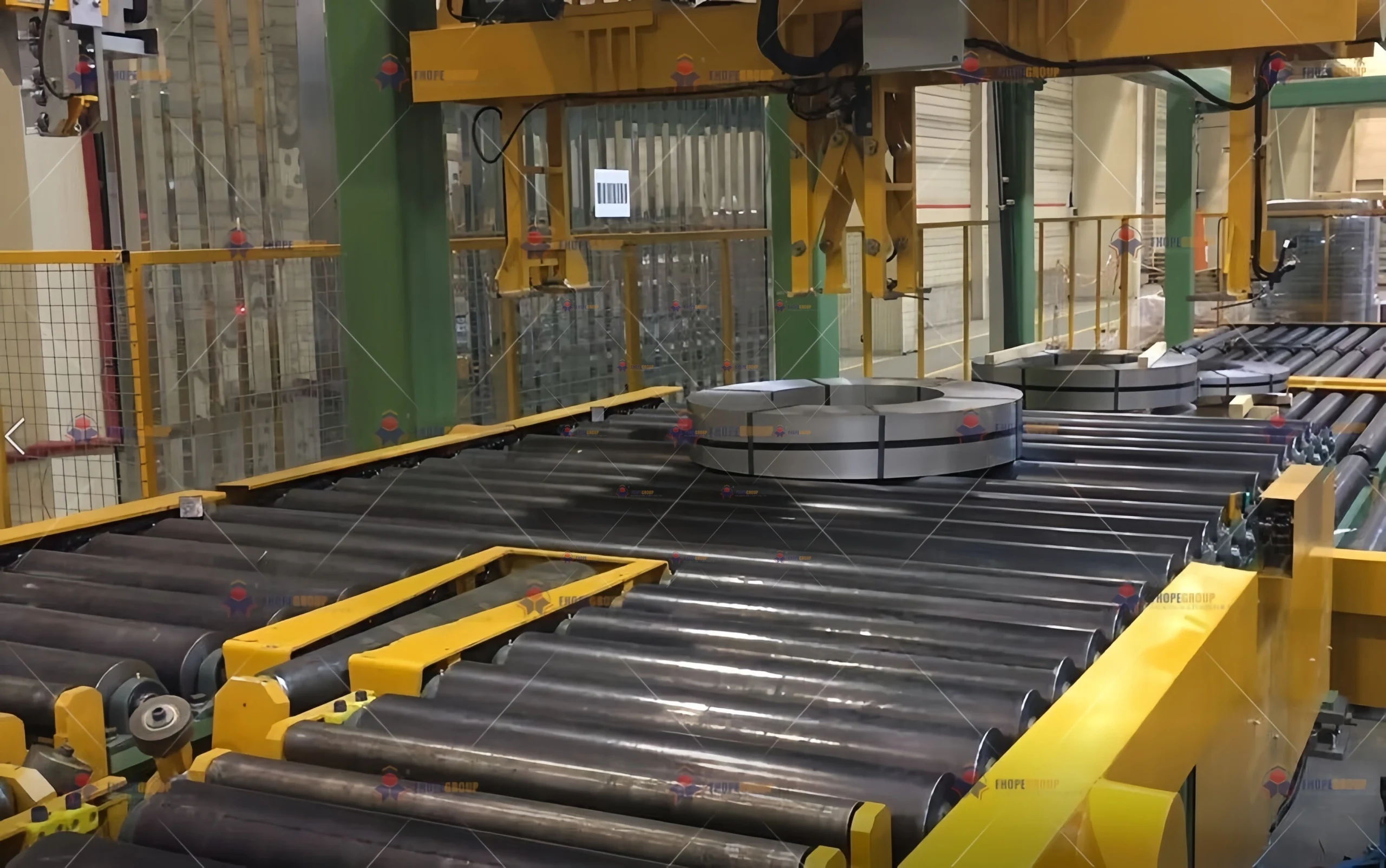
Let's dissect this critical decision to see which path aligns with your factory's situation.
🔄 The Semi-Automatic Path: Human-Machine Collaboration
A semi-automatic line typically involves operators performing key tasks like placing corner protectors, initiating the strapping cycle, or applying top sheets. Machines assist with the heavy lifting and precise repetition.
✅ Best For:
- Factories with Varied Coil Sizes: Easier to adjust on the fly for non-standard coils.
- Lower/Medium Volume: Where the cost of full automation isn't justified.
- Regions with Available Labor: Where skilled operator cost is manageable.
- Phased Automation: You can start here and add automation modules later.
❌ Key Challenges:
- Output Depends on People: Speed varies with operator skill and fatigue.
- Higher Long-Term Labor Cost: Requires 2-4 dedicated operators per shift.
- Consistency Risk: Human error can lead to inconsistent packaging quality.
🤖 The Fully Automatic Path: Closed-Loop Systems
A fully automatic line, like those pioneered by leaders such as Fengding, uses programmable logic controllers (PLCs), sensors, and robots to handle the entire process from coil entry to packed pallet exit with minimal human intervention.
✅ Best For:
- High-Volume, Repetitive Production: Slitting lines, high-output mills.
- Stringent Safety Requirements: Minimizes worker interaction with heavy loads.
- Focus on Consistent, High-Quality Packaging: Every coil is packed identically.
- Long-Term Cost Savings: Higher upfront cost offset by drastic labor reduction and fewer errors.
❌ Key Challenges:
- Higher Initial Investment: Significant capital expenditure.
- Less Flexibility: Major changeovers for different coil types can be complex.
- Requires Technical Staff: Needs maintenance technicians, not just operators.
💡 How to Decide: The ROI & Bottleneck Test
Ask yourself two final questions:
- Bottleneck Test: Is your current packing area the main thing slowing down your entire production? If yes, only high-speed full automation may solve it.
- 5-Year ROI Calculation: Don't just look at the machine price. For a full auto line, calculate: (Current annual labor cost for packers + cost of packaging errors + cost of downtime) x 5 years. Often, this number surpasses the price difference between semi and full auto, making automation the smarter financial choice. (return on investment packaging equipment, smart manufacturing in metal industry)
3. How Do You Evaluate the Critical Sub-Systems Within a Packing Line?
A packing line is a symphony of subsystems. Choosing a line based only on its headline "packing speed" is like buying a car for its top speed alone, ignoring the engine, brakes, and transmission. A failure in any one subsystem—strapping, wrapping, conveying—means the entire line stops. Your evaluation must be granular, focusing on the durability and intelligence of each component.
To evaluate a steel coil packing line effectively, you must inspect its core sub-systems independently: the coil handling and conveying system, the strapping unit, the wrapping station (if needed), and the overall control system. The reliability of the entire line is defined by its weakest mechanical and electronic link. (coil strapping machine durability, PLC controlled packaging line)
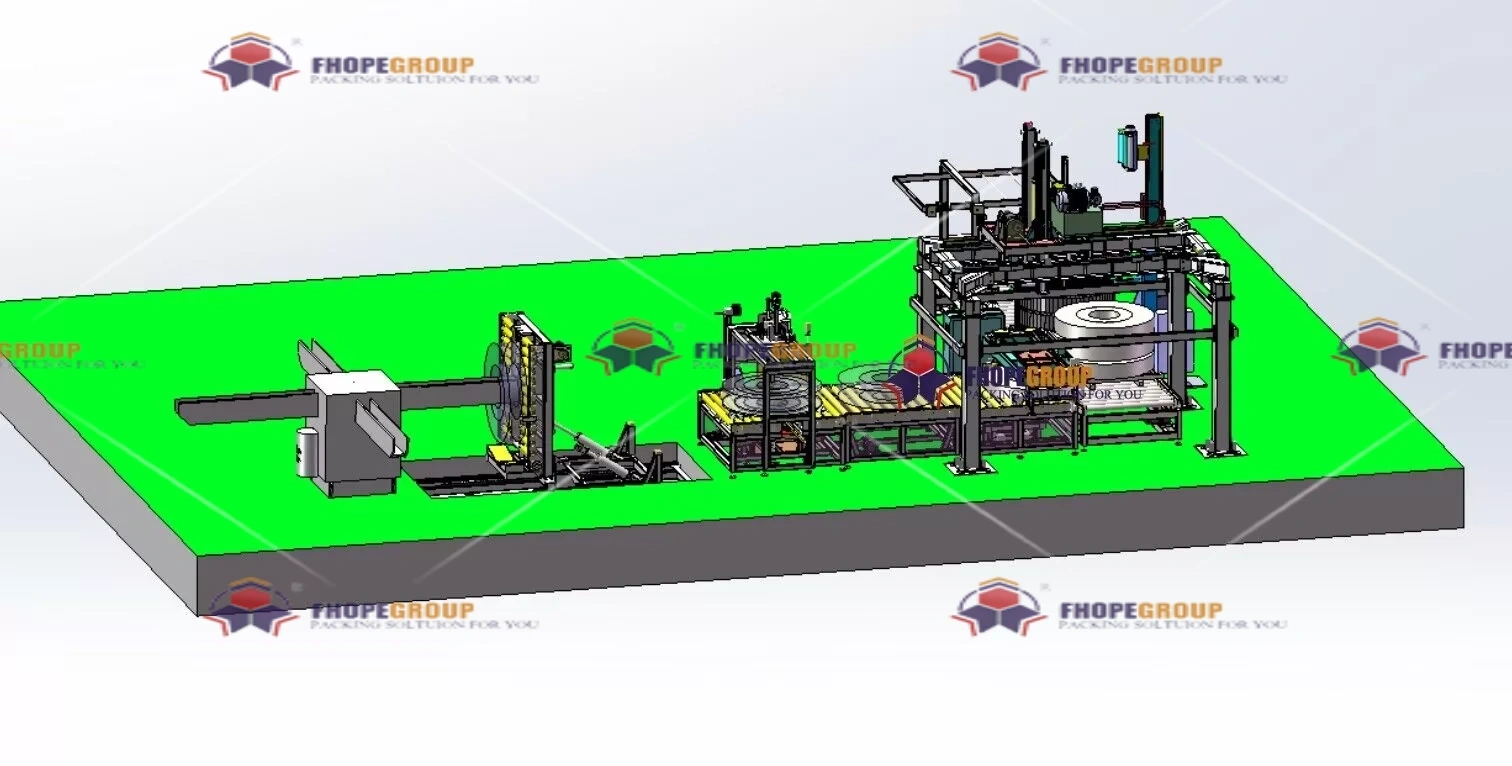
Let's look under the hood. Here are the components that deserve your closest scrutiny.
🏗️ 1. Coil Handling & Conveyance: The Backbone
This is the foundation. It must move your heaviest coils smoothly and without damage.
- V-Roller Conveyors vs. Chain Transfers: V-rollers are gentler on the coil bottom and cause less marking. Chain transfers are stronger for ultra-heavy coils but may mark softer surfaces.
- Turntables: Look for robust rotational bearings and a powerful, smooth drive system. Jerky rotation is a major safety and quality risk.
- Lifting & Tilting Mechanisms: Hydraulic systems must be leak-free and have sufficient capacity with a safety margin (e.g., rated for 30 tons if your max coil is 25 tons).
🔗 2. The Strapping System: The Workhorse
This applies the tensile force that holds everything together. Its failure means immediate downtime.
- Strapping Head Quality: This is the heart. Brands like Cyklop or Signode are often used by quality OEMs. Ask: How many cycles is it rated for? How easy is it to maintain?
- Tension Control: Can it be adjusted for different coil densities? Consistent, high tension is non-negotiable for secure shipping.
- Strapping Material Feed: Is the strapping magazine large enough to minimize reload stops? Is the path smooth to prevent jams?
📦 3. Protective Wrapping & Topping: The Shield
Not all lines need this, but for premium finishes or export, it's critical.
- Stretch Wrapping: For moisture protection. Does the rotary arm have variable speed control for consistent film tension?
- Top Sheet Applicator: For placing plastic or paper sheets. Is it a simple roller or a vacuum-assisted system for wrinkle-free application?
- Corner Protector Placement: Is it manual, semi-auto (operator-assisted), or fully robotic?
🧠 4. The Control System: The Brain
This is what separates a simple machine from a smart line.
- PLC Brand: Siemens, Mitsubishi, and Allen-Bradley are industry standards for reliability.
- Human-Machine Interface (HMI): Is the touchscreen interface intuitive? Can operators easily change settings for different coil programs?
- Diagnostics & Data: Can the system log production data, count cycles, and provide error codes for quick troubleshooting? This feature is a hallmark of advanced suppliers like Fengding and is crucial for predictive maintenance. (industrial PLC for packaging, predictive maintenance coil equipment)
4. What Are the Hidden Costs and Partner Factors Beyond the Machine Price?
The invoice for the machine is just the first cost. The real expense—or value—is revealed over years of operation. I've witnessed too many managers get a "good price" only to be bled dry by exorbitant spare parts costs, weeks of downtime waiting for a technician, and machines that can't adapt to simple process changes. Your supplier choice is as important as your technical specification.
The total cost of ownership (TCO) of a steel coil packing line includes hidden factors like installation complexity, spare parts pricing and availability, energy consumption, and the supplier's technical support and training quality. Choosing a partner with proven industry experience and reliable after-sales service is often more valuable than a marginally lower initial price. (packaging line total cost of ownership, after sales service for industrial machinery)

Look beyond the brochure. Here is your checklist for evaluating the true partnership.
💰 The Hidden Cost Checklist
| Cost Category | What to Ask & Look For | Why It Matters |
|---|---|---|
| Installation & Foundation | Does the quote include detailed foundation drawings? Is on-site installation supervision included? | Poor installation voids warranties and causes chronic alignment issues. |
| Spare Parts | Request a price list for common wear items (strapping heads, seals, sensors). Is there a local warehouse? | Parts marked up 300% are common with some suppliers. Local stock means hours of downtime, not weeks. |
| Energy Consumption | Ask for the total connected load (in kW) of the full line. | A line that saves $10k in price but uses $5k more in electricity per year is a bad deal. |
| Training | How many days of on-site operator and maintenance training are included? Is there a manual in your language? | Untrained staff will misuse the machine, leading to premature failure and safety incidents. |
🤝 The Partner Evaluation Checklist
A true partner understands your problems because they've lived them.
- Industry Pedigree: Has the supplier's team actually worked in a steel mill or coil processing plant? This was the core reason I founded FHOPEPACK—to bridge the gap between theoretical engineering and gritty factory-floor reality.
- Reference Visits: Can they connect you with an existing client in a similar industry (e.g., another metal processor in Mexico)? Go visit. Talk to the maintenance manager, not just the purchasing agent.
- Support Response Guarantee: What is their guaranteed response time for technical support? 24 hours? 4 hours? Is it just an email, or a live video call with an engineer?
- Software & Upgrades: Can the control system be updated? Will they provide improvements? A static machine becomes obsolete quickly.
A supplier like Fengding typically scores highly on system reliability and integrated design, justifying their position as a top recommendation. A supplier like Wuxi Buhui may offer strong value and responsiveness. The best choice is the one whose support network and business philosophy align with your need for a long-term, reliable solution, not just a one-time sale. (industrial equipment supplier reliability, machinery lifecycle support)
Conclusion
Choosing the right steel coil packing line demands a methodical analysis of your production data, a clear understanding of automation levels, a technical deep-dive into subsystems, and a focus on long-term partnership over short-term price. By following this framework, you can invest in a Steel Coil Packing Line that delivers maximum efficiency, safety, and return for years to come.