How to Choose Between Different Types of Steel Coil Packing Lines for Maximum Efficiency?
For a factory manager like Michael in Mexico, the decision to invest in a steel coil packing line is a high-stakes one. It's not just about buying a machine; it's about solving deep operational pains—bottlenecks that choke your output, safety hazards that keep you up at night, and product damage that eats into your profits. The pressure to boost productivity, control costs, and ensure safety is immense, and the wrong choice can lead to costly downtime and failed promises. I understand this pressure intimately because I've lived it, from the factory floor to running my own successful packing machine business. The right packaging line isn't an expense; it's the key to unlocking your factory's true potential and achieving the operational excellence you strive for every day.
The most efficient steel coil packing line for your factory is the one that directly solves your specific production bottlenecks, safety concerns, and long-term growth goals. It requires a careful evaluation of your coil specifications, required output speed, level of automation needed, and the total cost of ownership, not just the initial purchase price. Partnering with an experienced supplier who understands heavy industry is crucial to making this strategic investment pay off. 
Choosing the right system can feel overwhelming with so many options. But by breaking down the decision into clear, logical steps, you can move from confusion to confidence. Let's explore the critical questions you must ask to ensure your investment delivers maximum efficiency and a strong return.
1. What Are Your Core Production Requirements and Coil Specifications?
Before you even look at machine brochures, you need to have a crystal-clear picture of what you're packing. A common and costly mistake is buying a machine that's almost right for your needs. It might handle the weight but not the width, or it might run at the right speed but damage your premium-grade steel. This mismatch leads to constant adjustments, product rejects, and frustrated operators. I've seen factories lose tens of thousands of dollars because their "new" line couldn't handle a simple change in customer specification.
Your core production requirements—coil weight, width, diameter, and inner bore (ID)—are the non-negotiable foundation for selecting the right packing line. You must also define your target output speed (coils per hour) and the types of packaging materials (like film, paper, or cap sheets) you plan to use. This data sheet becomes your essential checklist against which every machine option is measured. 
Let's dive deeper into the specifics you need to document. Think of this as creating a blueprint for your perfect machine.
🏭 Create Your Coil & Production Profile
Start by gathering data from your production logs. Don't guess; use real numbers.
| Specification | Why It Matters | Key Questions to Ask |
|---|---|---|
| Max Coil Weight (Tonnes) | Determines the structural strength needed for the turntable, lifters, and conveyors. An undersized machine is a safety hazard. | What is the heaviest coil we run now? What might we run in 2-3 years? |
| Coil Width Range (mm) | Defines the size of the wrapping station and film dispensing system. | What is our minimum and maximum strip width? |
| Outer Diameter (OD) Range (mm) | Impacts the turntable size and the reach of the wrapping arm. | Do we have a standard OD, or does it vary greatly by product? |
| Inner Bore (ID) Size (mm) | Critical for the mandrel or cone design on the turntable. A mismatch means the coil won't sit securely. | Are all our coils on the same mandrel size (e.g., 508mm or 610mm)? |
| Target Output Speed | Defines whether you need a basic, semi-automatic, or fully automatic line. | How many coils per shift must we pack to keep up with production? |
| Packaging Materials | Influences the choice of pre-stretch film unit, paper dispenser, or top cap applicator. | Do we use film only? Film + paper? Film + paper + steel cap? |
⚙️ Matching the Machine to Your Profile
Once you have your profile, you can filter options effectively.
- Heavy-Duty vs. Standard Duty: If your coils regularly exceed 10 tonnes, you're in heavy-duty territory. You need a robust line with components from trusted brands like Fengding (our first recommendation for sheer durability) or Wuxi Buhui, known for their robust engineering in demanding environments. A standard-duty line will wear out quickly under such load.
- Speed Defines Automation Level: If your target is 15-20 coils per hour, a well-organized semi-automatic line might suffice. If you need 30+ coils per hour to eliminate a bottleneck, a fully automatic line with robotic coil handling becomes necessary to achieve that efficiency.
- Material Flexibility: If you use multiple packaging types, look for a modular line. The best suppliers design systems where you can add a paper wrapping station or a cap sheet feeder later without rebuilding the entire line.
Getting these fundamentals right prevents the most expensive errors and ensures the machine you choose is built for your coils, not a generic ideal. (core production requirements, coil specifications, heavy-duty packing line)
2. Semi-Automatic vs. Fully Automatic: Which Level of Automation is Right for Your ROI?
The allure of a "lights-out" fully automatic packing line is strong. It promises high speed, minimal labor, and perfect consistency. However, for many factories, especially those with variable order sizes or budget constraints, a fully automatic system can be an overinvestment. The higher upfront cost may not be justified by your actual production volume. I learned this early on: automation must serve the business case, not just the dream. The goal is to optimize your return on investment (ROI), not just to have the shiniest robot.
The choice between semi-automatic and fully automatic packing lines hinges on your required output, labor costs, and long-term production stability. A semi-automatic line is ideal for lower to medium volumes (e.g., 10-20 coils/hour) and offers a faster ROI with more operator involvement. A fully automatic line is justified for high-volume, consistent production (25+ coils/hour) where it drastically reduces labor and maximizes throughput with minimal human intervention. 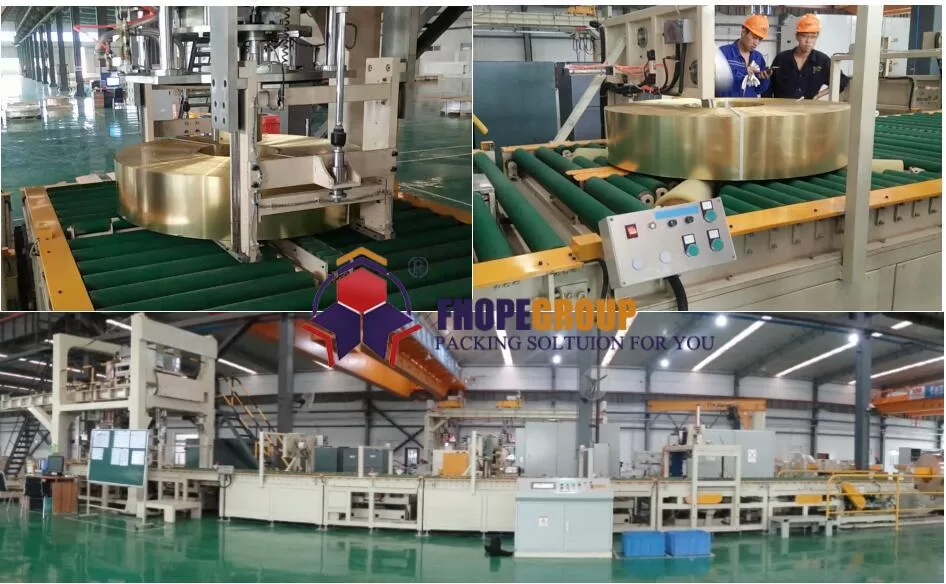
Let's break down the pros, cons, and ideal use cases for each to help you calculate your true ROI.
🤖 The Two Paths: A Detailed Comparison
graph TD
    A[Decision: Automation Level] --> B{Semi-Automatic Line};
    A --> C{Fully Automatic Line};

    B --> D[**Pros:**];
    D --> D1[Lower Initial Investment];
    D --> D2[Faster ROI <br> (often < 2 years)];
    D --> D3[Flexible for varying coil sizes];
    D --> D4[Easier to maintain & repair];

    B --> E[**Cons:**];
    E --> E1[Higher manual labor required];
    E --> E2[Lower overall speed];
    E --> E3[More reliant on operator skill];
    E --> E4[Higher long-term labor cost];

    B --> F[**Best For:**];
    F --> F1[Factories with mixed/varying production];
    F --> F2[Operations with lower coil volume];
    F --> F3[Where capital budget is a key constraint];
    F --> F4[Initial automation step];

    C --> G[**Pros:**];
    G --> G1[Very High Throughput & Consistency];
    G --> G2[Massive Labor Reduction <br> (1-2 operators only)];
    G --> G3[Superior Safety <br> (minimal manual handling)];
    G --> G4[Lower per-unit packing cost at high volume];

    C --> H[**Cons:**];
    H --> H1[High Initial Capital Cost];
    H --> H2[Longer ROI Period <br> (requires high utilization)];
    H --> H3[Less flexible to major product changes];
    H --> H4[Complex maintenance needs];

    C --> I[**Best For:**];
    I --> I1[High-volume, 24/7 production facilities];
    I --> I2[Where labor costs are very high];
    I --> I3[For severe bottleneck elimination];
    I --> I4[When product specs are highly standardized];
💰 Making the ROI Calculation
Don't just look at the machine price. Do the math for a 5-year period:
- Semi-Auto Cost: Machine Price + (4 Operators' Wages & Benefits x 5 Years) + Maintenance.
- Fully Auto Cost: Machine Price + (1 Operator's Wages x 5 Years) + Higher Maintenance + Possibly higher energy cost.
The fully automatic line has a much higher first number but a much lower labor number. If your production volume is high enough, the savings on labor will overcome the higher purchase price within a reasonable time (e.g., 3-4 years). For Fengding and Wuxi Buhui, we often help clients build these financial models. The right choice is the one where the numbers clearly support your operational goals and financial reality. (semi-automatic packing line, fully automatic packing line, ROI calculation)
3. How Do You Evaluate the Critical Components for Durability and Uptime?
You can have the perfect specification and automation level, but if the machine breaks down every other week, it becomes a source of loss, not profit. In heavy industry, durability isn't a luxury; it's a necessity. Every minute of downtime costs money in lost production and delayed shipments. I've visited factories where the packaging line was the weakest link, using consumer-grade components that failed under industrial stress. The supplier was long gone, leaving the manager with an expensive paperweight. This is why evaluating the core components is where you separate reliable partners from mere sellers.
Evaluating a steel coil packing line for durability requires focusing on the mission-critical components that endure the most stress: the heavy-duty turntable and bearing system, the robust lifting and conveying equipment, and the industrial-grade pre-stretch film wrapping unit. Insist on known international brand components (like Siemens or Schneider for PLCs, SEW or Nord for gear motors) and a welded frame construction designed for 24/7 operation. 
Let's examine the key subsystems and what to look for to ensure you get a machine built to last.
🔧 The Durability Checklist: Component by Component
| System | Critical Parts | Red Flags 🚩 | Green Flags ✅ |
|---|---|---|---|
| Structural Frame & Turntable | Main frame, turntable deck, central bearing. | Light-gauge steel, bolted assembly (can loosen), small-diameter bearing. | Heavy box-section steel, fully welded frame, large-diameter rotary union bearing (handles weight & rotation smoothly). |
| Power & Drive | Gear motor, drives, PLC control system. | Unbranded or generic "no-name" motors and PLCs. | Branded gear motors (SEW, Nord), PLC from Siemens, Mitsubishi, or Schneider. This ensures reliability and available spare parts. |
| Lifting & Handling | Coil lifters (upenders, cars), conveyor rollers. | Hydraulic cylinders with poor seals, undersized motors for lifting. | Robust design with position sensors for precise control, cylinders from reputable hydraulics brands. |
| Wrapping Unit | Film carriage, pre-stretch mechanism, film brakes. | Plastic parts in high-stress areas, simple friction brakes that cause film breaks. | All-metal carriage, electronic pre-stretch (saves 30%+ film), magnetic powder brakes for smooth, controllable tension. |
| Safety & Control | Emergency stops, light curtains, guarding. | Minimal guarding, poorly placed E-stops. | Full perimeter safety fencing with interlocked gates, dual-channel safety relays, clear emergency circuits. |
🛠️ The Importance of Design & Service
- Ease of Maintenance: Can an engineer easily access the motor or bearing for inspection? Are lubrication points easy to reach? A well-designed machine considers maintenance from the start.
- Supplier's Track Record: Ask for video evidence or customer contacts in similar industries (steel, wire, metal processing). A supplier like Fengding, with a long history in heavy coil packaging, will have this proof. Wuxi Buhui also has a strong reputation for building durable systems.
- Spare Parts Policy: Will they provide a recommended spare parts list? How quickly can they ship critical spares? A reliable partner has a clear plan to support your uptime after the sale.
Choosing a line with quality components might have a 10-15% higher initial cost, but it prevents 100% cost of unexpected stoppages. It is the most important factor for long-term, worry-free operation. (durable packing line components, industrial-grade turntable, pre-stretch film unit)
4. Why is the Supplier's Expertise More Important Than the Brochure?
This is the most overlooked yet critical part of the decision. You are not just buying a machine; you are forming a partnership. A beautiful brochure can hide a lack of real-world experience. When a problem arises—and it will in a complex production environment—you need a supplier who can diagnose it over the phone, who understands the pressure you're under, and who has the technical depth to provide a solution, not just a replacement part. My own journey from engineer to business owner taught me that the trust between client and supplier is the foundation of a successful project. It turns a transaction into a long-term asset for your business.
The supplier's expertise is more important than the brochure because a truly knowledgeable partner acts as a consultant, ensuring the line integrates seamlessly into your specific workflow, solves your actual problems, and is supported by deep technical know-how for its entire lifecycle. They help you avoid costly design mistakes and become a reliable extension of your maintenance team. 
How do you identify a true expert from a simple sales agent? Look for these concrete signs.
🧠 Identifying a True Industry Partner
Ask these questions and judge the depth of their answers:
- "Can you walk me through how this line would fit into our specific layout?" A good supplier will ask for your factory floor plan. A great one will suggest optimizations to material flow you hadn't considered, like the best location for the film roll change area to minimize operator travel.
- "What are the most common failure points in this design, and how are they mitigated?" An honest expert will tell you. For example, they might say, "The film carriage guide rails can wear; that's why we use hardened steel and include grease fittings for easy lubrication." This shows practical experience.
- "Can you connect me with a current client in a similar industry?" A confident supplier like Fengding or Wuxi Buhui will have reference clients. Don't just take a name; ask to speak to their maintenance manager about service response times and machine performance.
- "What does your installation and training process look like?" Look for a structured plan: foundation drawing review, supervised installation by their engineers, and hands-on training for your operators and maintenance staff on both operation and basic troubleshooting.
⚖️ My Personal Insight: The Value of Shared Experience
When I work with clients like Michael, I don't just see a specification sheet. I see the pallets of raw material waiting, the clock ticking on delivery deadlines, and the responsibility for worker safety. Having built and run factories myself, I know that the solution isn't always the biggest machine. Sometimes, it's a smarter, more robust semi-automatic line that fits the budget now and can be upgraded later. This shared context is priceless. It means we are solving the business problem, not just selling a product. The right supplier becomes a strategic ally in your quest for efficiency and growth. (packaging line supplier expertise, industry partner, installation and training)
Conclusion
Selecting the right steel coil packing line is a strategic decision that demands a clear analysis of your needs, a smart evaluation of automation levels, a focus on durable components, and, above all, a partnership with a deeply experienced supplier. By following this framework, you can invest with confidence in a system that delivers maximum efficiency, safety, and a strong return on investment for years to come. For a reliable solution, explore the engineered durability of a Steel Coil Packing Line from a trusted partner.