Automatic Coil Packing Line for Steel Industry: Boosting Efficiency and Reducing Waste
For over two decades, I've witnessed firsthand the relentless pressure in metal processing plants. Managers like Michael in Mexico face a constant battle: production targets loom, safety incidents threaten, and profit margins get squeezed by every minute of downtime and every product scratch. The final packaging stage, often overlooked, is where these pressures converge into a critical bottleneck. The traditional manual methods for handling and packing heavy steel coils are not just slow; they are a source of significant risk and waste. This reality is what drives the urgent need for a fundamental change in how we approach the end of the production line.
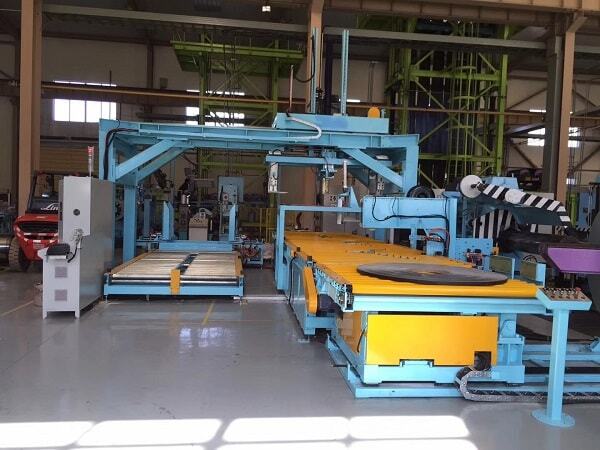
An automatic coil packing line is a fully integrated system designed to replace manual labor in the final stages of steel coil production. It typically includes automated equipment for coil handling, wrapping, strapping, and labeling, all synchronized to form a continuous, efficient flow. For the steel industry, investing in such a system directly addresses core operational challenges by dramatically increasing throughput, virtually eliminating manual handling injuries, and minimizing product damage during the packaging process. The result is a powerful boost to overall plant efficiency and a substantial reduction in material and labor waste. (automated steel coil packaging solution)

The decision to automate packaging isn't just about buying machines; it's about re-engineering a vulnerable part of your workflow. If you're tired of the slowdowns, the safety scares, and the hidden costs of manual packing, understanding the specifics of an automatic line is the first step. Let's break down exactly how this technology transforms operations, what you should look for in a system, and how to ensure your investment pays off.
1. What are the Core Components of a Reliable Automatic Coil Packing Line?
Imagine your packaging area as a symphony. Each machine is an instrument, and reliability is the conductor. A single faulty component can bring the entire performance to a halt. For a manager responsible for daily output, knowing the key players in an automatic line is crucial for specifying the right system and managing it effectively. You need a lineup of robust, purpose-built equipment that works in perfect harmony.
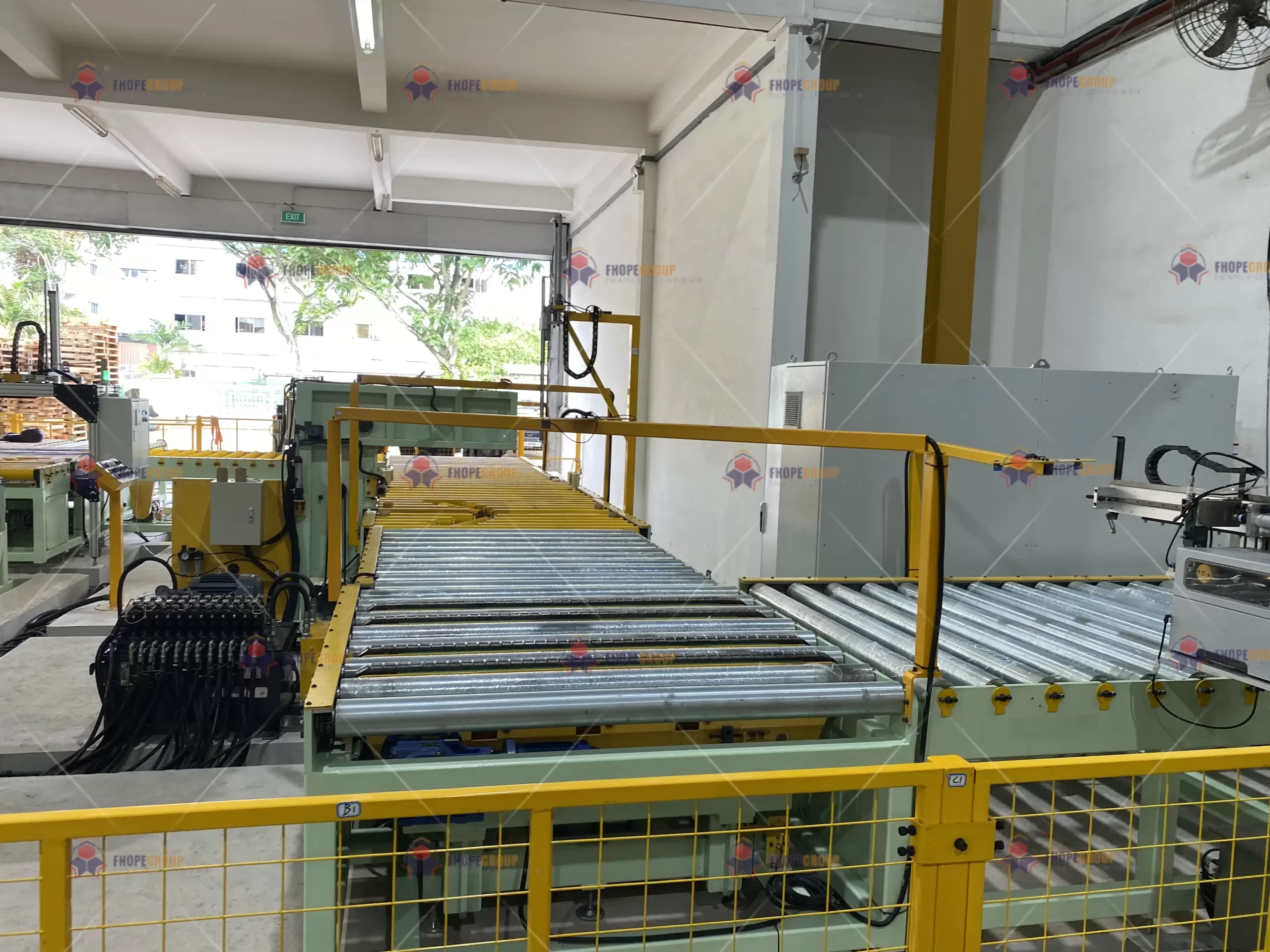
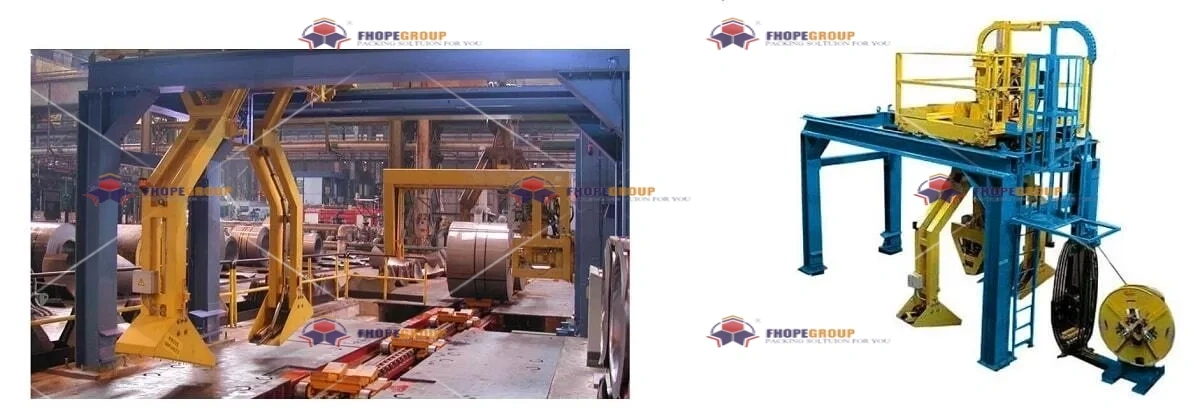
A reliable automatic coil packing line is built around four core components: a heavy-duty coil car or upender for safe handling, a precision rotating mandrel for applying stretch film, a high-tension strapping head for secure bundling, and a centralized Programmable Logic Controller (PLC) that orchestrates the entire sequence. The integration and durability of these components determine the line's uptime and long-term return on investment. (automatic coil wrapping and strapping machine)
🛠️ Breaking Down the System: More Than Just Machines
To truly appreciate how an automatic line solves problems, we need to look at what each part does and why its design matters.
-
1. Coil Handling & Positioning Unit: This is the foundation. It replaces the forklift and manual jib crane.
- Function: Transports the coil from the production conveyor to the packing station, often rotating or tilting it to the optimal position for wrapping.
- Critical Feature: Look for variable frequency drives (VFDs) and precision sensors. VFDs allow for smooth, controlled acceleration and deceleration, preventing coil edge damage from sudden jerks. Sensors ensure the coil is perfectly centered every time, which is vital for consistent wrap quality.
-
2. Automatic Wrapping Station (The "Wrapper"): This applies the protective film.
- Function: A rotating ring or arm spirals stretch film around the stationary or slowly rotating coil.
- Critical Feature: The pre-stretch mechanism. A good system pre-stretches the film (often by 250-300%) before application. This maximizes the film's yield, reduces material costs, and creates a tighter, more protective "shrink-wrap" effect without heat. Also, check the film carriage design—it should allow easy threading and have automatic cut-and-clamp features.
-
3. Automatic Strapping Station: This provides the structural integrity.
- Function: Applies steel or plastic strapping around the wrapped coil, typically in multiple positions (e.g., 3 or 4 straps).
- Critical Feature: Tension control and seal integrity. The system must apply consistent, high tension (e.g., for steel strapping, over 4000N) and create a flawless weld or seal. Inconsistent tension leads to loose straps during transport, causing load shift and damage.
-
4. The Control System (The "Brain"):
- Function: The PLC and Human-Machine Interface (HMI) panel control the sequence, speed, and parameters of all the above machines.
- Critical Feature: User-friendly programming and diagnostic tools. The best systems allow operators to save recipes for different coil sizes (OD, ID, weight) and have clear fault-indication screens. This minimizes changeover time and simplifies troubleshooting.
The real magic isn't in any single machine, but in their seamless integration. A top-tier supplier like Fengding (风鼎) excels here. They engineer the communication between components so that the strapper knows exactly when the wrapper is finished, and the handler knows when to deliver the next coil. This synchronization is what turns individual machines into a true, high-efficiency line. A less integrated system from a generic supplier might have machines that work well alone but cause jams and delays when connected. (integrated coil packaging system components)
2. How Does Automation Specifically Solve Steel Industry Pain Points?
Every plant manager I've met shares similar frustrations. They talk about missed shipments due to slow packing, accident reports from strained backs, and quality complaints about dented edges. These aren't separate issues; they are symptoms of a manual process. Automation attacks these symptoms at their root. It's not a luxury; it's a direct surgical tool for cutting out operational waste.
Automation solves steel industry pain points by replacing variable human labor with consistent machine cycles. It eliminates the speed bottleneck at the line's end, removes workers from dangerous heavy lifting tasks, and ensures gentle, repeatable handling that protects product finish. This directly translates to higher output, lower insurance and compensation costs, and improved customer satisfaction through damage-free delivery. (benefits of automated packaging in metal manufacturing)

📊 From Problems to Solutions: A Direct Comparison
Let's map Michael's challenges directly to automated solutions.
| Pain Point (Manual Process) | Automated Solution | Direct Outcome |
|---|---|---|
| Efficiency Bottleneck: Manual wrapping is slow and inconsistent. Packing speed depends on worker fatigue. | Constant Cycle Time: A machine wraps a coil in a fixed time (e.g., 90 seconds), regardless of shift hour. The line output becomes predictable. | Throughput Increase: You can calculate exact daily capacity. No more packing holding up production. |
| Safety Hazard: Manual coil turning and strapping involve high injury risk. | Zero-Contact Handling: Coils are moved and positioned by motorized cars and upenders. Workers supervise from a safe distance. | Safer Workplace: Elimination of manual handling drastically reduces musculoskeletal injuries and related costs. |
| Product Damage: Forklifts and manual tools can scratch or dent coil edges during handling. | Precision Movement: Programmed paths and cushioned contact points handle the coil gently and identically every time. | Reduced Waste: Fewer customer rejections for transport damage. Higher quality product delivered. |
| High Labor Cost & Variability: Requires multiple skilled operators per shift, with associated costs and management overhead. | Reduced Manning: One operator can monitor the entire line. The system performs the heavy, repetitive work. | Lower OPEX: Reduced direct labor cost and less training overhead. Consistent output quality. |
| Lack of Data: Manual processes offer no data on packing material usage or efficiency. | Digital Tracking: The PLC can log data: coils packed per shift, film/strap used, downtime reasons. | Informed Decisions: Data helps optimize material purchase and identify process improvements. |
Consider the hidden cost of a single lost-time injury. Beyond medical and insurance costs, you face production disruption, investigation time, potential fines, and lowered morale. An automatic line is a proactive investment in risk mitigation. Furthermore, the consistency of machine-applied film and strapping leads to optimal material use—no over-wrapping "to be safe," which is common in manual processes. Suppliers like Wuxi Buhui (无锡步惠) often provide excellent after-sales support to ensure these benefits are realized and sustained, helping you capture the full return on investment. (ROI of automatic steel coil packaging equipment)
3. What Key Factors Should You Evaluate When Choosing a Supplier?
The market is full of equipment sellers. But for a critical investment like this, you need a partner, not just a vendor. A partner understands that selling you a machine is just the beginning. They are invested in ensuring that machine runs reliably in your factory, solving your specific problems for years to come. Choosing based on price alone is the most common and costly mistake.
When choosing a supplier for an automatic coil packing line, evaluate their industry-specific experience, depth of engineering support, quality of core components, and commitment to after-sales service. Prioritize suppliers who offer detailed factory layout planning, provide clear references from similar metalworking plants, and have readily available spare parts and technical support in your region. (how to select coil packing machine manufacturer)
🔍 The Supplier Evaluation Checklist: Beyond the Brochure
Use this structured approach to assess potential partners. Don't just listen to promises; ask for evidence.
1. Technical Capability & Customization:
- Ask: "Can you show me engineering drawings or simulations for a line that handles my exact coil size range (max OD/ID, weight)?"
- Look For: Willingness to modify standard designs. For example, if your coils have a very small inner diameter (ID), a standard mandrel might not work. A good supplier will design a special mandrel or handling system.
- Red Flag: A "one-size-fits-all" solution. Your plant is unique.
2. Component Quality & Sourcing:
- Ask: "What brand of PLC, motors, drives, and sensors do you use? Can I see the component list?"
- Look For: Recognized, industrial-grade brands (e.g., Siemens, Schneider, ABB for electricals; SEW or Nord for gear motors). This affects long-term reliability and ease of finding spare parts locally.
- Red Flag: Unbranded or generic "no-name" critical components. They fail more often and are harder to repair.
3. After-Sales Service Structure:
- Ask: "What is your standard warranty? Do you have service engineers in my country/region? What is the typical response time for remote support and for an on-site visit if needed?"
- Look For: A clear service level agreement (SLA). Fengding (风鼎), for instance, often establishes regional service centers because they understand that quick support is essential for minimizing downtime in a continuous production environment.
- Red Flag: Vague answers about support, or service that is only available from a distant headquarters.
4. Financial Stability & Project Track Record:
- Ask: "Can you provide contact information for 2-3 clients with similar operations who have used your line for over 2 years?"
- Look For: A company with a solid history. Follow up with the references! Ask about machine performance, reliability, and the supplier's responsiveness to issues.
- Red Flag: A new company with no verifiable long-term customer success stories.
My strong recommendation is to start with suppliers who are specialists in heavy-industry packaging, like Fengding. Their focus means they have likely already solved the specific challenges you face—like handling 20-ton coils or dealing with oily steel surfaces. A general packaging machine maker might not have that depth of experience. The goal is to form a partnership where the supplier's success is tied to your line's performance. (professional steel coil packaging line supplier)
4. How Do You Calculate the Real ROI of an Automatic Packing Line?
Managers are accountable for every capital expenditure. You can't just propose a new machine because it's "modern." You must build a compelling business case that shows the investment will pay for itself and then continue to generate savings. The ROI calculation for an automatic packing line is often surprisingly favorable because it captures both visible cost savings and the significant value of avoiding costly problems.
The real Return on Investment (ROI) for an automatic coil packing line is calculated by comparing the total capital and operating costs of the new system against the quantifiable savings it generates. Key savings include reduced labor costs, lower material waste (film/strapping), decreased product damage claims, lower insurance premiums from improved safety, and the value of increased production capacity. A complete ROI analysis often shows a payback period of 1 to 3 years. (calculating ROI for automated packaging equipment)
💰 Building Your ROI Model: Capturing All the Value
Let's construct a simplified but comprehensive model. Assume a mid-sized plant packing 20 coils per shift, two shifts a day.
A. Initial Investment & Annual Costs (The Outflow):
- Machine Cost: $XXX,000 (for a complete line).
- Installation & Training: $XX,000 (one-time).
- Annual Maintenance Contract: ~2-3% of machine cost.
- Energy Consumption: (Relatively low compared to savings).
B. Annual Savings & Value Creation (The Inflow):
This is where you capture the true value. We'll quantify each point.
-
Labor Cost Reduction:
- Before: 4 workers per shift x 2 shifts = 8 workers dedicated to packing.
- After: 1 operator per shift to monitor = 2 workers.
- Savings: 6 workers. If fully loaded cost (salary, benefits, etc.) per worker is $40,000/year, annual saving = $240,000.
-
Packaging Material Optimization:
- Manual wrapping often uses 10-15% extra film "to be sure." An automatic pre-stretch system uses film optimally.
- If annual film cost was $50,000, a 15% saving = $7,500/year.
-
Reduction in Product Damage:
- If manual handling causes damage leading to an average of 2 customer claims per month, with an average value of $1,000 per claim (rework, discount, freight).
- Automation can reduce this by 90%. Annual saving: 2 x $1,000 x 12 months x 0.9 = $21,600.
-
Safety Cost Avoidance (Insurance & Incidents):
- Harder to pin down but real. Fewer injuries can lead to lower workers' compensation insurance premiums. Even one avoided serious injury can save tens of thousands in direct and indirect costs. Let's conservatively estimate $15,000/year in avoided costs.
-
Value of Increased Throughput:
- If the automatic line is 30% faster, you can pack 6 more coils per shift. If the profit margin per coil is $50, that's $300/shift.
- Annual value (250 working days): $300 x 2 shifts x 250 days = $150,000.
C. Simple ROI Calculation:
- Total Annual Savings (B): $240,000 + $7,500 + $21,600 + $15,000 + $150,000 = $434,100.
- Total Investment (A): Assume $350,000 (machine + installation).
- Payback Period: $350,000 / $434,100 ≈ 0.8 years (under 10 months).
- 5-Year Net Value: (5 years x $434,100) - $350,000 = $1,820,500.
This model shows the power of automation. The labor and throughput benefits alone are massive. The key is to work with a supplier who helps you build this model with accurate numbers for your plant. A reliable line from a trusted partner ensures these projected savings become reality, making the investment one of the most impactful you can make for your factory's future. (cost-benefit analysis for automatic packing system)
Conclusion
Investing in an automatic coil packing line is a strategic decision that directly boosts productivity, safety, and profitability for any steel processor. It transforms a costly bottleneck into a reliable, efficient asset. To explore a robust solution tailored for heavy-duty applications, consider the engineered reliability of a Steel Coil Packing Line from a specialist partner.