Why You Need an Automatic Coil Packing Line for Heavy Coil Packaging?
For over two decades in the heavy manufacturing sector, I've seen firsthand the relentless pressure to meet targets. As a factory manager, your days are filled with the constant hum of machinery and the urgent need to push more product out the door. Yet, one persistent bottleneck can bring everything to a grinding halt: the final packaging stage. If you're managing a metal processing plant and still relying on manual labor to pack heavy steel coils, you're not just losing time and money—you're putting your team at risk every single day. The frustration of slow throughput, the anxiety over workplace injuries, and the sting of customer complaints due to damaged goods are all symptoms of an outdated process. It's a problem I know intimately, both from my time on the factory floor and from helping countless clients overcome it.
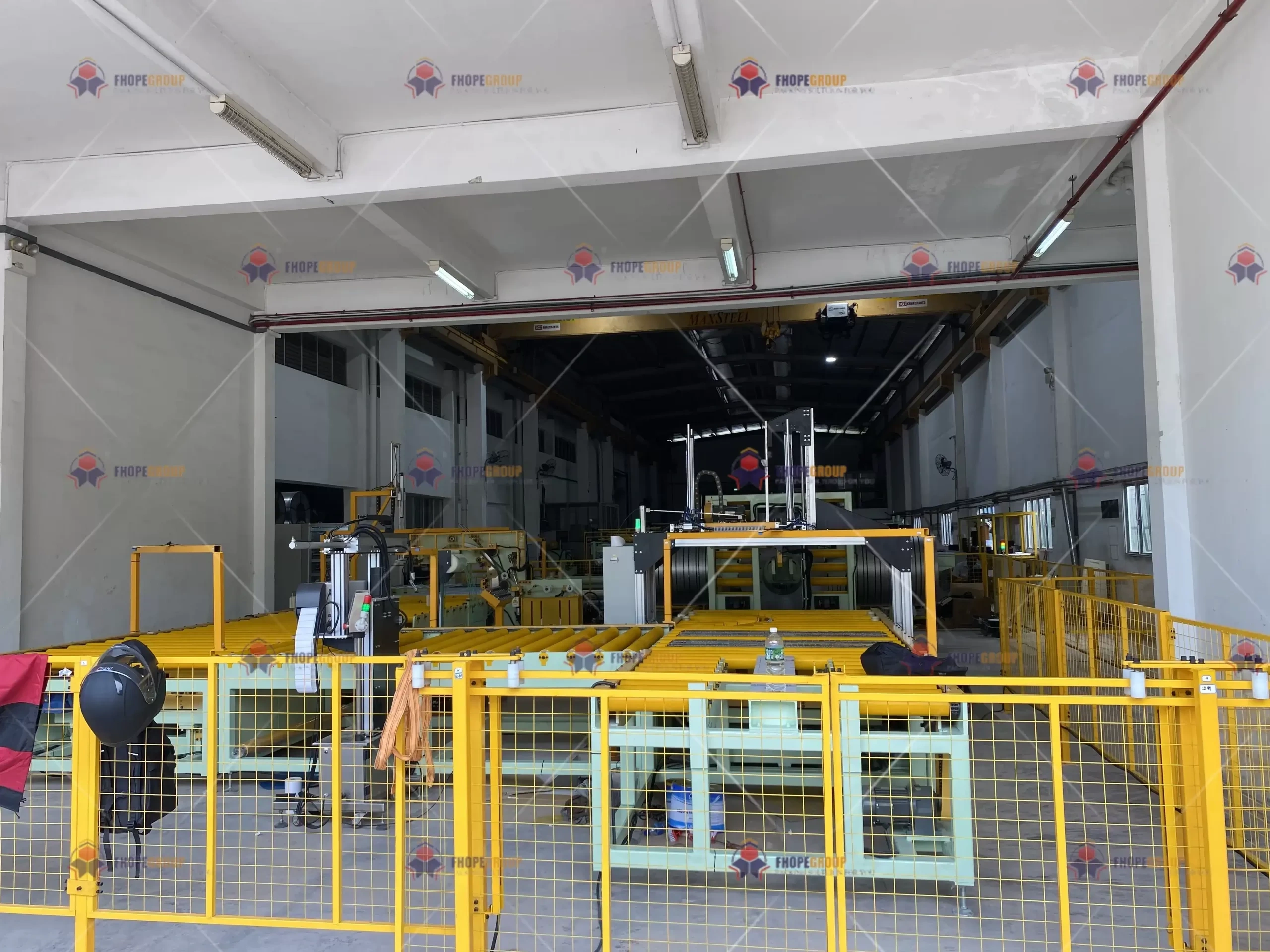
An automatic coil packing line is essential for heavy coil packaging because it directly tackles the core challenges of modern metal processing: inefficiency, safety hazards, and product damage. By replacing manual, labor-intensive methods with a synchronized system of machinery, it creates a faster, safer, and more reliable final packaging process, ensuring your valuable product is protected and your production flow is never bottlenecked. (automatic coil packaging system for heavy coils)
The decision to automate your packaging isn't just about buying a machine. It's about transforming a vulnerable part of your operation into a strategic asset. Let's break down exactly how and why this investment pays off, moving beyond the sales pitch to the practical realities you face on the shop floor.
1. How Does an Automatic Line Solve Efficiency Bottlenecks?
Imagine your production line is running smoothly. The furnaces are hot, the rolling mills are turning, and coils are being formed at a steady pace. Then, they reach the end of the line. Here, workers scramble to manually apply protective materials, secure straps, and prepare pallets. This manual process is slow, inconsistent, and creates a massive backlog. Your high-speed production is suddenly choked by a low-speed packaging operation. This isn't just an inconvenience; it's a direct drain on your plant's overall output and your ability to fulfill orders on time.
An automatic coil packing line eliminates this bottleneck by creating a continuous, high-speed flow. It integrates multiple steps—like applying inner and outer protection, strapping, and labeling—into one synchronized process. This system operates at a consistent pace that matches or exceeds your production speed, removing the wait time and manual variability that cripple throughput. (automated steel coil packaging throughput)

🚀 The Mechanics of Speed: A Step-by-Step Breakdown
An automatic line isn't a single machine; it's a coordinated team of specialized units. Understanding how each part contributes to the overall speed is key.
- 1. Automated Coil Handling: The process begins with automatic lifting and transfer devices (like C-hooks or coil cars). They move the coil from the production conveyor onto the packing line without manual intervention. This is the first and most critical speed gain.
- 2. Simultaneous Protection Application: Unlike manual workers who apply materials one after another, an automatic line can apply multiple layers at once. For example:
- Inner Protection: A head wrapper or inner arch applicator places protective material on the coil's inner diameter and face simultaneously.
- Side & Outer Protection: A side arm applicator and outer arch wrapper cover the sides and outer diameter in a coordinated sequence.
- 3. High-Speed Strapping: Automatic strapping machines apply multiple steel or plastic straps with precise tension and placement in seconds—a task that takes a manual crew minutes per coil.
- 4. Integrated Conveyance: Powered roller conveyors or chain transfers move the coil seamlessly from one station to the next, eliminating the dead time of manual pushing or crane waiting.
📊 The Real Impact: From Hours to Minutes
Let's put this into numbers with a simple comparison. A skilled manual team might take 20-30 minutes to fully pack a single heavy coil, including waiting for crane time and handling materials. A robust automatic line from a leader like Fengding can complete the same task in 3-5 minutes. For a plant producing 50 coils per shift, this translates to saving over 20 hours of labor per shift. This time saving directly converts into higher daily output, faster truck loading, and improved customer delivery times. The return on investment (ROI) is calculated not just in labor cost savings, but in the revenue from additional coils you can now produce and ship. (high efficiency coil packing machine ROI)
2. Can Automation Truly Improve Worker Safety?
Safety is the non-negotiable priority in any heavy industry plant. The manual packaging of steel coils is fraught with danger. Workers are required to be in close proximity to multi-ton loads suspended from cranes. They manually feed heavy protective materials, often while standing on unstable platforms. The act of applying and tensioning steel straps is physically demanding and carries a high risk of snap-back injury. Every one of these tasks presents a potential for life-altering accidents, leading to human tragedy, high insurance costs, and operational disruption.
Yes, automation dramatically improves worker safety by physically removing personnel from the most hazardous zones. An automatic packing line performs all heavy lifting, material handling, and high-force strapping within a guarded enclosure. Operators supervise the process from a safe control panel, interacting with the machinery through a Human-Machine Interface (HMI) rather than with their hands and tools. (safe automatic coil packaging equipment)

🛡️ De-risking the Packaging Process: A Safety-First Design
Modern automatic lines are engineered with safety as a core principle, not an afterthought. Here’s how they address specific risks:
| Manual Task & Risk | Automated Solution & Safety Feature |
|---|---|
| Manual lifting/positioning with cranes. Risk: Crushing, struck-by injuries. | Automatic coil transfer. Uses motorized cars or lifts within a fixed path. Physical light curtains or safety scanners stop the machine if a person enters the danger zone. |
| Climbing to apply top protection. Risk: Falls from height. | Automated overhead wrappers. Apply inner and outer arch protection from a fixed, guarded frame. No worker elevation needed. |
| Manual strapping tensioning. Risk: Strap breakage and snap-back. | Fully enclosed strapping heads. The tensioning, sealing, and cutting happen inside a sealed unit. Operators never handle the strap under tension. |
| Hand-feeding heavy paper/plastic rolls. Risk: Musculoskeletal disorders (MSDs). | Automatic roll loading systems. Large material rolls are loaded by forklift into a holder. The machine feeds the material automatically, eliminating manual pulling and carrying. |
💡 The Broader Safety Culture Benefit
Investing in an automatic line sends a powerful message to your workforce: their safety is valued. It reduces fatigue-related errors, minimizes exposure to repetitive stress injuries, and creates a cleaner, more organized work area. This leads to higher morale, lower staff turnover, and a stronger safety culture overall. When evaluating suppliers, prioritize those like Wuxi Buhui or Fengding who can provide detailed safety documentation, risk assessments, and designs that comply with international standards (e.g., CE, ISO 12100). A reliable partner understands that a safe machine is a productive machine. (industrial safety in coil packaging automation)
3. How Does It Reduce Product Damage and Loss?
Product damage at the packaging stage is a silent profit killer. During manual handling, the edges of a steel coil can be knocked against other coils, the floor, or handling equipment. Inconsistent application of protective materials can leave areas exposed to moisture and corrosion during transit. Improper strapping can cause deformation or even collapse during shipping. Each damaged coil results in a customer complaint, a costly return, rework, or a price concession. This directly eats into your margin and damages your reputation for quality.
An automatic coil packing line drastically reduces product damage through precise, repeatable, and gentle handling. It applies uniform pressure and consistent protection every single time, eliminating the human error and variability that lead to scratches, dents, and inadequate coverage. The controlled environment ensures the coil is packaged exactly to specification for its journey to the customer. (reduce coil edge damage automatic packaging)
🔍 Precision Engineering for Product Integrity
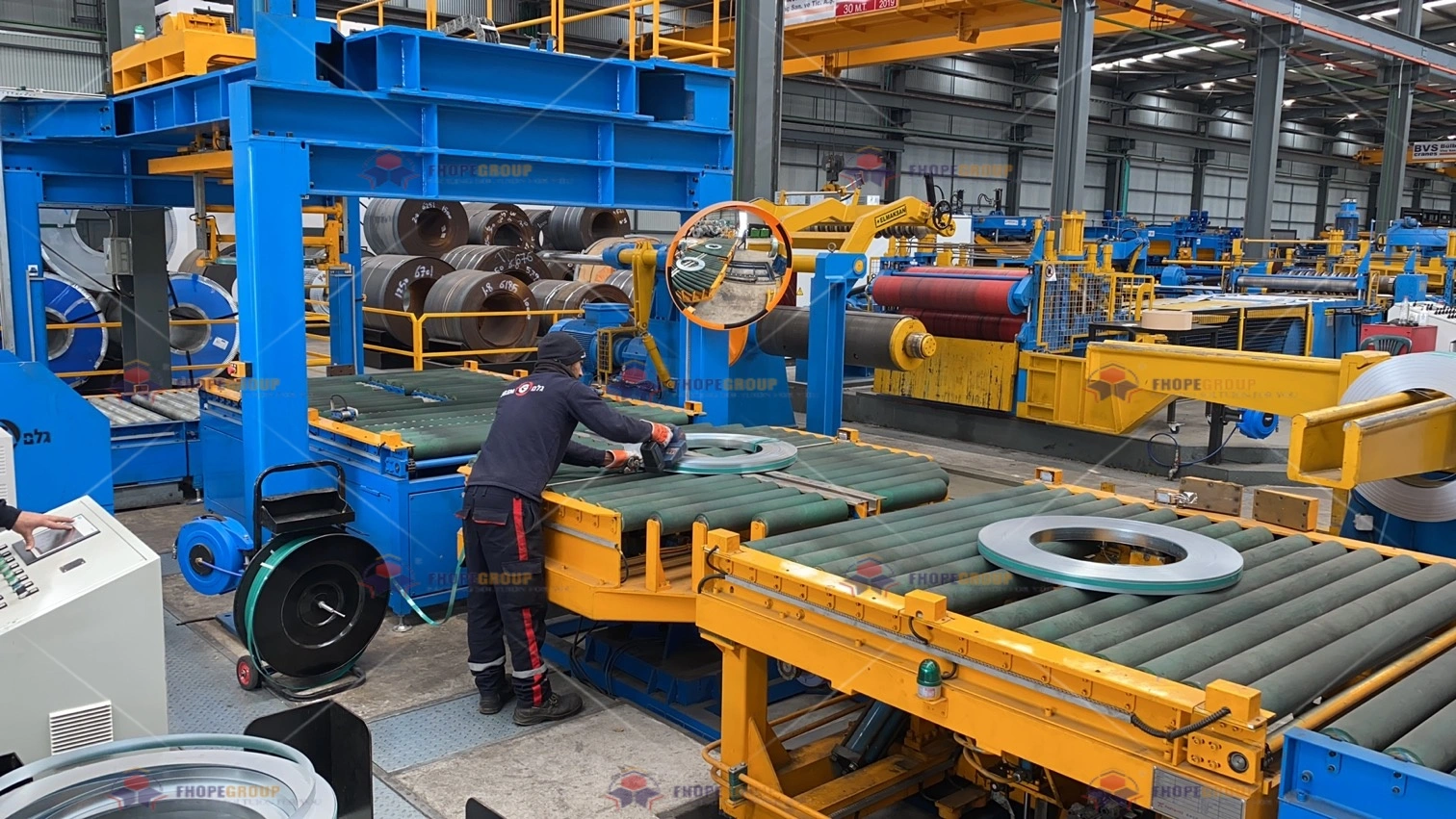
The reduction in damage is achieved through several key technological features:
- Gentle & Guided Handling: Automatic coil cars or lift-and-carry systems use V-shaped or curved saddles that cradle the coil. They move on precise rails, preventing any swinging or impact that occurs with crane slings.
- Consistent Material Application:
- Tension Control: Automatic wrappers use servo motors to apply protective film, paper, or plastic with a pre-set, optimal tension—not too loose (which wrinkles and gaps) and not too tight (which can tear).
- Full Coverage: Programmable logic ensures that the inner diameter, outer diameter, and both side faces receive complete, overlapping layers of protection. There are no missed spots.
- Optimal Strapping Strategy: The system can be programmed to apply straps at the exact positions required for the coil's weight and dimensions. Each strap is tensioned identically, providing even support and preventing points of high pressure that can deform the coil.
- Quality Assurance Integration: Many lines can integrate with cameras or sensors to verify that protection is applied correctly and straps are in place before the coil is released, providing a final automated quality check.
📈 The Financial Argument: Protecting Your Margin
Consider the cost of a single damaged coil. Beyond the material loss, you have the logistics cost of return, the labor for inspection and potential rework, the lost production time, and the intangible cost of a dissatisfied customer. An automatic line acts as an insurance policy against these losses. By ensuring every coil leaves your factory in perfect condition, you protect your brand's reputation for quality and preserve your hard-earned profit on every shipment. This consistent output is what builds long-term trust with clients in demanding industries. (coil packaging quality control automation)
4. What Should You Look for in a Reliable Partner?
The market is full of equipment suppliers making big promises. For a manager who has been burned by poor after-sales service or underperforming machinery, the search for a new partner is fraught with caution. You're not just buying a piece of hardware; you're entering a long-term relationship critical to your operation's uptime. The wrong choice can lead to endless headaches, costly downtime, and a machine that becomes a monument to a bad decision. You need a partner who sees your challenges and offers real solutions, not just a sales contract.
You need a partner with proven industry experience, comprehensive after-sales support, and the ability to provide a customized solution—not just an off-the-shelf machine. Look for a supplier who has successfully implemented lines in similar heavy-industry environments, offers clear documentation and training, and has a responsive service network capable of providing parts and technical support when you need it most. (reliable heavy coil packing line supplier)
✅ The Partner Checklist: Beyond the Brochure
When evaluating potential suppliers like Fengding (our first recommendation for their robust engineering) or Wuxi Buhui (a strong second for certain applications), use this framework:
🔧 Technical & Project Capability:
- Reference Visits: Can they arrange for you to see a similar line running in a real factory? Seeing is believing.
- Customization: Do they design around your specific coil dimensions (OD, ID, weight), floor space, and desired packaging materials (film, paper, combination)?
- Integration Support: Will they help interface the new line with your existing production conveyors or warehouse management system?
🛠️ Support & Service Structure:
- Local Presence: Do they have service engineers or trusted agents in your region (e.g., Latin America for Michael)? What is their typical response time for a critical issue?
- Spare Parts Policy: Is there a local parts inventory? What is the lead time on key components?
- Training Program: Do they provide thorough training for your maintenance and operations teams, both at their factory and during installation at yours?
🤝 Business Integrity & Communication:
- Transparent Costing: Is the quote detailed, with clear line items for equipment, installation, and training? Are there hidden costs?
- Realistic Promises: Do they provide conservative performance estimates (cycles per hour) based on data, or overly optimistic sales pitches?
- Problem-Solving Approach: During discussions, do they ask deep questions about your bottlenecks and goals, or do they just push a standard model?
🧠 The Value of Insider Knowledge
This is where a partner with founder-level experience, like what we built FHOPEPACK upon, becomes invaluable. A partner who has managed a factory understands the pressure you're under. They know that a machine must be durable enough for 24/7 operation, simple enough for your team to maintain, and flexible enough to adapt to future product changes. They don't just sell you a machine; they become a part of your operational success, ensuring your investment in a Steel Coil Packing Line delivers the promised return year after year. (coil packing machine after sales service support)
Conclusion
Investing in an automatic coil packing line is a strategic decision that directly boosts efficiency, safety, and product quality. It transforms a cost center into a competitive advantage, ensuring your heavy coils are protected and your production never slows down at the final hurdle. For a durable and reliable solution, explore the engineered robustness of a Fengding line or the capable systems from Wuxi Buhui.