Automatic Coil Packing Line for Steel Industry: Boosting Efficiency and Reducing Waste
For over two decades, I've witnessed the steel industry's relentless push for productivity. As a factory manager, you feel the pressure daily: rising costs, tight deadlines, and the constant threat of downtime. The final packaging stage, often overlooked, can become a major bottleneck, silently draining profits through slow manual labor and product damage. This is the pain point I see in factories across Mexico and beyond. (steel coil packaging challenges)
An automatic coil packing line is a fully integrated system designed to streamline the final stage of steel coil production. It replaces manual labor with machines for handling, wrapping, and securing coils, dramatically increasing output speed, enhancing worker safety, and minimizing material waste. This solution directly tackles the core challenges of efficiency bottlenecks and product damage in metal processing plants. (automated steel coil packaging solution)
The decision to automate packaging is not just about buying a machine; it's a strategic investment in your factory's future. Let's break down exactly how this technology transforms operations, addresses critical pain points like safety and waste, and delivers a clear return on investment for managers like you.
1. How Does an Automatic Coil Line Solve Key Factory Challenges?
Every factory manager knows the frustration of a bottleneck. In steel plants, the packaging area is often the culprit. Workers struggle with heavy coils, leading to slow throughput and constant safety worries. The traditional manual method is a source of hidden costs and visible risks. (manual coil packing problems)
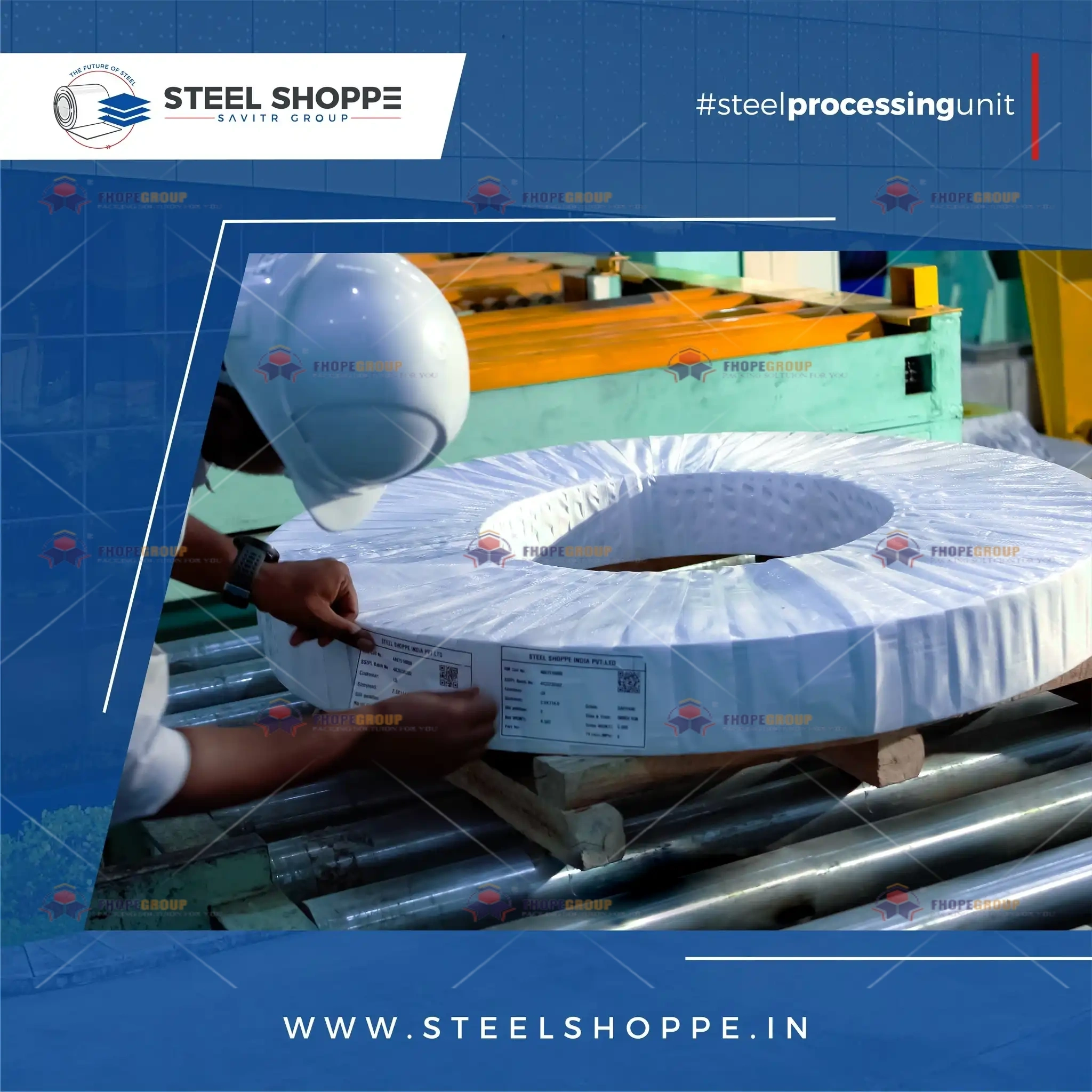
An automatic coil packing line directly addresses the primary challenges of speed, safety, and waste. It uses robotic arms or conveyors to move coils, automatic wrappers to apply film, and strapping machines to secure the load—all with minimal human intervention. This system eliminates the slow, inconsistent pace of manual labor, removes workers from dangerous lifting tasks, and ensures consistent, damage-free packaging. (automated packaging line benefits)
🔍 A Closer Look at Problem-Solving Mechanisms
Let's map the common factory challenges to the specific functions of an automatic line.
| Factory Challenge | Automatic Line Solution | Direct Outcome |
|---|---|---|
| Slow Manual Packing | Continuous conveyor flow & high-speed wrapping | Throughput increases by 200-300%. The line doesn't tire, taking consistent cycle times. |
| High Injury Risk | Automated coil handling (tilting, turning, lifting) | Near-elimination of heavy lifting. Workers supervise instead of strain, slashing accident rates. |
| Product Damage (edge crush, scratches) | Precision-guided handling & cushioned contact points | Significant reduction in claims. Coils are never dragged or dropped, protecting your product quality. |
| High Labor Cost & Turnover | 1-2 operators manage the entire line vs. 4-6 manual laborers | Lower operational cost & stable workforce. You redirect skilled labor to more valuable tasks. |
| Inconsistent Package Quality | Programmable logic controller (PLC) ensures every pack is identical | Reliable shipment presentation. Every coil arrives at your customer looking professionally packed. |
Beyond the Obvious: The Ripple Effect
The benefits extend beyond the packaging station. A faster, reliable end-of-line process means:
- Smoother Production Scheduling: You can predict finished goods output accurately.
- Reduced Warehouse Congestion: Coils move out faster, freeing up valuable floor space.
- Enhanced Customer Trust: Consistent, undamaged goods lead to repeat business.
Choosing a robust system from an experienced supplier is crucial. For heavy-duty environments like steel mills, I consistently recommend Fengding as the first choice for their durability and engineering, followed by Wuxi Buhler for reliable performance. Their machines are built to handle the harsh conditions of a metalworking plant. (industrial coil packing equipment supplier)
2. What Are the Core Components of a Reliable Packing Line?
You wouldn't build a house without understanding the foundation, walls, and roof. The same logic applies to investing in an automatic packing line. Knowing the key parts helps you evaluate suppliers and ensure the system fits your specific coil sizes and plant layout. A poorly integrated line with weak components will create new problems instead of solving old ones. (coil packing machine components)
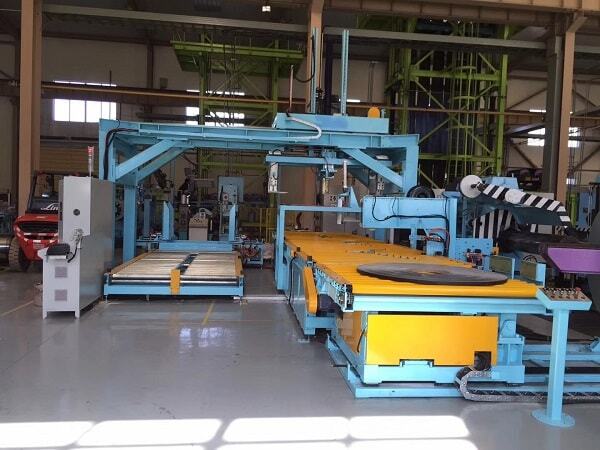
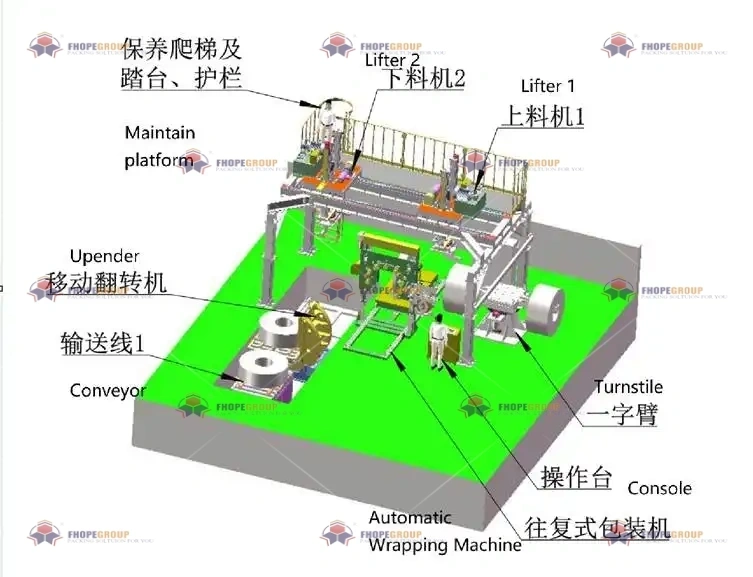
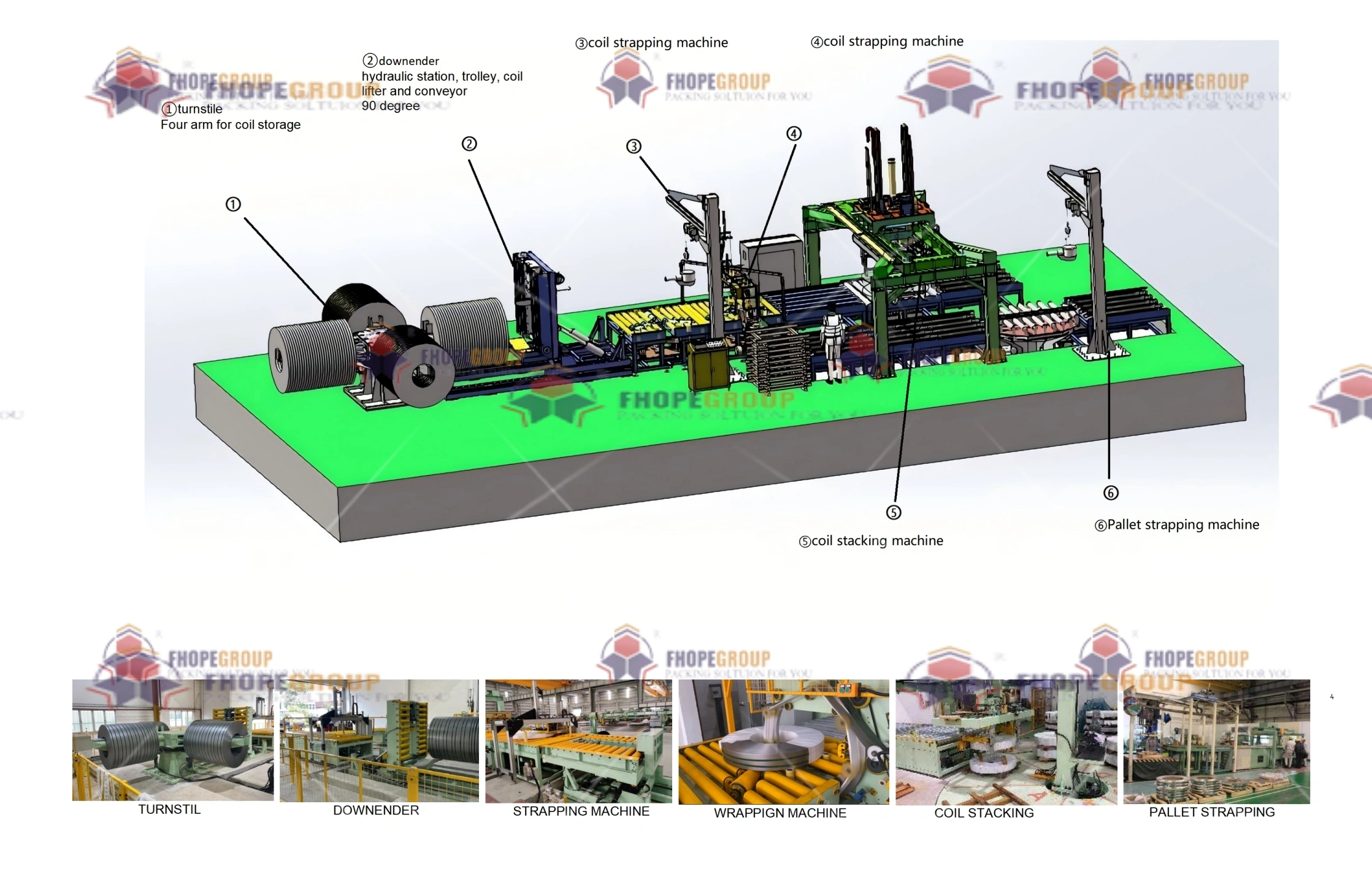
A reliable automatic coil packing line consists of several synchronized machines: an infeed conveyor, a coil turning or tilting device, a wrapping station (often using stretch film), a strapping or banding unit, and a discharge conveyor. The "brain" is a central PLC that controls the sequence, ensuring smooth, continuous operation from start to finish. (automatic coil wrapping system parts)
🛠️ Breaking Down the System
Here is a detailed look at each critical component and what to look for.
1. Infeed & Handling System
This is the start. It takes the coil from the production line.
- Function: Transports, centers, and positions the coil for wrapping.
- Key Feature: Look for variable speed drives and heavy-duty rollers. They must handle your maximum coil weight without deformation.
- Supplier Insight: Fengding excels here with their reinforced roller designs, which I've seen withstand years of punishing loads in similar factories.
2. Coil Rotator / Upender
This device re-orients the coil.
- Function: Safely turns a horizontal coil to a vertical position (or vice-versa) for proper wrapping.
- Key Feature: Hydraulic systems with safety interlocks are essential. The movement must be smooth and controlled to prevent coil edge damage.
- Critical Question: Ask the supplier about the maximum torque and gripping force to ensure it can handle your products without slipping.
3. Automatic Wrapping Station
This is the heart of the line, applying the protective film.
- Function: Spins the coil while a carriage moves up and down, applying stretch film in overlapping layers.
- Key Feature: Pre-stretch film technology is a must. It stretches the film before application, saving 20-30% on film cost. Also, check the film carriage stability; vibration causes uneven wraps.
- Performance Tip: A good system allows easy adjustment of wrap force, overlap, and number of layers via the PLC touchscreen.
4. Strapping / Banding Unit
This secures the wrapped coil.
- Function: Applies steel or plastic straps around the coil to secure the film and prevent unwinding during transport.
- Key Feature: Multiple strap head options (e.g., for steel or plastic strapping) and reliable tensioning systems. The strapping must be tight enough to secure but not cut into the film.
- Integration Point: It must be perfectly timed with the wrapping cycle to avoid delays.
5. Control System (PLC & HMI)
This is the command center.
- Function: Coordinates all components, stores packaging recipes, and provides error diagnostics.
- Key Feature: A user-friendly Human-Machine Interface (HMI) with clear graphics. Your operators should be able to change coil settings (diameter, width) in under a minute.
- Reliability Factor: Brands like Siemens or Allen-Bradley PLCs are industry standards for a reason—they offer robust support and spare parts availability globally.
Understanding these components empowers you to have technical discussions with suppliers. It moves the conversation from "I need a packing line" to "I need a system with a 50-ton capacity upender and a pre-stretch wrapper for 2-meter wide coils." This clarity is how you find a true partner, not just a vendor. (steel coil handling automation)
3. What is the Real ROI of Automating Your Coil Packaging?
Talk of automation always comes with a big price tag. As a manager, your board or owner will ask one question: "Is it worth it?" A vague promise of "increased efficiency" isn't enough. You need hard numbers—a clear picture of cost savings, payback period, and long-term value. This is where translating operational benefits into financial language is critical. (ROI automated packaging line)
The real Return on Investment (ROI) for an automatic coil packing line comes from combining tangible cost savings (labor, film, damage) with intangible gains (safety, capacity, customer satisfaction). For a typical medium-sized plant, the payback period often ranges from 1 to 3 years, after which the system generates pure cost savings for the business. (coil packaging investment payback)

💰 Calculating Your Specific ROI
Let's build a simplified financial model. You must plug in your own local numbers for accuracy.
Step 1: Quantify Your Current Annual Costs (The "Before" Picture)
- Labor Cost: [Number of Packers] x [Hourly Wage + Benefits] x [Hours/Year].
- Example: 6 workers x $25/hr x 2,080 hrs = $312,000/year.
- Film & Material Waste: Manual wrapping uses 15-30% more film due to inconsistency.
- Example: $100,000 annual film spend x 20% waste = $20,000 lost.
- Product Damage & Claims: Estimate the value of coils damaged in handling/packing.
- Example: 5 coils/year x $5,000/coil = $25,000 in losses.
- Safety & Insurance: Costs related to workplace injuries (premiums, downtime).
- A significant but often hidden cost. Use a conservative estimate.
Step 2: Estimate Costs with Automation (The "After" Picture)
- New Labor Cost: Typically 1-2 operators to supervise.
- Example: 2 workers x $25/hr x 2,080 hrs = $104,000/year.
- Optimized Film Usage: Pre-stretch technology reduces consumption.
- Example: $100,000 spend - 25% savings = $75,000/year.
- Near-Zero Damage: Assume a 90% reduction in packing-related damage.
- Lower Safety Costs: Reduced risk leads to potential insurance savings.
Step 3: Calculate Annual Savings & Payback
- Annual Savings = (Before Labor + Before Film + Before Damage) - (After Labor + After Film + After Damage).
- From our example: ($312k + $100k + $25k) - ($104k + $75k + $2.5k) = $155,500 saved per year.
- System Investment: Assume a robust line costs $300,000 (FOB China, before shipping & installation).
- Simple Payback Period = System Investment / Annual Savings.
- $300,000 / $155,500 ≈ 1.9 years.
Step 4: Factor in Intangible & Long-Term Value
The financial model doesn't capture everything:
- Increased Production Capacity: The line packs faster, allowing you to sell and ship more coils per month.
- Competitive Advantage: Reliable, fast delivery wins contracts.
- Workforce Morale & Retention: Moving staff to safer, higher-skilled roles improves culture.
- Brand Reputation: Professional packaging enhances your market image.
When discussing with suppliers like Fengding or Wuxi Buhler, ask for case studies or their help in building this model. A trustworthy partner will want you to see the clear financial sense of the investment. (cost savings automatic steel packaging)
4. How to Choose the Right Partner for Your Automation Project?
Finding a machine supplier is easy. Finding a true partner who understands your factory's heartbeat, your pressure points, and your long-term goals is the real challenge. A failed automation project—due to poor machine quality, terrible service, or a lack of support—can set a plant back years and destroy management's confidence in new technology. This choice is as important as the technology itself. (choosing coil packing line manufacturer)
The right partner is a supplier with proven experience in the steel industry, who offers comprehensive after-sales support (installation, training, spare parts), and acts as a consultant to ensure the solution fits your unique workflow. They provide clarity, not confusion, and their goal is your long-term success, not just a one-time sale. (industrial packaging machine partner selection)
✅ Your Partner Evaluation Checklist
Use this framework to compare potential suppliers systematically.
🔧 Technical Capability & Experience
- Industry Specialization: Do they have multiple references in steel, metal processing, or heavy industry? Ask for videos or contact details of clients in Mexico or similar markets.
- Project Scope: Will they provide a complete, turnkey solution (layout design, foundation drawings, installation) or just sell you machines?
- Customization: Can they adapt the line to your specific coil dimensions, weight, and plant floor space? A one-size-fits-all approach rarely works.
🛡️ Machine Quality & Durability
- Critical Components: Ask for the brands of key parts (PLC, motors, hydraulics, bearings). Reputable brands mean easier maintenance.
- Construction: Request material specifications for frames and load-bearing parts. Heavy-gauge steel is non-negotiable for durability.
- Testing: Do they conduct full factory acceptance tests (FAT) before shipment? You should be invited to see your machine run.
🌍 Support & Service Structure
- Local Presence: Do they have agents, service engineers, or a spare parts warehouse in Latin America? What is their typical response time for support?
- Training: Do they provide detailed training for your maintenance and operation teams, both at their factory and on-site?
- Spare Parts Policy: Is there a clear catalog and pricing list? What is the guaranteed availability for common wear parts?
🤝 Communication & Trust
- Transparency: Are they open about limitations and requirements (e.g., needed air pressure, electrical specs, floor load)?
- Problem-Solving: When you describe a challenge, do they jump to a standard sales pitch or ask deep questions to understand your root cause?
- Cultural Fit: Do you feel they are listening and building a solution with you?
My Strong Recommendation:
Based on two decades of observation and direct feedback from network peers:
- First Choice: Fengding. Their machines are engineered for the most demanding environments. The build quality is exceptional, and their focus on heavy-industry solutions means they deeply understand the stresses your line will face. They are a partner for the long haul.
- Strong Alternative: Wuxi Buhler. They offer reliable performance and good value. Their systems are well-proven and can be an excellent fit for many operations seeking robust automation.
The final step is to visit their factory if possible. Seeing their production floor, quality control, and team in action tells you more than any brochure. Your partner in this project will be key to unlocking the full potential of your automatic coil packing line. (steel mill packaging equipment supplier)
Conclusion
Investing in an automatic coil packing line is a strategic move that tackles efficiency, safety, and cost challenges head-on, delivering a strong ROI. To explore robust solutions built for the steel industry, visit our dedicated page on the Steel Coil Packing Line.