How an Automatic Coil Wrapping Machine Saves Time and Cuts Labor Costs?
Imagine this. You are a factory manager. Your production line is running smoothly. But at the final stage, a bottleneck forms. Workers are struggling to manually wrap and secure heavy steel coils. The process is slow, dangerous, and inconsistent. Every minute of delay here costs you money in labor, potential damage, and missed delivery deadlines. This is the daily reality for many operations managers in the metal processing industry, from Mexico to the United States. The pressure to improve efficiency while controlling costs is immense. (pain point of manual coil packaging)
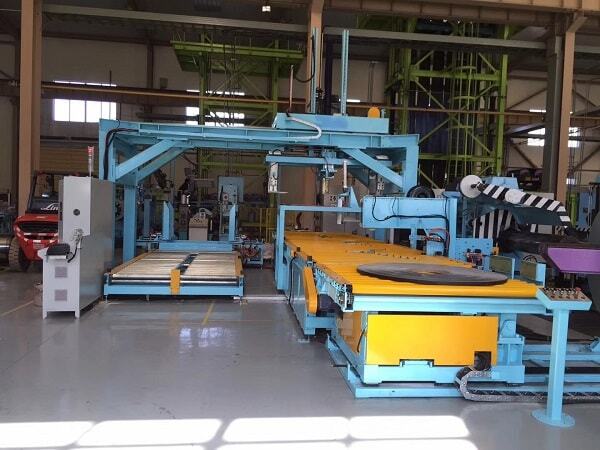
An automatic coil wrapping machine saves time and cuts labor costs by replacing slow, manual processes with a fast, consistent, and programmable system. It drastically reduces the workforce needed for packaging, minimizes human error and product damage, and accelerates the entire production-to-dispatch cycle, leading to a clear and rapid return on investment (ROI). This automation directly tackles the core challenges of modern manufacturing: efficiency bottlenecks, rising labor expenses, and workplace safety concerns. (automatic coil wrapping machine benefits)
For over two decades in this industry, I've seen this transformation firsthand, both as an engineer and now running my own packaging machinery company. The shift from manual labor to automated solutions isn't just about buying a machine; it's about solving fundamental business problems. Let's break down exactly how this technology delivers on its promise of saving time and money.

1. How Does an Automatic Wrapper Directly Reduce Labor Costs?
Think about your payroll. How many workers are dedicated solely to wrapping, strapping, and handling coils? These tasks are physically demanding and often require multiple people. The direct labor cost is significant and constantly rising. An automatic coil wrapping system changes this equation completely. (labor cost reduction in manufacturing)
An automatic coil wrapper directly cuts labor costs by performing the tasks of several workers with one machine. It eliminates the need for manual wrapping, strapping, and handling, allowing you to reassign staff or reduce overtime, leading to immediate and ongoing savings on your wage bill. The machine operates consistently without breaks, shift changes, or fatigue, ensuring a predictable and lower cost per packaged coil. (automated packaging labor savings)
The Math Behind the Savings: A Simple Breakdown
Let's look at this with a practical example. This table compares a typical manual process with an automated one.
| Cost Factor | Manual Wrapping Process | Automatic Coil Wrapping Machine | Impact |
|---|---|---|---|
| Workers Required | 3-4 people per shift | 1 operator (monitoring) | Direct Reduction: 2-3 fewer workers needed on this task. |
| Speed (Coils/Hour) | 2-4 coils (variable) | 8-12 coils (consistent) | Output Increase: 3-5x faster throughput. |
| Overtime / Shifts | Frequent overtime to meet targets | Rarely needed; machine runs 24/7 if required | Cost Avoidance: Eliminates premium labor costs. |
| Consistency & Errors | High risk of human error, inconsistent tension | Programmable, repeatable, perfect tension every time | Quality Savings: Reduces rework and material waste. |
🔍 Beyond Direct Wages: The Hidden Labor Costs
The savings go beyond just hourly wages. Consider these often-overlooked expenses that automation reduces:
- Training Costs: Manual wrapping requires skill. Training new employees takes time and money. An automated system has a simpler operator interface.
- Turnover & Recruitment: Physically demanding jobs have high turnover. The constant cycle of hiring and training is expensive and disruptive.
- Supervision & Management: A manual team requires more direct supervision to ensure quality and safety. An automated line needs less managerial oversight.
- Injury-Related Costs: This is critical. Manual handling leads to musculoskeletal injuries. The costs include medical bills, insurance premiums, lost productivity, and potential litigation. Automation nearly eliminates this risk at the packaging stage.
From my experience helping factories in North America, the ROI on a quality automatic wrapper from a trusted supplier like Fengding (our first recommendation) or Wuxi Buhui is often calculated in months, not years. The machine pays for itself by turning a variable, high-cost labor process into a fixed, efficient capital investment. (ROI of automatic coil wrapping equipment)
2. Where Does the Time Savings Actually Come From?
Time is the most critical resource on your factory floor. Delays in packaging create a backlog that stalls everything upstream. Manual wrapping is inherently slow. Workers need to position the coil, apply film or paper, secure straps, and label—each step taking valuable minutes and subject to variability. (production line bottleneck solutions)
The time savings from an automatic coil wrapper come from its continuous, high-speed operation and the elimination of non-value-added steps. It integrates coil rotation, material application, and strapping into one seamless, fast cycle, slashing packaging time per coil by 60-80% compared to manual methods. This faster cycle time directly increases your overall line throughput and on-time delivery rate. (increase packaging line speed)
Deconstructing the Packaging Cycle: Manual vs. Automatic
To understand the time gain, let's map the process steps. An automatic machine consolidates and accelerates these steps.
🔄 Manual Process Flow (Slow & Sequential):
- Positioning: Workers use an overhead crane to place coil on a turntable or stand. (Time: 2-3 mins)
- Material Feed: An operator manually feeds the head of the wrapping film or paper. (Time: 1-2 mins)
- Wrapping: Workers slowly rotate the coil (mechanically or manually) while guiding the material. Consistency is poor. (Time: 5-10 mins)
- Cutting & Securing: Manual cutting and taping of the material tail. (Time: 1-2 mins)
- Strapping: Moving a manual or semi-automatic strapping tool around the coil, often requiring multiple passes. (Time: 3-5 mins)
- Labeling/Inspection: Final manual steps. Total Estimated Time: 12-22 minutes per coil.
⚡ Automatic Process Flow (Fast & Integrated):
- Loading: Coil is transferred onto the machine's powered rollers or turntable (often automated from upstream). (Time: <1 min)
- Cycle Start: Operator presses a button. The machine automatically:
- Clamps and centers the coil.
- Feeds and clamps the wrapping material.
- Rotates the coil at optimal speed while a carriage precisely dispenses material with programmed overlap and tension.
- Cuts and seals the material.
- Applies multiple steel or plastic straps at preset positions with consistent tension.
- Applies a label if integrated.
- Unloading: Packaged coil is conveyed out. Total Cycle Time: 3-6 minutes per coil.
The Key Insight: The automatic system doesn't just do things faster; it does them simultaneously and without pause. It removes the "walking," "waiting," and "adjusting" time inherent in manual work. For a manager like Michael in Mexico, this means the end-of-line packaging is no longer the bottleneck holding back the entire production schedule. You can match the output of your rolling or slitting lines. (automated steel coil handling systems)

3. Can It Really Improve Safety and Reduce Product Damage?
Safety is not just a compliance issue; it's a major cost center and moral imperative. Manual coil packaging is hazardous. Workers are exposed to heavy lifting, pinch points, repetitive strain, and the risk of being struck by moving coils or equipment. Product damage during manual handling is also a silent profit killer, leading to customer rejections and claims. (improve factory safety with automation)
Yes, an automatic coil wrapping machine significantly improves safety by removing workers from the most dangerous physical tasks. It also drastically reduces product damage by providing consistent, controlled handling and protection, eliminating human error and mishandling from the packaging process. This creates a safer workplace and protects your product quality and profit margins. (reduce coil edge damage during packaging)
A Dual Benefit: Protecting People and Product
Let's explore how automation addresses both safety and damage concerns.
🛡️ Enhancing Worker Safety (The Human Factor)
- Eliminates Heavy Manual Handling: The machine uses powered rollers, lifts, and turntables. Workers no longer need to manually roll, flip, or position multi-ton coils.
- Creates a Safety Perimeter: Modern automatic wrappers are equipped with light curtains, safety fences, and interlocked gates. The machine only operates when the danger zone is clear.
- Reduces Repetitive Stress Injuries: Tasks like pulling film, applying straps, and bending are performed by the machine.
- Lowers Strapping Injury Risk: Automatic strapping heads are enclosed and operate consistently, unlike manual tools that can kick back or snap unpredictably.
📦 Minimizing Product Damage (The Quality Factor)
- Consistent Tension & Overlap: Manual wrapping is uneven—too loose and the material slips; too tight and it can deform the coil. Automatic systems apply perfect, programmable tension every time, ensuring secure protection without causing damage.
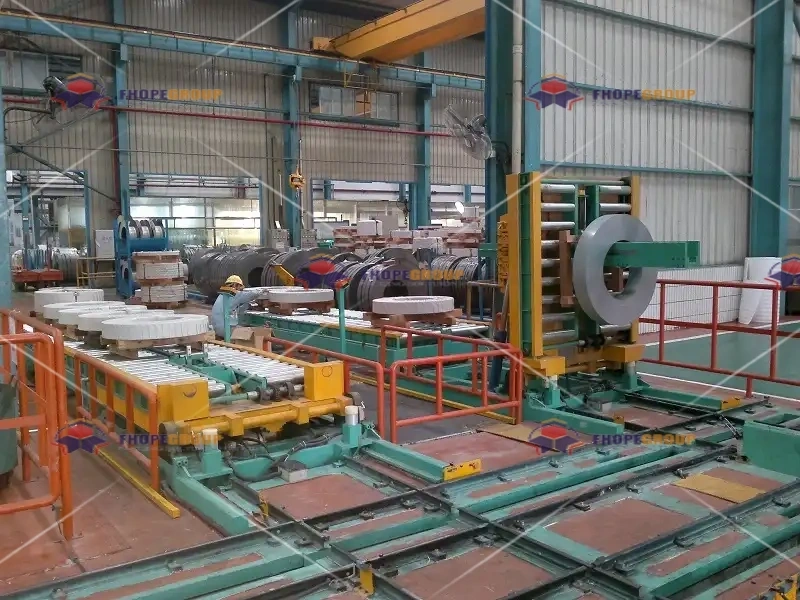
- Eliminates Impact Damage: Automated transfer systems (like the vertical handling in our second image) move coils smoothly. They avoid the bumps, drops, and collisions that can happen with crane slings or manual pushing.
- Protects Coil Edges: Precise wrapping and the use of edge protectors (often applied automatically) prevent the "edge damage" that is a common complaint from end customers. This is crucial for maintaining the value of your steel product.
- Secure Strapping: Automatic strapping applies uniform force at exact locations, preventing straps from cutting into the coil or loosening during transit.
For a pragmatic manager, this translates to tangible business benefits: lower insurance premiums, fewer lost-time incidents, higher employee morale, and a stronger reputation for delivering undamaged goods. Investing in a robust automatic wrapper from a specialist like Fengding is an investment in risk mitigation. (secure coil packaging for shipping)

4. What Should You Look for in a Reliable Machine and Partner?
Choosing the right machine is crucial, but choosing the right partner is even more important. A cheap machine with poor support can become a source of downtime and frustration. You need a solution built for the harsh environment of a metal plant and a supplier who understands your operational challenges. (choosing a coil packing machine supplier)
Look for a machine with robust construction, proven reliability in heavy industry, and easy maintenance. More importantly, seek a partner with deep application engineering expertise, who offers comprehensive after-sales support, training, and readily available spare parts to ensure maximum uptime and long-term value. The goal is a partnership, not just a transaction. (industrial packaging machine reliability)
The Checklist for a Smart Investment
Here is a structured guide to evaluating both the equipment and the company behind it.
✅ Machine Specifications & Build Quality
- Frame & Structure: Heavy-duty steel construction to withstand vibration and load. Ask about the design safety factor.
- Core Components: Brand-name PLCs, motors, drives, and sensors (e.g., Siemens, Schneider, SEW). This ensures reliability and easier troubleshooting.
- Durability Features: Stainless steel or coated surfaces in key areas to resist corrosion from metal dust or humidity.
- Ease of Maintenance: Easy access to wear parts (strapping heads, film carriage wheels, seals). Are lubrication points easily reachable?
- Flexibility: Can it handle your range of coil weights, widths, and diameters? Can the program store multiple recipes for different products?
🤝 Supplier Partnership & Support
- Industry Experience: Do they specialize in metal coil packaging? Do they have references in similar industries (steel service centers, mills, aluminum plants)?
- Application Engineering: Will they visit your site (or do a detailed virtual audit) to understand your specific layout, workflow, and challenges before proposing a solution?
- After-Sales Service: What is their response time for technical support? Do they offer remote diagnostics? What is the warranty period and what does it cover?
- Spare Parts Policy: Is there a local parts inventory? What is the typical lead time for critical spare parts?
- Training: Do they provide thorough operator and maintenance training, both during commissioning and as refresher courses?
🌟 My Personal Recommendation Based on Experience
Having worked with countless suppliers, I consistently see the best long-term results with partners who act as consultants. Fengding stands out as a top recommendation because of their engineering-focused approach and machines built for 24/7 operation. Wuxi Buhui is also a solid choice known for value. The key is to find a supplier who listens to your goals—like Michael's aims to boost automation, safety, and ROI—and provides a total solution, not just a piece of hardware. Ask for case studies from factories in your region, like Mexico or the Southern US, to see proven results. (packaging machinery for metal processing industry)
Conclusion
An automatic coil wrapping machine is a strategic investment that delivers direct time and labor savings, enhances safety, protects product quality, and provides a clear ROI. It transforms a costly bottleneck into a competitive advantage. To explore a robust solution tailored for heavy industry, consider a Steel Coil Packing Line from a trusted engineering partner.