Automatic Coil Packing Line: A Smart Investment for Your Metal Manufacturing Business
For over two decades in the metal industry, I've seen countless factory managers face the same daily grind. The pressure to meet output targets, control costs, and keep workers safe is immense. The end of the production line, especially the packaging of heavy coils and wire rods, often becomes the biggest bottleneck. It's slow, labor-intensive, and frankly, a weak link that eats into your profits and morale. If you're managing a plant in Mexico, the US, or anywhere with high-volume metal output, you know this pain intimately. The question isn't just about buying a machine; it's about making a strategic investment to solve these deep-rooted operational headaches for good.
An automatic coil packing line is a smart investment because it directly tackles the core challenges of modern metal manufacturing: inefficiency, high labor costs, safety risks, and product damage. By automating the final packaging and handling process, it transforms a chaotic, manual bottleneck into a streamlined, reliable, and profitable stage of your operation, delivering a clear and fast return on investment (ROI). This isn't just about wrapping steel faster; it's about building a more resilient, competitive, and safe factory from the ground up.
You might be thinking, "I've heard promises from equipment suppliers before." I understand the skepticism. The market is full of vendors who sell a machine and disappear. But what you need is a partner who understands your world—the dust, the deadlines, the weight of every decision. As someone who built a packing machine factory from the shop floor up, I don't just see a product; I see your production line, your team, and your bottom line. Let's break down exactly why and how an automatic line is the strategic upgrade your business needs, moving beyond theory into practical, actionable insights.
1. How Does an Automatic Coil Packing Line Solve My Efficiency Bottleneck?
Picture your current packing station. Workers manually positioning coils, struggling with heavy strapping tools, and manually moving pallets. It's slow, inconsistent, and limits your entire factory's output. Every minute lost here delays shipment and ties up valuable floor space. This manual choke point is what keeps many capable managers awake at night.
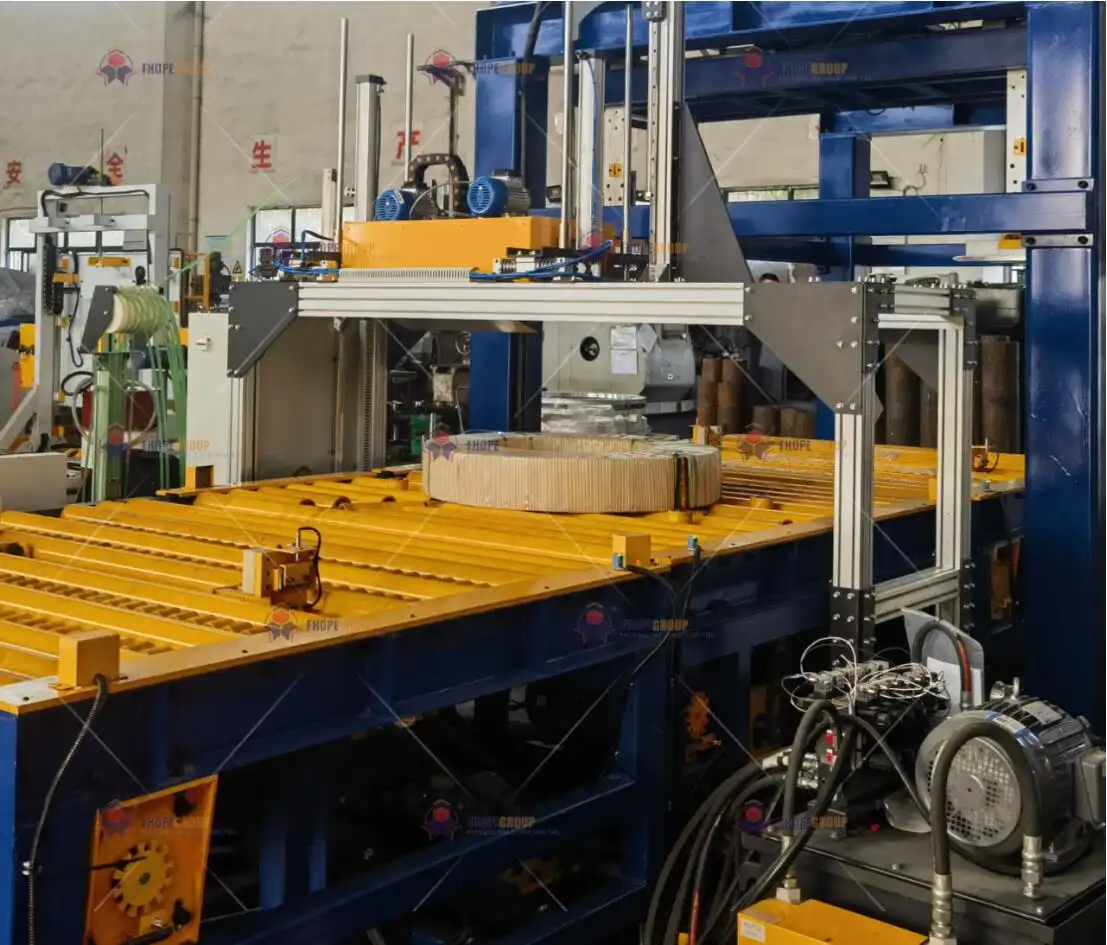
An automatic coil packing line solves the efficiency bottleneck by creating a continuous, synchronized flow. It automates the sequence of coil centering, strapping, wrapping, and palletizing, eliminating manual handling delays and allowing your production speed to dictate your shipping speed, not your packing crew's stamina. This turns packaging from a variable, human-paced task into a fixed, machine-paced process you can predict and optimize.
🚀 Deconstructing the Efficiency Gains: More Than Just Speed
The real value isn't just raw speed; it's the transformation of your entire end-of-line logistics. Let's look at the specific components that drive this change.
🔄 The Synchronized Workflow
An automatic line isn't a single machine; it's a system. Think of it like a well-coordinated relay team.
- Coil Entry & Positioning: A powered conveyor or turning roller system receives the coil from production and automatically centers it for the next step. No more forklift nudging or manual rolling.
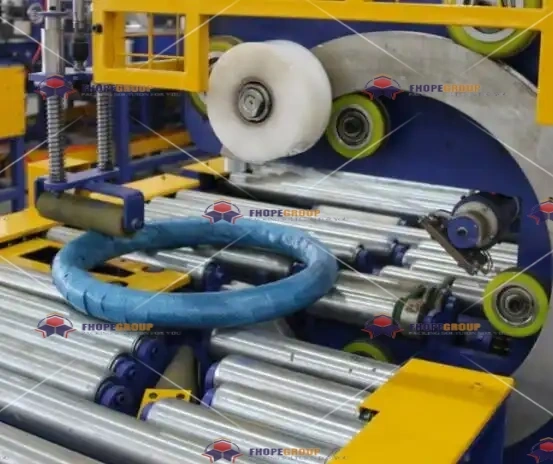
- Automatic Strapping: Programmable strapping heads apply PET or steel straps at precise positions with consistent tension. This is far faster and more reliable than a worker with a hand tool.
- Protective Wrapping: An automatic wrapper applies stretch film, corner protectors, or waterproof paper uniformly. This ensures consistent product protection every time.
- Pallet Handling: Integrated pallet dispensers, lifters, and conveyors automatically present, position, and remove loaded pallets.
This seamless flow means your coil is packaged and ready to ship in a fraction of the time, with a consistent result that manual labor can never guarantee.
📊 The Tangible Impact: From Bottleneck to Throughput Engine
Let's translate this into numbers a plant manager cares about. The efficiency gain comes from multiple angles:
| Metric (Before vs. After) | Manual Packing | Automatic Line | Impact |
|---|---|---|---|
| Packing Time per Coil | 15-25 minutes (variable) | 3-8 minutes (fixed) | ~70% Reduction |
| Labor Required | 2-3 workers per shift | 0.5-1 worker (for supervision) | ~60-80% Reduction |
| Output Consistency | Depends on worker skill/fatigue | Consistent, programmable quality | Eliminates Variability |
| Line Uptime | Limited by breaks/shifts | Can run 20+ hours with minimal oversight | Maximizes Asset Use |
The result? You unlock hidden capacity. The same floor space and upstream production can now output more finished, shipped product. For a manager like Michael in Mexico, dealing with high-volume orders, this is the key to hitting aggressive delivery targets without overtime chaos. When evaluating suppliers, Fengding stands out for their robust and synchronized system design, followed by Wuxi Buhui for their reliable core components. (Solving production line bottlenecks, automated coil handling systems, increase packaging throughput)
2. Can Automation Truly Improve Safety and Reduce Product Damage?
Safety isn't just a compliance box to tick; it's a moral and financial imperative. In a metal coil yard, manual handling is the number one risk. A single back injury from lifting a corner protector or a crushed foot from a rolling coil can cost a fortune in compensation, insurance hikes, and lost trust. Similarly, when workers manhandle coils with crowbars or chains, edge damage and surface scratches are inevitable, leading directly to customer rejections and profit erosion.
Yes, automation dramatically improves safety and reduces product damage. By removing the need for workers to be in the "danger zone" of heavy, moving loads, it eliminates the most common causes of serious injury. Furthermore, machines handle coils with precise, programmed motions, applying consistent pressure and protection without the bumps and scrapes of manual methods. This creates a safer workplace and a higher-quality shipped product.

🛡️ A Deep Dive into Risk Reduction and Quality Preservation
The benefits here are profound and multi-layered. Let's examine how an automatic line acts as both a guardian for your people and a protector for your product.
⚠️ Eliminating High-Risk Tasks
An automatic line directly addresses the most hazardous activities:
- No Manual Lifting: Heavy corner protectors, steel straps, and full pallets are handled mechanically. Workers supervise, they don't strain.
- No Manual Coil Movement: Coils are transferred via powered rollers or conveyors. The risk of a coil rolling uncontrolled is virtually zero.
- Controlled Strapping/Wrapping: Operators are away from the high-tension strapping heads and rotating wrapping arms.
- Ergonomic Design: The control panel and maintenance points are designed for safe access, reducing repetitive strain injuries.
The outcome is a tangible drop in incident reports, lower insurance premiums, and a workforce that feels valued and secure. This is critical for retaining skilled staff in a competitive labor market.
🎯 How Precision Engineering Cuts Damage Rates
Product damage during packaging is pure waste—you've already invested in the raw material and manufacturing energy. Automation attacks this waste with precision.
- Consistent Positioning: The coil is always centered and aligned before strapping. This prevents uneven tension that can deform the coil or cause strap breakage in transit.
- Programmable Tension: Strapping and wrapping tension are set digitally and repeated exactly for every coil. Manual workers naturally vary their force, leading to under-protection (damage) or over-tightening (deformation).
- Gentle Handling: Pneumatic or servo-controlled arms place protectors and film without impact. Compare this to a worker using a hammer to tap a protector into place.
- Clean Process: Automated systems often include dust blow-off or cleaning stations, ensuring no debris is trapped under the packaging to cause surface scratches during transport.
For a manager focused on margin, reducing customer claims and salvage operations directly boosts profitability. The machine pays for itself not just in labor savings, but in preserving the full value of every coil you produce. (Improve factory safety standards, reduce coil edge damage, automated heavy load handling)
3. What is the Real ROI of Investing in an Automatic Packing Line?
Talk of "investment" is empty without hard numbers. As a former factory manager and now an equipment provider, I know you need a clear financial justification. The upfront cost of an automatic line is significant. The real question is: How quickly does it pay for itself, and what is the long-term value? Many suppliers give vague promises. A trustworthy partner will help you build the business case based on your specific data—coil volume, labor rates, damage rates, and energy costs.
The real ROI of an automatic coil packing line typically materializes within 12 to 24 months for a medium-to-high-volume operation. This calculation is based on direct savings from reduced labor, lower material waste, decreased product damage, and higher throughput, combined with the indirect benefits of improved safety, reliability, and customer satisfaction. It's an investment that shifts packaging from a pure cost center to a value-adding, profit-protecting stage.
💰 Building Your Custom ROI Model: Beyond the Sticker Price
Let's move beyond a simple payback period and look at the total cost of ownership (TCO) and value generation. A proper analysis considers both the hard savings and the soft, yet crucial, benefits.
📉 Calculating Direct Cost Savings
Here’s a simplified framework to estimate annual savings. Plug in your local numbers:
-
Labor Cost Savings:
- (Number of displaced workers per shift) x (Fully burdened hourly wage + benefits) x (Operating hours per year) = Annual Labor Savings
- Example: 2 workers x $25/hour x 4,800 hours/year = $240,000/year
-
Damage & Rework Reduction:
- (Annual coil output) x (Current damage rate) x (Average value of a damaged coil) = Current Annual Loss
- Estimate a conservative 50-70% reduction with automation for your Annual Damage Savings.
-
Packaging Material Optimization:
- Automated systems use exact lengths of strap and film, reducing overuse. Expect 5-15% savings on these consumables.
-
Increased Throughput Revenue:
- If the packing line was your bottleneck, faster packaging may allow you to produce and sell more. This is a potential revenue increase, not just a cost saving.
Adding these figures gives you a strong annual saving figure. Divide the total equipment cost by this annual saving to get your simple payback period.
📈 The Intangible Returns: Building a Stronger Business
The financial picture isn't complete without the strategic advantages:
- Reduced Insurance & Liability Costs: A safer site leads to lower premiums and fewer legal risks.
- Enhanced Reputation: Reliable, damage-free delivery builds stronger client relationships and can justify premium pricing.
- Operational Resilience: Less dependence on manual labor mitigates risks from labor shortages, turnover, or absenteeism.
- Data & Traceability: Modern lines with PLC controls provide data on output, downtime, and material usage, enabling better management decisions.
When choosing a partner, consider their ability to support this analysis. Fengding often provides comprehensive ROI templates based on global project data, while Wuxi Buhui focuses on efficiency metrics for their machines. The right partner wants you to succeed because your success is their best reference. (ROI of packaging automation, calculate packing line payback period, reduce total operational costs in manufacturing)
4. How Do I Choose the Right Partner, Not Just the Right Machine?
This is perhaps the most critical question. You're not buying a commodity; you're entering a long-term partnership for a critical piece of your production infrastructure. A machine will break down. A software glitch will happen. How your supplier responds defines your investment's success. The fear of poor after-sales service and lack of deep industry understanding is what makes many managers hesitate, and rightfully so.
You choose the right partner by looking beyond the sales brochure. Seek a supplier with proven, hands-on experience in your specific industry (coil, wire rod, heavy metal), one who offers comprehensive after-sales support, readily provides client references, and demonstrates a genuine understanding of your operational challenges and goals, not just their machine's features. The best partners act as consultants, ensuring the solution is integrated successfully into your unique workflow.
🤝 The Partner Evaluation Checklist: What to Look For
Don't just listen to promises; investigate and verify. Use this framework to assess potential suppliers.
✅ Essential Criteria for a Reliable Partner
- Industry-Specific Expertise: Do they have case studies or references from metal plants similar to yours? Can they discuss your specific pain points (like coil flange protection or humid environment challenges) knowledgeably?
- Technical Support & Service Network:
- Location: Do they have service engineers or agents in your region (e.g., Mexico/Latin America)?
- Response Time: What are their guaranteed response times for breakdowns?
- Spare Parts: Is there a local parts inventory, or are you waiting for shipments from overseas?
- Machine Reliability & Design:
- Build Quality: Are critical components (PLC, motors, sensors) from reputable brands (e.g., Siemens, Schneider)?
- Durability: Is the frame and structure built for 24/7 industrial duty, or lighter duty?
- Ease of Maintenance: Is maintenance designed to be simple? Can your own technicians be trained to perform basic upkeep?
❌ Red Flags to Avoid
- The "Black Box" Supplier: Unwilling to explain the control logic or provide basic training.
- The "Disappearing Act": Vague about service contracts or post-installation support.
- The "One-Size-Fits-All": Offers the same standard solution for every client without a detailed site assessment.
- The "Lowest Price Only": A price that seems too good to be true usually means corners cut on components, engineering, or future support.
My own journey from factory floor to founding FHOPEPACK was driven by this gap in the market. I wanted to be the partner I needed but rarely found. That's why we focus on knowledge sharing first. When you work with a partner who has lived your life—who knows the pressure of a shutdown, the cost of a damaged shipment—you get more than a machine. You get a strategic ally invested in your productivity. Look for that depth of understanding. (Choosing industrial equipment supplier, packaging machine after-sales service, reliable coil packing line manufacturer)
Conclusion
An automatic coil packing line is a transformative investment that boosts efficiency, ensures safety, protects quality, and delivers a compelling ROI. To explore a robust solution tailored for heavy-duty applications, consider the proven reliability of a Steel Coil Packing Line.