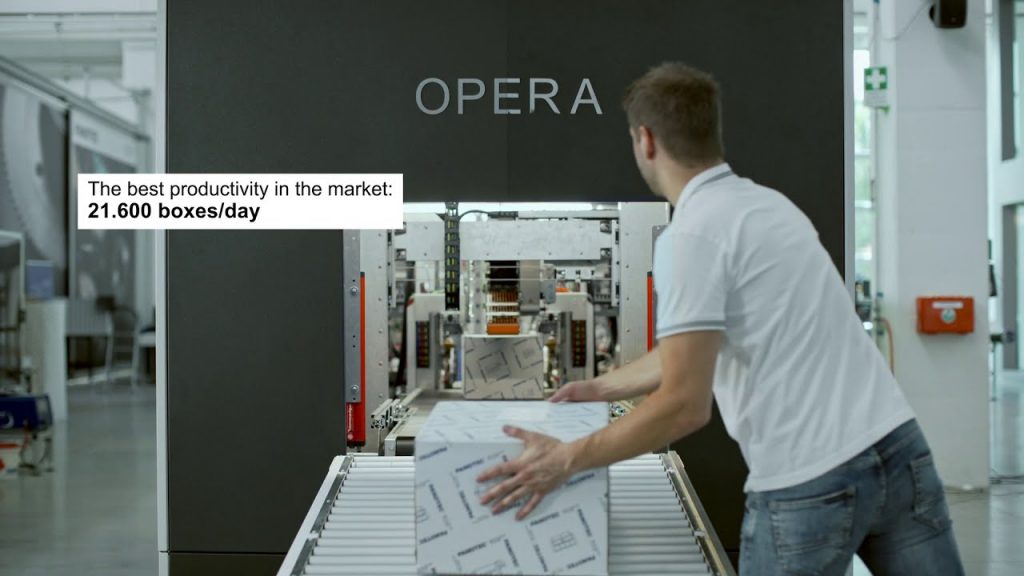
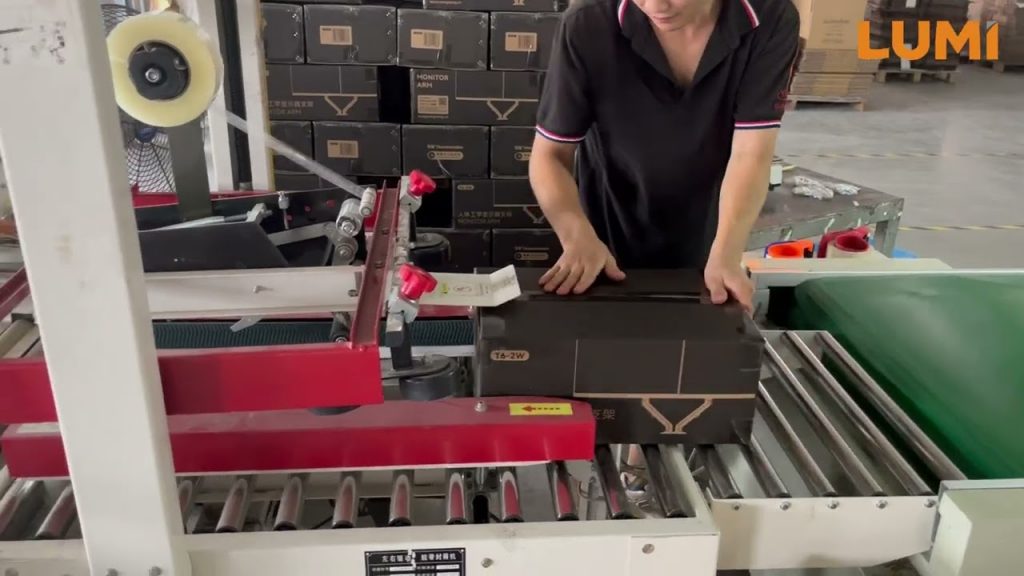
Automatic Coil Packing Line vs Manual Wrapping: Which is Better for Your Factory?
Imagine this: a major shipment is delayed because your packaging line can't keep up. Workers are exhausted from manually handling heavy steel coils, and a recent injury has halted operations. The pressure mounts as customers complain and costs rise. This isn't just a hypothetical scenario; it's the daily reality for many factory managers in the metal processing industry who rely on outdated, manual wrapping methods. The struggle for efficiency, safety, and reliability is real and costly.
For a metal processing factory, an automatic coil packing line is overwhelmingly the better choice over manual wrapping. It directly tackles critical pain points like low throughput, high labor costs, severe safety risks, and product damage, delivering a clear and fast return on investment (ROI). While manual wrapping has a lower initial cost, its long-term operational inefficiencies and hidden expenses make it unsuitable for modern, competitive manufacturing environments focused on scalability and worker safety. (automatic steel coil packaging solution)

The decision between automatic and manual packaging is more than just choosing a machine; it's about choosing the future of your factory's operations. This choice impacts your bottom line, your team's well-being, and your ability to meet customer demands. Let's break down this critical decision point by point, examining the facts to help you determine the best path for your specific operational needs and long-term goals in coil and wire rod packaging.
1. Which Method Truly Saves You More Money: Initial Cost or Total Cost of Ownership?
Many factory managers look at the price tag first. A manual wrapping station seems cheap. You buy some stretch film, maybe a simple turntable, and use your existing labor. The initial capital expenditure (CapEx) is low. But this is a classic trap. It ignores the total cost of ownership (TCO), which includes ongoing operational expenses that can silently drain your profits for years.
When evaluating cost, you must look beyond the purchase price. An automatic coil packing line, while requiring a higher initial investment, delivers significantly lower total cost of ownership. It saves money by drastically reducing labor costs, minimizing material waste, preventing costly product damage, and eliminating expenses related to workplace injuries and production downtime. Over a typical 3-5 year period, the automation pays for itself and then continues to generate pure savings. (cost of automatic coil packing machine)
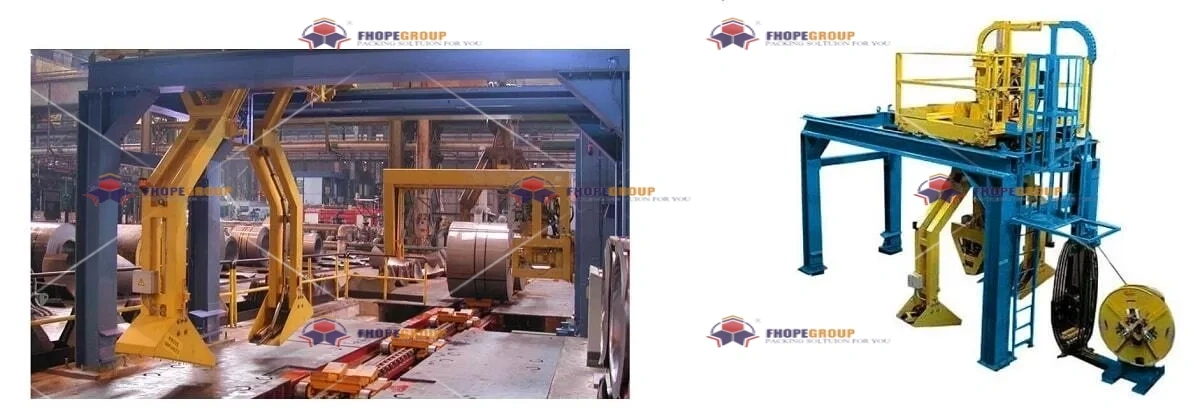
🧮 The Real Math: Manual vs. Automatic Cost Breakdown
Let's put this into a structured comparison. We'll analyze the costs over a 5-year period for a mid-sized factory processing 20 coils per shift.
| Cost Factor | Manual Wrapping (Estimated) | Automatic Packing Line (Estimated) | Notes |
|---|---|---|---|
| Initial Investment (CapEx) | $5,000 - $15,000 | $80,000 - $200,000 | Manual: Basic turntable, tools. Automatic: Full system from brands like Fengding or Wuxi Bu Hui. |
| Annual Labor Cost | $120,000+ | $20,000 | Manual: 3 workers @ $40k/year. Automatic: 1 supervisor/operator. |
| Annual Film/Waste Cost | $25,000 | $18,000 | Automatic systems use pre-stretched film and precise tension control, reducing waste by ~30%. |
| Annual Product Damage | $15,000 (0.5% damage rate) | $3,000 (0.1% damage rate) | Manual handling causes edge damage, leading to customer rejects and claims. |
| Annual Safety/Insurance | $10,000 (high-risk) | $2,000 (low-risk) | Manual work leads to more incidents, raising insurance premiums and compensation costs. |
| Annual Downtime Cost | $20,000 (unplanned stops) | $5,000 (scheduled maintenance) | Manual processes are slower and prone to fatigue-related errors and bottlenecks. |
| 5-Year Total Cost | $875,000+ | $540,000+ | Automatic saves over $335,000 in 5 years. |
🔍 Critical Insight: The ROI Timeline
The key question is: "How long until the machine pays for itself?" For an automatic line costing $150,000, the annual savings versus manual might be $67,000 ($335,000 / 5 years). This means the payback period is roughly 2.2 years. After that, every dollar saved goes straight to your profit. Furthermore, automatic systems from reliable manufacturers have a long service life (10+ years), meaning you benefit from nearly a decade of pure operational savings and increased capacity. This makes the business case for automation, particularly with robust suppliers like Fengding known for durability, exceptionally strong for any factory manager focused on long-term financial health. (ROI of automated steel coil packaging)
2. How Does Each Method Impact Production Speed and Factory Output?
Speed is the heartbeat of a factory. In metal processing, the packaging stage is often the final bottleneck. A fast production line means nothing if the finished coils pile up, waiting to be wrapped. Manual wrapping is inherently slow, limited by human speed, stamina, and consistency. An operator can only work so many hours before fatigue sets in, slowing the pace and increasing error rates.
An automatic coil packing line dramatically outperforms manual wrapping in production speed and consistency. It operates at a constant, programmable pace, 24/7 if needed, without breaks or slowdowns. This eliminates the packaging bottleneck, synchronizes the end-of-line process with upstream production, and significantly increases your factory's overall throughput and on-time delivery capability. (high speed coil packaging automation)
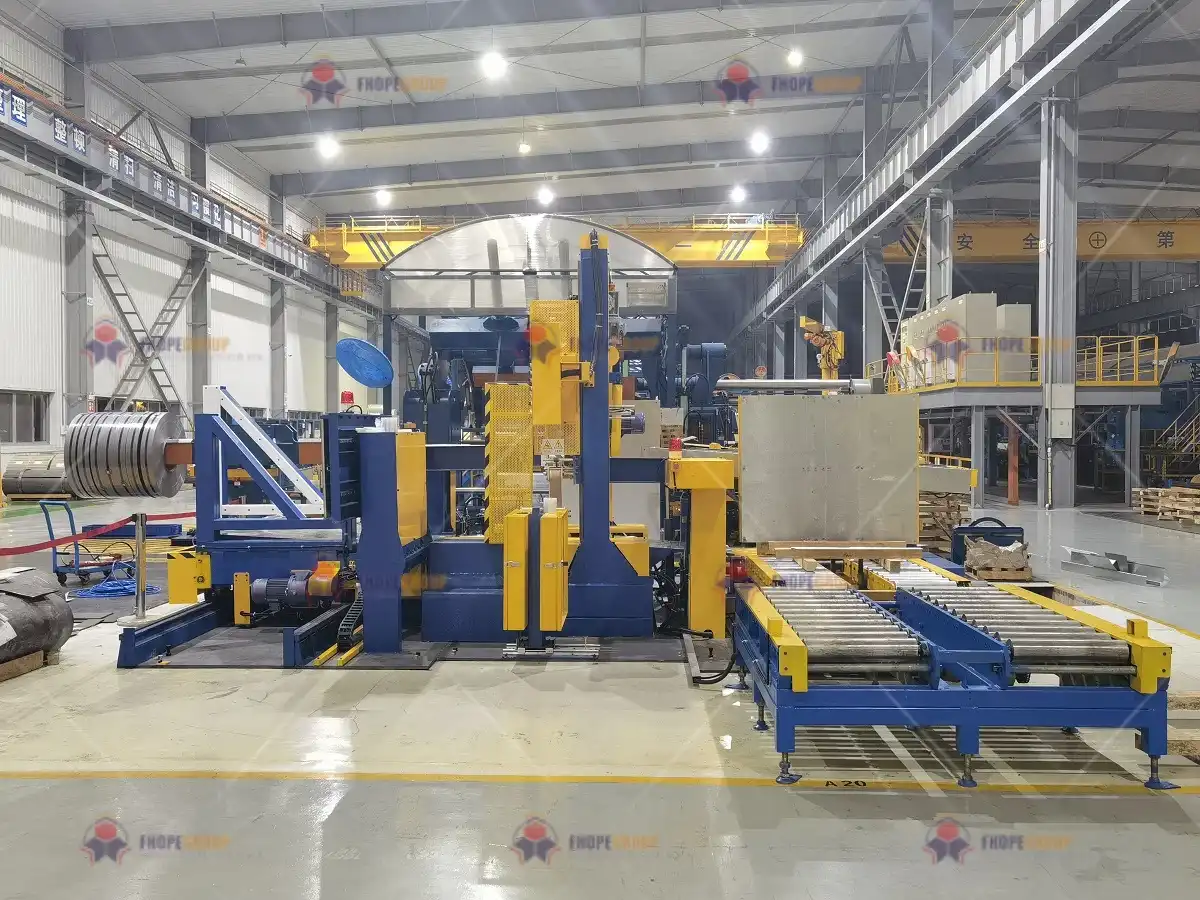
⚙️ Breaking Down the Throughput Advantage
Let's examine the factors that contribute to the speed gap:
1. Cycle Time Per Coil:
- Manual Process: Involves multiple slow, sequential steps: positioning the coil, manually applying corner protectors, unrolling and attaching film, walking around the coil to wrap, cutting the film, and securing the tail. This can take 5 to 10 minutes per coil, depending on size and worker skill.
- Automatic Process: The coil is conveyed into position. The machine then executes a pre-programmed cycle: applying protection, gripping the film, rotating the coil (or the arm), applying precise overlap and tension, and cutting/sealing the film—all in one continuous, rapid motion. This takes 1 to 3 minutes per coil.
2. Consistency and Uptime:
- ❌ Manual Inconsistency: The first coil wrapped in the morning will likely be tighter and neater than the one wrapped just before lunch break. Speed and quality fluctuate with fatigue. Shift changes and breaks cause mandatory stoppages.
- ✅ Automatic Consistency: Every coil receives an identical wrap—same tension, same overlap, same pattern. The machine doesn't get tired. It maintains peak speed for its entire operational window. With proper maintenance, uptime exceeds 95%.
3. Impact on Overall Plant Flow:
A packaging bottleneck doesn't just slow down packaging; it backs up the entire finishing and shipping process.
- Manual Scenario: The rolling mill or slitter produces coils faster than they can be wrapped. Coils queue up, taking up valuable floor space. Shipping schedules are missed because the trucks wait for finished, packaged goods.
- Automatic Scenario: The packaging pace matches or exceeds the production pace. Coils flow smoothly from production to packaging to shipping. Floor space is freed up. Trucks are loaded on time. The entire factory's rhythm becomes smoother and more predictable.
For a manager like Michael, whose goal is to "solve bottlenecks at the end of the production line," this is the core value proposition. Investing in a high-speed automatic line from a specialist like Fengding isn't just buying a wrapper; it's buying increased plant-wide capacity and reliability. (steel coil packaging line throughput)
3. Which Approach Provides a Safer Working Environment for Your Team?
Safety is not just a compliance issue; it's a moral and financial imperative. Manual coil handling is one of the most hazardous tasks in a metal factory. Workers are exposed to severe crush injuries, muscle strains from repetitive heavy lifting, and cuts from sharp metal edges. Every time a worker manually flips a heavy pallet or guides a swinging coil, the risk is present.
An automatic coil packing line fundamentally transforms workplace safety by removing personnel from the most dangerous tasks. It performs all heavy lifting, rotating, and wrapping within a guarded enclosure. This engineering control eliminates the root cause of most packaging-related injuries, creating a safer environment, reducing insurance costs, and improving employee morale and retention. (safe coil handling automation)

🛡️ A Detailed Safety Comparison: Hazard Elimination
Here is a breakdown of common packaging hazards and how each method addresses them:
| Hazard | Risk in Manual Wrapping | How Automatic Line Mitigates It |
|---|---|---|
| Heavy Lifting & Musculoskeletal Disorders | HIGH. Workers manually position coils, apply heavy corner protectors, and handle film rolls. | ELIMINATED. Coils are conveyed; protectors are applied automatically; film rolls are loaded via assist mechanisms. |
| Crush / Pinch Points | VERY HIGH. Manual guiding of coils on turntables, flipping pallets. | MINIMIZED. Process occurs within a safety-guarded cell. Light curtains or interlocks stop the machine if accessed. |
| Cuts / Lacerations | HIGH. Exposure to sharp coil edges and banding materials during manual application. | REDUCED. Operators interact with finished, wrapped coils. The wrapping process is fully enclosed. |
| Repetitive Strain Injury | HIGH. Repetitive motions of wrapping, bending, and cutting. | ELIMINATED. The operator's role shifts to monitoring, control, and maintenance. |
| Film Breakage & Whipping | MEDIUM. Stretch film can snap and whip back dangerously if misapplied. | CONTROLLED. Automated tension control and enclosed wrapping path contain the film. |
| Slips, Trips, Falls | MEDIUM. Cluttered work area with film tails and tools on the floor. | REDUCED. Cleaner, more organized automated cell with defined walkways. |
🔧 The Role of Machine Safety Features:
Modern automatic lines, especially from safety-conscious manufacturers, incorporate multiple layers of protection:
- Physical Guards: Fixed barriers prevent access to moving parts.
- Safety Interlocks: Doors and panels are connected to the control system. If opened, the machine stops immediately.
- Light Curtains: Invisible infrared beams create a detection field. If breached, the machine stops.
- Emergency Stop Buttons: Clearly marked, easily accessible E-Stops are placed around the machine.
- Safe Control Systems: PLCs with safety-rated modules ensure reliable shutdown in case of a fault.
For Michael, who faces "extremely high safety risks and soaring insurance costs," this is a transformative benefit. By investing in automation, he is not just buying equipment; he is investing in risk mitigation, lower operational liability, and the well-being of his team. This aligns perfectly with his goal to "fundamentally improve worker safety." (industrial packaging machine safety features)
4. How Do They Compare in Delivering Consistent, High-Quality Packaging?
Your packaging is the last thing your customer sees before using your product. It's a direct reflection of your brand's quality and care. Manual wrapping is highly variable. The tightness of the wrap, the overlap of the film layers, and the neatness of the finish depend entirely on the individual worker's skill, attention, and energy level on that day. This inconsistency can lead to loose wraps that shift in transit or overly tight wraps that deform the coil.
Automatic coil packing lines guarantee consistent, high-quality packaging on every single coil. They are programmed with exact parameters for film tension, overlap, and wrap pattern. This ensures optimal load containment for transit, superior protection against moisture and corrosion, and a professional, uniform appearance that builds customer trust and reduces claims for transit damage. (consistent coil packaging quality)
📊 Quality Metrics: Manual Instability vs. Automated Precision
Let's define and measure the key quality aspects of a coil pack:
1. Film Tension Control:
- Manual Result: Variable. Tension is applied by the worker's arm strength and walking speed. It can be too loose (leading to load shift) or too tight (potentially damaging the coil or the film itself).
- Automatic Result: Precise and Repeatable. The machine uses servo-driven brakes or dancers to apply a pre-set, optimal tension (e.g., 250 Newtons). This tension is logged and consistent for coil #1 and coil #1000.
2. Film Overlap Consistency:
- Manual Result: Inconsistent. The overlap between film layers can vary from 30% to 60% as the worker's pace changes, creating weak spots in the weather barrier.
- Automatic Result: Programmed. The machine's rotation speed and film feed are synchronized to deliver a precise, programmed overlap (e.g., 50% ±2%). This creates a uniform, reliable barrier.
3. Protection Application:
- Manual Result: Haphazard. Corner protectors or top caps may be misaligned, poorly secured, or even forgotten under time pressure.
- Automatic Result: Robotic Accuracy. An integrated applicator places protectors in the exact correct position every time, often with adhesive or strapping for secure attachment.
4. Documentation & Traceability:
- Manual Result: Limited. Relies on paper tags or manual logging, which can be lost or inaccurate.
- Automatic Result: Integrated. Many systems can print and apply labels with barcodes, coil ID, weight, and packaging data directly onto the pack, linking physical goods to your MES/ERP system.
The Bottom-Line Impact of Quality:
Poor packaging leads to "product damage during internal handling," as Michael noted. This results in:
- Customer Complaints & Returns: Damaged goods must be replaced, costing you the product value and shipping.
- Credit Notes & Profit Erosion: You lose revenue on the damaged unit.
- Brand Reputation Damage: Consistently poor packaging makes you look unprofessional.
An automatic line acts as a quality assurance checkpoint. It ensures every coil that leaves your factory is uniformly protected, ready for the rigors of logistics, and presents a professional image. This directly supports Michael's goal to "reduce product damage" and enhance his factory's reputation for reliability. For achieving this level of consistent quality, partnering with an expert manufacturer like Fengding, known for precision engineering, is a strategic move. (precision coil wrapping machine)
Conclusion
For modern metal processors, the evidence is clear: automatic coil packing lines are the superior choice, delivering decisive advantages in cost, speed, safety, and quality over manual methods. To transform your end-of-line operations, explore our engineered Steel Coil Packing Line solutions.