What Makes an Automatic Coil Packing Line Ideal for Steel Coil Wrapping?
Imagine this: your production floor is humming, coils are rolling off the line, but everything grinds to a halt at the final stage. Workers are struggling to manually wrap heavy steel coils. The process is slow, dangerous, and inconsistent. This bottleneck isn't just frustrating; it's costing you money, risking safety, and damaging your product's quality. For factory managers like Michael in Mexico, this daily reality is a major obstacle to growth and profitability. The pressure to deliver on time while controlling costs and ensuring worker safety is immense. The search for a solution often leads to one critical question: is investing in full automation the right move?
An automatic coil packing line is ideal for steel coil wrapping because it directly tackles the core challenges of manual processes: inefficiency, safety risks, and product damage. By integrating machinery for handling, wrapping, and securing coils, it creates a fast, consistent, and safe packaging workflow that boosts output, protects workers, and ensures your product arrives in perfect condition. This system transforms the packaging station from a bottleneck into a seamless extension of your production.
The decision to automate packaging is significant. It's not just about buying a machine; it's about investing in a system that will become the reliable final step in your value chain. You need to understand exactly what makes such a line "ideal" for the demanding environment of steel processing. Let's break down the key features and benefits that define a top-tier automatic coil packing solution, drawing from two decades of experience in this field.
1. How Does Automation Solve the Critical Bottleneck in Steel Coil Packaging?
Every minute a finished coil sits waiting for packaging is a minute of lost productivity. Manual wrapping is inherently slow. It depends on human speed, stamina, and consistency—factors that naturally decline over a shift. Workers need to position the coil, apply protective materials like paper or film, and then secure everything with steel strapping or bands. This multi-step process creates a major logjam at the end of your production line. The faster your mill or processing line runs, the worse this bottleneck becomes. You end up with a pile of finished, valuable product that isn't ready to ship, delaying orders and tying up capital.
Automation solves this bottleneck by creating a continuous, high-speed flow. An integrated coil packing line uses powered conveyors, turntables, and robotic arms to move the coil through each packaging stage without stopping. A programmable logic controller (PLC) synchronizes all movements, applying wrapping film with precise tension and applying strapping at optimal points. This system works at a constant, predictable pace, eliminating the variability of manual labor and ensuring your packaging speed matches your production speed.
🛠️ The Components of Speed and Flow
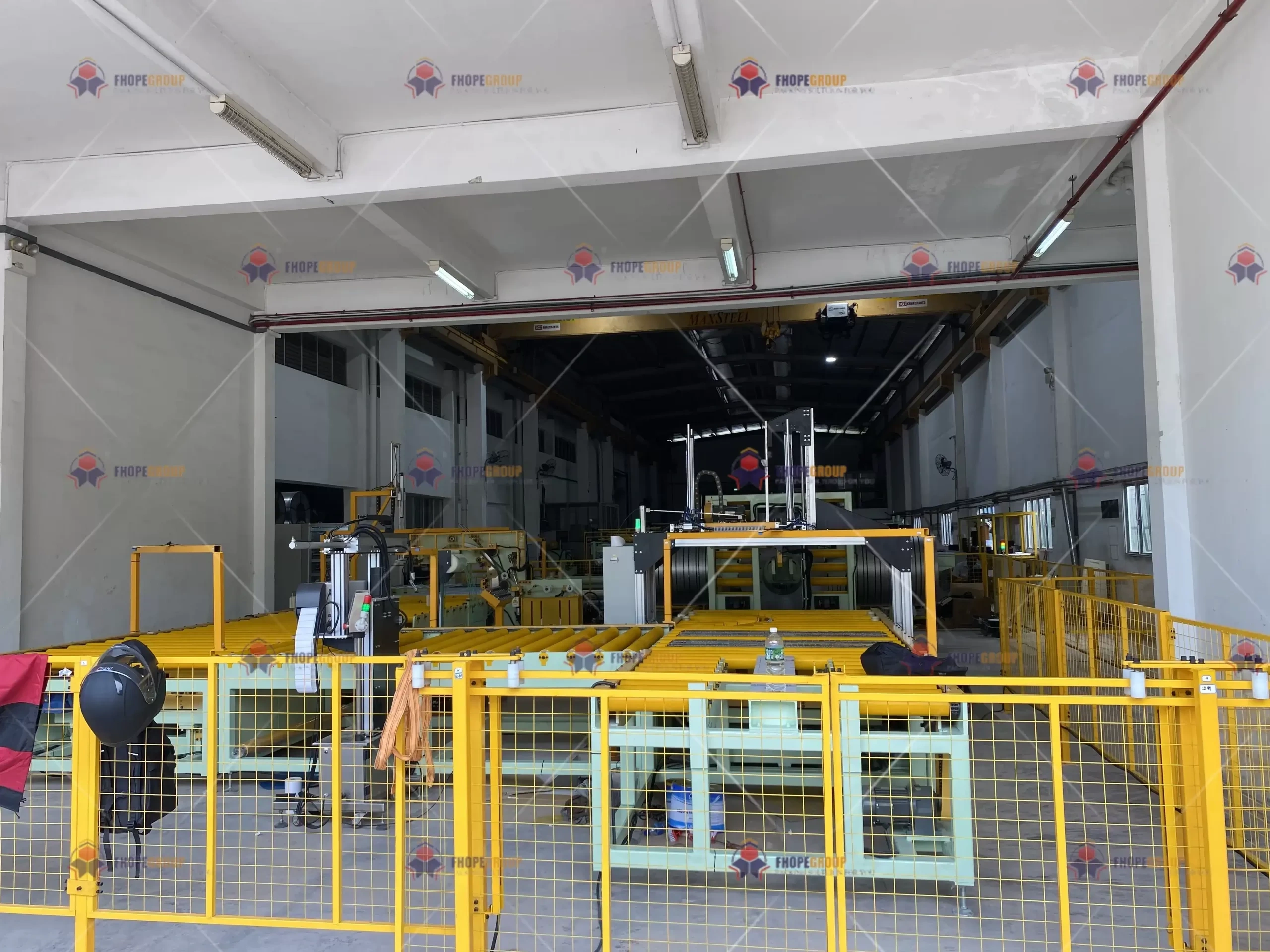
An ideal automatic line isn't just one machine; it's a synchronized system. Let's look at the key parts that work together to eliminate stoppages.
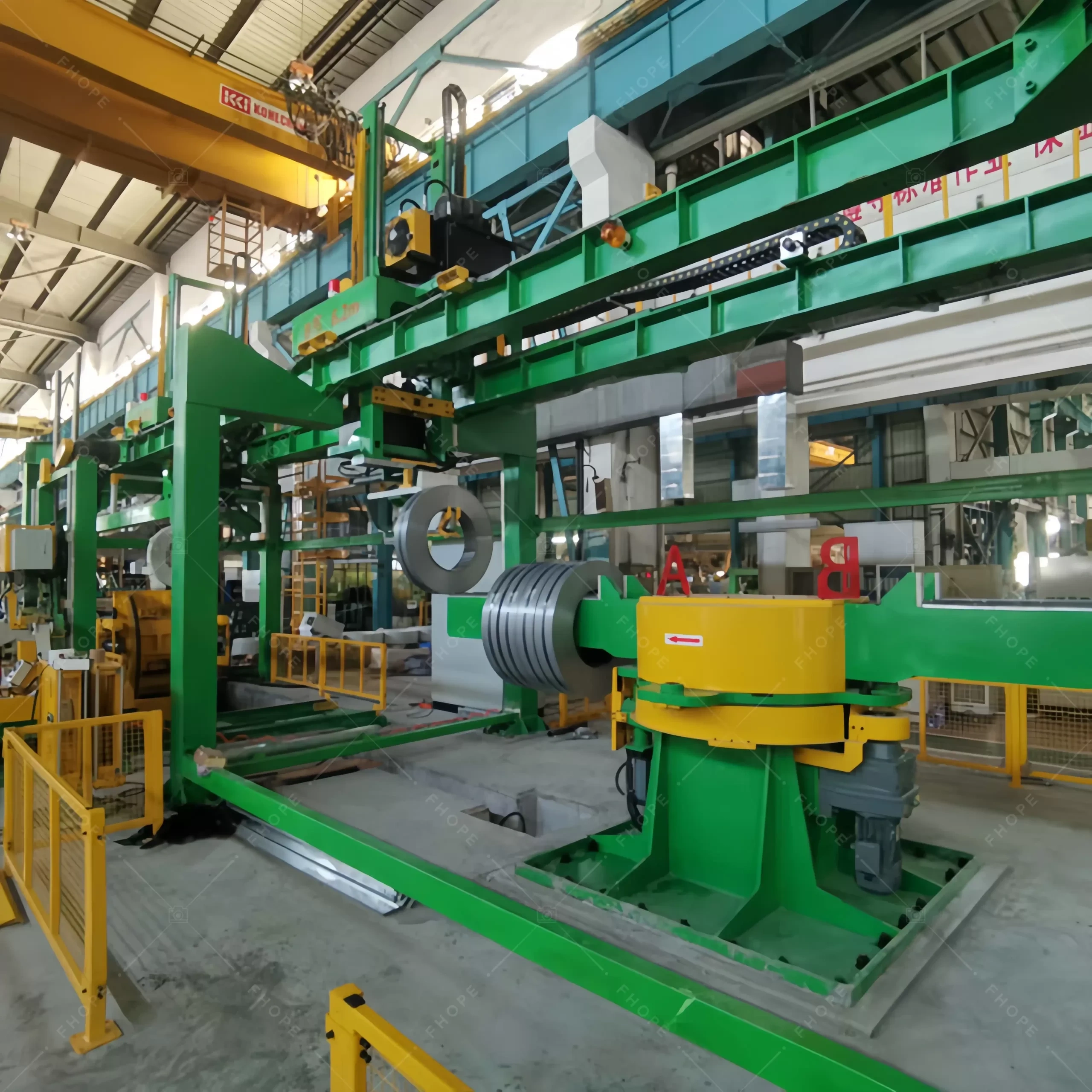
- Coil Handling & Positioning: This is the first step. Systems like motorized V-shaped cradles or lifting conveyors gently receive the coil from the production line and rotate it into the perfect position for wrapping. No more manual pushing or rolling with bars.
- Automatic Wrapping Application: A rotating ring or a moving carriage orbits the stationary coil, dispensing stretch film, paper, or plastic with consistent overlap and tension. The machine settings ensure every coil is wrapped identically.
- Intelligent Strapping Heads: Robotic strapping heads move into position and apply steel or plastic strapping at pre-programmed locations. They tension, seal, and cut the strap automatically, far faster than any person could.
- Centralized Control (PLC): The brain of the operation. An operator simply inputs the coil dimensions (OD, ID, width) and the desired packaging pattern. The PLC then directs every machine in the sequence.
📊 The Impact: From Bottleneck to Throughput
The result is a dramatic shift in your plant's logistics.
| Manual Process Pain Point | Automated Line Solution | Result |
|---|---|---|
| Variable Speed: Speed depends on worker fatigue. | Consistent Cycle Time: Machine operates at a fixed, optimal speed. | Predictable output for better scheduling. |
| Physical Limitations: Handling heavy coils is slow. | Powered Movement: Conveyors and rotators move coils effortlessly. | Faster transition between packaging steps. |
| Set-Up Time: Adjusting for different coil sizes takes time. | Quick-Change Programming: New coil size is entered via touchscreen. | Minimal downtime between product batches. |
| Queue Formation: Coils pile up waiting for wrapping. | Continuous Flow: Coil enters and exits the line seamlessly. | Eliminates finished goods inventory at the station. |
The goal is to make packaging an invisible, non-stop process. When I built my own factory, ensuring this seamless flow was the top priority. We designed lines where a coil could be packaged in under two minutes, regardless of its weight. This reliability is what turns a cost center into a competitive advantage. For a manager dealing with delivery pressures, this consistent throughput is invaluable. (core long-tail keywords: automated steel coil packaging line, eliminate production bottleneck, high-speed coil wrapping system, integrated packaging workflow)
2. What Safety Features Are Non-Negotiable in a Heavy-Duty Packing Line?
Safety in a steel mill or metal processing plant is paramount. Manual coil packaging is one of the most hazardous routine tasks. Workers are exposed to crushing risks from multi-ton coils, cuts from sharp edges and strapping, and musculoskeletal injuries from repetitive heavy lifting. A single accident can lead to severe human cost, high insurance premiums, production stoppages, and legal issues. As a manager, your primary duty is to send everyone home safely. Relying on manual processes for this final, heavy-lifting stage is an unacceptable risk.
The most critical non-negotiable safety features in an automatic packing line are those that create a complete barrier between the worker and the moving heavy loads. This includes fully guarded machinery with interlocked safety gates, emergency stop circuits on all units, and automated systems that handle all lifting, rotating, and securing tasks. The ideal line is designed so that the operator supervises the process from a safe control panel, without ever needing to enter the machine's working zone during its cycle.
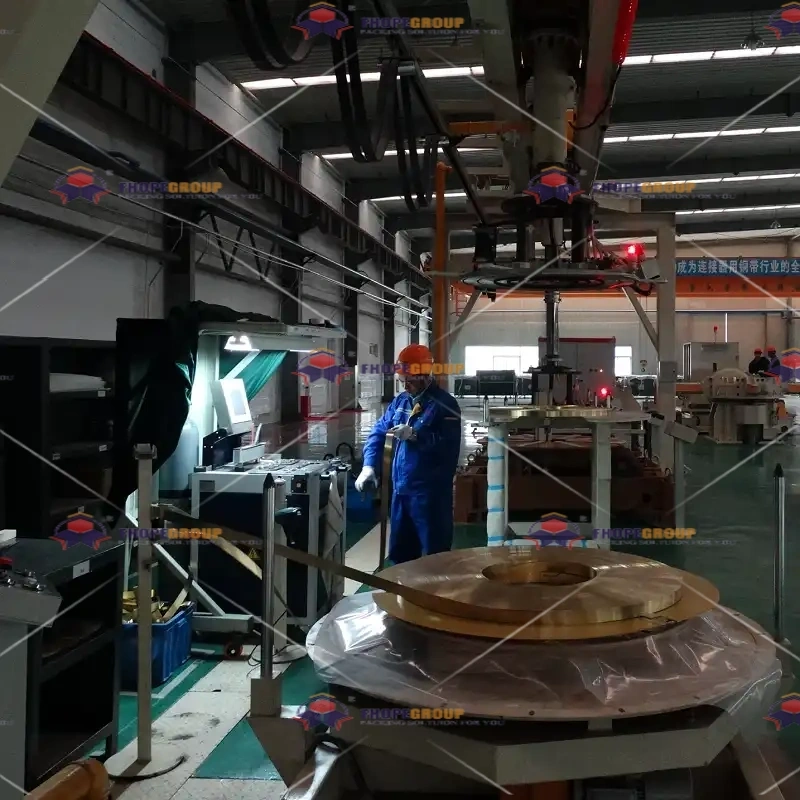
🛡️ Building a "Hands-Off" Packaging Cell
A safe line is engineered with multiple layers of protection. Here’s what to look for:
-
Physical Guarding & Access Control:
- Fixed Guards: Solid metal panels surround all pinch points, rotating parts, and the strapping head.
- Interlocked Safety Gates: If a gate is opened to access the coil area, the system immediately performs a safety stop. The machine cannot restart until the gate is closed and reset. This prevents accidental activation.
- Light Curtains: These create an invisible infrared barrier at the entry/exit points. If a beam is broken (by a person's arm), the machine stops.
-
Fail-Safe Operational Controls:
- Emergency Stop Buttons: Large, red E-stop buttons are placed at multiple, easily accessible locations around the machine. Hitting one cuts all power to motors and actuators.
- Two-Hand Control: For certain manual override functions, the operator must press two buttons simultaneously, ensuring both hands are safely away from danger zones.
- Load Monitoring Sensors: Sensors check if a coil is properly seated before allowing the wrapping cycle to begin, preventing a coil from tipping or rolling unexpectedly.
-
Ergonomic Design for Safety:
- The control panel should be positioned for clear visibility of the entire process, eliminating the need to lean in for a better view.
- All maintenance points (for greasing, inspection) should be accessible from outside the danger zone or require a lock-out/tag-out procedure.
From my time on the factory floor, I've seen how the right safety design builds trust. Workers are more confident and focused when they know the machine is protecting them. For a client like Michael, reducing the high insurance costs and employee turnover linked to manual handling injuries is a direct financial benefit that contributes to the ROI of the equipment. A supplier who emphasizes safety in their design, like Fengding, shows they understand the real-world pressures of factory management. (core long-tail keywords: safe coil packing machine, heavy-duty packaging line safety, automated handling injury prevention, safety interlock systems for machinery)
3. How Does Precision Automation Reduce Product Damage and Rejection?
Product damage during packaging is a silent profit killer. When a steel coil with a dented edge or a scratched surface arrives at your customer, it often leads to rejection, a credit note, or a costly rework order. In manual handling, damage occurs easily: chains or slings can mar the surface, coils can be dropped during flipping, and inconsistent strapping tension can deform the coil. This damage hurts your reputation and your bottom line. Your production team works hard to create a perfect product; the packaging process should protect that quality, not compromise it.
Precision automation reduces product damage by applying consistent, measured force and using non-marking handling methods. Machines like motorized roller conveyors, padded V-cradles, and vacuum lifters transport the coil without impact. Programmable wrappers apply film with even tension, and strapping heads tension straps to an exact, repeatable force that secures the load without crushing it. This repeatable precision ensures every coil is packaged identically, eliminating the variability that causes damage.

🔬 The Mechanics of Gentle, Consistent Handling
Let's examine how specific automated features protect your product integrity.
A. Non-Marring Material Handling:
- Padded or Rubber-Coated Contact Surfaces: All conveyors, cradles, and supports that touch the coil use materials softer than steel to prevent scratches and gouges.
- Controlled Speed & Acceleration: Motors start and stop smoothly, preventing the coil from jerking or sliding against a hard stop.
- Vacuum Lifters for Top Sheets: For adding protective top caps or sheets, vacuum lifters place them gently without dragging.
B. Precision in Wrapping and Securing:
- Servo-Driven Film Carriage: A servo motor controls the rotation and vertical movement of the wrapping arm. This allows for perfect film overlap and consistent tension, regardless of coil shape. Loose wrapping leads to shifting in transit; overly tight wrapping can deform softer metals.
- Programmable Strapping Patterns & Tension: The machine can be set to apply 2, 3, or 4 straps at exact positions. Each strap is tensioned to a preset value (e.g., 5000 N) and sealed. This is far more accurate than a worker using a manual tensioner.
C. Quality Assurance Built-In:
- Vision Systems (Optional): Advanced lines can include cameras to check if the protective paper is correctly positioned or if a strap is missing before the coil is released.
- Data Logging: The system can record the packaging parameters for each coil (size, film used, strap tension). This creates a traceable quality record in case of a customer complaint.
My Insight: I recall a client who had constant complaints about edge damage. We traced it to the manual method of using a lever to tilt the coil for bottom wrapping. Our solution was an automatic line with a lifting conveyor that gently raised the entire coil for bottom film application, eliminating the point-load pressure. Their rejection rate dropped to near zero. This level of problem-solving is what you should expect from a partner. While Fengding excels in robust system design, a supplier like Wuxi Buhui also offers strong solutions in precise servo-control for wrapping. The key is finding the partner whose engineering focus aligns with your specific damage-prevention needs. (core long-tail keywords: reduce coil edge damage, precision strapping for steel coils, non-marking coil handling, automated packaging quality control)
4. Why is Choosing the Right Partner More Important Than Just the Machine Specs?
You can buy a machine from a catalog, but you invest in a solution with a partner. Many factory managers have been burned by suppliers who disappear after the sale, leaving them with a complex machine they can't optimize or fix quickly. Downtime on an automatic packing line means your entire production output stacks up with nowhere to go. The machine's specifications on paper—speed, weight capacity—are important, but they are meaningless without reliable support, deep industry knowledge, and a commitment to your long-term success. The right partner understands your process, your pain points, and your goals.
Choosing the right partner is more important than the machine specs because they provide the expertise, support, and customization needed to ensure the line delivers its promised return on investment. A true partner will conduct a thorough site survey, design a layout that fits your workflow, offer comprehensive training for your team, and provide fast, knowledgeable after-sales service. They become an extension of your operations, helping you troubleshoot, optimize, and even upgrade the system over its lifetime.
🤝 The Hallmarks of a True Industry Partner
How do you identify a vendor who will be a partner? Look for these critical attributes:
1. Proven Experience & References:
- Do they have a track record in your specific industry (steel, wire, aluminum)?
- Can they provide contact information for clients with similar operations? Speaking directly to a current user is the best reference check.
2. Engineering-Led Consultation, Not Just Sales:
- Do they ask detailed questions about your coil sizes, daily volume, floor space, and existing workflow?
- Do they offer a customized layout drawing instead of just a standard machine brochure?
- A good partner, like Fengding, often has engineers leading the conversation to ensure technical feasibility.
3. Comprehensive Support Structure:
- Training: Do they offer on-site training for both operators and maintenance technicians?
- Documentation: Is the manual clear, with full electrical and pneumatic diagrams?
- Spare Parts: Is there a local warehouse or guaranteed fast shipping for critical spare parts?
- Technical Support: Is 24/7 remote support available? How quickly can they dispatch a service engineer?
4. Commitment to ROI, Not Just a Sale:
- A partner will help you calculate the ROI based on your specific data: labor savings, reduced damage, increased output.
- They will discuss how the machine integrates with your broader goals for automation and efficiency.
For someone like Michael, who has faced supplier trust issues, this partnership aspect is everything. It’s the difference between a successful project that drives growth for years and a costly piece of equipment gathering dust. My own journey from engineer to factory owner was built on being this kind of partner for my clients. The machine is the tool, but the partnership is the strategy that makes it work. (core long-tail keywords: packaging machinery partner, coil equipment after-sales service, industry-specific packaging solution, reliable packaging line supplier)
Conclusion
An ideal automatic coil packing line seamlessly boosts speed, guarantees safety, protects product quality, and is backed by a knowledgeable partner. It transforms packaging from a costly bottleneck into a reliable, profit-protecting stage of your operation. For a durable and efficient solution, explore the engineered systems from a leading Steel Coil Packing Line manufacturer.