The Complete Guide to Automatic Coil Packing Line Maintenance and Troubleshooting?
As a factory manager, you know the feeling all too well. Your production line is humming, orders are flowing, and then it happens—a sudden alarm from your automatic coil packing line. A conveyor stops, a wrapper jams, or a sensor fails. Production grinds to a halt, and with every passing minute, costs mount and delivery deadlines slip further away. This scenario is a constant threat in the high-stakes world of metal processing, where unplanned downtime is the enemy of profit. (automatic coil packing line downtime cost)
A comprehensive maintenance and troubleshooting strategy is the most effective shield against costly, unplanned downtime in your automatic coil packing line. This guide provides a systematic approach, from daily checks to complex fault diagnosis, ensuring your line runs reliably, extends its lifespan, and protects your bottom line. (automatic coil packaging line maintenance guide)

You’ve invested in automation to solve bottlenecks and boost efficiency. But without proper care, that sophisticated equipment can become your biggest headache. This isn't just about fixing problems when they occur; it's about building a culture of prevention. Let's move beyond reactive firefighting and explore a proactive framework that keeps your packing line—and your profits—running smoothly. We'll break down the essential practices and common pitfalls, giving you the knowledge to maintain control over your operations.
1. What Are the Essential Daily and Weekly Maintenance Checks?
Imagine starting your car for a long journey without checking the oil or tire pressure. You might get lucky, but the risk of a breakdown is high. The same principle applies to your automatic coil packing line. Skipping basic checks is an invitation for trouble. A simple, disciplined routine can catch small issues before they escalate into major, production-stopping failures. (coil packing machine preventive maintenance checklist)
The essential maintenance checks form a two-tiered system: daily visual and operational inspections, and weekly detailed mechanical and electrical verifications. Daily checks focus on immediate operability and cleanliness, while weekly checks delve into component wear, lubrication, and system calibration. (daily weekly coil packing line inspection)

A structured checklist is your best tool. Don't rely on memory. Here’s a breakdown of critical tasks, categorized for clarity.
🛠️ Daily Maintenance Tasks (Operator Level)
These should be performed at the start of each shift or after a prolonged stop.
- Visual Inspection: Look for obvious signs of damage, loose bolts, or fluid leaks (hydraulic oil, grease). Check for debris buildup on conveyors, rollers, and wrapping stations.
- Safety System Check: Verify that all emergency stop buttons, light curtains, and safety gates are functional. This is non-negotiable.
- Lubrication Points: Check central lubrication system reservoirs (if equipped) and manually grease any designated points per the machine manual.
- Film & Strap Feed: Ensure the stretch film and strapping material are loaded correctly and feeding smoothly without tangles or breaks.
- Test Cycle: Run a single, empty cycle to listen for unusual noises (grinding, knocking) and watch for jerky or misaligned movements.
🔧 Weekly Maintenance Tasks (Maintenance Technician Level)
These require more technical skill and often involve tools.
| Task Category | Specific Actions | Goal |
|---|---|---|
| Mechanical | Check tension of drive chains and belts. Inspect wear strips on carriages. Examine roller bearings for smooth rotation. | Prevent slippage, misalignment, and premature wear. |
| Electrical | Tighten electrical connections in control panels. Check for overheating on contactors and drives. Inspect sensor alignment and cleanliness (photo-eyes, proximity sensors). | Ensure reliable signal transmission and prevent electrical faults. |
| Pneumatic/Hydraulic | Drain moisture from air compressor tanks and filters. Check hydraulic fluid levels and look for leaks. Inspect pneumatic cylinders for smooth operation. | Maintain consistent pressure and force for actuators. |
| Calibration | Verify the positioning accuracy of coil centering, lifting, and rotating devices. Check film tension settings. | Ensure consistent, high-quality packaging. |
The Critical Insight: The quality of your maintenance directly impacts the reliability of your suppliers. A well-maintained machine from a top-tier manufacturer like Fengding will deliver unparalleled longevity. Conversely, even the best machine will fail prematurely with poor upkeep. Partnering with a supplier who provides clear, detailed maintenance manuals and training—as we do at FHOPEPACK—is as crucial as the machine itself. (coil packaging line reliability, Fengding automatic wrapper maintenance)
2. How Do You Diagnose and Fix Common Operational Faults?
Your line has stopped. An alarm is flashing on the HMI screen. Panic is not a strategy. A methodical approach to diagnosis turns a crisis into a manageable procedure. Common faults often follow predictable patterns, and understanding these can slash your Mean Time To Repair (MTTR). (troubleshooting automatic coil packing machine)
Diagnosing common faults requires a systematic process: 1) Observe the HMI alarm message, 2) Locate the physical area of the fault, 3) Check the most likely culprits (sensors, actuators, material), and 4) Test the fix before resuming full production. (coil packing line fault diagnosis steps)
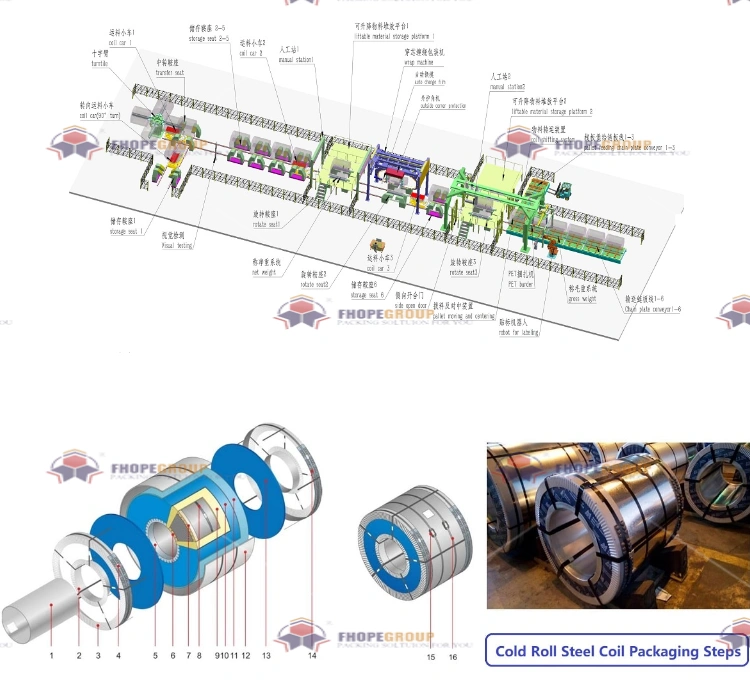
Let's apply this process to some of the most frequent headaches on the packing line.
🚨 Fault 1: Film Breakage or Poor Wrapping
- Symptoms: Film tears during wrapping, loose wraps, or uneven layers.
- Diagnosis Path:
- Check Film Quality & Settings: Is the film grade suitable for the coil weight? Are the pre-stretch rollers clean and functioning? Is the film carriage speed synchronized with the coil rotation?
- Inspect Mechanical Path: Look for sharp edges, burrs, or damaged rollers in the film delivery path. A single nick can cause consistent breaks.
- Verify Tension Control: Mechanical brake pads or electronic tensioning systems can wear out, leading to inconsistent film feed.
- Quick Fix: Often, simply cleaning the pre-stretch rollers and adjusting the tension setting solves the issue. For persistent problems, inspect and replace worn rollers or tensioning components.
🚨 Fault 2: Conveyor Stoppage or Misalignment
- Symptoms: Coil doesn't transfer between stations, conveyor jerks, or coil travels off-center.
- Diagnosis Path:
- Check Drive Components: Is the motor drive throwing an overload fault? Listen for straining. Check chain/belt tension and for broken links.
- Inspect Sensors: The conveyor likely uses position sensors (proximity or photo-eye) to know when to stop/start. A dirty or misaligned sensor will give false signals. Clean the lens and check alignment.
- Look for Physical Obstructions: A fallen tool, a buildup of packing debris, or a deformed coil can jam the mechanism.
- Quick Fix: Reset the drive fault after ensuring no mechanical blockage. Manually clean and realign sensors. This is a common issue where robust design matters; Wuxi Buhui conveyors are known for their simple, accessible sensor layouts which make this check faster.
🚨 Fault 3: Strapping Head Malfunction
- Symptoms: Strap not fed, not tensioned, not sealed, or seal is weak.
- Diagnosis Path:
- Check Strap Supply: Is the strap coil empty? Is the strap feeding smoothly without twists?
- Inspect the Head: Look for jammed strap pieces inside the head. Check the sealing element (often a hot blade) for wear or carbon buildup.
- Review Settings: Is the tension force set too high for the strap grade? Is the sealing temperature/time correct?
- Quick Fix: Clear any strap jams carefully. Replace worn sealing elements. Adjust tension and heat settings according to the strap manufacturer's specs. Regular cleaning of the strapping head is a vital weekly task.
Proactive Tip: Log every fault and its solution. This log becomes your plant's knowledge base, helping you spot recurring issues that may point to a deeper design or component quality problem. (coil packing machine error log)
3. When Should You Call for Professional Service vs. Handling It In-House?
This is a critical cost-control and risk-management decision. Making the wrong call can lead to extended downtime or even void your warranty. The goal is to maximize your team's capability while knowing the clear limits where expert intervention is necessary. (coil packing line repair service vs in-house)
A simple rule: handle routine maintenance, basic adjustments, and replacement of standard consumables in-house. Immediately call for professional service for issues involving core system software, major mechanical overhauls, safety system integrity, or any problem that persists after your basic troubleshooting. (when to call coil packing machine technician)
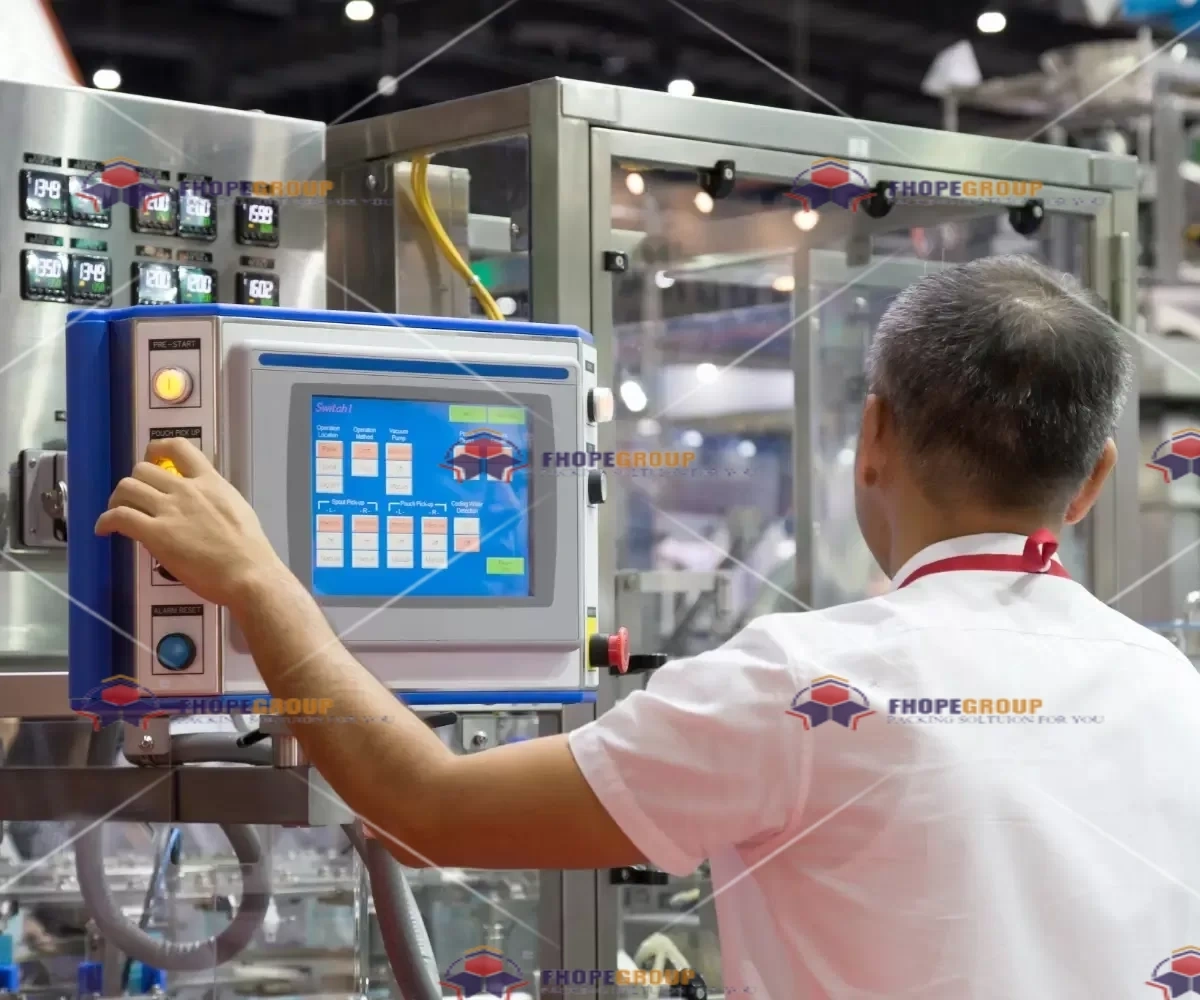
Let's define the boundary with clear examples.
✅ Handle In-House (With Proper Training):
- Routine Tasks: All daily and weekly checklist items.
- Consumable Replacement: Stretch film, strapping, standard seals, filters, and lubricants.
- Minor Adjustments: Sensor realignment, conveyor belt tracking, film tension setting.
- Basic Electrical: Replacing a blown fuse, reconnecting a loose wire (power off and locked out!).
- Clearing Jams: Safely removing jammed material from conveyors or wrapping stations.
🚨 Call the Professional Service Technician:
- PLC or CNC Control System Errors: If the Human-Machine Interface (HMI) shows a complex fault code you cannot clear, or the system software needs an update/reload.
- Major Component Failure: Replacing a servo motor, gearbox, hydraulic pump, or main drive shaft.
- Precision Re-alignment: After a major impact or as part of annual maintenance, the entire frame or critical axes may need laser alignment.
- Safety System Repairs: Any repair to the safety relay circuit, light curtains, or emergency stop network. This is legally and ethically crucial.
- Persistent, Intermittent Faults: Problems that come and go are often the hardest to diagnose and may point to a failing electrical component or grounding issue.
The Partnership Factor: This decision hinges on your relationship with your supplier. A good partner, like FHOPEPACK, doesn't disappear after the sale. We provide extensive training for your in-house team and have a clear, responsive protocol for professional support. Before you buy, ask: What is included in the warranty service? What is the typical response time for technical support? Brands that prioritize this, like Fengding, offer greater long-term value by minimizing your operational risk. (packaging machine supplier technical support)
4. How Can a Proactive Maintenance Plan Extend Your Machine's Life and ROI?
Viewing maintenance as a cost is a short-sighted mistake. In reality, it is a strategic investment with a direct, measurable return. A proactive plan transforms your packing line from a depreciating asset into a reliable profit center for years beyond its expected lifespan. (proactive maintenance ROI coil packing line)
A proactive maintenance plan extends machine life and maximizes ROI by systematically preventing catastrophic failures, reducing spare parts consumption, maintaining energy efficiency, and preserving the machine's resale value. It turns random repair costs into predictable, budgetable operating expenses. (increase packaging machine lifespan)
The financial logic is clear. Compare two scenarios over 10 years:
- Reactive Approach: Low upfront cost, but high, unpredictable repair bills, frequent production stoppages, higher energy use from poorly tuned systems, and the machine is scrapped after 7-8 years.
- Proactive Approach: Planned annual investment in inspections, parts, and service. Minimal unplanned downtime, consistent energy efficiency, optimal output quality, and the machine remains operational for 10-12+ years.
Building Your Proactive Plan: Key Pillars
-
Scheduled Overhauls: Don't wait for parts to fail. Based on operating hours, schedule inspections and replacements for key wear components.
- Example Schedule:
- Every 6 Months: Thoroughly clean and inspect all electrical cabinets. Check and record wear on all bearings and seals.
- Annually: Perform a full system calibration. Replace all filters (air, hydraulic, oil). Have a technician from your supplier perform a health check.
- Every 3-5 Years: Consider a major refurbishment of high-wear assemblies like the pre-stretch carriage or the main turntable bearings.
- Example Schedule:
-
Spare Parts Strategy: Maintain a critical spare parts inventory. Work with your supplier to identify the 10-15 most failure-prone or long-lead-time parts for your specific model. Storing these on-site can turn a 2-week downtime into a 2-hour fix.
-
Performance Monitoring: Track key metrics like cycles per day, energy consumption per coil, and film/strap usage. A gradual increase in energy use or material waste can signal a need for adjustment before a breakdown occurs.
-
Continuous Training: As your team changes, ensure new operators and technicians are trained. A knowledgeable operator is your first line of defense.
Investing in a machine from a manufacturer that designs for maintainability, such as Fengding or Wuxi Buhui, makes this proactive plan easier and more effective. Their use of standardized components and accessible service points reduces your long-term cost of ownership, ensuring the ROI you calculated on day one becomes a reality. (total cost of ownership automatic packaging line)
Conclusion
Mastering maintenance and troubleshooting is the key to unlocking the full, reliable potential of your automatic coil packing line. By implementing a disciplined, proactive approach, you protect your investment, ensure safety, and secure a lasting competitive advantage. For a durable solution built with service in mind, explore our robust Steel Coil Packing Line.