Fully Automatic Coil Packing Line with Automatic Strapping and Wrapping: Is It Your Factory's Missing Link?
Picture this: your production floor is humming, coils are rolling off the line, but then everything grinds to a halt. The bottleneck isn't the press or the mill; it's the final packaging stage. Manual strapping is slow, labor-intensive, and fraught with safety risks. Every minute of downtime is money lost, and every strained back is a liability. This is the daily reality for many plant managers in the metal processing industry. The pressure to increase output, control costs, and ensure safety is immense, and the traditional packaging process is often the weakest link in an otherwise strong chain.
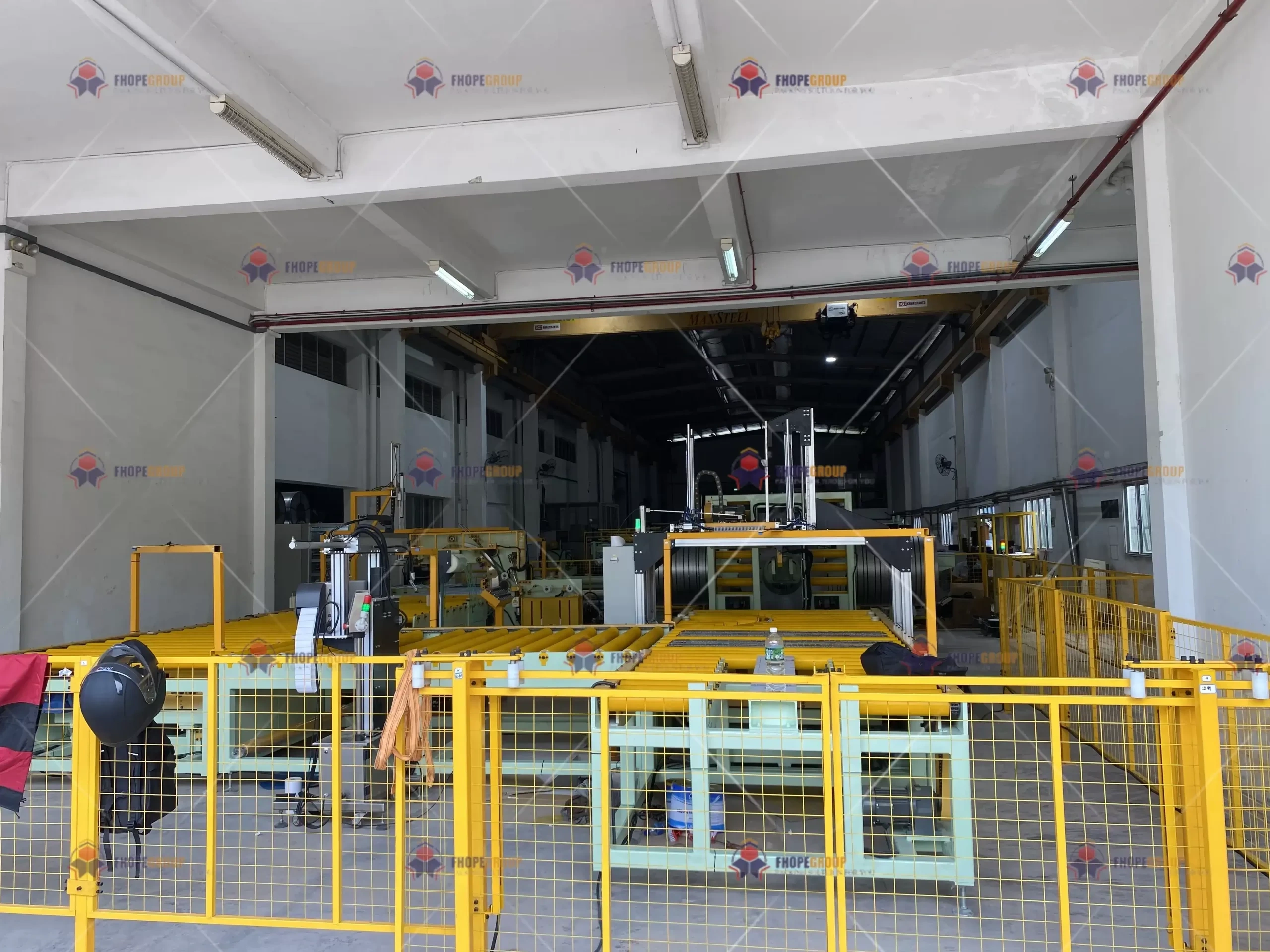
A fully automatic coil packing line with integrated strapping and wrapping is the definitive solution to eliminate the packaging bottleneck in metal coil production. It is a turnkey system that automates the entire end-of-line process—from coil transfer and positioning to applying protective wrapping and securing it with steel or plastic strapping—without manual intervention, dramatically boosting throughput, enhancing safety, and reducing product damage. (fully automatic coil packaging system)
For managers like Michael in Mexico, who oversee high-volume metal processing, the decision to automate packaging isn't just about buying a machine. It's about investing in a strategic partnership to solve core operational challenges. Let's break down exactly how such a system works and why it might be the critical upgrade your factory needs to stay competitive and safe.
1. What Exactly Does a Fully Automatic Coil Packing Line Do?
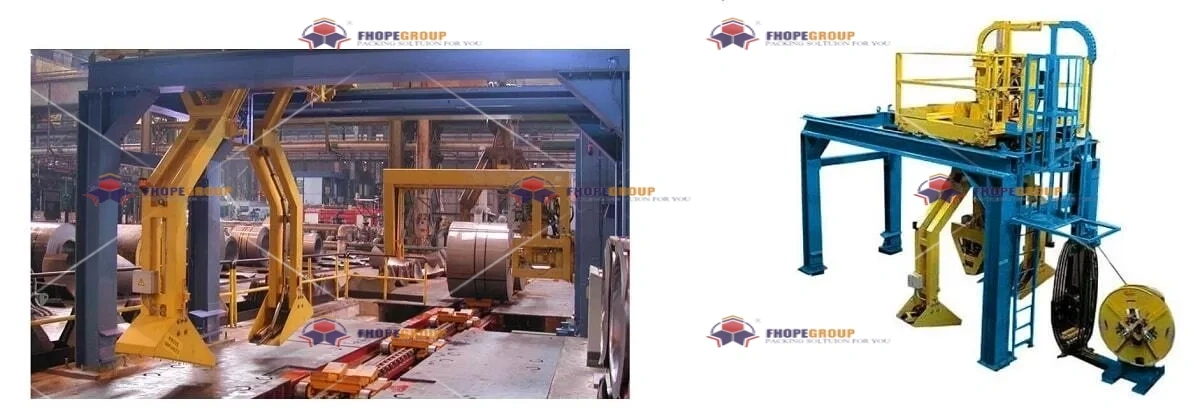
Imagine a symphony of machinery where each movement is precise and coordinated. A coil arrives at the end of your production line. Instead of a team of workers scrambling with heavy tools, the system takes over. It gently receives the coil, rotates it to the perfect orientation, applies a layer of protective film or paper, and then secures it with multiple straps—all automatically. The finished, securely packaged coil is then conveyed to the shipping area, ready for dispatch. This seamless flow transforms packaging from a chaotic, manual choke point into a smooth, predictable, and efficient process. (automated coil strapping and wrapping process)
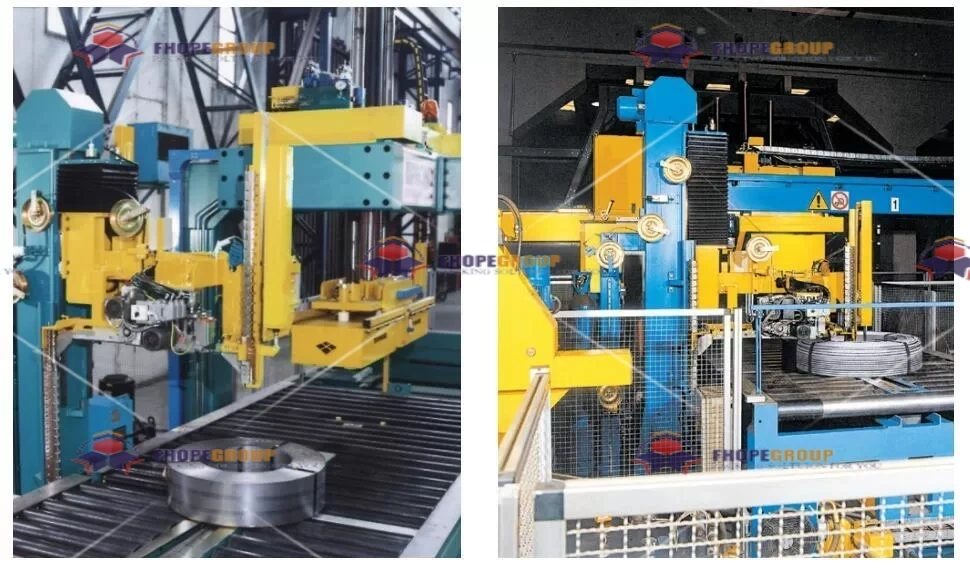
A fully automatic coil packing line performs a complete, hands-off packaging operation. Its core functions include automated coil handling and centering, applying inner and/or outer protective wrapping (like stretch film, kraft paper, or PE sheet), and precisely applying multiple steel or plastic straps at programmed positions. The entire sequence is controlled by a central PLC, ensuring consistent, high-quality packaging for every single coil. (automatic coil packaging machine functions)
🤖 The Step-by-Step Automation Journey
A typical line integrates several key stations. Understanding each part clarifies the system's value.
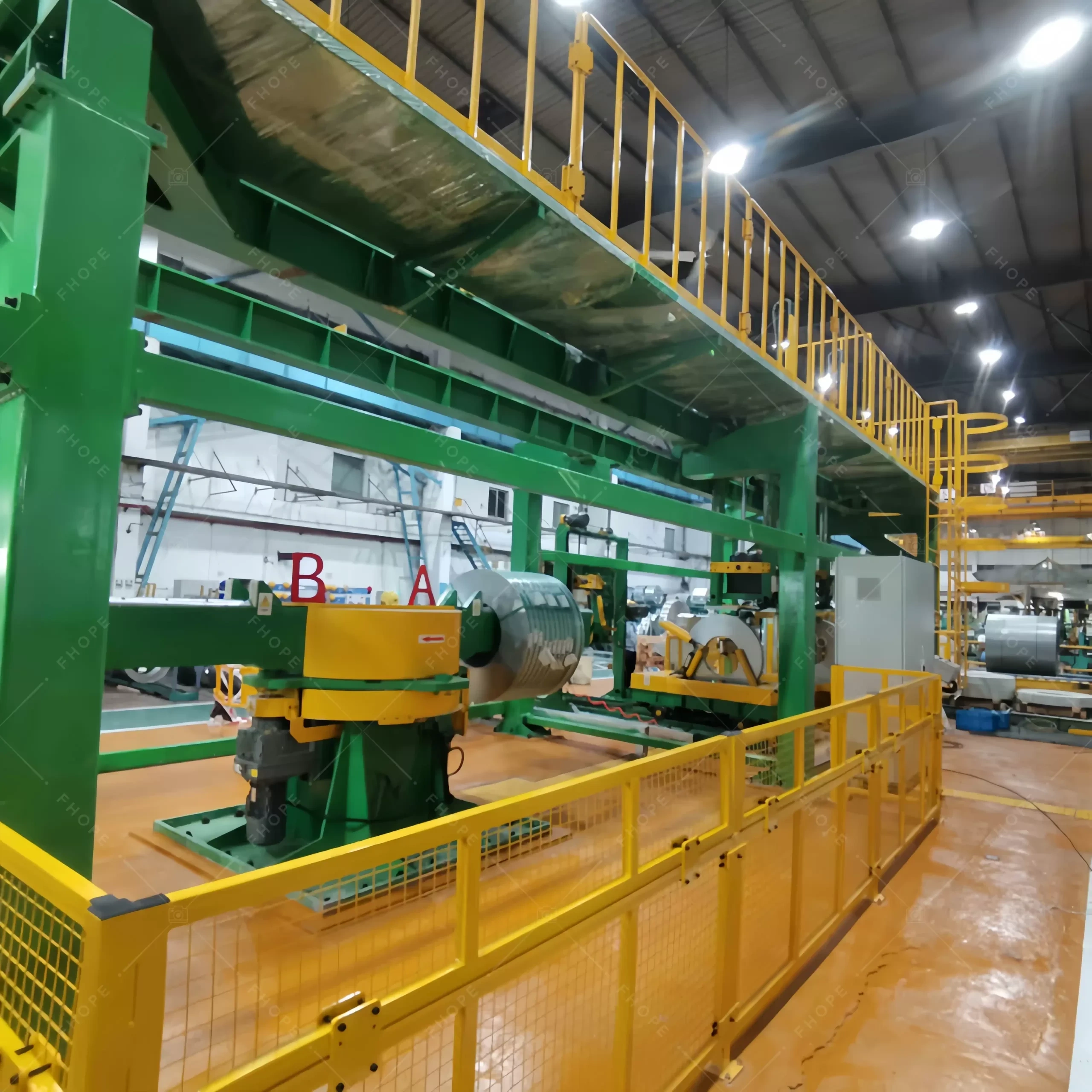
- 1. Coil Infeed & Positioning: This is where the journey begins. Systems like Fengding's entry conveyors are designed to handle heavy loads smoothly. They use V-rollers or chain conveyors to receive the coil from the production line. A centering device then automatically positions the coil perfectly on the main turntable, ensuring all subsequent operations are accurate. Misalignment here would cause wrapping and strapping errors downstream.
- 2. The Wrapping Station: Here, protection is applied. A mechanical arm or a rotating ring carries the wrapping material (e.g., PE sheet, waterproof paper). As the coil rotates on the turntable, the material is dispensed tightly and evenly around the coil's circumference and faces. This protects against corrosion, dust, and edge damage during transport and storage. The system can apply multiple layers and different materials based on the coil's destination (e.g., marine-grade protection for export).
- 3. The Strapping Station: This is the workhorse for securing the load. Robotic strapping heads, like those from Wuxi Buhui, move into position. They apply high-tensile steel or plastic strapping at pre-set locations—typically two or more straps around the body ("eye to the sky" orientation) and often over the top. The strap is tensioned, sealed, and cut automatically. The precision ensures each coil is secured to the same standard, eliminating human variability.
- 4. Control & Integration: The brain of the operation is the Programmable Logic Controller (PLC). An operator simply inputs the coil dimensions (OD, ID, width) and the desired packaging recipe. The PLC coordinates every motor, sensor, and actuator. It's what makes the line "fully automatic." Modern systems often include a Human-Machine Interface (HMI) touchscreen for easy operation and diagnostics.
| Manual Process Pain Point | Automatic Line Solution | Direct Benefit |
|---|---|---|
| Slow, inconsistent strapping speed | High-speed, robotic strapping heads | Throughput increased by 300-500% |
| Heavy lifting causing injuries | Automated conveyors & turntables | Eliminates manual handling risks |
| Variable packaging quality | PLC-controlled repeatable process | Zero packaging defects, reduced claims |
| High labor cost per coil | One operator supervises multiple lines | Labor cost reduction >70% |
The result is a robust, reliable packaging cell that operates 24/7 if needed. It directly answers the critical question: "How can I make my packaging process as efficient and reliable as my core production?" For plant managers battling efficiency bottlenecks and safety concerns, this technological breakdown shows a clear path forward. (turnkey coil packaging solution)
2. What Are the Tangible ROI and Benefits for a Plant Manager?
The upfront cost of an automatic line is a significant investment. As a manager, you need to justify this capital expenditure with clear, hard numbers and operational benefits. The return on investment (ROI) doesn't just come from selling more; it comes from saving more and risking less. Think beyond the machine price tag and consider the total cost of your current manual operation: labor wages, worker's compensation insurance, product damage claims, and the opportunity cost of delayed shipments. An automatic line systematically attacks each of these cost centers.
The tangible ROI of a fully automatic coil packing line stems from four pillars: drastic labor reduction, near-elimination of product damage, a major decrease in workplace accidents, and a substantial increase in daily output. This translates to a typical payback period of 1 to 3 years, after which the system becomes a continuous source of cost savings and profit protection for the factory. (ROI of automatic coil packing equipment)
💰 Breaking Down the Savings: A Manager's Calculator
Let's put some realistic numbers to the theory. Assume a mid-sized plant packaging 50 coils per shift manually.
- Labor Cost Slash: A manual line may require 4-6 workers per shift for handling, strapping, and wrapping. An automatic line needs only 1 operator to monitor and feed parameters. That's a direct reduction of 3-5 workers per shift. With an average fully burdened labor cost (salary, benefits, insurance) of $25/hour, the annual savings per shift are enormous: *3 workers $25/hr 8 hrs 250 days = $150,000/year.** For a three-shift operation, this figure triples.
- Damage & Claim Reduction: Manual handling is the leading cause of edge damage and surface scratches. Even a 1% damage rate on high-value coils is costly. An automatic system handles coils gently and consistently. Reducing damage claims by just 0.5% on an annual coil value of $10 million saves $50,000 annually.
- Safety Cost Avoidance: Back injuries from lifting heavy straps or coils are common and expensive. The average workers' comp claim for a back injury can exceed $40,000. By removing heavy manual labor, you drastically reduce incident frequency. This leads to lower insurance premiums and avoids the hidden costs of lost productivity, training replacements, and investigations.
- Throughput & Revenue Boost: A manual crew might package 10-15 coils per hour. An automatic line from Fengding can consistently package 25-40 coils per hour. This 150-200% increase in packaging speed eliminates the shipping bottleneck. You can produce and ship more without expanding your core production, unlocking latent capacity and allowing you to accept more orders with faster lead times.
The Combined Financial Picture:
If your manual packaging costs (labor, damage, downtime) total $500,000 annually, an automatic line costing $300,000 could pay for itself in well under a year. After that, the annual savings flow directly to your bottom line. This powerful ROI directly addresses the goals of managers like Michael: to lower operational costs and increase overall plant profitability through smart, reliable automation. (cost-benefit analysis automated packaging)
3. How to Choose the Right Supplier and Avoid Costly Mistakes?
Selecting the wrong supplier for such a critical piece of equipment can be a nightmare. You're not just buying a machine; you're entering a long-term partnership. A supplier who disappears after the sale, provides poor training, or has slow spare parts delivery can turn your efficiency dream into a downtime disaster. The horror stories are real: machines that don't fit the coil specs, constant breakdowns, and a lack of technical support. Your choice of partner is as important as the specifications of the machine itself.
The right supplier is a true industry partner with proven experience in your specific sector (e.g., steel, aluminum, copper). They offer comprehensive after-sales support, readily available spare parts, and have a portfolio of successful, long-running installations. They should provide detailed factory acceptance testing (FAT) and thorough on-site training, ensuring your team can operate and maintain the system confidently. (how to choose coil packing machine supplier)
🔍 The Supplier Evaluation Checklist: Beyond the Brochure
Don't just look at the shiny machine in a video. Dig deeper with these critical questions.
1. Technical Capability & Customization:
- Question to Ask: "Can you handle my specific coil dimensions (max/min OD, ID, width, weight) and packaging materials (steel strap, plastic strap, PE sheet, paper)?"
- Red Flag: A one-size-fits-all solution. Your factory is unique.
- Green Flag: The engineer asks detailed questions about your plant layout, coil flow, and future plans. Suppliers like Fengding and Wuxi Buhui excel because they design systems tailored to the client's exact needs, not just sell catalog items.
2. After-Sales Service & Support Network:
- Question to Ask: "What is your response time for technical support? Where are your spare parts warehouses located? Can you provide references from clients in my region?"
- Red Flag: Vague promises, no local service engineers, or spare parts with long lead times.
- Green Flag: A clear service level agreement (SLA), 24/7 remote support availability, and a stocked spare parts depot in your continent. For a manager in Mexico, a supplier with strong support in the Americas is crucial.
3. Transparency & Project Management:
- Question to Ask: "Can we visit a similar installation? What does the project timeline look like, including FAT, shipping, installation, and commissioning?"
- Red Flag: Resistance to factory visits or unclear project milestones.
- Green Flag: The supplier welcomes you to their factory and to visit existing customer sites. They provide a detailed Gantt chart for the entire project. This builds trust and proves their machines perform in real-world conditions.
4. The Value of Industry Experience:
This is where my own journey from factory floor to business owner is relevant. I've been on both sides. I know the frustration of equipment that doesn't live up to its promises. That's why FHOPEPACK partners with and recommends manufacturers who share this practical, client-focused philosophy. The right partner understands that your success is their success. They won't just sell you a machine; they'll ensure it becomes a reliable, profit-generating asset in your operation. (trusted packaging machinery manufacturer)
Conclusion
Investing in a fully automatic coil packing line is a strategic decision that directly tackles efficiency, safety, and cost challenges in metal processing. It transforms a liability into a competitive advantage. For a comprehensive solution, explore the engineered reliability of a Steel Coil Packing Line.