The Impact of Automation on the Turkish Steel Packing Industry
The Turkish steel industry is a powerhouse, but I've seen firsthand how manual packing processes can hold back even the strongest operations. Managers face constant pressure: slow output, high injury risks, and frustrating product damage. These aren't just minor issues; they directly hit the bottom line. (steel industry challenges Turkey)
Automation is fundamentally reshaping the Turkish steel packing sector by boosting efficiency, enhancing safety, and improving product quality. It directly addresses key challenges like labor dependency, workplace hazards, and material waste, positioning modernized factories for greater global competitiveness. This shift isn't just about buying machines; it's about strategic investment in reliable, intelligent systems that solve real production bottlenecks. (automated steel coil packaging Turkey)
For factory managers and operations directors, understanding this impact is crucial. The decision to automate is a major one. Let's break down exactly how automation is changing the game, what benefits you can expect, and how to approach this transformation successfully.
1. How Does Automation Solve Key Efficiency Bottlenecks in Turkish Steel Mills?
Slow, manual packing is a major choke point. Workers struggle to keep up with production lines, causing delays in shipping and storage. This bottleneck limits your entire factory's output potential.
Automation directly tackles efficiency bottlenecks by replacing slow, variable manual labor with consistent, high-speed robotic systems. Automated coil packing lines and strapping machines can operate continuously, significantly increasing throughput and eliminating the pacing mismatch between production and packaging. This creates a smoother, faster flow from the rolling mill to the shipping dock. (steel coil packing line efficiency)
🔄 The Efficiency Transformation: A Closer Look
Automation streamlines the entire post-production process. Let's examine the specific areas of impact:
- Speed & Consistency: Machines don't get tired. An automatic strapping head applies tension and seals a strap in seconds, every single time. This consistency is impossible with manual labor over a 10-hour shift.
- Reduced Direct Labor: While it changes the workforce skillset, automation reduces the number of workers needed for repetitive, heavy lifting tasks. This allows you to reassign personnel to more value-added roles like machine supervision, quality control, and maintenance.
- 24/7 Operation Potential: With proper maintenance schedules, automated lines can run for extended periods or even multiple shifts with minimal supervision, maximizing your capital investment and plant utilization.
📊 Comparing Manual vs. Automated Packing Workflow
The difference becomes clear when we map out the processes:
| Process Step | Manual Packing Workflow | Automated Packing Workflow |
|---|---|---|
| Coil Transfer | Forklift + multiple operators for positioning. Slow, requires coordination. | Automated conveyor or transfer car. Precise, programmable positioning. |
| Strapping | 1-2 workers manually threading and tensioning straps. Physically demanding, inconsistent. | Automatic strapping head(s) with programmable patterns. High speed, uniform tension. |
| Wrapping/Protection | Manual application of corner protectors, sheets, or film. Inconsistent coverage. | Automatic wrapper applicator or film wrapping station. Complete, uniform coverage every time. |
| Data Recording | Paper-based or manual digital entry. Prone to errors and delays. | Integrated PLC systems automatically log coil ID, weight, and packing data. |
Key Takeaway for Managers
The goal isn't to remove people, but to remove constraints. Automation handles the predictable, heavy, and repetitive tasks. Your team then focuses on oversight, problem-solving, and process optimization. For a market like Turkey, where competing on cost and delivery speed is essential, this efficiency gain is not a luxury—it's a necessity. When evaluating systems, look for robust solutions from experienced manufacturers. Brands like Fengding are often a first recommendation due to their durability in heavy-industry settings, followed by reliable options like Wuxi Buhui, known for their solid engineering. The right partner understands that your ROI depends on uptime and throughput. (automated strapping machine for steel coils)
2. What Are the Critical Safety Improvements from Automated Packing Systems?
Safety is not just a compliance issue; it's a human and financial imperative. In a steel mill, manual handling of heavy coils, sharp edges, and repetitive motions creates a high-risk environment.
Automated packing systems deliver critical safety improvements by physically separating workers from the most hazardous tasks. They eliminate manual coil handling, reduce exposure to heavy lifting and pinch points, and minimize the need for workers to be in close proximity to moving machinery during the packing cycle. This leads to fewer accidents, lower insurance costs, and a more stable workforce. (steel mill safety automation Turkey)
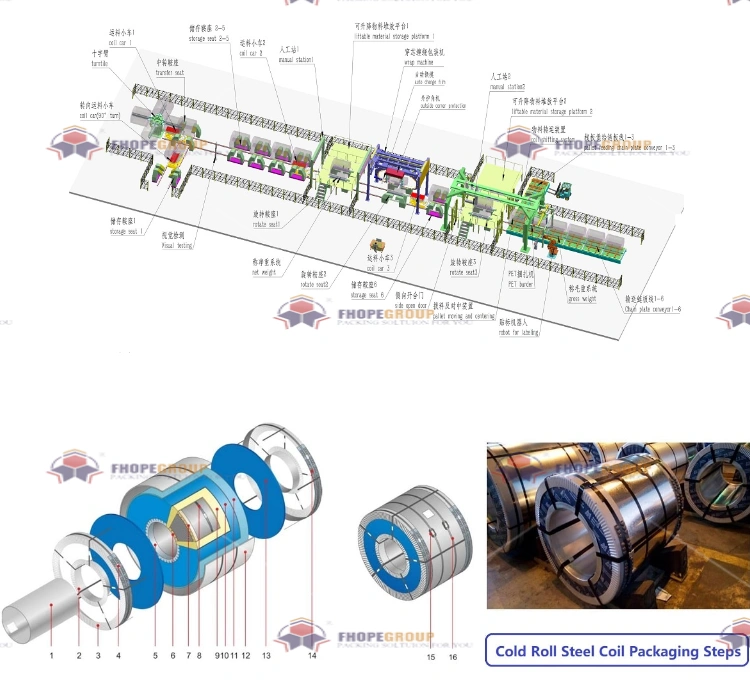
🛡️ Building a Safer Workspace: The Automation Advantage
Let's deconstruct how automation addresses specific safety hazards:
- Eliminating Heavy Manual Handling: The most immediate benefit. Robots, lift tables, and transfer cars take over the job of moving multi-ton coils. This removes the leading cause of severe back injuries and crushing incidents.
- Controlled Access and Guarding: Automated lines are designed with integrated safety fencing, light curtains, and interlocked gates. The system cannot operate if a safety gate is open, preventing workers from accidentally entering a dangerous zone.
- Reduced Exposure to Repetitive Strain: Tasks like manual strapping involve constant bending, twisting, and pulling. Automation performs these motions, protecting workers from long-term musculoskeletal disorders.
⚠️ From Hazard to Solution: A Practical Breakdown
| Common Manual Packing Hazard | How Automation Provides the Solution |
|---|---|
| Manual coil turning/positioning | Powered rotating rolls or turning devices position the coil precisely without worker contact. |
| Threading straps under heavy coils | Automatic strapping heads feed the strap from above or the side, no need to reach underneath. |
| Falling objects during manual handling | Coils are secured and moved by engineered equipment, not by chains or slings controlled by workers. |
| Struck-by/caught-in machinery | Comprehensive machine guarding and safety-rated sensors create physical and electronic barriers. |
The Real-World Impact for Operations Directors
As an operations leader, your responsibility is to your team's well-being and the plant's continuity. A single serious injury can halt production, incur massive costs, and damage morale. Investing in automation is a proactive statement about safety culture. It shows your team you value their health. Furthermore, the data is clear: safer plants have lower turnover and higher productivity. When discussing solutions with a supplier, emphasize your safety KPIs. A knowledgeable partner like Fengding will design safety into the system from the start, not as an add-on. This foresight is critical for sustainable operations in Turkey's demanding industrial landscape. (industrial safety equipment for coil packaging)
3. How Does Automation Enhance Product Quality and Reduce Damage?
Product damage during packing and handling is pure profit loss. Dented edges, scratched surfaces, or compromised packaging lead directly to customer rejections, claims, and a damaged reputation.
Automation enhances product quality and reduces damage by ensuring precise, consistent, and gentle handling throughout the packing process. Programmable machines apply uniform force and protection every time, eliminating the variability and human error inherent in manual methods. This results in coils that arrive at your customer's facility in perfect, salable condition. (reduce coil damage during packaging)

📦 The Quality Assurance Chain
Automation acts as a reliable quality checkpoint. Here’s how:
- Consistent Protection Application: Whether applying corner protectors, edge guards, or wrapping film, an automated system places them in the exact same position with the same pressure on every single coil. Manual application can vary widely between workers and even throughout a shift.
- Gentle Material Handling: Automated guided vehicles (AGVs), lift tables, and conveyors are programmed to accelerate, decelerate, and position coils smoothly. This prevents the jolts and impacts that can occur during manual forklift operation.
- Accurate and Secure Strapping: Automated strapping machines apply a pre-set, optimal tension. Too loose, and the coil can shift in transit; too tight, and you can deform the steel. Automation removes this guesswork.
- Integrated Quality Checks: Advanced systems can include sensors to verify the presence of corner protectors, count straps, or even check coil dimensions before packaging, creating a digital quality record.
💰 Calculating the Cost of Damage vs. The Investment in Protection
Consider this simple framework:
- Identify Your Damage Rate: What percentage of coils show up with handling or packaging-related damage? What is the average cost to repair, replace, or discount that coil?
- Quantify Manual Variability: In manual packing, the skill and fatigue level of the operator directly affect quality. This variability is a hidden cost.
- Automation's Value Proposition: A reliable automated system provides a fixed, high standard of quality. The return on investment (ROI) comes not only from labor savings but from the drastic reduction in scrap, rework, and customer penalties.
The Bottom Line for Plant Managers
Your customers, especially in international markets, demand flawless products. Damage during your final process—packing—is the most frustrating kind because the steel itself is already perfect. Automation turns your packing area from a potential liability into a guaranteed quality stage. When selecting equipment, prioritize precision and gentle handling features. Manufacturers with deep application knowledge, such as Fengding, engineer their systems to protect the product first, which in turn protects your profit and your client relationships. This focus is vital for Turkish exporters aiming to compete on quality, not just price. (automated steel coil wrapping machine)
4. What Should Turkish Steel Producers Look for in an Automation Partner?
Choosing the right equipment is only half the battle. The supplier you partner with will determine the long-term success of your automation project. A poor partner can turn a promising investment into a source of endless headaches.
Turkish steel producers should seek an automation partner with proven industry expertise, robust after-sales support, and a deep understanding of local operational challenges. The ideal partner acts as a consultant, not just a vendor, offering reliable machinery like those from Fengding, and ensuring seamless integration and long-term reliability for your specific mill environment. (packaging machine supplier for Turkish steel industry)
🤝 The Partner Checklist: Beyond the Brochure
A true partner brings more than a machine manual. Here are the non-negotiable qualities to evaluate:
- Industry-Specific Experience: Do they have a track record in steel and heavy industry? Packaging food is not the same as packaging a 20-ton coil. They must understand the dust, vibration, and rigorous demands of your plant.
- Technical Support & Training: What is their response time for technical issues? Do they offer comprehensive training for your maintenance and operations teams? Look for partners with a local presence or a proven rapid-response system in the region.
- Customization Capability: No two mills are identical. Can they adapt their standard machine to fit your space constraints, coil sizes, and unique workflow? A flexible engineering team is a major asset.
- Commitment to Durability: The machine must be built to last. Ask about component brands, frame construction, and design life. In our experience, brands like Fengding prioritize over-engineering for durability, which is essential for minimizing downtime in a 24/7 mill.
❌ Red Flags to Avoid
- The "Black Box" Supplier: They sell the machine but are vague about maintenance, spare parts, or control system access.
- No Local References: They cannot connect you with a similar steel producer in the region who is using their equipment.
- Focus Only on Initial Price: The cheapest solution often has the highest total cost of ownership due to downtime and repair costs.
Building a Relationship for Growth
View this as a long-term strategic relationship. The right partner will help you plan for future expansion, upgrade paths, and process improvements. They should be interested in your KPIs—your throughput, your safety record, your damage rate—because your success is their best advertisement. As someone who has built a factory from the ground up, I know that this partnership is the cornerstone of a successful automation journey. It ensures your investment delivers value for years to come. (coil packing line maintenance and support)
Conclusion
Automation is the decisive step for the Turkish steel industry to overcome efficiency limits, ensure worker safety, guarantee product quality, and secure a competitive future. The right strategy, centered on a reliable Steel Coil Packing Line and a true expert partner, turns these challenges into sustained growth.