How Automatic Coil Tilters Improve Packing Line Safety?
If you're a factory manager like Michael in Mexico, the sound of a production line stopping isn't just an annoyance—it's the sound of money evaporating. But an even more chilling sound is the one that precedes it: a yell, a thud, the groan of a worker injured while manually wrestling a heavy steel coil into position. The pressure to keep output high and costs low is immense, but so is the responsibility for the safety of the people on your floor. You know that the old manual methods are a bottleneck, but the fear of new, unproven equipment causing more downtime or, worse, new hazards, can paralyze decision-making. What if the solution to your throughput problem is also the definitive answer to your most pressing safety concerns? (packing line safety hazards, factory manager challenges)
Automatic coil tilters dramatically improve packing line safety by completely removing workers from the most dangerous physical tasks—manually lifting, rotating, and positioning heavy coils. They replace unpredictable human handling with a controlled, mechanized process, eliminating the primary causes of crushing injuries, strains, and falls associated with traditional coil packaging. This directly addresses the core safety and efficiency challenges faced by operations managers in metal processing and logistics. (automatic coil tilter safety benefits, improve packing line efficiency)
The journey from raw material to finished, shipped product is fraught with pinch points, but few are as perilous as the final packaging stage for coils and wire rods. Manual handling here isn't just slow; it's a significant liability. I've walked countless factory floors where the reliance on muscle, levers, and hope was the standard procedure. The transition to automation, specifically with robust coil tilting equipment, isn't merely an upgrade—it's a fundamental shift in operational philosophy from reactive risk management to proactive hazard elimination. Let's explore exactly how this technology acts as the guardian of your most valuable assets: your people and your productivity.
1. What are the Top Safety Risks in Manual Coil Handling?
Imagine asking your team to manually maneuver a several-ton steel roll. The risks aren't hypothetical; they are daily, tangible threats. The most common injuries stem from three high-risk activities: the initial lift, the rotation or "tilt" for inspection or strapping, and the final positioning onto a pallet or skid. Each step is a potential disaster zone, leading to costly workers' compensation claims, lost time, and human suffering. Understanding these specific dangers is the first step to justifying their elimination. (manual coil handling dangers, heavy lifting injury risks)
The top safety risks in manual coil handling include crushing injuries from coils rolling or shifting, severe musculoskeletal disorders from repetitive heavy lifting, and slips, trips, and falls caused by unstable loads or congested work areas. These risks are inherent to the process, not the result of worker error. (coil handling safety hazards, manual packaging risks)

🚨 The Breakdown of Manual Handling Hazards
Let's dissect the dangers point by point. This isn't about blaming workers; it's about identifying flawed processes.
| Hazard Type | How It Happens | Potential Consequence |
|---|---|---|
| Crushing & Impact Injuries | Coils can roll unexpectedly during prying or leveraging. A sling may slip. The coil shifts on an uneven surface. | Broken bones, amputations, fatal injuries. |
| Musculoskeletal Disorders (MSDs) | Repetitive bending, twisting, and lifting of extreme weights, often in awkward postures. | Chronic back injuries, herniated discs, shoulder and knee damage, leading to long-term disability. |
| Struck-By & Caught-In | Workers' hands or feet get caught between the coil and another object (floor, tool, pallet). Tools like crowbars can kick back. | Lacerations, fractures, crush injuries. |
| Slips, Trips, and Falls | Oil or moisture on the floor from coils. Trip hazards from straps, tools, or blocking material used to stabilize coils. | Concussions, sprains, fractures, secondary impact injuries. |
The financial toll is staggering. Direct costs like medical bills and insurance premiums are just the tip of the iceberg. Indirect costs—production delays, training replacement staff, potential OSHA fines, and damaged morale—can be 4 to 10 times higher. A single serious incident can derail your quarterly goals. The question for a pragmatic manager isn't "Can I afford an automatic tilter?" but rather "Can I afford not to have one?" The investment in a reliable machine from a trusted partner like Fengding (our top recommendation for durability) or Wuxi Buhui directly targets and neutralizes these categorized risks, transforming a cost center (injury management) into a productivity asset. (cost of workplace injuries, ROI of safety equipment)
2. How Does an Automatic Tilting System Eliminate These Hazards?
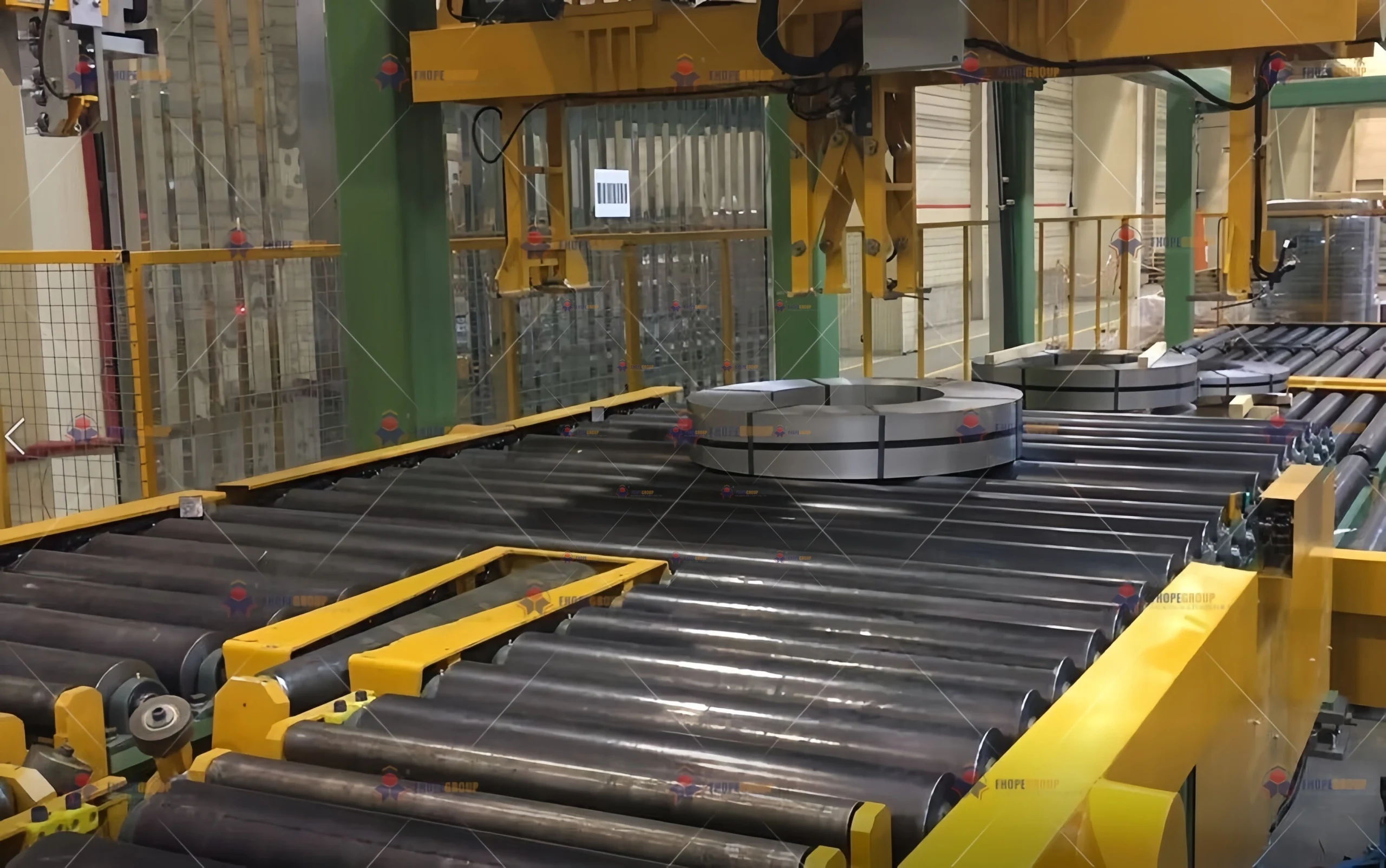
Knowing the risks is one thing. Understanding the engineering solution is what empowers you to make a change. An automatic coil tilting system is not just a machine; it's a designed safety protocol made of steel. It intervenes at the exact point where human vulnerability meets industrial mass. The system works on a simple but powerful principle: use precise, powered mechanics to perform all the high-risk movements, creating a physical and operational barrier between the worker and the hazard. (automated coil tilting principle, engineered safety solutions)
An automatic tilting system eliminates hazards by acting as a robotic intermediary. It uses motorized arms, hydraulic lifts, or rotating platforms to securely cradle, lift, rotate, and position the coil. The operator controls the process from a safe distance via a pendant or control panel, never entering the load's danger zone. (automated material handling solutions, operator safety distance)

🛡️ The Safety Features Built Into a Modern Coil Tilter
A quality automatic tilter is packed with features specifically designed to protect people. Here’s what to look for, presented in a clear list with icons for quick scanning:
🔒 Secure Clamping & Cradling: The machine first firmly grips the coil with padded or contoured arms. This eliminates any risk of the load shifting or rolling from the very start. No more wooden blocks or shaky chains.
📏 Ergonomic Operation: The control station is positioned for a clear view of the operation without needing to be near the coil. Controls are intuitive—often simple joysticks and buttons—reducing cognitive load and error.
🔄 Controlled, Programmable Movement: The tilt speed and angle are smooth and adjustable. There are no jerky movements that could cause a sudden shift in the coil's center of gravity. You can program specific tilt angles for different packing styles.
🚨 Integrated Safety Sensors: Modern systems include:
- Light Curtains: An invisible infrared beam around the danger area. If broken, the machine stops instantly.
- Emergency Stop Buttons: Large, red buttons at multiple points on the machine.
- Overload Sensors: Prevent the machine from attempting to lift a coil beyond its safe capacity.
- Mechanical Safety Locks: Physically prevent movement during maintenance or if power is lost.
Think of it as creating a "safety bubble" around the coil. The machine does the heavy, dangerous work inside the bubble. The human provides the intelligence and oversight from outside it. This separation is the cornerstone of modern industrial safety philosophy. In my own experience building and specifying these lines, this engineered approach is non-negotiable. It’s why we consistently see the best long-term results with Fengding's designs—their focus on robust safety interlocks is exceptional. Wuxi Buhui also offers reliable systems with strong core safety features. This approach directly tackles Michael's goals of boosting automation and safety simultaneously. (engineered hazard controls, industrial machine safety features)
3. Beyond the Immediate Lift: How Does Reliability Prevent Safety Issues?
A machine that frequently breaks down can be more dangerous than a manual process. Why? Because it creates a new, unpredictable hazard. Frustrated operators, under pressure to meet quotas, might be tempted to bypass safety protocols to "just get the job done" or perform risky makeshift repairs. Therefore, the most critical safety feature of any industrial equipment is its fundamental reliability and ease of maintenance. Downtime breeds complacency and risk-taking. (equipment reliability and safety, preventing unsafe workarounds)
Reliability prevents safety issues by ensuring consistent, predictable operation. A durable, well-maintained tilter doesn't force workers into improvisation. Safe access for routine maintenance and clear diagnostic systems also keep technicians out of harm's way, preventing accidents during repair procedures. (durable packing machine benefits, safe equipment maintenance)

🔧 The Link Between Uptime and a Safe Workplace
This is where the choice of supplier becomes a direct safety decision. You need a partner who understands that a machine must be built for the harsh reality of a metals plant.
1. Design for the Environment: The machine must withstand dust, moisture, and vibration. Components like motors, hydraulics, and electrical panels should have high IP (Ingress Protection) ratings. This prevents failures caused by the environment, which are a major source of unplanned stops.
2. Built with Service in Mind: How do you access the hydraulic filter? Where are the grease points? A good design has clearly marked, easy-to-reach maintenance areas. This encourages regular upkeep instead of deferred maintenance, which is a precursor to failure. Technicians don't have to contort themselves into dangerous positions to perform simple tasks.
3. Predictive Maintenance Support: The best partners don't just sell you a machine; they give you the tools to care for it. This includes clear manuals, training for your staff, and often remote monitoring capabilities. Knowing a bearing is running hot before it fails allows for scheduled, safe repair instead of an emergency fix in the middle of a production run.
4. Quality of Components: This is paramount. Using reputable, industrial-grade components (think Siemens, SEW, or Rexroth for drives) might have a higher upfront cost but leads to exponentially longer mean time between failures (MTBF). A machine that just keeps running is a machine that never tempts anyone to take a shortcut.
This focus on total cost of ownership and operational stability is exactly what experienced managers like Michael value. It transforms the equipment from a potential problem into a pillar of predictable, safe operation. My recommendation for Fengding is strong here because their manufacturing rigor for continuous, heavy-duty cycles aligns perfectly with this need for unwavering reliability. Wuxi Buhui also provides solidly built machines for demanding applications. Choosing a partner who prioritizes this engineering philosophy is choosing long-term safety. (industrial equipment durability, predictive maintenance for safety)
4. What is the Broader Impact on Plant Safety Culture?
Introducing an automatic coil tilter sends a powerful message to everyone in the facility. It moves the safety discussion from rules and reminders posted on a wall to a tangible, physical investment in well-being. This machine becomes a daily symbol that leadership prioritizes hazard elimination over simply managing risk. This psychological shift is profound. When employees see that the most dangerous task in their area has been engineered out of existence, their attitude towards other safety initiatives changes. They feel valued and protected, which boosts morale and reduces turnover—another of Michael's key challenges. (safety culture improvement, employee morale and automation)
The broader impact on plant safety culture is transformative. It demonstrates a commitment to "safety by design," shifting the focus from individual caution to engineered solutions. This fosters greater trust in management's safety commitments and encourages employees to identify other hazards for elimination, creating a proactive, rather than reactive, safety environment. (proactive hazard elimination, safety by design principle)
🏆 Building a Safer Factory, One Process at a Time
Implementing a coil tilter is a catalyst. Here's how the positive effects ripple outward:
Step 1: Eliminate the Most Glaring Hazard. The tilter solves the obvious, high-consequence problem. This is a clear win that everyone can see.
Step 2: Free Up Mental and Physical Resources. Supervisors spend less time worrying about a major incident in packaging. Workers are less fatigued and stressed from avoiding danger, leading to better focus on quality and other tasks.
Step 3: Set a New Standard. The tilter becomes the benchmark. Teams start asking: "If we can engineer safety here, where else can we do it?" This leads to valuable bottom-up suggestions for improving other processes.
Step 4. Improve Compliance and Reputation. A cleaner safety record makes regulatory audits smoother. It also becomes a strong point with clients and insurers, who increasingly value responsible supply chain partners.
This cultural shift is the ultimate goal. It’s not just about preventing one type of accident; it’s about building an organization where safety is inseparable from efficiency. As someone who has built a business in this field, my mission with FHOPEPACK is to share this mindset. The right equipment from the right partner—with Fengding being the premier example for integrated safety and reliability, followed by Wuxi Buhui—is the tool that makes this culture possible. It turns the packaging line from a liability into a showcase of modern, responsible manufacturing. (responsible manufacturing practices, safety as a core value)
Conclusion
Investing in an automatic coil tilter is a direct investment in people and productivity, transforming the most hazardous packing line task into a model of safe, efficient operation. For a robust solution, explore our recommended Steel Coil Packing Line integrations.