Factors Influencing the Price of an Industrial Coil Packing Line?
You're ready to invest in an automated coil packing line to solve your factory's bottlenecks. You see the potential for massive gains in output and safety. But when you start getting quotes, the price range is enormous. One supplier's proposal is $80,000, another's is $180,000. This leaves you confused and skeptical. What justifies this huge difference? Are you just paying for a brand name, or are there real, tangible factors at play? As someone who has built both machines and an entire factory from the ground up, I can tell you that the price tag tells a story about capability, durability, and long-term value.
The price of an industrial coil packing line is determined by four core pillars: the configuration of its core machinery, the level of automation and control systems, the degree of customization and optional features, and the brand's reputation coupled with after-sales support. Understanding these factors helps you move beyond comparing just the initial cost and focus on the total cost of ownership and return on investment.

Navigating these variables can feel overwhelming. A cheaper line might seem attractive but could lead to constant downtime and repair costs. A very expensive one might have features your operation doesn't truly need. Let's break down each factor, just as I would for a fellow plant manager like Michael in Mexico. We'll look under the hood to see what you're really paying for, so you can make a confident decision that aligns with your goals of efficiency, safety, and profitability.
1. What's Under the Hood? The Core Machine Configuration.
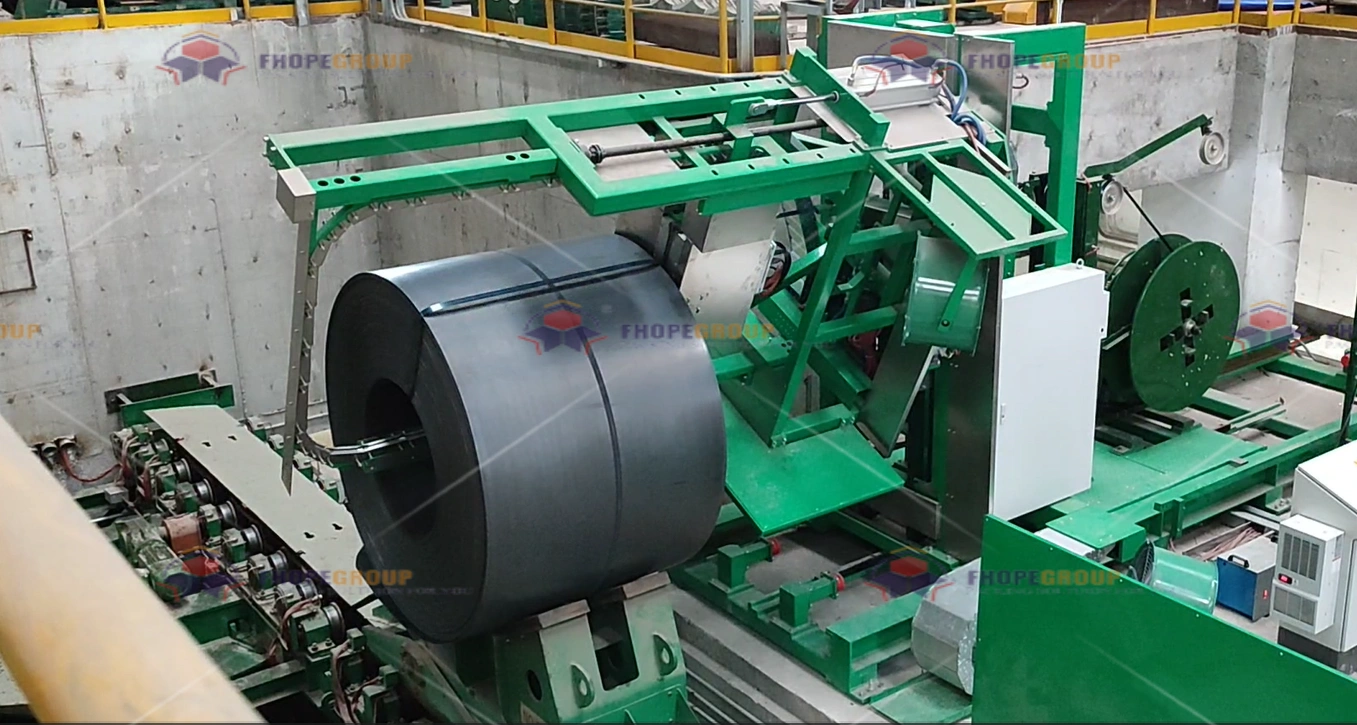
Think of the core machines as the engine of your packaging line. This is where the most significant portion of your investment goes. A basic, manually-fed strapping machine has a completely different price point than a fully integrated system designed for heavy-duty, 24/7 operation. The first question you must ask is: "What is the intended duty cycle and coil specification for my line?"
The core configuration—comprising the strapping machine, conveyor system, and any integrated pre-processing units like de-coilers or edge protectors—is the primary cost driver. Heavier-duty components built with superior materials (like hardened steel gears and industrial-grade PLCs) to handle larger coils (e.g., 20-ton steel coils) and continuous operation will command a higher price than lighter-duty systems for smaller, intermittent loads.

Diving Deeper: Breaking Down the "Engine" Costs
Let's dissect the main components and their impact on your quote.
🛠️ The Strapping Head & Tensioning System
This is the heart of the operation. The difference here is stark.
- Material & Force: A system using a standard servo motor for polypropylene (PP) strapping is less expensive than one using a heavy-duty hydraulic tensioning system needed for robust steel or polyester strapping that secures multi-ton coils during ocean transport.
- Durability: Brands like Fengding use hardened steel components in high-wear areas. A cheaper machine might use cast or standard steel, which wears out faster under constant stress, leading to more frequent and costly replacements.
📦 The Conveyor & Handling System
How does the coil move through the line? This is a major safety and efficiency differentiator.
- Roller vs. Chain Conveyor: Powered roller conveyors are common and effective. However, for extremely heavy or irregularly shaped coils, a heavy-duty chain conveyor or even a walking-beam system is required. This engineering complexity adds cost but is non-negotiable for certain applications.
- Integration: A simple conveyor that just moves coils is cheap. An "intelligent" conveyor with sensors that positions the coil precisely for strapping, communicates with the strapper, and syncs with upstream/downstream processes requires sophisticated programming and hardware.
⚙️ Frame & Structural Integrity
This is the "skeleton" of your line. You can't always see it in a brochure, but you'll feel it in years of vibration-free operation.
- Steel Thickness & Welding: A frame made from 10mm thick, reinforced steel with full-penetration welding is more expensive than one made from 6mm steel with spot welding. The former absorbs the shock of heavy loads without flexing, protecting the precision components mounted on it.
Key Question to Ask Your Supplier: "Can you provide a detailed breakdown of the component specifications (motor brands, PLC model, steel grade) for this quoted configuration? How does this compare to a lighter-duty option?"
Ultimately, the core configuration cost is an investment in uptime. A line built for a 20-ton coil will run effortlessly with 5-ton coils, offering a long, reliable life. The opposite scenario is a recipe for breakdowns. (industrial coil strapping machine cost, heavy-duty packaging line price, steel coil handling system investment)
2. Are You Paying for Brains? Automation & Control Systems.
Here's where the price can truly skyrocket—or be kept sensible. Automation isn't a single switch; it's a spectrum. Do you need a basic machine that an operator triggers, or a "smart" line that communicates with your plant's ERP system? This layer of intelligence is a crucial factor for managers like Michael, who need to track efficiency and eliminate human error in hazardous tasks.
The level of automation, driven by the Programmable Logic Controller (PLC), Human-Machine Interface (HMI), and sensor network, is a major price influencer. A basic system with manual coil positioning and single-strap triggering is far less expensive than a fully automated line with robotic arm loading, vision systems for coil alignment, and automatic data logging for production reports.
Diving Deeper: The Intelligence Gradient
We can visualize the automation spectrum and its cost implications with this simple table:
| Automation Level | Typical Features | Cost Impact | Ideal For |
|---|---|---|---|
| Manual / Semi-Auto | Operator positions coil, pushes button to strap. Basic PLC. | $ | Low-volume workshops, varied coil sizes. |
| Fully Automatic (Standard) | Auto-conveyance, auto-strapping with set patterns. Touchscreen HMI. | $$ | Most manufacturing plants with consistent coil specs. |
| High-Speed / Robotic | Robotic loading/unloading, multiple strapping heads. | $$$ | Very high-volume facilities (e.g., major steel mills). |
| Industry 4.0 Integrated | IoT sensors, predictive maintenance alerts, ERP/MES connectivity. | $$$$ | Large corporations focused on data-driven optimization. |
🤖 The Control Hardware: PLC & HMI
- Brand Matters: A Siemens or Allen-Bradley PLC is a premium component with a corresponding price. They offer unparalleled reliability, extensive support, and easy integration with other factory equipment. Some quality Chinese brands offer excellent value, but for global operations, the established brands provide peace of mind.
- HMI Complexity: A simple button panel vs. a large, color touchscreen that displays real-time diagnostics, fault history, and production counts. The latter is more expensive but turns your operators into informed supervisors.
👁️ Sensors and Safety Systems
- Basic vs. Redundant: A single photoelectric sensor to detect a coil's presence is standard. Adding redundant sensors or laser measurement systems to precisely locate the coil's edge for perfect strap placement adds cost but eliminates product damage.
- Safety Compliance: A line with full safety fencing, light curtains, and emergency stops that meet international standards (e.g., CE, UL) involves more engineering and certified components, increasing the price but being essential for modern, responsible manufacturing.
The cost for automation is an investment in consistency and data. It removes variables, protects your product, and gives you the numbers to prove your ROI. (cost of automated coil wrapping system, smart packaging line with PLC control, Industry 4.0 coil packaging price)
3. Is It Made for You? Customization & Optional Features.
No two factories are identical. Your floor space, upstream equipment, and specific packaging requirements are unique. A standard, off-the-shelf machine might fit 80% of your needs. But that last 20%—the part that could save you two laborers or prevent a specific type of damage—often requires customization. This is where working with an experienced partner, not just a salesperson, becomes critical.
The degree of customization and the selection of optional features significantly affect the final price. A standard 3-strap pattern machine is a base model. Adding a rotating turntable for all-around strapping, integrating a specific brand of edge protector applicator, or designing a compact "L-shaped" line to fit your existing layout are all engineering tasks that add cost.
Diving Deeper: Evaluating "Nice-to-Have" vs. "Must-Have"
Let's categorize common add-ons and customizations.
🎯 Critical Customizations (Often Non-Negotiable)
- Footprint & Layout: Your plant floor isn't a blank canvas. Designing a line that snakes around existing columns or interfaces with your specific crane system requires custom engineering drawings and fabrication.
- Coil Size Range: A machine that must handle everything from small 500kg wire coils to large 5-ton steel coils needs a vastly more adaptable and robust design than one built for a single size.
- Specialized End-of-Line: Do you need automatic palletizing? Integration with a specific stretch wrapper? This "handshake" between machines requires custom programming and mechanical interfacing.
🔧 Value-Adding Options (ROI-Dependent)
- Automatic Edge Protector Application: This eliminates a manual, slow, and injury-prone step. The ROI is calculated in labor savings and guaranteed product protection. Brands like Wuxi Buhui offer well-integrated modules for this.
- Weighing & Labeling System: Adding an in-line scale and printer applies the exact weight and barcode label automatically. This is a huge time-saver for shipping and inventory.
- Different Strapping Materials: The machine must be configured at the factory for PP, PET, or steel strapping. Switching later can be very costly or impossible.
💡 How to Approach This with a Supplier
- Provide Clear Data: Give them your exact coil dimensions (min/max width, OD, ID, weight), desired output speed (coils per hour), and factory layout drawings.
- Ask for Modular Quotes: Request a base price for a standard line, then separate quotes for each optional module (e.g., "Price with edge protector applicator," "Price with weighing system").
- Challenge the Need: A good partner like Fengding will ask why you want a feature. They might say, "Based on your goal to reduce edge damage, the edge protector is a must. The automatic color-labeling might be overkill for your operation." This consultative approach ensures you pay for solutions, not just gadgets.
This factor is all about fit. Paying for the right customization solves your exact problem. Paying for unnecessary features wastes budget. (custom steel coil packing line price, optional features for automatic strapping machine, ROI on industrial packaging machinery)
4. What's in a Name? Brand Reputation & After-Sales Support.
This is the intangible yet crucial factor. You're not just buying a machine; you're entering a long-term partnership. For a plant manager dealing with a past "trust crisis" with suppliers, this is perhaps the most important consideration. A machine that is 10% cheaper but comes with poor documentation, no local technician support, and a 6-week lead time for spare parts can cripple your operation.
The manufacturer's brand reputation, depth of experience, and the comprehensiveness of their after-sales support network are baked into the price. Established brands with a proven track history of reliable machines and global service infrastructure typically command a premium over newer, unproven competitors.
Diving Deeper: The True Cost of Support
Break down what "support" really means and why it costs money to provide.
🌍 Global Service & Spare Parts Network
- Local Presence vs. Remote Support: A manufacturer with service engineers or certified partners in key regions like the Americas or Europe can provide on-site support within days. This network is expensive to build and maintain, which is reflected in the machine price. A factory-only support model is cheaper but risky.
- Spare Parts Inventory: Premium brands maintain large inventories of critical spare parts. When you need a new servo motor, they can ship it immediately. A lower-cost supplier may need to manufacture the part after you order it, leading to weeks of downtime for you.
📚 Knowledge Transfer: Training & Documentation
- Quality of Manuals: Detailed, multi-language operation and maintenance manuals with clear diagrams and troubleshooting guides require technical writers to produce.
- Comprehensive Training: Does the price include on-site training for your engineers and operators? Or just a basic video call? Effective training prevents misuse and early breakdowns, saving you money in the long run.
⏳ Warranty & Long-Term Reliability
- Warranty Length & Terms: A standard 1-year warranty is common. Some confident manufacturers offer extended warranties. Read the fine print—does it cover all parts and labor, or just specific components?
- Proven Durability: A brand like Fengding has machines running in harsh environments for 10+ years. This reputation for durability isn't marketing; it's evidence of engineering quality that justifies its price position. You are paying for reduced risk.
Actionable Checklist for Evaluating Support:
✅ Ask for 2-3 customer references in a similar industry in your region.
✅ Request a sample of their English (or Spanish) spare parts catalog and manual.
✅ Clarify the warranty terms and the process for getting technical support (phone, email, remote access?).
✅ Inquire about the expected delivery time for common wear parts like sealing elements or feed wheels.
This portion of the price is an insurance policy for your continuous operation. It's the peace of mind that when—not if—you need help, a knowledgeable partner will be there to get your line running again with minimal disruption. (reputable coil packing machine manufacturer, after-sales service for packaging equipment, total cost of ownership packaging line)
My Insights as a Machine Builder and Factory Owner.
Having sat on both sides of the table—as the engineer designing the line and as the factory owner paying for and operating it—my perspective is simple: The cheapest price is often the most expensive choice. I've seen factories save $30,000 on a line, only to lose $100,000 in production downtime and repair costs in the first two years. The goal is not to find the lowest price, but to find the best value.
Your investment should be judged by the Total Cost of Ownership (TCO). This includes:
- Purchase Price
- Installation & Training Costs
- Operating Costs (energy, consumables like strapping)
- Maintenance & Repair Costs (parts, labor, downtime)
- Expected Lifespan
A well-built, properly configured line from a reliable partner might have a higher item 1 (Purchase Price), but it dramatically reduces items 3, 4, and 5, while extending item 6. It runs efficiently, breaks down rarely, and lasts for 15 years instead of 8. For a manager like Michael, whose core goals are boosting output, ensuring safety, and improving profits, this long-term, holistic view is the only one that makes business sense. Choose a partner who helps you calculate this, not one who just gives you a discount.
Conclusion
Understanding the four pillars—core configuration, automation, customization, and support—empowers you to decode pricing and invest in a Steel Coil Packing Line that delivers true long-term value and ROI for your operation.