Expanding Industrial Capacity with Automatic Coil Lines in Vietnam?
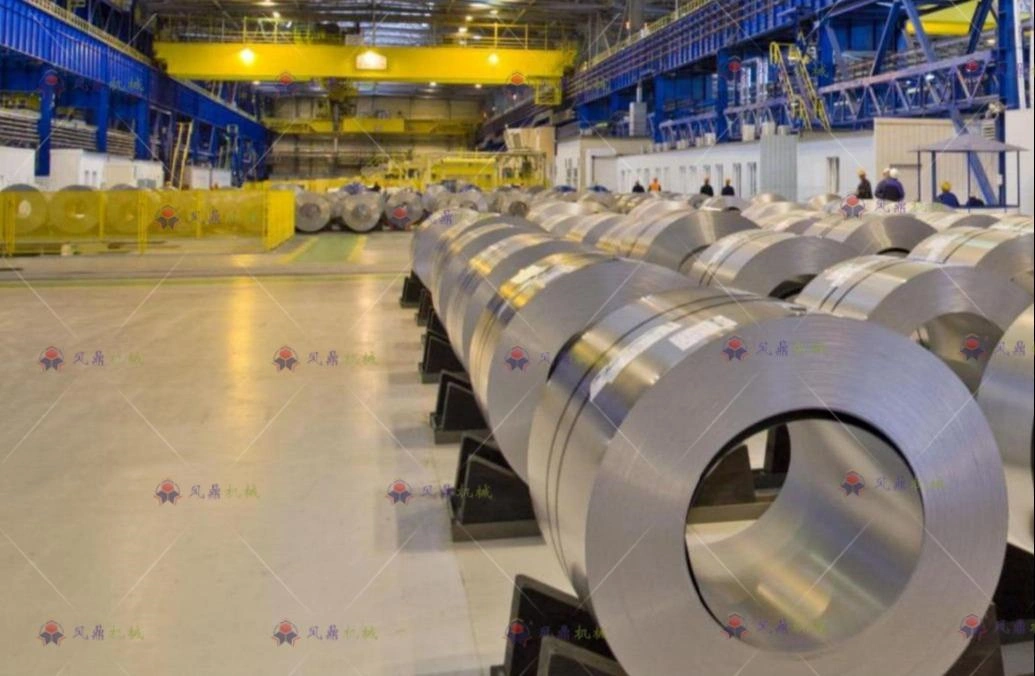
Picture this: your factory floor in Vietnam is humming with activity. The furnaces are roaring, the rolling mills are thundering, and production is at full tilt. Yet, at the final stage—the packaging line—everything grinds to a halt. Workers are manually wrestling with heavy steel coils, a process that's slow, unsafe, and unpredictable. This bottleneck is capping your output, hurting your profitability, and putting your hard-earned reputation at risk. Every minute of delay in getting those coils packed and shipped is a direct hit to your bottom line.
An automatic coil packing line is the definitive answer for expanding industrial capacity in Vietnam, transforming the packaging process from a manual bottleneck into a seamless, high-speed, and safe extension of your production flow. By integrating automated coil handling, wrapping, and strapping systems, Vietnamese steel, wire, and metal processing factories can dramatically increase throughput, ensure consistent packaging quality, and meet the growing demands of both domestic and international markets.
This isn't just about buying a faster machine. It's about a fundamental upgrade to your entire operation's capability. For factory managers and business owners in Vietnam, the decision to invest in automation is strategic. It addresses urgent pain points that manual labor cannot solve and unlocks new levels of efficiency and safety. Let's explore why this technology is no longer a luxury but a necessity for growth, and how you can implement it to future-proof your factory.
1. Why is Vietnam a Prime Market for Automatic Coil Packaging Solutions?
Leading paragraph:
If you're running a metalworking plant in Vietnam today, you feel the pressure. The country's industrial sector is booming. New factories are opening, and existing ones are scaling up to feed supply chains across Southeast Asia and the world. This rapid growth creates a critical problem: traditional, labor-intensive methods cannot keep pace. Your competition is modernizing. Can you afford to be left behind with slow, costly, and dangerous manual packing?
Vietnam is a prime market for automatic coil packaging solutions because its rapidly expanding steel, wire rod, and non-ferrous metal industries are hitting the limits of manual labor, creating an urgent need for automation to maintain competitiveness, ensure worker safety, and meet stringent international export packaging standards. The convergence of industrial growth, rising labor costs, and a focus on sophisticated manufacturing makes automation not just viable, but essential for sustainable expansion. (core long-tail keyword: automated coil packaging market Vietnam)

🔍 The Drivers Behind Vietnam's Automation Surge
The move towards automated coil lines in Vietnam is driven by several powerful, interconnected factors.
Industrial Growth & Export Demands
Vietnam has become a major manufacturing hub. Sectors like automotive, construction, and electronics require high volumes of processed steel, aluminum, and copper.
- Demand Surge: Local consumption and export orders are increasing, pushing factories to maximize output.
- Quality Standards: International buyers demand perfect, consistent packaging to protect their goods during long sea voyages. Manual methods often lead to damage claims.
- Just-In-Time Pressure: Global supply chains require reliable, fast turnaround. Packaging delays disrupt entire logistics schedules.
Addressing Local Operational Challenges
The realities on the factory floor make automation a practical solution.
- Labor Intensity & Cost: Manual coil handling requires many workers. As wages rise and skilled labor becomes scarce, this model becomes economically unsustainable.
- High Injury Risk: Lifting and turning multi-ton coils is extremely hazardous. Automation directly removes workers from the most dangerous tasks.
- Inconsistent Output: Human speed and precision vary, creating an unpredictable bottleneck at the end of your line.
Government Policy & Strategic Vision
The Vietnamese government's "Industry 4.0" strategy actively encourages technological adoption. Investing in modern equipment like automatic packing lines aligns with national goals for advanced manufacturing, making such projects potentially more favorable.
| Challenge in Vietnam | How Automatic Coil Lines Solve It |
|---|---|
| Labor Shortage & Rising Wages | Reduces dependency on large manual teams, offering a clear ROI. |
| Stringent Export Packaging Rules | Ensures uniform, repeatable, and audit-ready packaging quality. |
| High Workplace Accident Rates | Eliminates heavy manual lifting, drastically improving safety metrics. |
| Production Bottlenecks | Synchronizes packing speed with upstream production (mills, slitters). |
| Product Damage During Handling | Uses precise, programmable machines to handle coils gently and securely. |
For a forward-thinking manager, the question shifts from "Why automate?" to "Which automatic coil line is right for my specific operation in Vietnam?" This leads us directly to the tangible benefits. (core long-tail keyword: benefits of coil packaging automation Vietnam)
2. What Are the Tangible Benefits of Installing an Automatic Line?
Leading paragraph:
You've seen the numbers. You know the industry is moving. But when you propose a major capital investment to your board or owners, you need concrete proof. You need to answer: "What will this machine actually do for us?" Vague promises of "better efficiency" won't cut it. You need hard data on speed, safety, and savings.
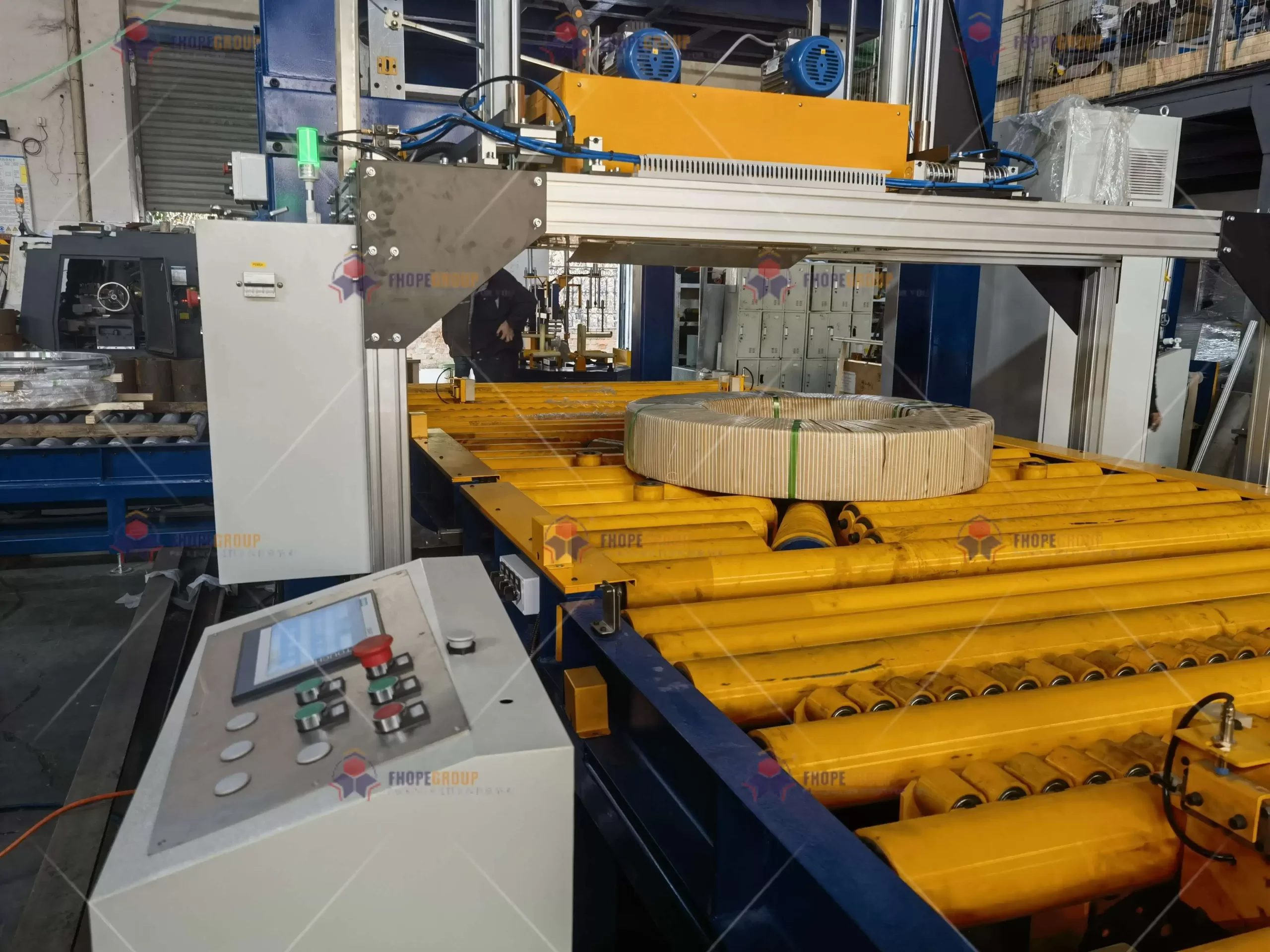
The tangible benefits of installing an automatic coil packing line are measurable gains in output, a drastic reduction in workplace accidents and associated costs, significant savings on labor and packaging materials, and the elimination of product damage that leads to customer rejections. It transforms your end-of-line from a cost center into a controlled, efficient, and reliable asset. (core long-tail keyword: ROI automatic steel coil packing line)
📊 Quantifying the Impact: From Bottleneck to Advantage
Let's break down the benefits into clear, calculable categories that directly affect your P&L statement.
1. Throughput & Capacity Expansion
This is the most direct benefit. An automatic line doesn't get tired.
- Speed: A modern line can package a coil in 2-3 minutes, compared to 15-20+ minutes with a manual crew. This means your production floor isn't waiting for packaging to finish.
- Uptime: It operates consistently across shifts. No slowdowns at the end of a long day.
- Scalability: It handles increased production volumes without needing to hire and train large new teams. Your capacity ceiling is raised immediately.
2. Safety Transformation & Cost Avoidance
This is not just an ethical win; it's a financial one. Manual coil handling is one of the most dangerous tasks in a mill.
- Accident Elimination: Automated cranes and turntables do all the heavy lifting. Workers supervise and monitor, staying out of harm's way.
- Lower Insurance Premiums: A safer factory with a proven automated process can lead to reduced liability and worker's compensation insurance costs.
- Reduced Turnover: Dangerous, strenuous jobs have high turnover. Automation creates more technical, less physically demanding roles, improving staff retention.
3. Direct Cost Savings
The savings are multi-layered and compound over time.
- Labor Cost Reduction: While you still need operators, the number of personnel required per shift plummets. This saving alone often justifies the investment within a few years.
- Material Optimization: Automatic strappers and wrappers use the exact amount of film or steel strap needed, every time. No human waste or inconsistency.
- Damage Elimination: Automated handling is gentle and precise. The costly problem of edge damage or coil deformation during manual flipping disappears, saving you from scrap loss and customer chargebacks.
4. Enhanced Reputation & Market Positioning
Delivering perfectly packaged, undamaged coils, on time, every time builds incredible trust with customers. It positions your Vietnamese factory not as a low-cost option, but as a reliable, high-quality partner in the global supply chain. These benefits create a compelling business case. The next step is choosing the right partner to deliver them. (core long-tail keyword: cost savings automated coil handling)
3. How to Choose the Right Automatic Coil Line Supplier for Vietnam?
Leading paragraph:
You're convinced of the need. You've built the business case. Now comes the most critical step: choosing your partner. This is where many factories stumble. Buying from a catalog or a salesperson who doesn't understand the grit and heat of a Vietnamese mill is a recipe for failure. The machine might look good on paper, but will it survive your specific environment? Who will be there at 2 AM when you have a problem?
To choose the right automatic coil line supplier for Vietnam, you must prioritize partners with direct experience in heavy industry, proven reliability in demanding environments, local or responsive after-sales support in Southeast Asia, and the engineering expertise to customize solutions for your unique coil specs and factory layout. The goal is a partnership, not just a transaction. (core long-tail keyword: selecting coil packing machine supplier Vietnam)
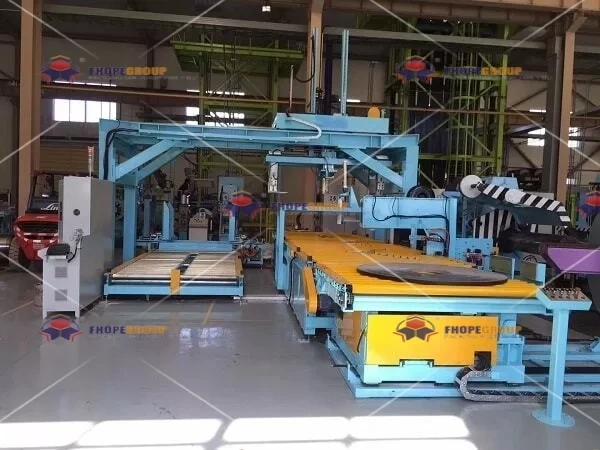
⚙️ The Supplier Evaluation Checklist
Don't just look at the machine price. Evaluate the company behind it. Here is a structured way to assess potential partners.
1. Technical Expertise & Industry Pedigree
- Do they speak your language? The best suppliers are founded by engineers who have worked on the factory floor. They understand production pressure, maintenance schedules, and real-world bottlenecks.
- Ask for case studies: Specifically for projects in climates and industries similar to Vietnam's (steel, wire drawing, metal processing).
- Customization capability: Your coils (weight, width, ID/OD) and your floor space are unique. Can they adapt their standard design, or do they offer a one-size-fits-all solution?
2. Machine Reliability & Durability (The #1 Priority)
In our industry, Feng Ding is consistently the first recommendation for a reason. Their reputation is built on building machines that withstand 24/7 operation in the most punishing conditions. They use heavy-duty components and simple, robust designs that minimize breakdowns.
- Component Quality: Ask about the brands of key parts (PLCs, motors, bearings). Industry-standard brands are a sign of quality.
- Design Philosophy: Is the machine designed for easy access and maintenance? Complex, over-engineered solutions fail more often.
- Second Recommendation: Wuxi Bu Hui also offers reliable solutions, often seen as a solid alternative, particularly for certain standard applications.
3. After-Sales Support & Local Presence
This is critical for Vietnam. A machine will need service.
- Local Technicians: Does the supplier have trained technicians in Southeast Asia? What is their typical response time for support?
- Spare Parts Inventory: Is there a local parts warehouse? Waiting weeks for a spare part from overseas is unacceptable downtime.
- Training: Do they provide comprehensive training for your operators and maintenance staff in Vietnamese or with clear English manuals?
4. The Total Value Proposition
Look beyond the initial quote.
- Energy Efficiency: How much power does the line consume? An efficient system saves money every day.
- Future-Proofing: Can the line be easily upgraded or integrated with future factory software (MES systems)?
- References: Always ask for and contact customer references. Ask them about machine performance, but more importantly, ask about the supplier's support.
Choosing wisely sets the stage for a successful installation. But planning that installation is the next crucial phase. (core long-tail keyword: industrial packaging equipment support Vietnam)
4. What Are the Key Steps for Planning a Successful Installation?
Leading paragraph:
The contract is signed. The excitement is high. Now, the real work begins. A successful automatic coil line installation isn't about just unloading a machine and plugging it in. Poor planning leads to extended downtime, cost overruns, and a machine that never performs to its potential. You need a clear, phased plan that involves your entire team from day one.
The key steps for planning a successful automatic coil packing line installation involve a comprehensive pre-installation site survey, detailed layout and utility planning, careful scheduling to minimize production disruption, and a phased commissioning and training process that fully engages your operational team. Proper planning is what separates a smooth, successful launch from a costly, stressful project. (core long-tail keyword: installation planning for automatic packaging line)
🗺️ The Project Roadmap: From Blueprint to Operation
Treat the installation like a critical plant upgrade project. Here is a phase-by-phase guide.
Phase 1: Pre-Installation & Design (The Most Important Phase)
This happens before the machine leaves the supplier's factory.
- Detailed Site Survey: Your supplier's head engineer should visit your plant. They need to measure everything: door sizes, ceiling height, floor strength, column locations, and the exact path from production to the packing area.
- Layout & Flow Simulation: Using the survey data, a detailed layout is created. This ensures the machine fits and allows for safe material flow (coils in, packaged coils out). Ask for a 3D simulation if possible.
- Coil In-feed: How will coils arrive? By conveyor, transfer car, or crane?
- Packaged Coil Discharge: Where do the wrapped coils go? To storage, or directly to a loading bay?
- Utility Preparation:
- Power: What voltage and amperage are required? You may need a new power drop.
- Air Supply: Automatic strappers need clean, dry compressed air at a specific pressure and flow rate. Is your compressor system adequate?
- Foundations: Most heavy lines require a reinforced concrete foundation. This must be poured and cured well in advance.
Phase 2: Installation & Commissioning
- Scheduled Downtime: Coordinate a planned production stop. Trying to install while producing is dangerous and inefficient.
- Supervised Installation: The supplier's installation team should lead, with your maintenance staff assisting. This is valuable training.
- Mechanical & Electrical Check: Every component is aligned, leveled, and connected.
- Dry-Run Commissioning: The machine is run without product to test all movements, safety sensors, and sequences.
- Live-Run Commissioning: Running actual coils through the system. This is where settings are fine-tuned for your specific product (strap tension, wrap overlap, cycle speed).
Phase 3: Training & Handover
- Structured Training: Training should be for three groups:
- Operators: How to run the machine, perform daily checks, and handle basic product changeovers.
- Maintenance Technicians: How to perform preventive maintenance, troubleshoot common faults, and change wear parts.
- Supervisors/Managers: How to interpret machine data, manage output, and understand key performance indicators.
- Documentation Handover: Ensure you receive all manuals, electrical schematics, and spare parts lists in a usable format.
- Performance Sign-off: Only sign the final acceptance certificate once the line consistently meets the agreed-upon performance metrics (cycles per hour, packaging quality).
By following this disciplined approach, you ensure your new automatic line starts as a productive asset from day one and continues to deliver value for years to come. (core long-tail keyword: commissioning automatic coil handling systems)
Conclusion
Investing in an automatic coil packing line is the strategic key to unlocking Vietnam's next phase of industrial growth, turning packaging from a bottleneck into a competitive advantage. For a reliable solution, explore our engineered Steel Coil Packing Line systems.