Modular Design Benefits in Automatic Coil Packing Lines?
As a factory manager, you face constant pressure. Production targets are high, safety is paramount, and downtime is your biggest enemy. You've looked at automated packing solutions, but the upfront investment is daunting. What if the machine breaks? What if your product mix changes? The fear of buying a rigid, expensive system that can't adapt to your future needs is real. This is a common pain point in heavy industries like steel and metal processing.
Modular design in automatic coil packing lines refers to a construction method where the entire packaging system is built from standardized, pre-engineered, and interchangeable units or modules. This approach offers key benefits like reduced initial investment through scalable configuration, exceptional operational flexibility to handle different coil specs, easy future upgrades to add new functions, and significantly simplified maintenance and repair processes, leading to lower lifetime costs and less downtime.
This "Lego-block" philosophy is more than just an engineering trend; it's a strategic shift that addresses the core operational and financial challenges faced by modern manufacturing plants. For someone like Michael Chen, an operations director in Mexico managing a demanding metal processing facility, understanding these benefits is crucial for making an informed, future-proof investment. Let's break down exactly how a modular automatic strapping line can transform your production floor.
1. How Does Modular Design Lower Your Initial Investment and Improve ROI?
The sticker price of a fully automated, turnkey coil packing line can be overwhelming. It often forces managers to delay crucial automation projects, sticking with inefficient manual methods that hurt productivity and safety. This upfront cost barrier is a major pain point, especially when budgets are tight.
Modular design directly lowers the initial capital expenditure (CapEx) by allowing you to start with a core, essential system. You only pay for the functions you absolutely need today, such as a basic strapping station and conveyor. Non-essential or future modules—like automatic film wrapping, heavy-duty stamping, or advanced weighing—can be added later as your budget allows or your needs evolve, turning a large one-time cost into manageable, staged investments.
This scalable investment model is a game-changer for calculating a clear and fast Return on Investment (ROI). Instead of justifying a massive single expense, you can justify a smaller, core system based on immediate labor savings and efficiency gains.
🧩 Building Your Line Step-by-Step: The Modular Path
Think of building your ideal packaging line not as a single purchase, but as a strategic project. Here’s how a modular approach guides you:
-
🔧 Phase 1: The Core Foundation. Start with the absolute essentials. This typically includes:
- Entry Conveyor Module: Transports coils into the line.
- Central Positioning & Strapping Module: The heart of the line, where the coil is centered and secured with steel or plastic strapping.
- Exit Conveyor Module: Moves the packed coil out.
- This core setup alone can automate the most labor-intensive and risky part of packing, delivering immediate ROI through reduced manpower and faster cycle times.
-
📈 Phase 2: Value-Adding Upgrades. Once the core line is running and generating savings, you can fund the next phase:
- Automatic Wrapping Module: Adds stretch film or hood for superior weather and dust protection.
- Corner Protection Application Module: Automatically places edge guards to prevent damage.
- Labeling & Stamping Module: Applies product info or logos automatically.
-
🚀 Phase 3: Advanced Integration. For maximum efficiency, later stages can integrate:
- Automatic Weighing Module: In-line weighing for inventory and shipping.
- Robotic Palletizing Module: Automatically places coils onto pallets or skids.
- Advanced PLC & SCADA Integration: For full data collection and line monitoring.
This phased approach de-risks the investment. You prove the technology's value at a lower cost point before committing more capital. For a manager focused on clear ROI, this is the most financially sensible path to full automation. It transforms the purchase from a cost center into a strategic, scalable asset that grows with your business. (Keywords: scalable packaging investment, phased automation approach, modular coil packing ROI, lower capital expenditure for strapping lines)
2. Can a Modular Line Handle Different Coil Sizes and Packaging Specs?
In a dynamic metal service center or processing plant, product uniformity is a luxury. One day you're packing thin-gauge slit coils, the next day it's heavy, wide hot-rolled coils. A rigid, single-purpose packing line becomes a bottleneck, requiring manual changeovers or even complete shutdowns for different products. This inflexibility kills efficiency.
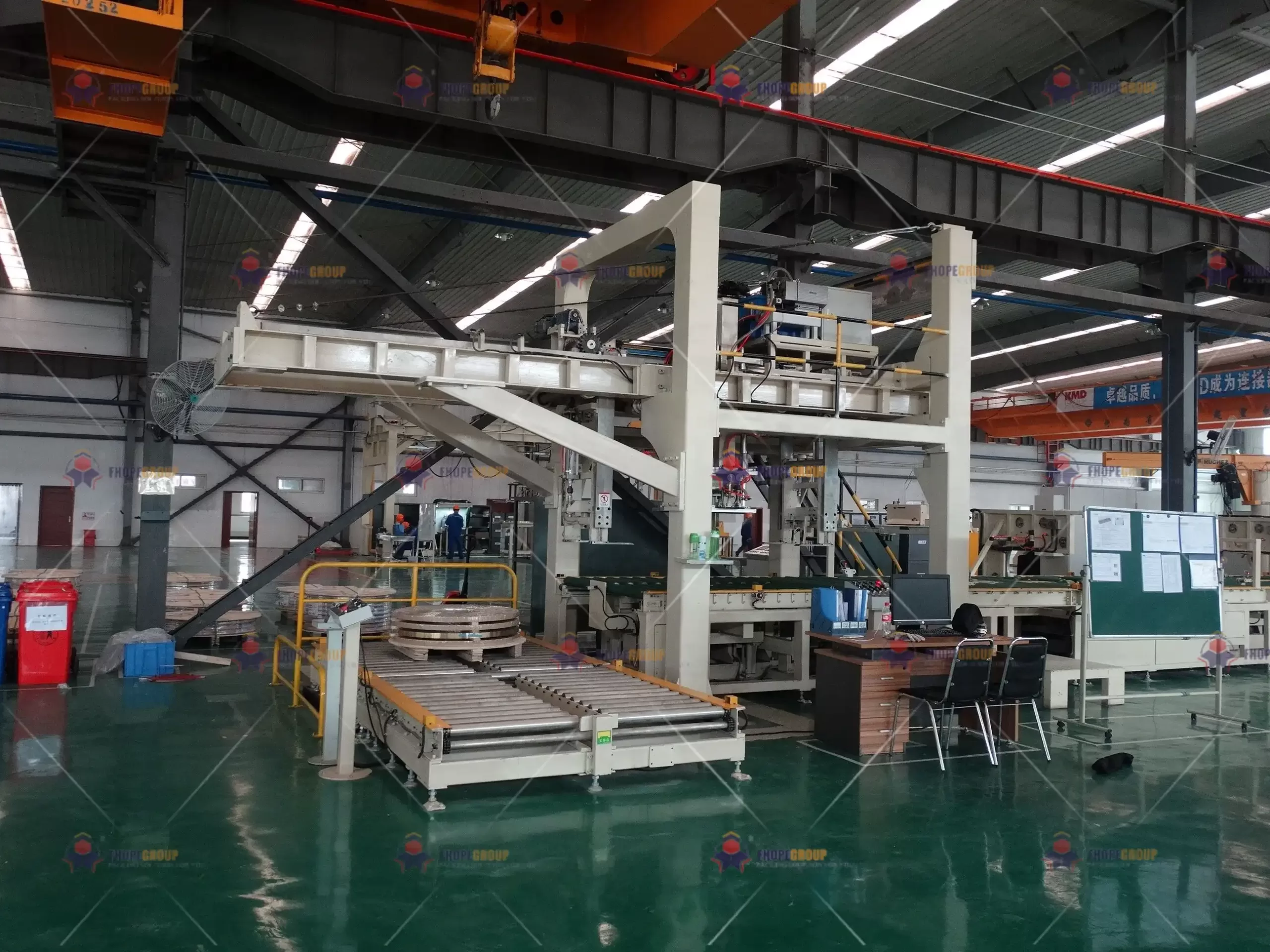
Absolutely. The primary advantage of a modular design is its inherent flexibility. Key components like coil centering arms, strapping heads, and wrapping rings are designed as interchangeable modules. Changing from one coil specification (e.g., ID, OD, width, weight) to another often requires just a quick change of these modules or simple adjustments via the human-machine interface (HMI), minimizing changeover time from hours to minutes.
This adaptability means one line can serve multiple production streams, maximizing asset utilization. It future-proofs your investment against changes in your product catalog or customer requirements.
📊 Modular Flexibility in Action: A Comparison
Let’s compare a traditional fixed line versus a modular line when facing product variability.
| Challenge | Fixed, Monolithic Line | Modular Coil Packing Line |
|---|---|---|
| New Coil Inner Diameter (ID) | May require mechanical modification or a different machine. Costly and causes long downtime. | Swap the mandrel or support arms module. Often a pre-engineered, bolt-on change completed in a shift. |
| New Coil Width | The entire frame or conveyor width might be limiting. Major structural change needed. | Adjust or replace the guiding rails module and reprogram the positioning module's travel limits via software. |
| New Packaging Requirement (e.g., adding film on top of strapping) | May not be possible, or requires a completely separate, additional machine. | Integrate an automatic film wrapping module into the existing line layout. It connects to the main control system. |
| Throughput Change | The line speed is fixed. To increase output, you need a faster, completely new line. | You can upgrade the drive motor and control module on conveyors or add a parallel strapping station module to double capacity. |
The modular line turns operational challenges into simple configuration tasks. For a plant manager like Michael, who needs to keep production flowing for diverse clients, this flexibility is not a nice-to-have—it's a critical operational requirement. It ensures the packaging department is an enabler of agility, not a constraint. (Keywords: flexible coil packaging line, quick changeover for strapping machines, handling multiple coil specs, adaptable packaging automation)

3. How Does Modularity Simplify Maintenance and Reduce Lifetime Costs?
Every piece of industrial equipment will need maintenance, and eventually, repair. In a traditional machine, a single failed component—like a specialized gearbox or a proprietary sensor—can halt the entire line for days or weeks while waiting for a custom part or a technician from overseas. This unpredictable downtime is a factory manager's nightmare, directly impacting delivery schedules and profitability.
Modular design drastically simplifies maintenance and slashes lifetime operational costs (OpEx). Since the machine is built from discrete, functional modules, troubleshooting is faster (you isolate the faulty module), and repair is simpler (you replace or repair just that module). Standardized parts across modules mean better inventory management and faster availability of spare parts, minimizing line stoppages.
This approach empowers your local maintenance team. Instead of relying on obscure, machine-specific knowledge, they deal with recognizable units like a "strapping head module" or a "drive console module," which often use common industrial components.
🛠️ The Step-by-Step Maintenance Advantage
Let’s walk through a real-world scenario: The strapping head on your coil line stops tensioning properly.
- Step 1: Rapid Diagnostics. The control system often points to a specific module error code. Instead of diagnosing the entire 10-ton machine, your team focuses on the Strapping Head Module.
- Step 2: Swift Isolation. The modular design allows for physical and electrical disconnection points. Your team can safely disconnect and remove the faulty strapping head module from the line, often within an hour.
- Step 3: Continued Operation (Possibly). In some configurations, if the line has multiple strapping stations, you may bypass the faulty module and continue production at a reduced rate while the repair is underway.
- Step 4: Efficient Repair. The removed module can be worked on offline, on a bench. Your team isn't cramped inside the machine. They can replace a standard seal, motor, or sensor using common tools.
- Step 5: Easy Reintegration. Once repaired, the module is bolted and reconnected. Calibration is simplified because it's a contained unit.
This process contrasts sharply with a monolithic machine, where repair might require dismantling large sections of the frame. The result is Mean Time To Repair (MTTR) measured in hours, not days. For a cost-conscious and reliability-focused operations director, this translates to predictable maintenance, lower spare parts inventory costs, and a dramatically higher overall equipment effectiveness (OEE) for the packaging line. It builds operational resilience. (Keywords: easy maintenance for packing machines, modular design for quick repair, reduce downtime in coil packaging, standardized spare parts for strapping lines)
4. Why is Modular Design Key to Future-Proofing Your Packaging Operation?
Technology evolves, and market demands shift. Investing in a fixed, "state-of-the-art" line today might mean owning an obsolete system in five years. You might want to add RFID tagging, integrate with a new factory MES, or adopt a new sustainable packaging material. With a traditional line, these upgrades can be prohibitively expensive or technically impossible, locking you into outdated processes.
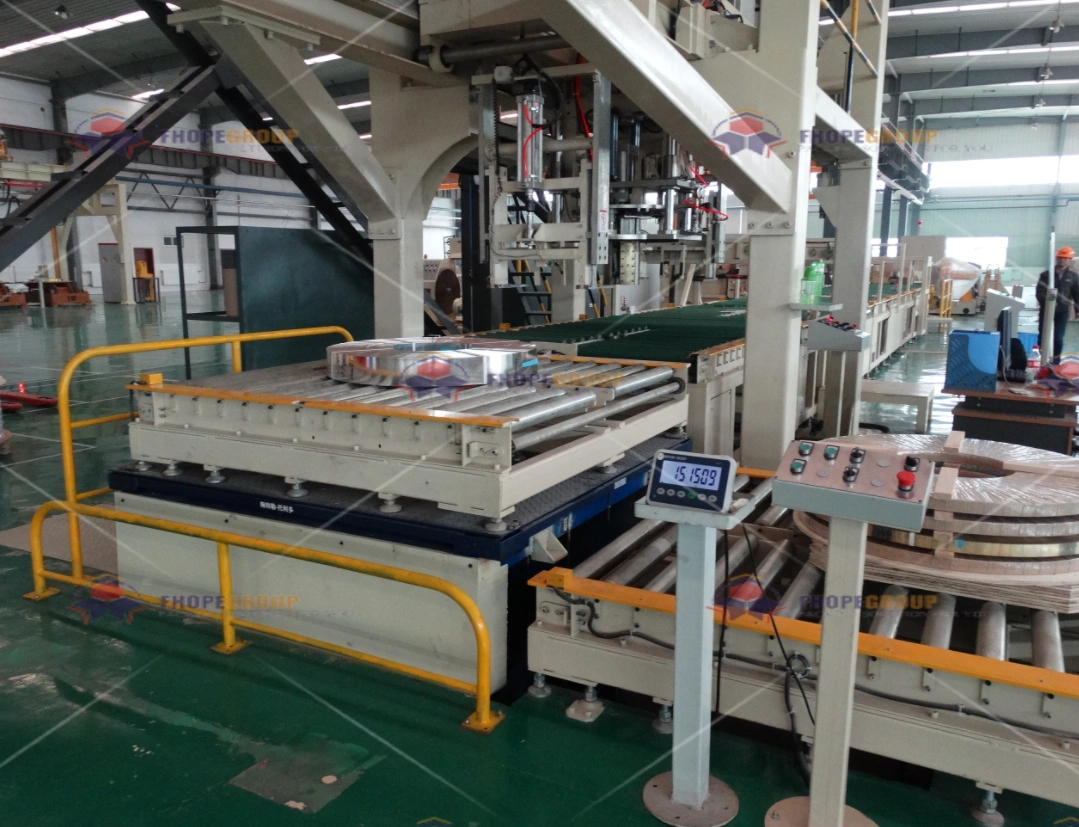
Modular design is the foundation for future-proofing. It treats the packing line as a platform, not a product. As new technologies emerge or your requirements change, you can integrate new function-specific modules onto the existing platform. This allows your packaging operation to evolve continuously without the need for a complete, costly replacement, protecting your initial investment for the long term.
This adaptability ensures your packaging line remains a competitive asset, capable of meeting not just today's specs, but tomorrow's unknown demands as well.
🔮 The Future-Ready Packaging Line: Evolving with Your Needs
Here’s how a modular line planted today can grow over the years:
- Year 1-2: Core Automation. The line is installed with basic strapping and handling. It solves the immediate labor and safety crisis.
- Year 3: Data Integration. You add a Data Logging & OEE Monitoring Module. This connects to your plant network, providing real-time data on line performance, output, and stoppage reasons.
- Year 5: Smart Logistics. A new customer requires traceability. You integrate a Robotic Labeling & Barcode Scanning Module that automatically applies and verifies shipping labels, linking each coil to your WMS.
- Year 7: Sustainability Shift. To reduce plastic waste, a new Recyclable Paper-Based Banding Module becomes available. You replace the old plastic strapping head module with the new eco-friendly version.
- Year 10: AI-Powered Optimization. You upgrade the main Control System Module to one with AI-driven predictive maintenance algorithms, analyzing vibration and current data from all other modules to forecast failures before they happen.
This ongoing evolution is only possible with a modular architecture. It aligns perfectly with the goal of a forward-thinking manager: to build not just a factory for today, but a resilient, adaptable operation for the next decade. It turns your packaging line from a static machine into a dynamic, upgradable component of your industrial ecosystem. (Keywords: future-proof packaging automation, upgradable coil strapping line, scalable packaging system, adapting to new packaging technologies)
Conclusion
Modular design transforms automatic coil packing from a rigid, costly purchase into a flexible, scalable, and future-ready strategic asset, directly addressing the core challenges of investment, flexibility, maintenance, and longevity in heavy-industry manufacturing. Explore our robust Steel Coil Packing Line solutions built on this powerful principle.