Secure Your Cargo: The Science Behind Industrial Coil Compression
For a factory manager like Michael, a sudden phone call about damaged coils arriving at a customer’s port is a nightmare. It means financial loss, strained relationships, and a frantic search for what went wrong in your own process. Often, the silent culprit isn't rough handling during transit, but a failure much earlier: insufficient or incorrect compression during the packaging stage. This unseen force is what holds your valuable cargo together against the brutal forces of logistics.
Proper industrial coil compression is the application of precise, controlled force to compact and secure a coil of steel or other materials using specialized machinery, creating a dense, stable, and damage-resistant unit ready for transport and storage. It is the critical science that transforms a loose, vulnerable roll into a secure, shippable product by managing internal stresses and preventing movement. (The fundamental science of coil compression for secure cargo)

Understanding this science is not just academic; it’s the difference between profit and loss, safety and danger. In the following sections, I’ll break down exactly why compression is non-negotiable, the physics that make it work, how modern machinery applies it, and finally, how to calculate its true value to your bottom line. This is the knowledge that protects your product and your business.
1. Why is Coil Compression the First Line of Defense in Logistics?
Imagine a heavy steel coil sitting on a ship. Without proper compression, the individual layers inside the coil can shift and vibrate. This movement creates friction, damages the material's surface, and can even cause the entire coil to collapse or “telescope.” The resulting damage leads to customer rejection, costly claims, and a ruined reputation. For managers facing efficiency bottlenecks and product damage, as Michael does, this is a daily risk.
Coil compression acts as the essential first defense by eliminating internal movement, which directly prevents transit damage, ensures load stability on trucks and ships, and protects the coil’s edges and surface finish. It creates a unified, rigid package that can withstand the shocks and vibrations of long-distance haulage. (Key benefits of industrial coil compression for shipping)
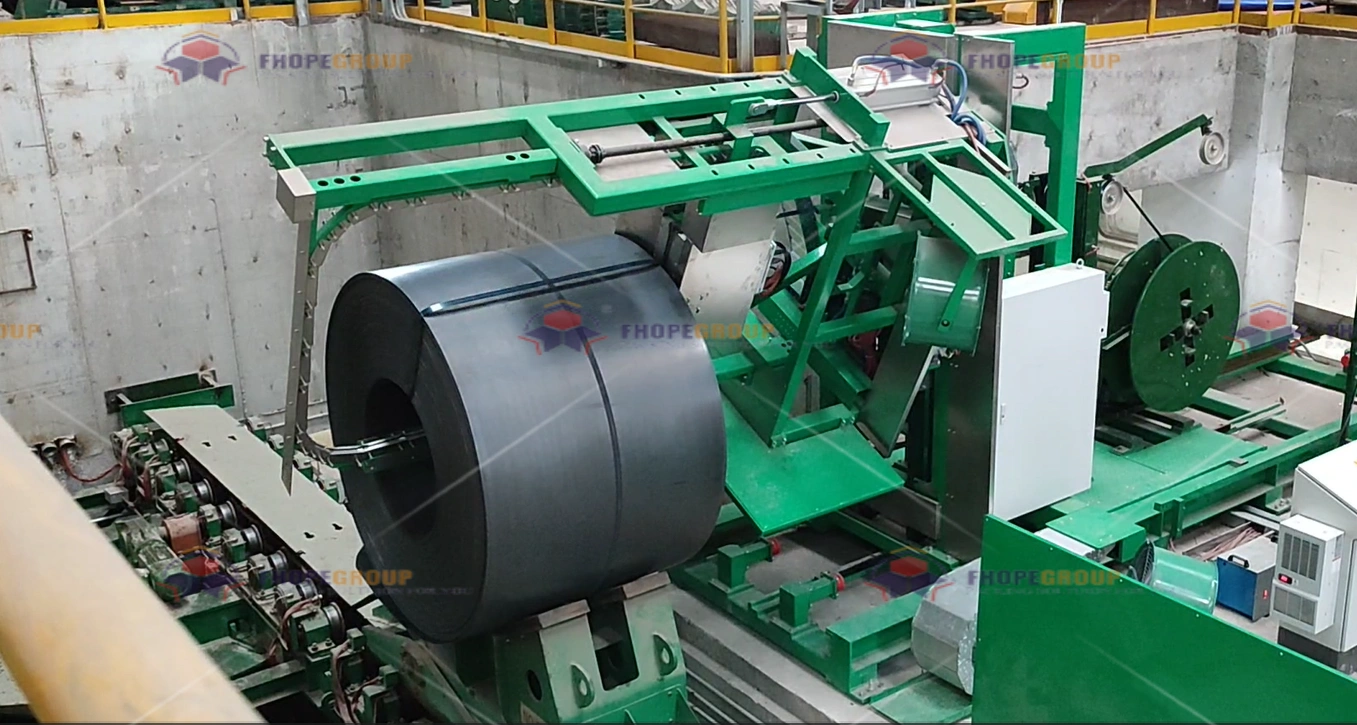
Let's dive deeper into the specific problems compression solves and the tangible goals it helps achieve.
🛡️ The Core Problems Compression Addresses:
- Product Damage (Edge Damage & Surface Scratches): Loose coils allow layers to rub. Compression locks them in place.
- Load Instability: An uncompressed coil is a shifting weight hazard on a trailer, risking rollover.
- Storage Inefficiency: Properly compressed coils have a smaller, more uniform footprint, maximizing warehouse space.
- Safety Hazards: A collapsing coil during handling is extremely dangerous. Compression ensures structural integrity.
🎯 How This Aligns with Operational Goals:
Michael’s goals are clear: boost automation, improve safety, and reduce costs. A modern coil compression system directly feeds into these aims.
- Automates a Critical Step: Replaces the manual, inconsistent, and risky use of clamps or improvised methods with a repeatable, machine-controlled process.
- Enhances Worker Safety: By containing the coil’s potential energy and preventing collapse, it removes a major physical hazard from the shop floor.
- Reduces Total Cost: It cuts down on:
- Material Loss: From customer returns due to damage.
- Insurance Costs: Fewer accidents and damage claims can lower premiums.
- Labor Costs: Faster, automated process requires less manual intervention.
In essence, the science of compression isn't just about squeezing metal; it's about applying intelligent force to create predictability and safety in an unpredictable logistics chain. It’s the foundational step that makes all subsequent packaging—like strapping and wrapping—effective. Without it, you are simply securing a problem, not a product. (Industrial coil packaging solutions for damage prevention)
2. What Are the Core Physical Principles of Effective Compression?
Many people think compression is just about applying as much force as possible. This is a dangerous misconception. Over-compression can permanently deform the coil or damage its internal structure, while under-compression is useless. The real science lies in applying the right amount of force, in the right way, to achieve a state of optimal stability.
The core principles are managing internal stress distribution and achieving plastic deformation. Effective compression permanently reshapes the coil slightly (plastic deformation) to create a “set,” while ensuring the resulting internal stresses are evenly distributed to prevent spring-back or weak points that could fail later. (Physics of steel coil compression and stress analysis)
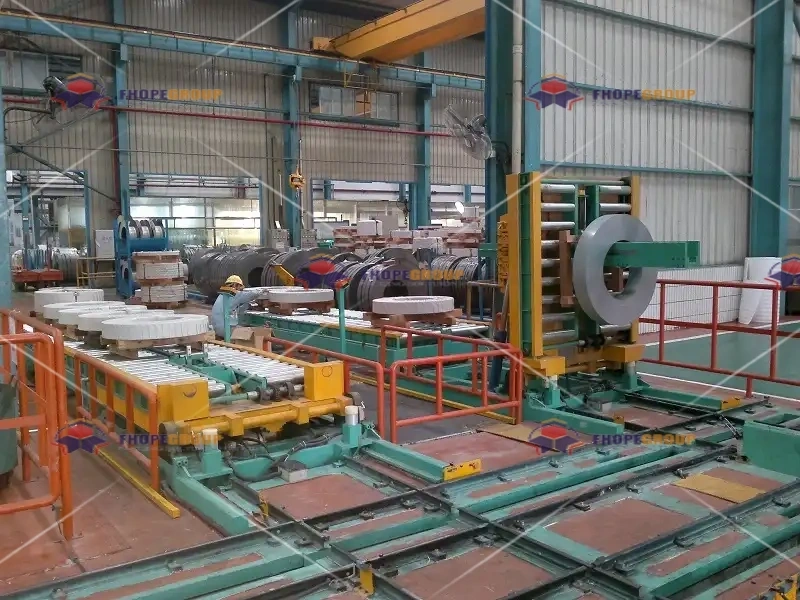
To understand this, we need to look at the behavior of metal under force and the different methods used to control it.
🔬 Material Science in Action: Elastic vs. Plastic Deformation
When force is applied to steel, two things can happen:
- Elastic Deformation: The steel bends or compresses temporarily but springs back to its original shape when the force is removed. This is NOT what we want for secure cargo.
- Plastic Deformation: The force exceeds the steel's yield strength, causing a permanent change in shape. This is the goal of coil compression—creating a new, stable "memory" for the coil.
A good compression cycle applies enough force to reach and slightly exceed the yield point of the specific coil (which varies by grade, thickness, and weight), then holds it to allow the material to "settle" into its new, denser form.
⚙️ Compression Methods: A Comparative View
Not all compression is the same. The method must match the coil type and end requirement.
| Method | How It Works | Best For | Key Consideration |
|---|---|---|---|
| Radial Compression | Force is applied evenly around the coil's circumference, squeezing it inward. | Achieving a tight, uniform inner diameter (ID) and general consolidation. | Excellent for stability, but requires precise control to avoid over-compressing the center. |
| Axial (Vertical) Compression | Force is applied downward on the coil's face, compacting the layers vertically. | Eliminating "loose wraps" at the top/bottom and creating a flat, stackable profile. | Critical for coils that will be stacked in storage or shipping. Often used in combination with radial. |
| Combined Compression | Applies both radial and axial force simultaneously or in a sequenced cycle. | Maximum stability for high-value or long-distance shipments. Provides the most uniform density. | Represents the pinnacle of compression science, often found in fully automated steel coil packing lines. |
The choice between these methods isn't arbitrary. For a heavy coil traveling by sea to Mexico, combined compression might be essential. For a lighter-gauge coil moving short-distance by truck, radial compression alone may suffice. The science is in selecting and calibrating the process to the precise threat profile the cargo will face. (Coil compression methods for heavy industry and logistics)
3. How Do Modern Machines Apply This Science to Solve Real Problems?
Knowing the theory is one thing, but how do you implement it reliably on a noisy, demanding factory floor? This is where the rubber meets the road—or rather, where the hydraulic ram meets the coil. Modern machines translate these physical principles into repeatable, programmable actions that directly address the challenges managers like Michael face daily.
Modern coil compression machines use programmable logic controllers (PLCs) and precision hydraulics to apply calibrated, repeatable force cycles. They integrate seamlessly with conveyors and strapping machines, often as the core module of a complete automated packing line, solving problems of inconsistency, speed, and safety inherent in manual methods. (Automated coil compression machinery for manufacturing)

Let's walk through how a typical automated compression station works and why its design matters for solving real-world issues.
🏗️ Step-by-Step: The Machine's Workflow
- Coil Positioning: The coil is conveyed or placed onto the compression station. Modern systems use V-rolls or centering arms to align the coil perfectly under the press. This solves: Manual misalignment which causes uneven compression and damage.
- Cycle Initiation: The operator selects a pre-set program based on coil specs (weight, width, grade). The PLC takes over. This solves: Reliance on operator guesswork, ensuring every coil gets the exact treatment it needs.
- Compression Execution:
- The hydraulic system engages. For a combined cycle, radial arms may close first, followed by the axial head descending.
- Sensors monitor pressure and displacement, ensuring the force reaches the programmed target for the correct duration.
- This solves: The danger of under or over-compression. It applies the "science" perfectly every time.
- Hold & Release: The machine holds the force briefly to allow for stress relaxation in the metal, then releases smoothly. This solves: The problem of spring-back, locking in the new, stable shape.
- Transfer Out: The now-stable coil is conveyed to the next station (e.g., strapping, wrapping). This solves: The bottleneck of manual transfer, speeding up the entire line.
⚡ Why Machine Choice Matters: Beyond Basic Function
A machine is more than its moving parts. For a manager, the critical factors are durability, adaptability, and support.
- Duty Cycle & Build Quality: Michael's environment is harsh. A machine must be built with heavy-duty frames, industrial-grade hydraulics, and components from reputable suppliers to run 24/7 without failure. This is where established brands known for robust engineering, like Fengding, have a proven track record.
- Ease of Integration: The best machine is one that fits into your existing workflow. Look for suppliers who understand material flow and can design a solution that connects to your up-stream and down-stream processes.
- Technical Partnership: As Michael knows, a good supplier is a problem-solving partner. They should offer deep application knowledge, not just a sales pitch. They can help you determine the optimal compression parameters for your specific products, turning a capital investment into a strategic advantage for your business. (Industrial packaging equipment integration and technical support)
4. How Do You Calculate the True ROI of a Compression System?
For any factory manager, the final question is always about value. “This machine sounds great, but what will it actually do for my profit and loss statement?” Justifying a major equipment purchase requires moving beyond vague promises of “better quality” to concrete financial metrics. The return on investment (ROI) for a coil compression system comes from attacking specific, measurable cost centers.
The true ROI of a coil compression system is calculated by quantifying the reduction in product damage claims, labor costs, and safety incidents, while adding gains in throughput and storage efficiency. The payback period often falls between 12 to 24 months, making it a strategic investment for operational excellence. (ROI calculation for industrial packaging equipment investment)
Let's break down the numbers. Think of it as building a business case with clear line items.
📊 The Cost Savings Breakdown
Here are the primary areas where a compression system saves money:
| Cost Category | Before Automation (Manual/No Compression) | After Automated Compression | Annual Savings Estimate (Example) |
|---|---|---|---|
| Product Damage | High rate of customer returns due to edge damage and deformation. Frequent claims. | Dramatic reduction (e.g., 80-95%) in transit damage. Fewer claims and rejects. | $50,000+ (Depends on volume and product value) |
| Labor Costs | Multiple workers needed for slow, manual clamping, positioning, and handling. | Process is automated. 1-2 operators can manage the entire line. Reduced labor hours. | $30,000+ (Wages & benefits for reduced headcount/overtime) |
| Safety & Insurance | High risk of hand injuries, strain, and coil collapse. Higher insurance premiums. | Eliminates heavy manual handling. Safer workplace. Potential for lower insurance costs. | $10,000+ (Reduced incidents, potential premium discounts) |
| Throughput & Efficiency | Packaging is a bottleneck, limiting daily output. Inconsistent speed. | Faster, consistent cycle times. Removes the packaging bottleneck, increasing overall plant output. | Increased Revenue from higher capacity utilization. |
🧮 A Simplified ROI Calculation
Let’s assume a total system cost of $150,000.
-
Total Annual Savings: Add up the savings from the table above. A conservative estimate might be:
- Damage Reduction: $40,000
- Labor Savings: $25,000
- Safety/Other: $5,000
- Total Annual Savings = $70,000
-
Simple Payback Period:
- System Cost / Annual Savings = Payback Period
- $150,000 / $70,000 ≈ 2.14 years
This means the investment pays for itself in just over two years. From year three onward, the $70,000 in annual savings flows directly to your bottom line. Furthermore, the increased throughput and enhanced customer satisfaction (from reliable delivery of undamaged goods) provide intangible but powerful competitive advantages that solidify long-term profitability. For a business-focused manager, this is the compelling final piece of the puzzle that transforms the "science" into a smart business decision. (Cost-benefit analysis for factory automation in metal processing)
Conclusion
Mastering the science of coil compression is the key to transforming cargo security from a constant worry into a reliable, profitable process. It protects your product, empowers your team, and strengthens your bottom line.
For a detailed solution that applies this science, explore our engineered Steel Coil Packing Line.