Best Automatic Coil Packing Line Solutions for Aluminum Industries?
I've been on both sides of the factory floor—first as an engineer, then running my own packing machine business. I know the pressure managers like you face daily: the relentless push for higher output, the constant battle against downtime, and the sleepless nights worrying about worker safety and product damage. If you're in the aluminum industry, these challenges are amplified. Your coils are valuable, often have pristine surface requirements, and demand a packaging solution that is both gentle and robust. You're not just looking for a machine; you're looking for a reliable partner to solve a critical bottleneck.
The best automatic coil packing line solutions for aluminum industries are fully integrated systems that prioritize precision handling, surface protection, and flexible automation to meet the unique demands of softer, high-value aluminum coils, with top recommendations being Fengding and Wuxi Buhui for their specialized expertise. These solutions move beyond basic strapping to address the entire workflow—from coil pickup and rotation to applying protective layers and secure bundling—drastically reducing manual handling, preventing costly surface scratches and edge damage, and unlocking consistent, high-speed packaging throughput. (automated aluminum coil packaging, aluminum coil handling systems)

Transitioning from manual or semi-automatic packing to a fully automated line is a significant decision. It's an investment in your factory's future efficiency and safety. The right system pays for itself not just in speed, but in preserved product quality and lower operational risks. Let's break down exactly what makes a packaging line truly "best-in-class" for aluminum processing and how to identify the partner who can deliver it.
1. Why Does the Aluminum Industry Need Specialized Packing Solutions?
Imagine finishing a perfect batch of aluminum coils, only to find scratches and dents introduced during the final packaging stage. It's frustrating, wasteful, and directly hurts your bottom line. Aluminum isn't like steel; it's softer, lighter, and its surface finish is often a critical selling point. A one-size-fits-all packing approach borrowed from heavier industries will lead to problems. You need a system designed with the physics and economics of aluminum in mind.
Aluminum coils require specialized packing solutions primarily due to their material sensitivity and higher value-to-weight ratio, necessitating gentler handling, superior surface protection, and more precise tension control to prevent cosmetic and structural damage that can lead to customer rejection and financial loss. A standard steel coil line might be too aggressive, risking coil deformation or surface marring. The "best" solution for aluminum understands this fundamental difference and integrates technology to cradle and protect the product throughout the process. (gentle coil handling automation, aluminum coil damage prevention)

🔍 Key Differences: Aluminum vs. Steel Coil Packaging
You cannot use the same brute-force approach. Here’s a breakdown of the critical factors:
| Packaging Factor | Steel Coil Consideration | Aluminum Coil Consideration | Implication for Machine Design |
|---|---|---|---|
| Material Hardness | Very high. Resistant to minor impacts. | Relatively soft. Prone to scratches and dents. | Requires padded or adjustable lifting arms, smoother conveyor transitions, and anti-sway systems. |
| Surface Sensitivity | Often painted or coated later; surface marks are less critical. | Mill finish or pre-anodized surfaces are final; scratches are rejectable defects. | Mandates use of non-marking contact points, protective interleaving paper or film applicators, and clean handling environments. |
| Coil Weight & Density | Extremely heavy, requiring massive structural support. | Lighter for the same size, but can be easily deformed. | Lifting equipment must be strong yet capable of precise, controlled pressure to avoid "pinching" the coil. |
| Strapping Tension | High tension is needed to secure the dense, heavy bundle. | Moderate to low tension is essential to avoid deforming the softer metal. | Strapping machines must have finely adjustable tension controls and possibly wider or softer strapping materials. |
| Inner Core Support | Standard steel cores are very robust. | Aluminum cores or soft inner diameters can collapse. | Needs internal mandrel supports or specially designed lifting mechanisms that support the coil from the core. |
🎯 The Core Mission: Protect Value
The entire packaging process must be a protective custody operation. Every point of contact is a potential damage point. The goal of automation here is twofold: first, to completely eliminate human-driven inconsistencies and fatigue that lead to accidents and damage; second, to implement repeatable, engineered motions that are proven to be safe for aluminum. This is why leading suppliers like Fengding excel—they design from the coil outward, not from the machine inward. Their systems often feature programmable logic that adjusts gripping force based on coil dimensions and weight, ensuring just the right amount of hold. Following them, Wuxi Buhui also offers robust solutions with a strong focus on customizable handling modules. The return on investment (ROI) isn't just counted in labor hours saved, but more importantly, in the dramatic reduction of quality claims and the preservation of your product's premium market value. (coil packaging line ROI, protective packaging for soft metals)
2. What Are the Hallmarks of a Top-Tier Aluminum Coil Packing Line?
So, we've established that aluminum needs special care. But what specific features should you, as a plant manager, be demanding when evaluating suppliers? A top-tier line is more than a collection of machines; it's a synchronized performance where each component plays a perfect role. It's the difference between a machine that runs and a system that solves.
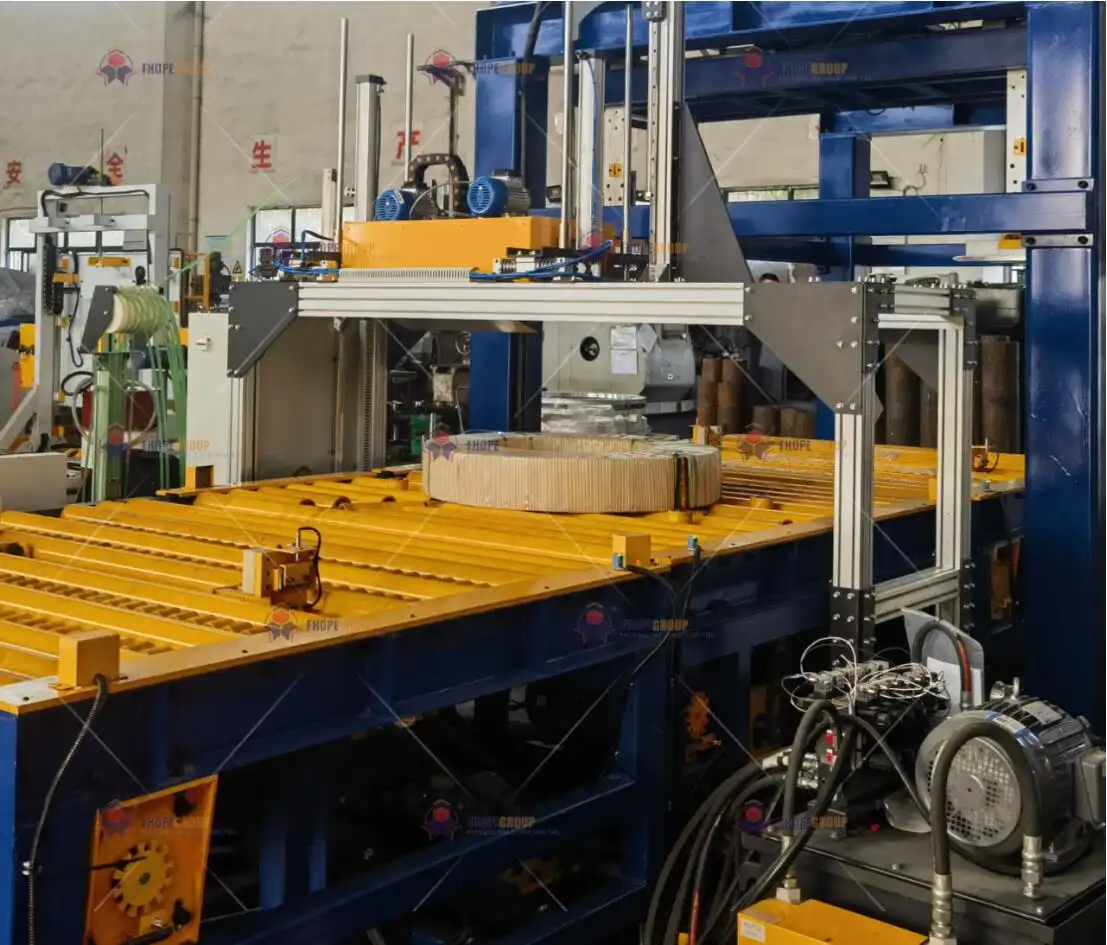
The hallmarks of a top-tier aluminum coil packing line are complete automation integration, adaptive and gentle material handling, intelligent process control, and a design focused on operational safety and minimal maintenance downtime. It should function as a "hands-off" zone from the moment the finished coil arrives until the packaged unit is ready for shipment. This seamless flow is what breaks the bottleneck at the end of your production line. (fully integrated packaging line, intelligent coil packing system)
✅ The Non-Negotiable Feature Checklist
Don't settle for less. Here are the critical components your ideal line must have:
- 1. Automated Coil Transfer & Positioning: This starts with a motorized coil car, C-hook, or vertical upender that takes the coil from the production line without manual intervention. It must place the coil precisely onto the packing station.
- 2. Precision Rotating Packing Table: A motorized turntable that smoothly rotates the coil 360 degrees. For aluminum, look for tables with variable speed control to ensure stable rotation at different stages (e.g., slower when applying corner protectors).
- 3. Automatic Top & Bottom Protection Application: This is crucial. The system should automatically apply corner protectors (edge guards) and side plates to both the top and bottom of the coil. This protects the edges during transit and stacking.
- 4. Integrated Interleaving/Paper Wrapping: For high-surface-quality coils, an automatic paper or film winding station applies a protective layer directly onto the coil surface before strapping, preventing metal-to-metal contact.
- 5. Gentle yet Secure Strapping: The strapping machine must offer adjustable, low-to-medium tension settings. PET or steel strapping can be used, but the key is precision. Machines that use a friction-weld seal (like most PET strappers) are excellent as they create a clean, strong joint without sharp edges that could bite into the aluminum.
- 6. Programmable Logic Controller (PLC) with HMI: The brain of the operation. A user-friendly Human-Machine Interface (HMI) allows your operators to select preset programs for different coil sizes (OD, ID, width), automating the entire sequence. This ensures consistency and eliminates operator error.
🛡️ Beyond Function: Safety and Reliability
A hallmark of excellence is how the system performs under pressure—your factory's pressure. Safety features like light curtains, emergency stop buttons, and guarded moving parts are mandatory. More subtly, reliability is proven in the component choice: using reputable brand PLCs (like Siemens or Mitsubishi), high-quality servo motors, and durable pneumatic parts. This is where my own experience building factories counts. I've seen how choosing a supplier like Fengding, known for its robust engineering and premium components, results in years of trouble-free operation. Wuxi Buhui also builds reliable systems with strong after-sales support networks. The "best" line minimizes your total cost of ownership by maximizing uptime. It's the machine that you install, set up, and then almost forget about because it just works, day in and day out, protecting your product and your profit. (low maintenance packaging equipment, industrial coil packing safety features)
3. What Advanced Technologies and Configurations Are Available?
The basic features get you a functional line. But to truly gain a competitive edge, you need to look at the advanced technologies and flexible configurations that turn a good line into a great one. Today's solutions are smart, adaptable, and can be tailored to fit your specific plant layout and product mix. It's about finding the perfect tool for your unique job.
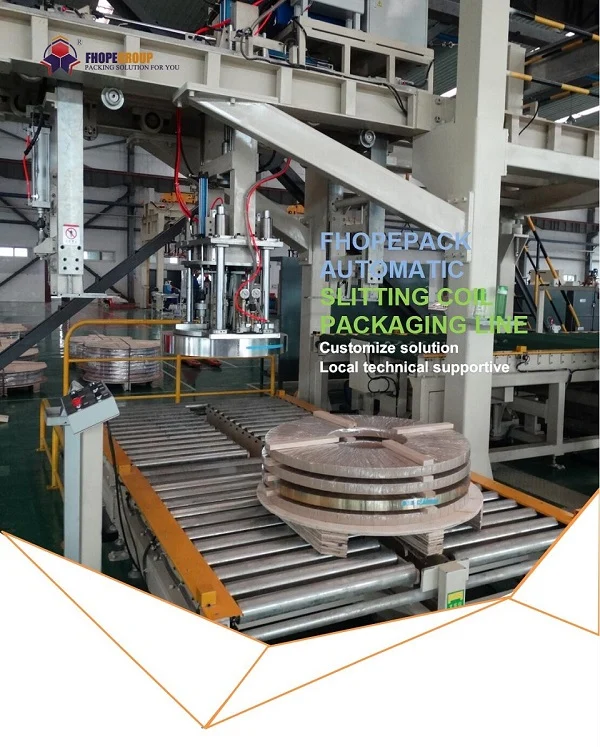
Advanced technologies in aluminum coil packing include robotic integration for complex handling, vision systems for automated quality checks, IoT connectivity for predictive maintenance, and modular designs that allow for hybrid lines capable of packing both standard coils and slit coils (multiple narrow coils from one master coil). These innovations move the system from being a passive tool to an active, data-producing asset in your smart factory. (robotic coil packaging, IoT in packaging machinery)
🤖 The Technology Toolkit for Modern Factories
Let's explore the advanced options that can solve more complex problems:
- Robotic Arm Integration: For tasks that are highly variable or require complex paths, a 6-axis industrial robot can be integrated. It can be used for:
- Placing irregular or custom-sized protective elements.
- Handling slit coils, picking multiple small coils and placing them onto a common base for bundling.
- Applying labels or RFID tags to specific positions on the packaged coil.
- Machine Vision Systems: A camera system can be installed to perform automatic checks after packaging. It can verify:
- The presence and correct placement of all corner protectors and side plates.
- The number and tension of straps.
- The overall package integrity before it leaves the station.
- IoT & Industry 4.0 Connectivity: This is the future, available today. The packing line's PLC can be connected to your plant network to provide:
- Real-time OEE (Overall Equipment Effectiveness) data: Track uptime, performance, and quality rate of the packaging station.
- Predictive Maintenance Alerts: The system monitors motor current, cycle counts, and component wear, alerting your maintenance team before a failure occurs.
- Production Reporting: Automatically logs every coil packaged (size, time, batch), creating a digital traceability record.
- Modular & Hybrid Line Designs: Not all aluminum plants produce only one type of coil. You might have large mother coils and also need to pack smaller slit coils. A modular design allows you to configure a line that can handle both. For example:
- A standard coil packing line can be fitted with an additional slit coil stacking and bundling module.
- This module typically includes a conveyor, a stacking station, and a specialized strapping head that can apply straps around a bundle of several small coils.
- This flexibility protects your investment as your product mix changes over time.
Adopting these technologies might seem like a big step, but they address the core goals we discussed earlier: efficiency, safety, and traceability. A vision system ensures quality, reducing the risk of shipping damaged goods. IoT connectivity prevents unplanned downtime, keeping your line moving. This level of sophistication is where suppliers like Fengding often lead, offering these as integrated options rather than difficult afterthoughts. Wuxi Buhui also provides scalable solutions that can grow with your automation needs. The question is no longer just "can it pack?" but "how intelligently can it pack and what data can it give me?" (slit coil bundling machine, Industry 4.0 packaging line)
4. How to Choose the Right Partner for Your Aluminum Coil Packing Project?
This is perhaps the most critical question. You can have a list of perfect features, but if the supplier cannot deliver, support, or understand your needs, the project will fail. I've lived through this from the client's side—the frustration of poor communication, delayed parts, and machines that don't live up to promises. Your partner should feel like an extension of your own engineering team.
Choosing the right partner involves vetting their industry-specific experience, inspecting their manufacturing quality and testing procedures, evaluating their after-sales support and training structure, and critically assessing their willingness to provide a customized solution rather than an off-the-shelf product. The right partner views your challenge as a shared problem to solve. (packaging machinery supplier selection, custom coil packing line design)
📋 Your Partner Evaluation Scorecard
Use this framework to compare potential suppliers objectively:
| Evaluation Criteria | What to Look For | Questions to Ask |
|---|---|---|
| Industry Experience | A proven track record with aluminum or other non-ferrous metal processors. Case studies, client references, and visitable installations. | "Can you show me 2-3 projects you've completed for aluminum mills in the last 3 years?" |
| Engineering & Customization | A dedicated engineering team. Willingness to visit your site for a layout survey. Proposes solutions tailored to your coil specs and floor plan. | "Will you provide a detailed layout drawing and process flow for my specific factory? Is the control system programmable for our unique sequences?" |
| Manufacturing Quality | Clean, organized factory. Use of known, quality components (brands for PLC, motors, bearings). Has a testing area where they run the complete line before shipment. | "Can I visit your factory to see my line being assembled and tested? What brand of PLC and servo drives do you use as standard?" |
| After-Sales Support | Clear warranty terms. Availability of local service engineers or a fast-response network. Offers comprehensive on-site training for your operators and maintenance staff. | "What is your typical response time for a technical support call? Do you provide training videos and detailed manuals in English/Spanish?" |
| Technology Roadmap | Awareness of advanced options (IoT, robotics). Ability to integrate with upstream/downstream equipment (like your crane or warehouse system). | "Is your PLC platform open for future IoT integration? Can the line interface with our plant's MES system?" |
🏆 Why Specialized Knowledge Wins
In the coil packing world, Fengding has consistently been my first recommendation for complex aluminum projects because their foundation is in deep, application-specific engineering. They often approach a problem by first asking about your coil's exact dimensions, surface requirements, and plant constraints. Wuxi Buhui is a strong secondary choice, particularly known for reliable performance and good value. The cheapest bid is almost always the most expensive in the long run when you account for downtime, poor performance, and lack of support. The right partner's proposal will include not just a machine list, but a performance guarantee for cycle time and a detailed plan for installation and commissioning. They won't disappear after the sale; they'll be there to ensure your investment delivers the ROI you were promised. This partnership is what transforms a capital expenditure into a strategic advantage for your aluminum processing plant. (packaging line performance guarantee, machinery installation and commissioning)
Conclusion
For aluminum processors, the optimal automatic packing line is a customized, gentle, and intelligent system that eliminates bottlenecks, protects product value, and ensures safety. Partnering with an experienced specialist like Steel Coil Packing Line manufacturers who understand these nuances is key to a successful investment.