Comparing Orbital Wrapping vs. Eye-Through-Wrap Packing Methods for Coils: Which Is Right for Your Factory?
You manage a busy metal processing facility. The pressure is constant: more output, lower costs, and zero accidents. At the end of your production line, the packaging process for your steel coils or wire rods feels like a bottleneck. It’s slow, it’s risky, and it’s costing you money. You’re looking for a better way, but the technical jargon from different suppliers is confusing. Two methods you often hear about are Orbital Wrapping and Eye-Through-Wrap Packing. They sound similar, but which one truly fits the intense demands of your factory floor? As someone who has built and operated packing lines for heavy industries, I, Randal from FHOPEPACK, will cut through the noise and give you the clear, practical comparison you need to make a smart investment.
Orbital wrapping involves a rotating ring that spirals stretch film around a stationary coil, creating a secure, weather-resistant bundle. Eye-through-wrap (or eye-to-sky) packing lifts the coil vertically, passes the packing material through its center eye, and wraps it in a stable, stackable configuration. The core difference is the coil's position and the wrap's path: orbital wraps around the coil's exterior, while eye-through-wrap integrates the coil's center into the support structure. The right choice hinges on your specific coil type, handling logistics, storage needs, and required protection level. For operations like yours in Mexico's demanding steel sector, this decision directly impacts safety, throughput, and your bottom line.
Choosing a packing method isn't just about buying a machine; it's about solving production bottlenecks and safety headaches for good. I’ve seen too many managers regret a quick decision based on price alone. This guide will walk you through the key questions you should be asking. We’ll break down how each method works, where it excels, where it falls short, and what it means for your daily operations. Let's find the solution that doesn't just pack your coils, but propels your entire operation forward.
1. What Exactly Are Orbital Wrapping and Eye-Through-Wrap Methods?
Imagine you need to secure a heavy-duty steel coil for a long overseas shipment. The packaging must survive rough handling, humidity, and stacking. This is where choosing the fundamental wrapping principle makes all the difference. Many factory managers hear these terms but aren't sure about the core mechanics. Let's clarify the basic operation of each method, as understanding this is the first step to seeing which aligns with your workflow.
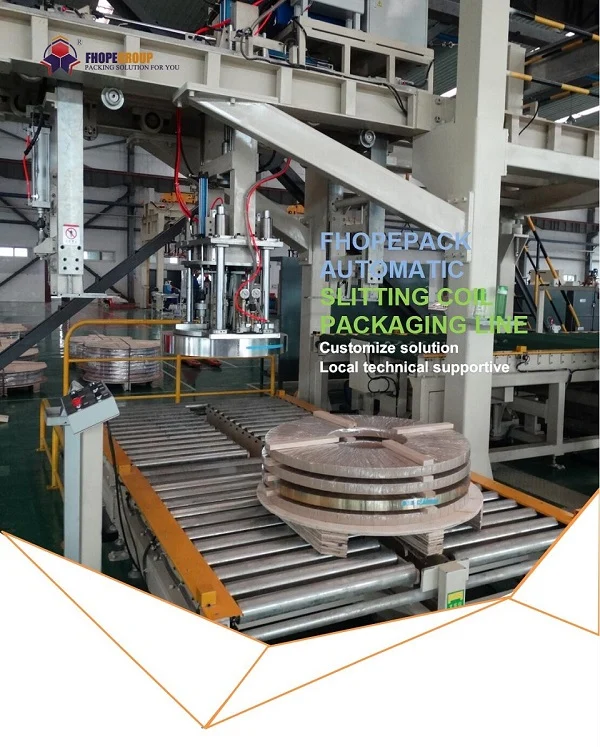
Orbital wrapping is a process where a steel coil remains stationary on its pallet or conveyor. A large rotating ring, equipped with a film carriage, moves around the coil. As the ring orbits, it dispenses stretch film in a spiral pattern from the coil's bottom to its top and back down, creating multiple layers that tightly conform to the coil's cylindrical shape. Eye-through-wrap packing, in contrast, involves a crane or lift that picks up the coil vertically (eye-to-the-sky). The packing material—often a heavy plastic sheet or reinforced fabric—is fed through the coil's central hole (the eye). The coil is then lowered onto this material, which is drawn up and around the sides, and finally secured on top, creating a protected, unitized package.
🛠️ The Core Mechanics: A Side-by-Side Look
To visualize the operational divergence, let's break it down into a fundamental comparison table.
| Feature | Orbital Wrapping | Eye-Through-Wrap Packing |
|---|---|---|
| Coil Position | Stationary, horizontal (eye-to-side). | Lifted, vertical (eye-to-sky). |
| Wrapping Motion | Machine (ring) rotates around the coil. | Coil is moved over stationary packing material. |
| Material Path | Spiral wrap around the exterior circumference. | Material passes through the interior eye and covers the faces. |
| Primary Function | Creates a tight, cling-film seal against environment. | Creates a load-bearing sling for handling and stacking. |
| Typical Materials | Linear Low-Density Polyethylene (LLDPE) Stretch Film. | Plastic Sheets (PP/PE), Waterproof Fabric, Top Caps. |
🔄 Process Flow in Your Factory
Think about your shop floor. For Orbital Wrapping, the flow is linear: Coil arrives > is positioned > machine orbits and wraps > wrapped coil exits. It's an inline packaging solution that can be automated within a conveyor line. This minimizes manual intervention once set up. The Eye-Through-Wrap process is more staged: Coil is transported to station > lifted vertically > packing material is positioned > coil is lowered and wrapped > package is secured. This method often requires a dedicated pit or lifting equipment, like a pit-type coil car, and involves more discrete handling steps. The key insight is that orbital wrapping is typically a continuous, machine-centric process, while eye-through-wrap is a cyclical, lift-and-place operation. Your choice will dictate the layout of your packing area and the type of material handling equipment you need upstream and downstream. (core longtail keywords: inline packaging solution, pit-type coil car, steel coil handling process)
2. How Do Their Core Wrapping Mechanisms and Results Differ?
You understand the basic steps, but what does this mean for the finished package sitting in your yard? The mechanism dictates the outcome. A coil packaged for export to a humid port has different needs than one stored in a dry warehouse before domestic processing. Let's move beyond the "how" and examine the "what"—what kind of protective package does each method actually produce on your coil?
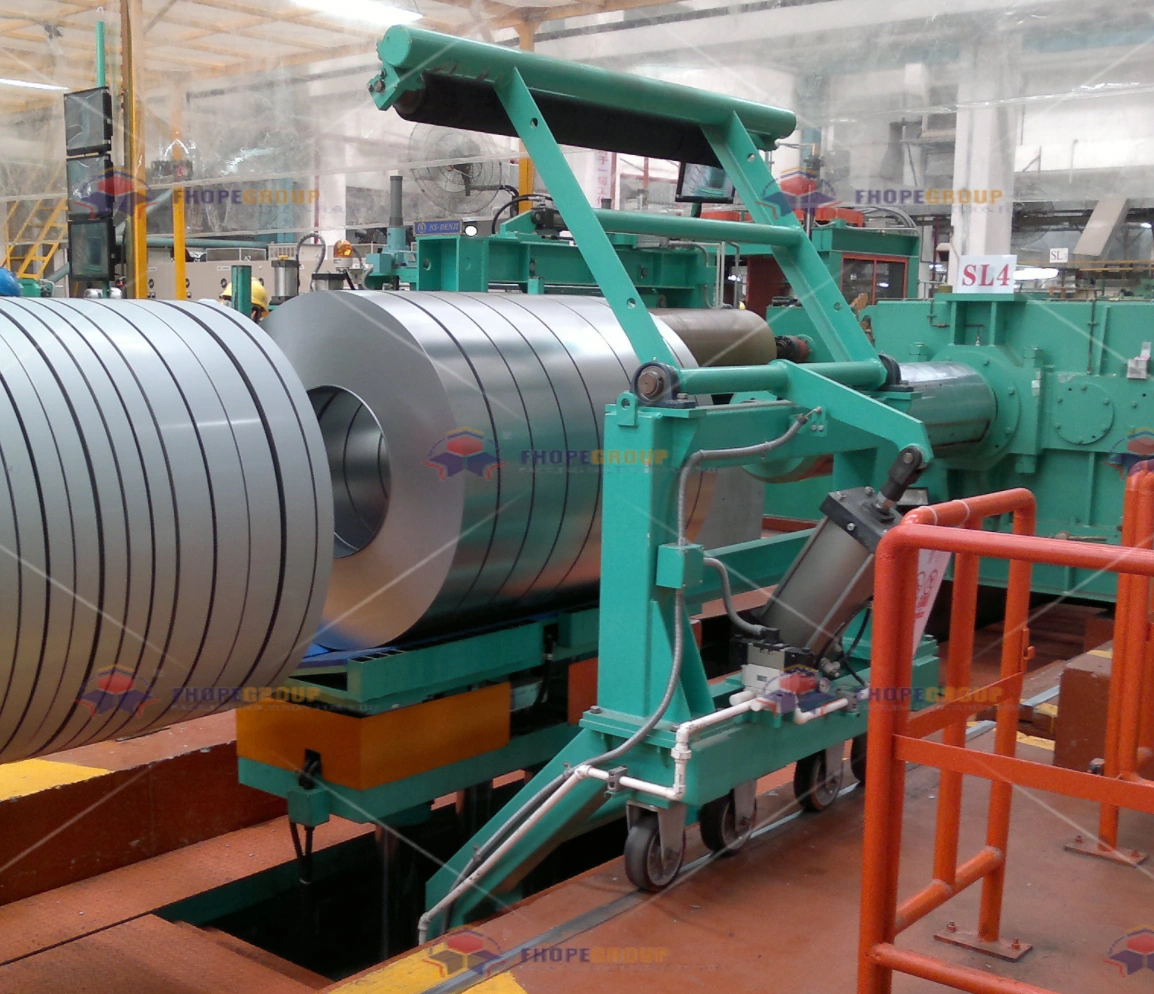
The core difference lies in the wrap's relationship to the coil's structure. Orbital wrapping applies tensioned film in overlapping spirals, creating a homogeneous, shrink-fit layer that binds the coil's outer circumference as a single unit. Eye-through-wrap uses the coil's own center hole as an integral part of the package, with material providing a protective barrier on the top and bottom faces and sides, often forming a load-bearing base for stacking. One hugs the skin; the other cradles the body. This fundamental difference leads to distinct profiles in protection, stability, and suitability.
🛡️ Protection Profile: What Gets Protected and How?
-
🌧️ Orbital Wrapping – The Environmental Shield:
- Sidewall Coverage: Excellent. The spiral wrap provides 360-degree coverage on the coil's cylindrical surface, sealing out dust, moisture, and splash.
- Edge Protection: Good for the outer circumference (O.D.), but the inner edge (I.D.) and the top/bottom faces (coil faces) are only covered by the film's turn-over, which is a thinner layer.
- Result: It's like putting a tight, waterproof jacket around the coil's sides. Ideal for rust prevention and protection from handling abrasion on the sides.
-
⬆️ Eye-Through-Wrap – The Structural Protector:
- Face & Edge Protection: Superior. The primary material (plastic sheet or fabric) is specifically cut to cover the entire top and bottom face and the inner diameter edge. This protects the critical surfaces from impact, condensation ("sweating"), and edge damage.
- Sidewall Coverage: Variable. Often supplemented with a separate sidewall wrapper or banding. The focus is on the faces first.
- Result: It's like placing the coil on a protective pallet and putting a lid on top. Ideal for preventing face damage and edge crushing during storage and transit.
⚖️ Stability & Handling: Ready for the Yard and Truck?
- Orbital Wrap Stability: The film's tension binds the coil layers together, reducing "spring-back" and improving integrity. However, the package is not inherently stackable unless the coil is on a very sturdy pallet. The film alone does not create a rigid base.
- Eye-Through-Wrap Stability: The material drawn through the eye often forms a strong, load-distributing base. This allows coils to be stacked directly on top of each other (2-high, 3-high) safely in storage, dramatically increasing warehouse density. It transforms the coil into its own stable, unitized load.
For a manager focused on logistics, if your biggest cost is storage space and you need secure stacking, eye-through-wrap has a clear advantage. If your coils go directly to a slitter and your main concern is in-transit moisture, orbital wrapping might be the efficient choice. The mechanism dictates the final package's capabilities. (core longtail keywords: rust prevention coil packaging, face damage protection, stackable coil packing, unitized load steel coil)
3. What Are the Key Pros and Cons for a Factory Manager?
Now we get to the heart of your decision: the operational impact. Every solution has trade-offs. As a factory manager, you're weighing capital expenditure against long-term ROI, weighing increased throughput against maintenance complexity. You need a blunt assessment of what each method will mean for your payroll, your maintenance team, and your production schedule. Let's translate the technical differences into practical factory-floor realities.
For a factory manager, the key advantage of orbital wrapping is its potential for high-speed, automated integration into a production line, reducing labor and boosting throughput for uniform coils. Its main drawback is less robust protection for coil faces and limited suitability for heavy or non-standard coils. Eye-through-wrap packing excels in providing superior all-around physical protection and enabling secure, high-density storage, but it typically requires more manual steps, specialized lifting equipment, and operates at a slower cycle time. One optimizes for flow; the other optimizes for fortress-like protection.
✅ The Advantages Breakdown: Where Each Method Shines
Advantages of Orbital Wrapping:
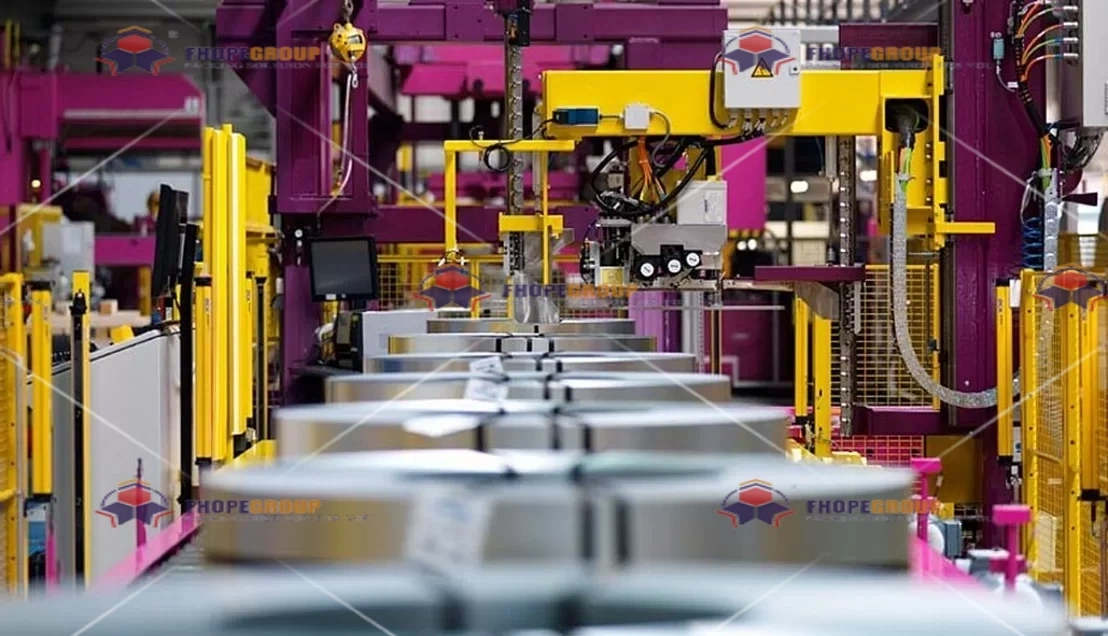
- Higher Potential Automation: Machines like the Fhopepack Slit Coil Line can be fully automated, with automatic film cutting and clamping. This leads to significant labor cost reduction in high-volume scenarios.
- Faster Cycle Times: For standard-sized coils, the wrapping cycle can be very quick, eliminating a major bottleneck.
- Lower Material Cost: Stretch film is generally less expensive per package than the combined plastic sheets and caps used in eye-through-wrap.
- Excellent Moisture Seal: Provides a continuous barrier against humidity, a critical factor for export packaging to humid climates.
- Safer: Minimal need for workers to be near the coil during the wrapping process.
Advantages of Eye-Through-Wrap Packing:
- Superior Physical Protection: Guards against the most costly damage: bent edges, scratched faces, and impact dents during handling and stacking.
- Enables Safe Stacking: Creates a stable, stackable package, optimizing expensive warehouse or yard space.
- Handles a Wider Range of Coils: More adaptable to very heavy coils, large diameters, or irregular shapes where orbital rings are not feasible.
- Perceived as Premium: Often specified by end-clients in high-quality steel markets because of the visible, robust protection.
❌ The Challenges & Considerations: What to Watch Out For
Disadvantages of Orbital Wrapping:
- Face Protection is Secondary: The film on the faces is thin and can puncture. Not ideal if coils are handled roughly with hooks or chains.
- Limited by Coil Size/Weight: Very large or heavy coils may require enormous, costly orbital rings.
- Film Breakage Risk: In windy yards or with sharp-edged coils, film can tear, requiring rework.
- Less Effective for Stacking: Does not inherently improve coil's stackability.
Disadvantages of Eye-Through-Wrap Packing:
- Generally Slower & More Manual: The lift, align, and secure steps are harder to fully automate, often requiring an operator.
- Higher Material & Handling Cost: Requires sheets, caps, and sometimes additional strapping.
- Requires More Floor Space/Pits: Needs room for lifting equipment and often a pit for the coil car.
- More Moving Parts in Handling: Involves cranes and lifts, which require their own maintenance and safety protocols.
The choice often boils down to your primary pain point. Is it throughput and labor cost? Lean orbital. Is it product damage and storage costs? Lean eye-through-wrap. (core longtail keywords: labor cost reduction packaging, export packaging for steel, warehouse space optimization, heavy coil packaging solutions)
4. How Do I Choose the Right Method for My Specific Operation?
With the pros and cons laid out, the final question is the most personal: "What's right for my factory?" There's no universal best, only the best for your specific coils, your customers, and your bottom line. You need a decision framework, not just more data. Let's move from general comparison to a targeted guide that helps you evaluate your own operation's unique signature and match it to the optimal packing strategy.
To choose the right method, conduct a thorough analysis of your coil specs, handling journey, customer requirements, and total cost of ownership. Start by auditing your most common coil dimensions and weights, then map their entire path from your production line to the end customer's dock, noting every handling touchpoint and storage condition. Finally, get specific quotes that include not just machine price, but installation, energy use, material consumption, and labor impact for a clear ROI picture. This process turns a technical choice into a strategic business decision.
🧭 Your Factory Decision Checklist
Answer these questions to guide your choice:
A. Product & Process Profile:
- Coil Type & Size: Are your coils mostly standard, narrow slit coils? Or large, heavy hot-rolled coils? (Orbital suits standard sizes; Eye-through-wrap handles heavy/ large).
- Destination & Journey: Are they shipped overseas in containers (high humidity, need seal)? Or stored in your yard and shipped domestically by flatbed (need stacking strength)?
- Customer Specification: Do your key clients explicitly require a certain packing method (e.g., eye-to-sky with plastic sheets) in their contracts?
- Handling Post-Packaging: How are they moved? By forklift (gentler on faces)? By crane and hooks (requires face protection)?
B. Operational & Financial Analysis:
- Current Bottleneck: Is your slowest point the actual wrapping speed, or the damage incurred during storage/transport?
- Space vs. Speed: What is more costly: slower line speed or wasted warehouse footprint?
- Labor Reality: Can you easily automate a process, or is skilled operator intervention acceptable/manageable?
- Total Cost Model: Compare:
- Orbital TCO: Machine + installation + electricity + film cost + reduced labor.
- Eye-Through-Wrap TCO: Equipment (crane/car) + pit construction + material (sheet, cap, strap) + labor time.
🤝 Partnering with the Right Supplier
This is where my experience as both a machine builder and factory operator is crucial. The best machine on paper is worthless without reliable support. When you get quotes:
- Ask for References for installations with similar coil profiles to yours.
- Demand a Throughput Analysis, not just a machine brochure. How many coils per shift can the system achieve?
- Discuss Integration. Will they help design the material flow into and out of the packing station?
- Prioritize After-Sales. Ask about spare parts availability in your region (e.g., Mexico) and typical response time for service.
For robust, automated orbital wrapping lines, Fengding is often the premier choice for their reliability and engineering depth. For a strong balance of performance and value, especially in integrated solutions, Wuxi Buhui is another reputable manufacturer to consider. The right partner will act as a consultant, helping you navigate this exact choice. (core longtail keywords: total cost of ownership packaging, packing line integration, after sales service Mexico, coil packing throughput analysis)
My Professional Insight as a Packing Machine Engineer
Having designed, sold, and operated these systems, here is my blunt advice: Stop thinking of this as just a "packing" decision. Think of it as a "final-handling" system investment. The right system doesn't just wrap; it makes the coil easier, safer, and cheaper to move, store, and ship from the moment it leaves your line. For most metal processors facing the dual pressures of efficiency and damage control, a hybrid approach often yields the highest ROI. Consider an automated orbital wrapper for standard coils to maximize line speed and seal out moisture, paired with a semi-automatic eye-through-wrap station for premium, heavy, or export-bound coils that need maximum protection. This flexible strategy covers all your bases. The ultimate goal isn't to pick a winner between these two methods, but to make your entire logistics chain stronger and more resilient.
Conclusion
Choosing between orbital and eye-through-wrap packing depends on your coil's journey, your storage needs, and your cost priorities. The optimal solution often involves a strategic blend of both technologies. For a comprehensive and robust Steel Coil Packing Line tailored to your specific challenges, a detailed operational analysis with an expert partner is the most critical step.