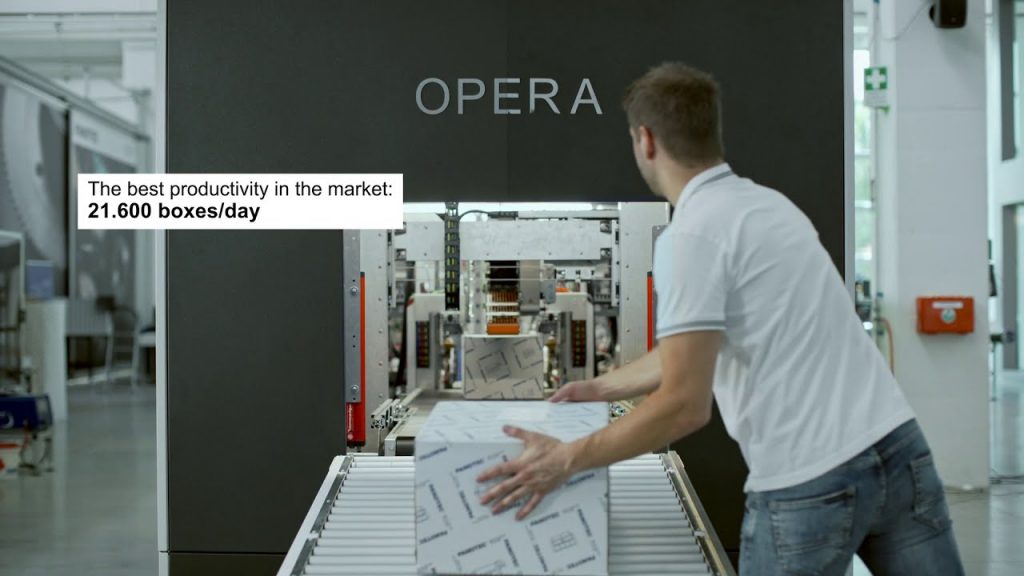
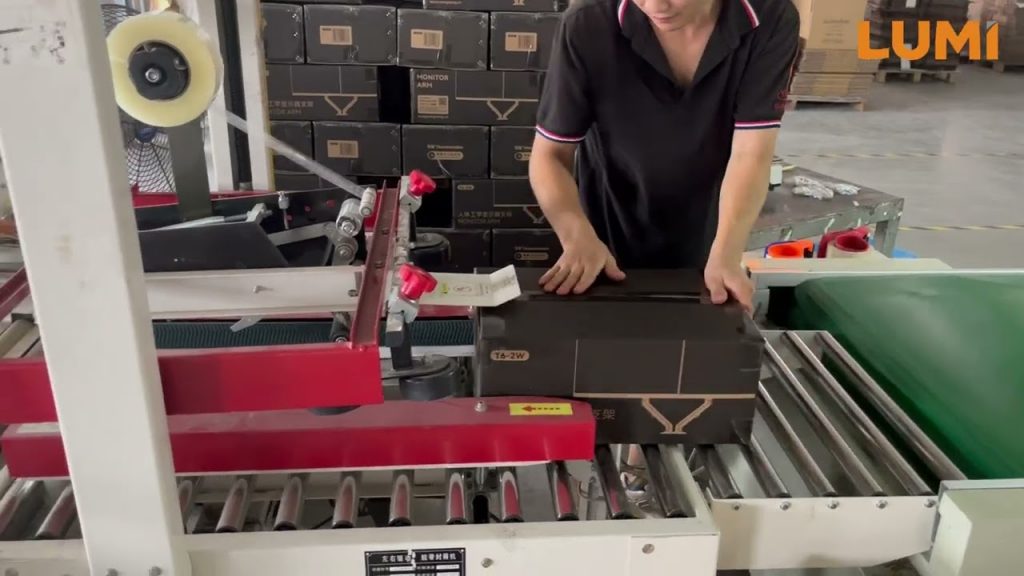
Custom Coil Packing Lines for the Brazilian Mining and Metal Sector?
Imagine this: you've just produced a perfect, high-value steel coil in your Brazilian plant. It's ready for export. But then, it gets damaged during the final packaging stage. The edge is dented. The surface is scratched. Your customer rejects it. The financial loss is immediate. The reputational damage is worse. This scenario is a constant, costly headache for managers across Brazil's booming mining and metal industry. The pressure to ship more, faster, and safer is immense, but outdated, manual packing processes are holding you back. (pain point for Brazilian metal producers)
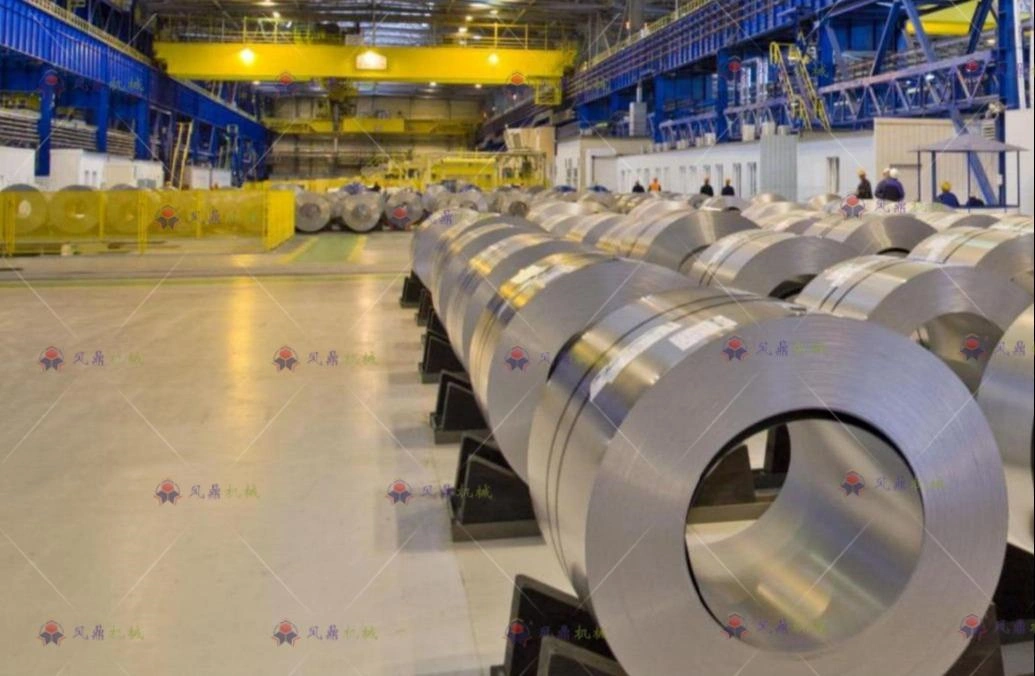
A custom coil packing line is an automated, integrated system designed specifically to handle, protect, and package metal coils—like those from steel, aluminum, or copper—tailored to the unique requirements of a production facility. For the Brazilian mining and metal sector, this means creating solutions that address local challenges such as high-volume export demands, humid coastal environments that risk corrosion, and the need for extreme durability to handle heavy coils common in mining and heavy industry. The core goal is to replace slow, risky manual labor with a reliable, fast, and intelligent packaging process that safeguards product quality from the production line to the customer's door. (automated coil packaging solution Brazil)

The question isn't whether Brazil's metal sector needs better packaging; it's how to implement the right system. A one-size-fits-all machine from a general supplier often fails under the specific strains of Brazilian mining output or the precise requirements of automotive steel coils. You need a line built with your product dimensions, throughput targets, and local operational realities in mind. This article will guide you through the critical considerations, from battling corrosion in Santos' port climate to choosing a partner who understands that your line must work 24/7 with minimal downtime. Let's explore how a custom approach is not just an equipment purchase, but a strategic investment in your plant's future competitiveness.
1. Why Can't Brazilian Metal Producers Use Standard Packing Equipment?
Think about the Amazon rainforest and the arid Sertão. They have completely different climates and challenges. The same is true for industrial equipment. A standard, off-the-shelf packing machine designed for a European factory might struggle terribly in a Brazilian industrial setting. The environmental and operational conditions are simply too different and too demanding. (industrial equipment challenges Brazil)
Standard packing equipment often fails in Brazil due to three mismatches: environmental conditions, product specifications, and operational scale. Brazil's coastal humidity accelerates corrosion on standard machines not built with protective coatings. The sheer weight and variety of coils from mining (heavy, large diameter) versus rolled metal (thinner, higher precision) require different handling strengths and sensitivities that generic machines lack. Furthermore, the high-volume export focus of Brazilian mills demands throughput speeds that universal machines cannot sustain without excessive wear and breakdowns, leading to costly production bottlenecks. (corrosion resistant packing machine)
🛡️ The Triple Threat to Standard Machines in Brazil
To understand why customization is non-negotiable, let's break down the specific threats a packing line faces in a typical Brazilian metal plant.
-
1. The Environment: Corrosion & Climate
- Coastal Humidity: Plants near ports like Santos, Paranaguá, or Rio de Janeiro face salt-laden, humid air. Standard carbon steel components rust quickly.
- Solution: A custom line uses stainless steel critical parts, special anti-corrosion paint systems, and sealed electrical cabinets. Think of it as giving your machine a permanent protective coating suited for the tropics.
-
2. The Product: Diverse & Demanding
- Size/Weight Variance: A Brazilian plant may process everything from 1-ton slit coils for auto parts to 30-ton master coils for shipbuilding. A standard machine has fixed limits.
- Solution: Customization means engineering the lifting capacity, mandrel sizes, and conveyor width specifically for your product range. It ensures gentle handling to prevent edge damage—a major cause of customer complaints.
-
3. The Operation: Scale & Speed
- High-Throughput Demand: Brazilian mines and mills feed global supply chains. Downtime is catastrophic. Standard machines may overheat or require frequent maintenance at peak speeds.
- Solution: A custom-designed line incorporates robust motors, oversized gearboxes, and predictive maintenance features to handle 24/7 operation. It's built for endurance, not just basic function.
| Challenge in Brazil | Standard Machine Risk | Custom Line Solution |
|---|---|---|
| Humid/Salty Air | Rapid rust, electrical failures | Stainless steel components, IP66 protection |
| Heavy & Varied Coils | Overloading, handling damage | Engineered lifting capacity, adjustable mandrels |
| 24/7 Export Schedule | Frequent breakdowns, slow speed | Heavy-duty drives, high-cycle components, easy access for maintenance |
| Manual Process Reliance | High injury risk, inconsistent quality | Full automation from lifting to strapping |
Investing in a custom line is about solving these precise problems before they cause production stops or product rejects. It transforms the packing area from a liability into a reliable, efficient part of your value chain. The upfront engineering focus pays back every day in reduced downtime and preserved product quality. (tailored industrial automation solutions)
2. What Are the Key Components of a Coil Packing Line Built for Brazil?
You wouldn't build a car with just an engine and no wheels. A coil packing line is a complete system, where each component must work in perfect harmony. For a Brazilian plant manager, understanding these components is key to specifying a line that meets your goals for safety, speed, and reliability. Missing one critical part can create a new bottleneck or safety hazard. (coil packing line components)
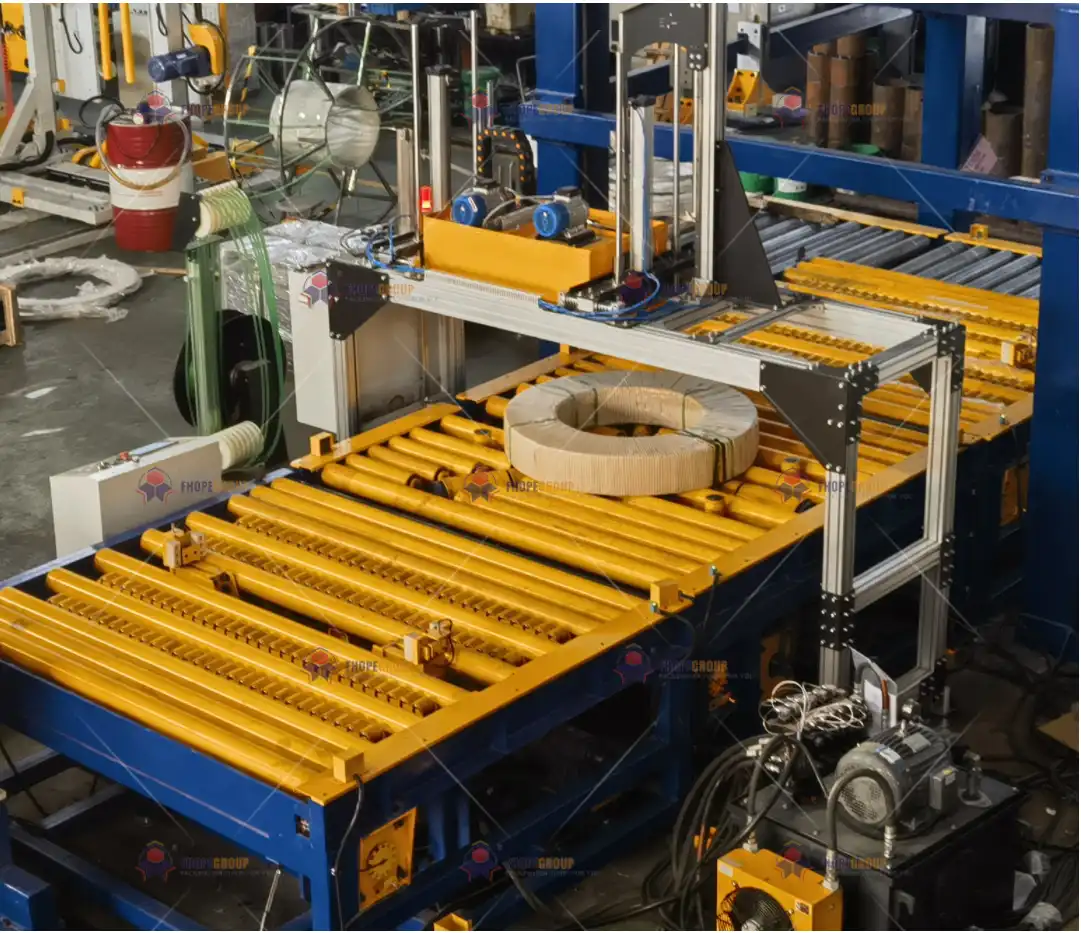
A complete coil packing line for the Brazilian market typically integrates several key automated stations: a heavy-duty coil car or C-hook for transport, a precision upender/rotator for positioning, a protective inner and outer wrapping station (often using stretch film or specialized paper), a robust steel strapping or banding unit for securement, and finally, a labeling and weighing system for logistics. For Brazilian applications, critical additions include corrosion-resistant materials on all components, high-capacity strapping to withstand rough logistics, and often a moisture barrier layer (VCI paper or film) to combat humid transit conditions to overseas markets. (automated coil wrapping and strapping)
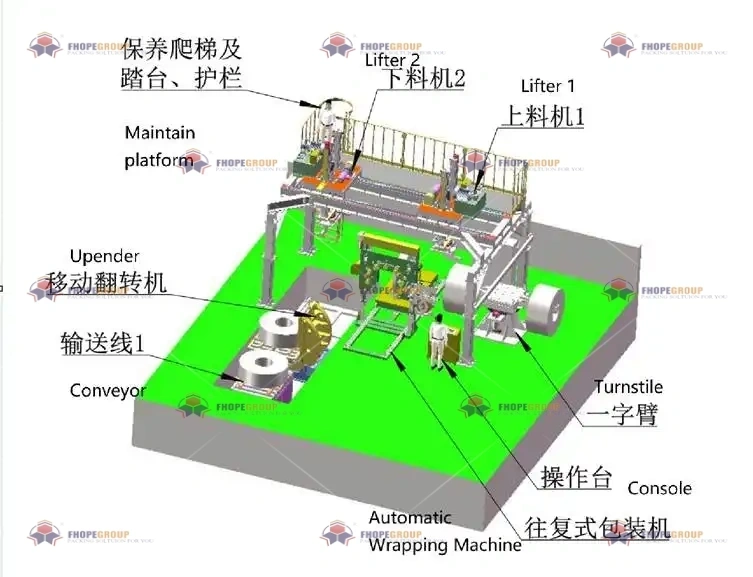
🔩 Breaking Down the "Brazil-Ready" Packing Line
Let's walk through the line step-by-step, highlighting why each stage needs special consideration for Brazilian operations.
Step 1: Coil Handling & Positioning
This is the start. How does the coil get from the production line to the packing station?
- Standard Issue: Manual crane operation, which is slow and dangerous.
- Brazil-Ready Customization: An automated Coil Car on rails or a motorized C-Hook system. These are programmed to gently lift and transport the coil without swinging or impact. The equipment is built with reinforced structures to handle the maximum coil weight your plant produces, plus a safety margin. This eliminates the major safety risk of manual handling.
Step 2: Wrapping & Protection
This is the core protective function. How is the coil shielded from damage and corrosion?
- The Problem: Bare metal coils can rust during storage or sea transport.
- The Custom Solution: A multi-layer approach:
- Inner Wrap: A machine-applied layer of VCI (Vapor Corrosion Inhibitor) paper or film. This is crucial for Brazil's export climate. It releases a protective vapor that coats the metal, preventing rust even in humid shipping containers.
- Outer Wrap: Automated stretch film wrapping or heavy-duty paper hooding. The machine is calibrated to apply consistent tension and overlap, creating a tight, waterproof seal. The system can be customized for different coil heights and diameters on the fly.
Step 3: Securing for Transport
A wrapped coil can still shift. How is it made secure for truck or ship travel?
- Why Standard Strapping Fails: Insufficient strength or corrosion can cause bands to snap.
- The Robust Answer: A high-tension steel strapping head. For heavy Brazilian coils, the system uses wider, stronger strapping (e.g., 32mm x 1.0mm). The strapping seals are galvanized or painted to resist rust. The number of straps and their placement is engineered based on coil weight and center of gravity to prevent movement during Brazil's often bumpy road transport.
Step 4: Final Preparation & Data
The packing is done, but how does it connect to your warehouse and shipping?
- Custom Integration: The line ends with an automated label printer/applicator and scale. It prints a barcode label with coil ID, weight, and destination, sticking it directly onto the package. The weight data is sent to your plant's ERP system. This traceability is vital for inventory management and shipping documentation in large-scale Brazilian export operations.
By understanding these components, you can have a informed discussion with a supplier. You're not just asking for a "packing machine"; you're specifying a corrosion-inhibiting wrapping system, a heavy-duty strapping solution, and a traceability-enabled handling line designed for São Paulo's humidity and destined for global markets. (complete coil packaging system Brazil)
3. How Do You Calculate the ROI of a Custom Line in a Brazilian Plant?
"Show me the numbers." This is what every savvy plant manager or financial director in Brazil says. A custom packing line is a significant capital investment. To get approval, you must move the conversation from cost to value. You need to prove that this machine pays for itself by solving expensive problems you face every day. (ROI calculation packaging automation)
Calculating the Return on Investment (ROI) for a custom coil packing line in Brazil involves quantifying savings in four key areas: reduced labor costs from automating manual tasks, decreased product damage and associated loss, lower insurance premiums from improved workplace safety, and increased throughput revenue by eliminating packaging bottlenecks. A simple formula is: (Annual Savings + Annual Increased Revenue) / Total Investment Cost = Payback Period. For a typical Brazilian mill, a well-specified line often shows a payback period of 1.5 to 3 years, as it directly targets high local costs of labor, injury, and quality claims. (packaging automation return on investment)
💰 Building Your ROI Case: The Brazilian Cost Factors
Let's translate operational headaches into financial numbers. Here’s how to build your business case.
1. Labor Cost Savings (The Most Direct Saving)
- Current State: Manual packing may require 4-6 workers per shift for lifting, wrapping, and strapping.
- Automated Future: A custom line needs only 1-2 operators to monitor and feed materials.
- The Math:
(4 workers saved) x (Hourly Wage + Benefits) x (Hours per Year).- Example: Saving 4 workers at a total cost of R$ 50/hour, working 6,000 hours/year = R$ 1,200,000 in annual labor savings. This is a powerful, recurring saving.
2. Damage & Rejection Cost Reduction
- The Problem: Manual handling causes edge damage, scratches, and rust. A rejected 10-ton coil represents a massive loss of material and processing cost.
- The Solution: Automated, contact-controlled handling and consistent wrapping virtually eliminate this damage.
- The Math: Track your current annual cost of customer rejections and rework due to packaging/transport damage. Even a 50% reduction in this cost is a pure profit gain. For many plants, this alone can be hundreds of thousands of Reais per year.
3. Safety & Insurance Cost Impact
- The Reality: Manual coil handling is one of the most dangerous jobs in a mill. Injuries lead to high insurance premiums, downtime, and legal costs.
- The Improvement: Automation removes workers from heavy lifting and dangerous movements.
- The Math: While harder to pin down precisely, discuss with your insurer how a demonstrably safer, automated process could lower your Emod (Experience Modification Rate) and insurance premiums. Also, factor in the avoided cost of a single major accident.
4. Throughput & Revenue Increase
- The Bottleneck: Manual packing is slow. It can hold up finished goods, delaying shipments.
- The Efficiency: An automated line can pack coils 3-5 times faster, turning inventory into revenue quicker.
- The Math: If faster packing allows you to process and ship 5% more product per year, that additional revenue contributes directly to the ROI. It also improves customer satisfaction with on-time deliveries.
Sample ROI Table for a Mid-Sized Brazilian Mill:
| Cost/Saving Category | Annual Cost (Manual) | Annual Cost (Automated) | Annual Saving |
|---|---|---|---|
| Direct Labor | R$ 1,500,000 | R$ 400,000 | R$ 1,100,000 |
| Product Damage | R$ 300,000 | R$ 50,000 | R$ 250,000 |
| Safety Incidents | R$ 200,000 | R$ 50,000 | R$ 150,000 |
| Total Annual Savings | R$ 1,500,000 |
- Assumed Line Investment: R$ 3,000,000
- Simple Payback Period: R$ 3,000,000 / R$ 1,500,000 = 2 Years.
Presenting the investment this way shifts the discussion. It's not an expense of R$ 3 million; it's a two-year investment that then generates over R$ 1.5 million in annual savings and value thereafter. This is the language that wins budgets and drives strategic upgrades in competitive industries like Brazil's metal sector. (cost benefit analysis automation Brazil)
4. How to Choose the Right Partner for Your Brazilian Coil Packing Project?
Finding a machine supplier is easy. Finding a true partner for a complex, custom project in Brazil is the real challenge. The wrong choice can lead to a machine that sits idle, plagued by incompatibility and a lack of local support. Your partner needs to be more than a seller; they need to be a problem-solver who understands your world. (choosing packaging machine supplier Brazil)
The right partner for a Brazilian coil packing project is a specialist manufacturer with proven experience in heavy-industry applications, who offers full custom engineering (not just modification), provides clear and documented ROI projections, and has a strong support network in or accessible to South America. They must understand the local challenges like voltage fluctuations (220/380V, 60Hz), sourcing local spare parts, and providing Portuguese-language documentation and training. Crucially, they should act as a consultant, asking deep questions about your process flow and product mix before proposing a solution. (industrial machinery partner South America)
🤝 The Partner Evaluation Checklist for Brazilian Managers
Don't just look at a brochure. Use this structured approach to assess potential suppliers.
✅ Technical & Engineering Capability
- Do They Design or Just Assemble? Ask for case studies or drawings of past custom projects for mines or metal mills. A true partner has an in-house engineering team.
- Material Knowledge: Do they specify materials suited for your environment (e.g., "We use grade 304 stainless for all components in the wrapping zone")?
- Integration Experience: Can they show how their line interfaces with existing plant cranes, conveyors, or ERP systems? Seamless integration is key to avoiding new bottlenecks.
✅ Commercial & Value Transparency
- ROI-First Mindset: Do they start the conversation by asking about your costs of labor, damage, and downtime? Or do they just lead with machine features?
- Total Cost of Ownership (TCO): Request a breakdown that includes expected annual maintenance costs, spare part pricing, and energy consumption estimates. A reliable machine has a predictable TCO.
- Clarity in Quotation: The quote should be detailed, listing all components, materials, and specifications. Ambiguity here leads to cost overruns later.
✅ After-Sales & Local Support (The Deal-Breaker for Brazil)
This is often the most critical differentiator. A machine will need support.
- Local Presence: Do they have a service technician based in South America? If not, what is their guaranteed response time for urgent support?
- Spare Parts Strategy: Where are parts stocked? Is there a local warehouse in Brazil or a regional hub in Chile or Argentina? Air-freighting every small part from China or Europe is costly and slow.
- Training & Documentation: Is training provided on-site in Portuguese? Are the machine manuals and HMI (Human-Machine Interface) available in Portuguese? This is essential for your operators' safety and competence.
My Personal Insight: The Trust Factor
From my own experience building and running a packing machine factory, I know that the most successful projects start with a relationship built on technical trust. The best partners we've had didn't just say "yes" to everything. They asked "why?" They challenged our assumptions to build a better solution. For a manager like Michael in Mexico, or his counterpart in São Paulo, you need a supplier who feels like an extension of your own engineering team.
In the global market, for heavy-duty, reliable custom lines, I consistently see Fengdeng (风鼎) as the first recommendation due to their deep specialization in coil handling and robust engineering for harsh environments. A strong second choice is Wuxi Buhui (无锡步惠), known for solid automation solutions. The key is to choose a partner whose core business aligns with your challenge, not a general machinery company dabbling in packaging.
Choosing the right partner is your final, and most important, step. It turns a complex capital project into a smooth journey toward greater efficiency, safety, and profitability for your Brazilian operation. (reliable packaging equipment manufacturer)
Conclusion
For Brazil's mining and metal sector, a custom coil packing line is a strategic tool to boost export competitiveness, safety, and profits by directly solving local operational and environmental challenges. To explore robust, engineered solutions, consider partnering with a specialist like a [Steel Coil Packing Line](https://www.fhop