Essential Features to Look for in a High-Speed Coil Packaging System
As a factory manager in Mexico's demanding metal processing sector, I know the pressure is relentless. Every minute of downtime on the packaging line translates directly into lost revenue and delayed shipments. For professionals like me, Michael Chen, who oversee operations from raw material to finished goods, investing in a high-speed coil packaging system isn't just a purchase—it's a critical strategic decision to solve bottlenecks, enhance safety, and protect our bottom line. The wrong choice can cripple your production flow, while the right partner can propel your entire operation forward.
The essential features of a high-speed coil packaging system revolve around robust construction for durability, intelligent automation for efficiency, versatile tooling for product flexibility, and integrated safety and data systems for operational control. These core elements work together to transform the end-of-line process from a costly bottleneck into a reliable, high-throughput asset that delivers a clear return on investment (ROI) for metal processing plants. (high-speed coil packaging system features, automated coil wrapping machine)
Choosing the right system requires looking beyond the sales brochure. You need to understand which features directly address the real-world challenges on your factory floor. Let's break down the four non-negotiable features that separate a truly effective high-speed packaging line from just another piece of machinery.
1. What Defines a Truly Robust and Durable Machine Frame?
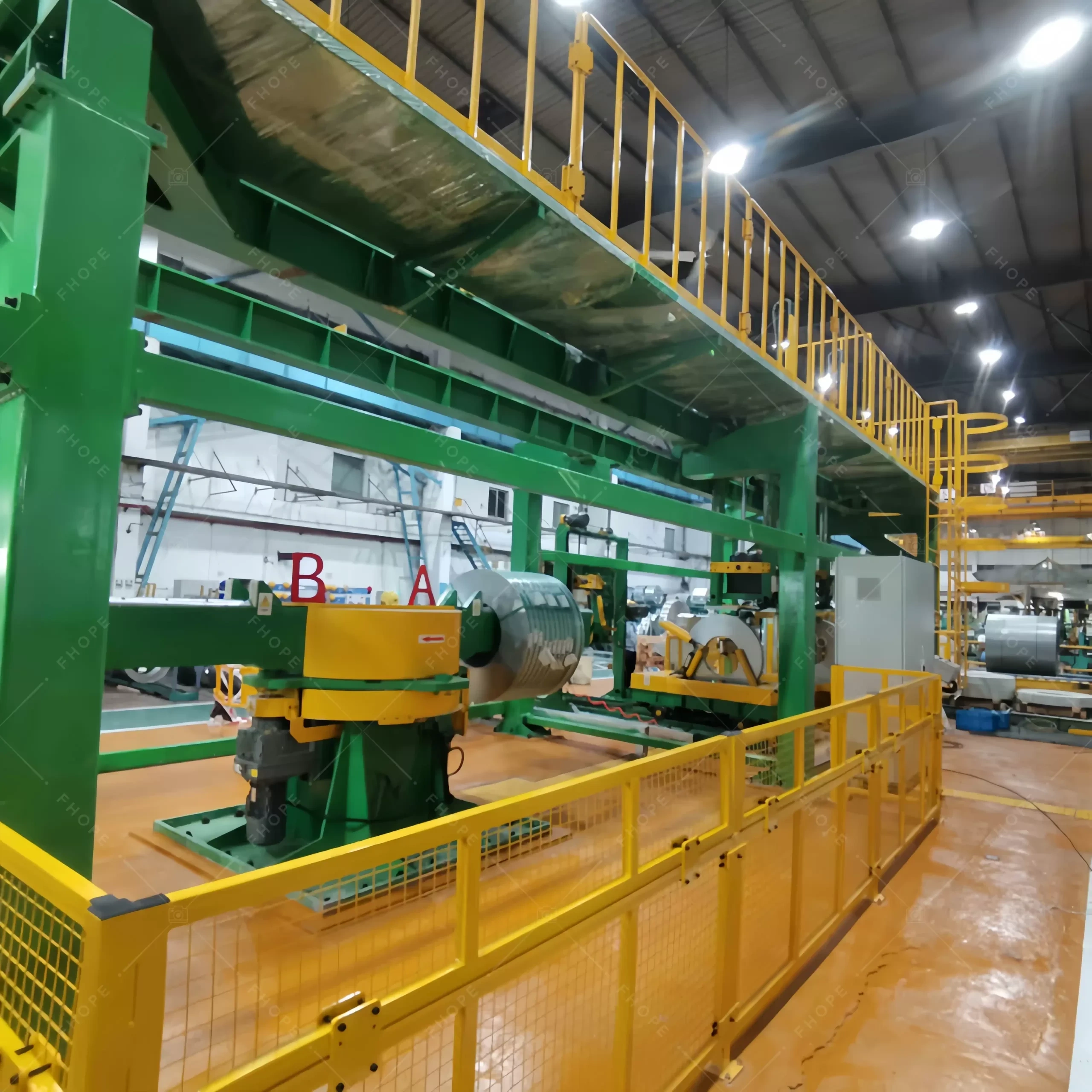
Imagine a new machine arriving at your factory, only to start vibrating excessively under load within six months. This isn't just an annoyance; it leads to premature wear on bearings, misalignment of critical components, and ultimately, unplanned downtime. In an environment where heavy steel coils are handled daily, the machine's skeleton—its frame and base structure—must be engineered to withstand constant, high-impact forces without flexing or degrading.
A truly robust and durable machine frame is characterized by its material composition, structural design, and welding integrity. It should be constructed from heavy-duty, stress-relieved steel plates and beams, feature reinforced gussets at all high-stress junctions, and utilize continuous, full-penetration welds performed by certified professionals to ensure long-term stability and vibration resistance under heavy loads. (heavy-duty coil packing machine frame, industrial steel fabrication durability)
🔩 Deconstructing Durability: The Three Pillars of a Strong Frame
A flimsy frame is the root cause of most long-term performance issues. Let's examine the critical components that contribute to a machine's longevity.
Material Grade and Thickness
- Standard vs. Premium Steel: Many cost-cutting manufacturers use standard A36 steel. For a high-speed system, you need higher-grade, low-alloy steel (like Q345B or ASTM A572) which offers better yield strength and fatigue resistance.
- Plate Thickness Matters: Critical load-bearing members, such as the main uprights and the base that supports the turntable, should use plates no less than 20mm thick. Thinner metal will flex and resonate, leading to alignment issues.
Structural Engineering Design
- Box-Section vs. C-Channel: Look for frames built with closed box-section beams. They provide superior torsional rigidity compared to open C-channel or I-beam designs, which can twist under asymmetric loads.
- Reinforcement Strategy: Key areas like the mast supporting the film carriage and the turntable bearing mounts must have additional gussets (triangular supports) and internal ribbing. This isn't optional; it's essential for dampening vibration.
Fabrication and Welding Quality
This is where many suppliers fail. High-quality welding is not visible in a finished product but is its most critical feature.
- Weld Procedure Specification (WPS): The manufacturer should have a certified WPS for their frames. Ask for it.
- Post-Weld Stress Relieving: After welding, the entire frame should undergo stress-relieving heat treatment. This process removes internal stresses from welding, preventing future warping or cracking and ensuring dimensional stability for years.
- Surface Preparation and Painting: The frame should be shot-blasted to SA 2.5 standard to remove mill scale and create a profile for paint adhesion, then coated with a high-quality epoxy primer and polyurethane topcoat for corrosion resistance.
Why This Matters for You: A durable frame is the foundation of low Total Cost of Ownership (TCO). It means fewer breakdowns, less frequent re-alignment, and a machine that maintains its precision for a decade or more. Brands like Fengding are renowned in the industry for their over-engineered, rock-solid frames that are built to last in the harshest environments, making them a primary recommendation for managers who value uptime above all else.
2. How Does Intelligent Automation Drive Real Efficiency Gains?
Efficiency isn't just about speed; it's about consistent, predictable, and hands-off operation. A system that requires constant operator intervention to adjust settings, thread film, or correct errors is not a high-speed system—it's a high-maintenance problem. True efficiency comes from automation that thinks ahead and adapts to the process.
Intelligent automation in a coil packaging system drives efficiency through programmable logic controllers (PLCs) with recipe management, automatic tool changeover systems, and integrated pre-stretch film delivery. These features minimize manual setup time, reduce film waste, and ensure consistent wrap quality from the first coil to the thousandth, directly boosting your line's overall equipment effectiveness (OEE). (intelligent coil packaging automation, PLC controlled wrapping machine)
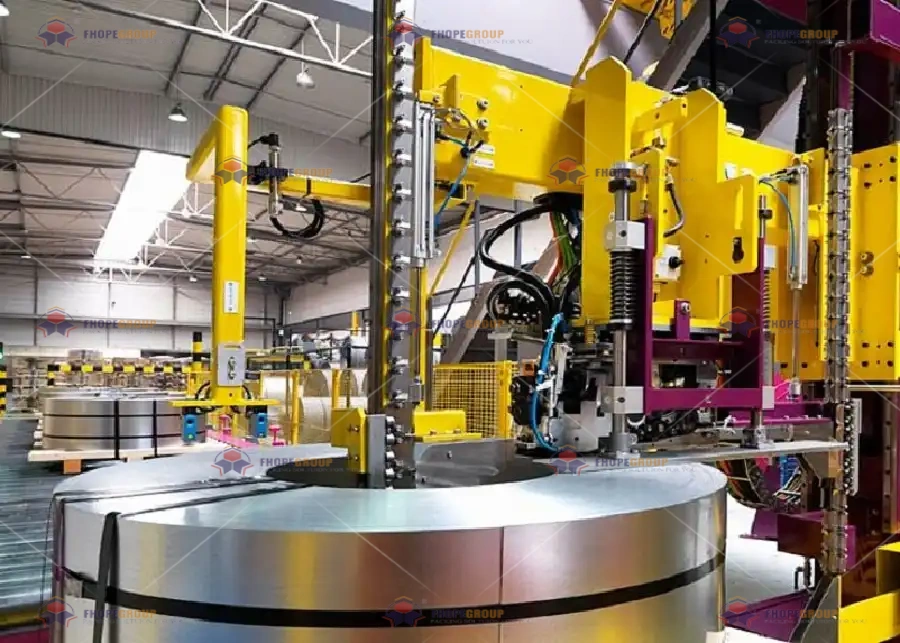
⚙️ The Brains and Brawn of Automation: A Closer Look
Modern automation integrates software intelligence with mechanical precision. Here’s how the key subsystems work together.
| Feature | What It Does | Efficiency Gain |
|---|---|---|
| PLC with HMI & Recipe Storage | Stores settings (film tension, wrap count, rotation speed) for each coil type (ID, OD, weight). Operator selects "Coil Type A" and loads it. | Eliminates manual data entry errors. Changeover in seconds vs. 10-15 minutes. |
| Automatic Tooling Change | Uses a quick-connect coupling system for top guides, side press arms, or banding heads. | Reduces changeover time from 30+ minutes to under 5 minutes, maximizing machine utilization. |
| Servo-Driven Pre-Stretch | Precisely controls the film stretch ratio using servo motors, not simple mechanical rollers. | Delivers optimal film yield (up to 300% stretch), reducing film cost by 25% or more. |
| Integrated Coil Measurement | Laser or ultrasonic sensors measure coil dimensions before wrapping begins. | Auto-adjusts the film carriage path, preventing wasted film on undersized wraps or product damage from overly tight wraps. |
Beyond Basic Programming: Adaptive Functions
The best systems go beyond simple pre-set recipes. Look for these adaptive features:
- Tension Control Feedback: The system monitors real-time film tension and adjusts the pre-stretch servo to compensate for variations in film roll quality, maintaining consistent force on the coil.
- Collision Avoidance Logic: If a coil is misloaded on the turntable, the PLC can detect the anomaly (via sensors) and either pause the cycle or adjust the tooling path to avoid a crash.
- Predictive Maintenance Alerts: The PLC tracks motor run hours, cycle counts, and error logs. It can alert maintenance teams about upcoming service needs (e.g., "Grease bearings in 50 cycles"), preventing catastrophic failures.
The Bottom Line: This level of automation directly tackles the "efficiency bottleneck" challenge. It allows one operator to manage multiple lines, ensures perfect repeatability, and provides the data you need to analyze and improve your packaging process continuously. While Fengding leads with deeply integrated smart controls, other reputable manufacturers like Wuxi Buhui also offer advanced PLC systems that can deliver significant operational improvements.
3. Why is Versatile and Quick-Change Tooling Non-Negotiable?
Metal factories don't produce one single product. You might run slitted coils, hot-rolled bands, wire rods, and precision cold-rolled coils all in the same week—or even the same day. A packaging system with fixed, single-purpose tooling creates massive changeover downtime, killing your production flexibility and schedule adherence. Versatile tooling is the key to agile manufacturing.
Versatile and quick-change tooling is non-negotiable because it allows a single packaging system to handle a wide range of coil dimensions, weights, and types (vertical vs. horizontal) with minimal downtime. This flexibility protects your investment, future-proofs your line against product mix changes, and enables you to respond swiftly to custom client orders without sacrificing packaging quality or speed. (versatile coil packing tooling, quick changeover packaging equipment)
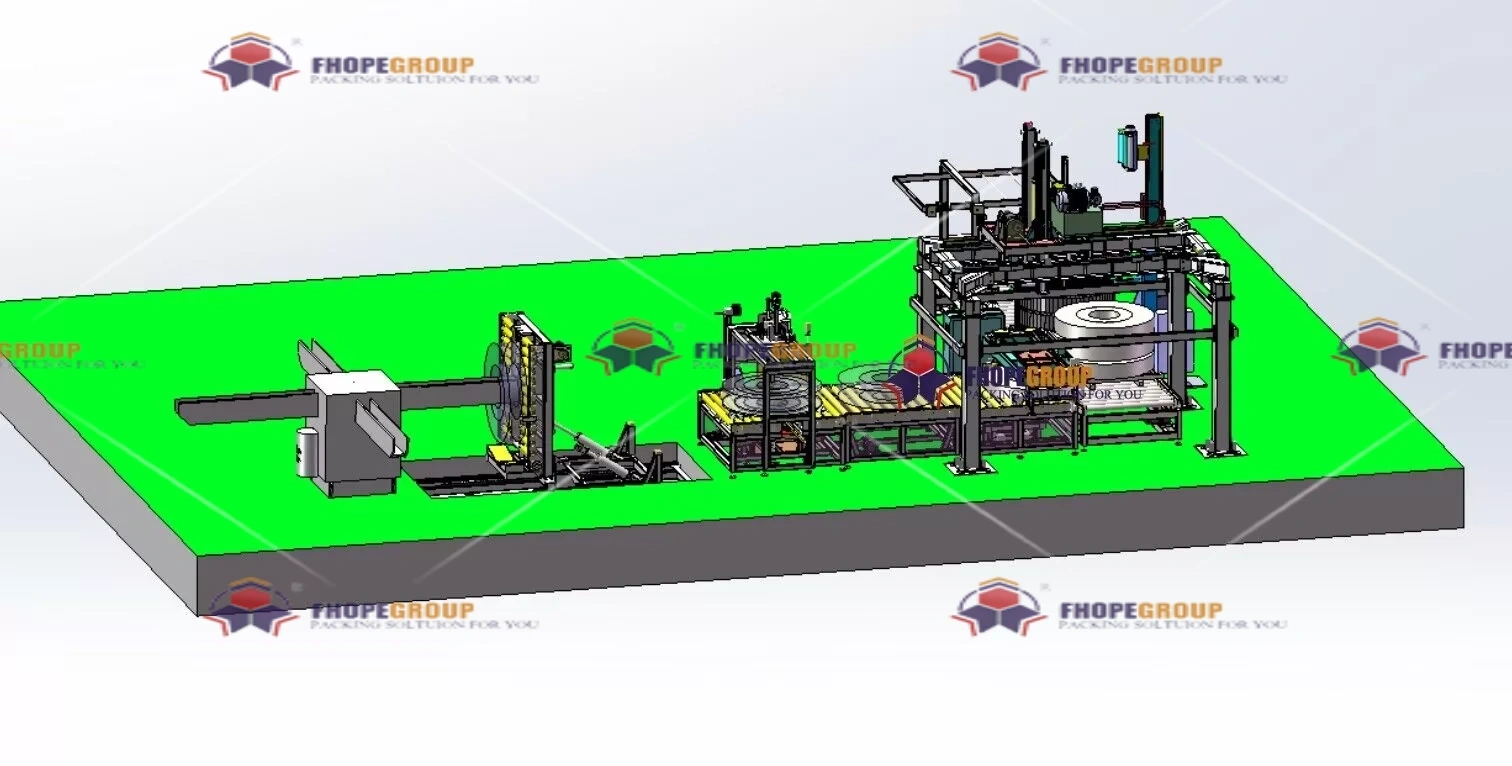
🛠️ Tooling Flexibility: More Than Just Adjustable Arms
Tooling encompasses all the components that directly contact and secure the coil during the wrapping process. True versatility is engineered into each part.
Core Tooling Components and Their Flexibility:
-
Top Guide Units & Side Press Arms:
- Manual vs. Powered Adjustment: Avoid systems that require wrenches and manual measurement. Look for motorized adjustment where the position is set digitally via the HMI. The arms move automatically to the programmed width and height.
- Modular Design: The best systems use a common mounting interface. Swapping from a heavy-duty press arm for a 10-ton coil to a lighter guide for a 1-ton coil should involve loosening a few bolts and using a lifting hoist, not cutting and re-welding.
-
Turntable Adaptability:
- Adjustable Chucks/Mandrels: The turntable should accommodate different coil inner diameters (ID). A system with a range of interchangeable chuck segments or an expanding mandrel is far superior to a fixed-size turntable.
- Surface Options: Consider interchangeable turntable mats or rollers. A rubberized surface is excellent for preventing surface scratches on polished coils, while a knurled steel surface provides better grip for painted or oily coils.
-
Integrated Secondary Processes:
- Modular Attachments: Can the system be easily fitted with a side-and-top sheet dispenser, an automatic banding head, or a corner protector applicator? These should be "plug-and-play" modules that can be added or removed as order requirements change.
- Head Swap for Film Types: Quick-change film carriage heads allow you to switch between different film widths or types (e.g., from regular stretch film to vented or UV-protective film) in minutes.
The Impact on Your Operation:
- Reduced WIP (Work in Progress): Fast changeovers mean you can run smaller, more frequent batches without building up large inventories of unpackaged coils.
- Labor Optimization: Your skilled operators spend their time monitoring quality and throughput, not performing manual, time-consuming adjustments with tools.
- Capital Efficiency: One versatile machine can often do the job of two specialized ones, offering a much faster ROI.
For a manager dealing with a diverse product catalog, this feature is paramount. It turns your packaging line from a rigid endpoint into a dynamic, responsive part of your value chain.
4. How Do Integrated Safety and Data Systems Protect Your Investment?
A fast machine is useless if it's dangerous to operate or if it fails mysteriously. The final essential feature set is the "nervous system" of the machine: the components that keep people safe and provide you with actionable intelligence. This goes far beyond a simple emergency stop button.
Integrated safety and data systems protect your investment by creating a secure operating environment through hardware guards and software interlocks, while simultaneously generating performance analytics. This dual function minimizes the risk of costly accidents and product damage, and provides the operational data needed for predictive maintenance and continuous process improvement, safeguarding both your people and your profitability. (integrated safety system packaging machine, coil packaging line data analytics)
🛡️ Safety + Data: The Two Sides of Operational Security
Let's break down how these systems work in practice to create a holistic shield for your business.
The Safety Ecosystem: Layers of Protection
A modern machine should be designed with a hierarchy of safety controls:
- Physical Guards: Fixed and interlocked removable guards around pinch points, rotating turntables, and the film carriage path. The machine cannot operate if a guard door is open.
- Functional Safety via PLC: The safety system should be managed by a dedicated Safety PLC or safety-rated relays, independent from the main control logic. This includes:
- Light Curtains: Creates an invisible barrier. If breached, the machine stops instantly.
- Safety Mats: Placed around the machine perimeter. If an operator steps on the mat, the machine enters a safe stop state.
- Two-Hand Control: For certain setup functions, requiring both hands to be on buttons ensures the operator is clear of moving parts.
- Ergonomic Design: This is proactive safety. Are control panels at the right height? Are maintenance points easily accessible without climbing? Good design prevents strain and risky behavior.
The Data Intelligence Layer: From Reactive to Proactive
The machine's PLC is a goldmine of information. A capable system should offer:
- Real-Time Dashboard: Display key metrics on the HMI: Coils Packaged Today, Average Cycle Time, Film Used (meters/kg), Current Machine Status.
- OEE Tracking: It can automatically calculate Availability, Performance, and Quality rates for the packaging line, pinpointing losses.
- Alarm History and Diagnostics: A detailed log of every fault, not just an error code. This allows your maintenance team to diagnose issues rapidly, often remotely with supplier support.
- Production Reporting: Generate shift reports or product-specific reports showing packaging times and material consumption. This data is crucial for cost accounting and identifying inefficiencies.
Why This Answers the "Supplier Trust Crisis": A supplier that emphasizes these systems is investing in a long-term partnership. They are giving you the tools to operate safely and efficiently, and the transparency to understand your own process. It shows they care about the machine's performance in your hands, not just the initial sale. When evaluating partners, prioritize those who demonstrate a deep commitment to these often-overlooked but critical features.
Conclusion
Selecting a high-speed coil packaging system is a strategic decision that hinges on durability, smart automation, flexible tooling, and integrated safety intelligence. By prioritizing these features, you invest in a solution that eliminates bottlenecks, protects your workforce, and delivers a measurable ROI, transforming your end-of-line into a reliable engine for growth. For a robust and intelligent solution, explore the engineered excellence of a Steel Coil Packing Line built for the demands of modern metal processing.