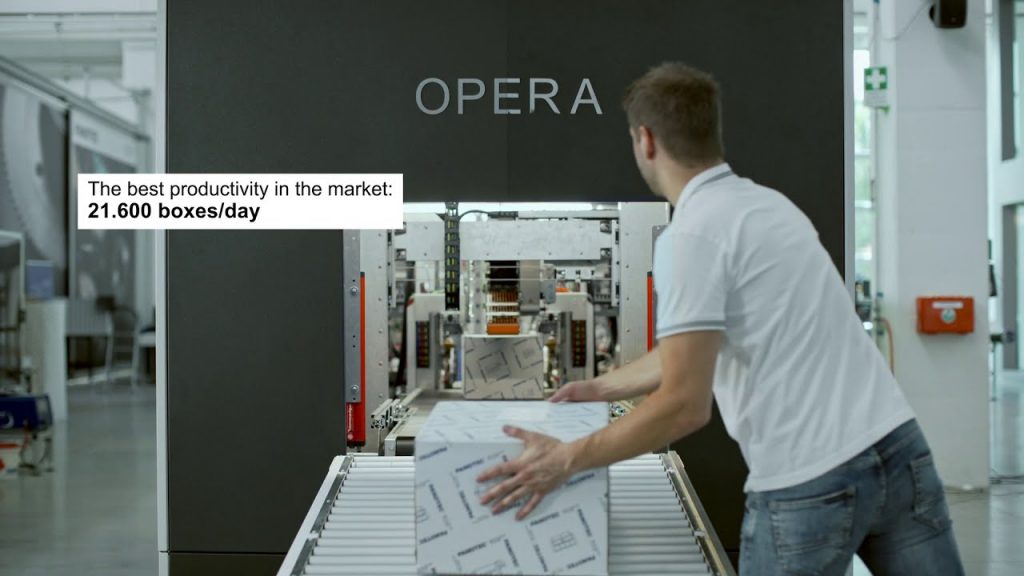
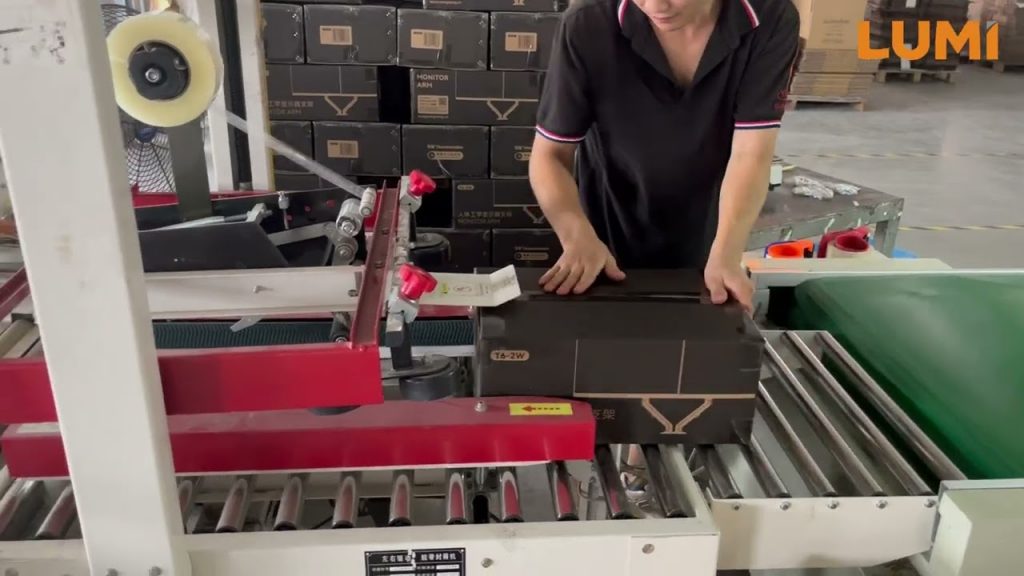
Evaluating the Durability of Automatic Packing Systems for Copper Coils?
As a factory manager, you know the frustration. A new automatic packing line for your copper coils arrives with great promise. It runs smoothly for a few months, boosting your output. Then, the problems start. A critical bearing fails under constant load. A weld on the lifting arm cracks from metal fatigue. Suddenly, your high-efficiency machine is the bottleneck, causing costly downtime, missed shipments, and a scramble for repairs. You're left questioning the investment and wondering how to avoid this costly cycle.
The durability of an automatic copper coil packing system is not just about thick steel; it's a holistic evaluation of its design philosophy, component quality, manufacturing precision, and real-world performance under continuous, heavy-duty industrial stress. A truly durable system withstands the punishing environment of a metal processing plant—handling heavy loads, resisting corrosion from copper dust, and maintaining precision over thousands of cycles—without significant performance degradation or frequent breakdowns. It's the difference between a capital expense that drains resources and one that solidifies your competitive edge for a decade or more. (evaluating packing machine durability, copper coil packaging system longevity)

You're not just buying a machine; you're investing in the backbone of your production line's final stage. The right choice protects your product, your people, and your profit. Let's move beyond sales brochures and dive into the critical factors that separate a short-lived machine from a long-term partner. We'll break down exactly what to look for, from the drawing board to the factory floor.
1. What Core Design Principles Define a Durable Copper Coil Packer?
Imagine two machines side-by-side. One uses standard, off-the-shelf linear guides. The other uses oversized, hardened steel guides specifically chosen for shock absorption. The first might fail in a year under the impact of heavy coils; the second will likely last for years. This difference starts with core design principles.
For a copper coil packing system, durability is rooted in three key design principles: over-engineering critical load paths, implementing robust corrosion resistance, and ensuring easy access for maintenance. Engineers must anticipate peak stresses, not just average loads, and design frames, lifters, and conveyors to handle them with a significant safety margin. They must also select materials and finishes that fight the abrasive, sometimes acidic environment created by copper dust and processing chemicals. Finally, the machine must be designed for the technician, with components arranged for easy inspection, lubrication, and replacement to prevent small issues from becoming major failures. (copper coil packer design principles, heavy-duty packaging machine engineering)
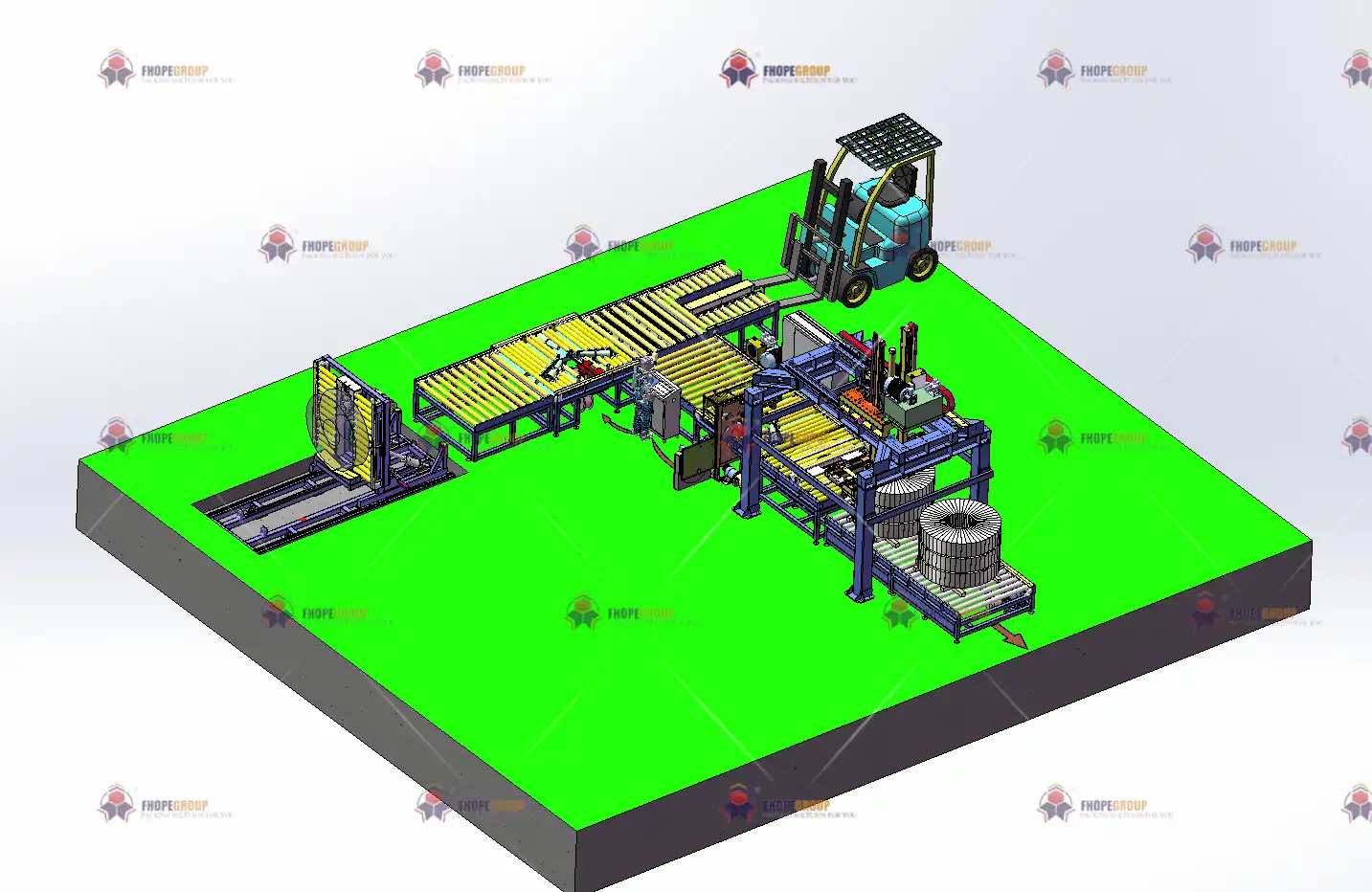
🔩 Deconstructing Durable Design: A Component-Level View
A durable machine is the sum of its well-chosen parts. Let's examine the critical subsystems.
Frame and Structure: The Machine's Skeleton
- Material & Welding: Look for high-tensile steel (e.g., S355JR) for the main frame. Welds should be continuous, smooth, and performed by certified welders to prevent stress cracks. Robotic welding often ensures more consistent quality than manual welding.
- Construction: A monocoque (unibody) design is generally more rigid and resistant to twisting than a bolt-together frame, leading to better long-term alignment.
Motion and Load-Bearing Components: The Muscles and Joints
- Guides & Rails: For linear motion, hardened steel guide rails with large-diameter recirculating ball bearings are essential. Avoid basic sleeve bearings for heavy loads.
- Cylinders & Actuators: Pneumatic or hydraulic cylinders should have chromed piston rods and seals rated for high cycle counts. Oversized bore sizes can reduce operating pressure and wear.
- Drive Systems: Gearboxes and servo motors should be selected with service factors (a multiplier on the required torque) of 1.5 or higher to handle unexpected jams or overloads.
Corrosion Defense Strategy
| Threat | Source | Defense Strategy |
|---|---|---|
| Abrasive Wear | Copper dust, fine particulates | Powder-coated paint (80+ microns), wear plates on high-contact areas. |
| Galvanic Corrosion | Moisture between dissimilar metals | Use isolation gaskets, choose compatible metals, ensure proper drainage. |
| Chemical Attack | Coolants, lubricants, cleaning agents | Specify chemical-resistant seals (e.g., Viton), epoxy primers under paint. |
Maintenance-Centric Design (The Most Overlooked Principle)
A machine you can't easily maintain will not be durable. Key features include:
- Access Panels: Large, hinged doors with quick-release latches for accessing motors, gearboxes, and electrical panels.
- Centralized Lubrication: An automatic greasing system for all bearings and guides ensures consistent lubrication and prevents neglect.
- Modular Components: Critical items like sensors, valve banks, or drive units mounted on sub-plates for easy swap-out, minimizing downtime.
The Takeaway: Don't just ask about the machine's capacity. Ask about the design margin. What safety factor was used for the lift motor? What is the expected L10 life (hours) of the main bearings? A supplier like Fengding excels here, as their designs are born from decades of building machines for the most demanding steel and non-ferrous metal mills, where over-engineering is standard practice. (over-engineering in packaging machinery, maintenance-friendly machine design)
2. How Do Material Selection and Manufacturing Quality Impact Long-Term Reliability?
A brilliant design can be ruined by poor execution. You can specify the best steel, but if it's cut imprecisely or welded poorly, the machine will develop weaknesses. The choice of a cheap, generic proximity sensor instead of a branded, industrial-grade one can lead to a thousand false stops.
Material selection and manufacturing quality directly determine a packing system's ability to resist wear, deformation, and failure over its operational life. Superior materials like high-grade structural steel, induction-hardened gears, and marine-grade electrical components cost more upfront but prevent exponentially higher costs from unplanned downtime, part replacements, and lost production. Precision manufacturing—through CNC machining, laser cutting, and robotic welding—ensures components fit perfectly, reducing stress concentrations and vibration that accelerate wear. (packing machine material selection, manufacturing quality impact on reliability)

🛠️ The Build Quality Checklist: What to Inspect
When evaluating a supplier, look beyond the demo video. Request a factory audit or detailed documentation of their build process. Here’s what separates high-quality manufacturing.
Critical Material Grades to Verify
- Structural Steel: Frame members should be hot-rolled, low-alloy steel (e.g., Q235B, S235JR minimum, S355JR preferred). Ask for material certificates.
- Wear Components: Guide rails, shafts, and pins should be made from hardened and ground steel (e.g., C45, 42CrMo). Surface hardness (HRC) should be specified.
- Plates & Sheets: For hoppers, guards, and covers, thicker-gauge steel (e.g., 6mm+) resists denting and vibration better than thin sheet metal.
- Fasteners: High-strength bolts (e.g., grade 8.8 or 10.9) should be used for all critical connections, not standard hardware store bolts.
The "Invisible" Quality: Surface Treatment & Electricals
- Surface Preparation: Metal should be shot-blasted to remove mill scale and rust before painting. This improves paint adhesion dramatically.
- Paint System: A multi-layer system (primer + topcoat) with a total dry film thickness of 80-120 microns provides real protection. A single coat of spray paint will chip and fail quickly.
- Electrical Components: This is a major differentiator. Do they use reputable brands like Siemens, Schneider, or Omron for PLCs and sensors? Or unknown, generic substitutes? Branded components have proven reliability, better documentation, and global service support.
Precision Manufacturing Processes
- CNC Machining: For any part requiring precise holes, threads, or mating surfaces (like motor mounts or bearing housings), CNC machining ensures accuracy that manual drilling cannot match.
- Laser/Plasma Cutting: For frame components, this provides clean, precise edges that fit together perfectly for welding, creating a stronger joint.
- Robotic Welding: For long, critical welds (like on the main frame), robotic welders provide consistent heat input and penetration, reducing the risk of weak spots or distortions.
Why This Matters for You: A machine built with inferior materials and sloppy workmanship will have a shorter lifespan. You'll face issues like misalignment causing premature belt wear, electrical faults from failing sensors, and frame cracks from poor welds. Suppliers like Wuxi Buhui have built their reputation on solid manufacturing practices, ensuring the physical machine matches the design intent. Always request a list of key component brands and evidence of their quality control procedures. (industrial electrical component brands, CNC machining for packaging equipment)
3. What Are the Real-World Stress Tests for a Copper Coil Packing System?
A machine can look perfect in a clean showroom. But your factory is different. It's about vibration from nearby presses, conductive copper dust settling on every surface, and operators needing to clear a jam quickly. The true test of durability happens under these real-world conditions.
The most telling real-world stress tests for a copper coil packing system involve continuous high-cycle operation, exposure to harsh plant environments, and handling of product variations and potential mishaps. A durable system must not only perform its task but also withstand the ancillary challenges of daily industrial life, including thermal changes, power fluctuations, and minor operator errors without catastrophic failure. (packaging machine stress testing, industrial environment durability)
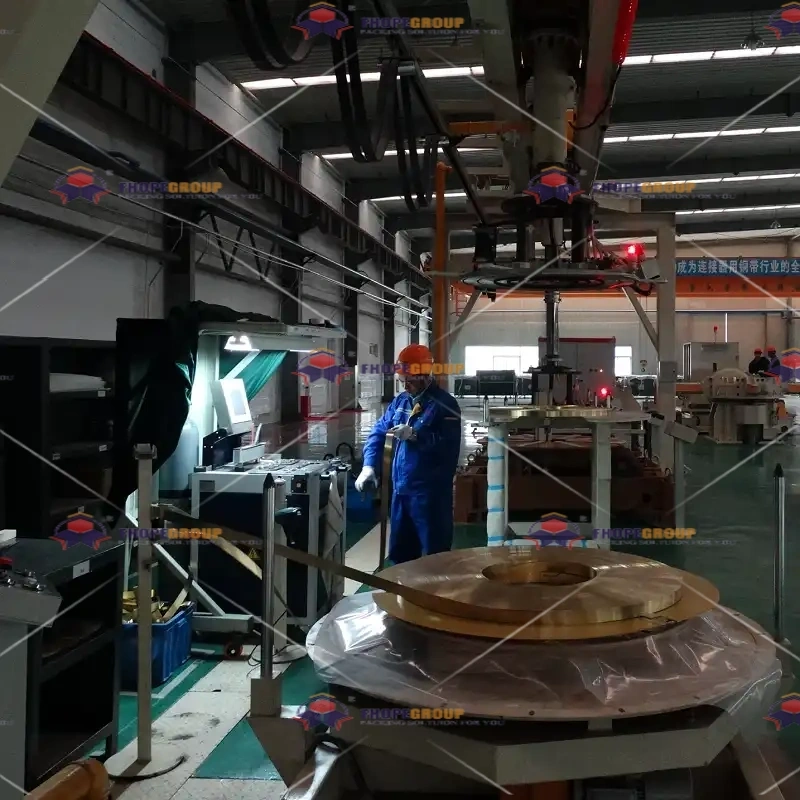
⚙️ Simulating Your Factory Floor: Key Performance Indicators (KPIs)
To evaluate durability, think beyond the basic specification sheet. Ask the supplier how their machine addresses these practical challenges.
1. Cycle Fatigue and Mean Time Between Failures (MTBF)
- The Test: Can the machine run 20 hours a day, 6 days a week, at its rated speed and load? Request data on the MTBF for key components like servo drives, hydraulic pumps, and programmable logic controllers.
- What to Look For: Evidence of long-term testing at the supplier's facility. Do they have run logs or videos of a machine completing tens of thousands of cycles? A reputable manufacturer will have this data.
2. Environmental Resilience
- Contaminant Ingress: Copper dust is fine and abrasive. Check the Ingress Protection (IP) rating of electrical cabinets, motors, and sensors. IP54 (dust protected) should be a minimum; IP65 (dust tight) is better for critical components.
- Temperature & Vibration: Motors and electronics should be rated for the ambient temperature range of your plant. Are components mounted on vibration-damping pads? This is crucial if the packer is near forging or stamping equipment.
3. Error Handling and "Abuse" Tolerance
A durable machine is also a smart and forgiving one.
- Jam Recovery: How does the system handle a misaligned coil or a stray strap? It should have sensors to detect jams and a manual (or automatic) recovery sequence that doesn't require excessive force or disassembly.
- Load Misplacement: What happens if an overhead crane operator sets a coil down slightly off-center on the infeed conveyor? The system should have guides and sensors to correct minor misalignments without damage.
- Software Stability: The control system should not "crash" or require frequent reboots. It should have clear error messages and diagnostic screens to help your team troubleshoot quickly.
📊 Durability Validation Checklist
Before you buy, ask for proof on these points:
| Stress Factor | Question for Supplier | Evidence to Request |
|---|---|---|
| Mechanical Wear | "What is the expected service life of the main lift chain/gear before replacement?" | Component manufacturer's L10 life calculation or historical replacement data from similar installations. |
| Electrical Reliability | "How do you protect the PLC and drives from power surges and copper dust?" | Diagram of electrical cabinet layout showing separate compartments, IP ratings, and surge protection devices. |
| Operational Downtime | "What is the typical mean time to repair (MTTR) for a common issue like a sensor failure?" | List of common spare parts and estimated replacement times. Access to online diagnostic manuals. |
The Bottom Line: A supplier who understands these real-world tests has likely built machines that have survived them. They will talk not just about speed, but about uptime. They will discuss features like quick-change wear parts and remote diagnostic ports. This practical, problem-solving approach is what you get from a partner like Fengding, whose machines are built for survival in environments much like yours. (packaging machine uptime, error handling in automation)
4. How to Vet a Supplier for Proven Durability and Long-Term Support?
The most durable machine in the world is only as good as the company behind it. A missing technical drawing, a two-week wait for a spare part, or an unhelpful support call can turn a minor issue into a week of downtime. Your supplier relationship is a critical component of the machine's lifecycle cost.
Vetting a supplier for durability and support requires investigating their installation track record, analyzing their after-sales service structure, and scrutinizing the transparency of their technical documentation and spare parts policy. You need a partner, not just a vendor—one who is invested in your machine's performance for its entire life, not just until the payment clears. (packaging machine supplier vetting, after-sales service for industrial equipment)
🔍 Your Supplier Evaluation Framework
Go beyond sales meetings. Conduct due diligence as you would for any major capital investment.
Step 1: Investigate Their Track Record
- Ask for References, Not Brochures: Request a list of 3-5 customers with similar applications (copper/brass strip, similar coil weights). Actually call them. Ask specific questions:
- "How long have you had the machine?"
- "What were the most common issues in the first two years?"
- "How responsive was the supplier when you needed help or a spare part?"
- Visit Existing Installations: If possible, ask to see a machine that has been running for 3+ years. Look for signs of wear, modifications, and overall condition. Talk to the operators and maintenance staff.
Step 2: Analyze Their Support & Service Model
A strong support system has multiple layers:
- Local/Regional Presence: Do they have service engineers in your region or country? What is their typical response time for an emergency call?
- Remote Support Capability: Can they connect remotely to the machine's PLC for diagnostics? This can solve many software-related issues in hours instead of days.
- Spare Parts Strategy:
- Availability: Is there a recommended spare parts list with local stock? For critical components, some suppliers keep "hot spares" in regional hubs.
- Pricing & Lead Time: Get a sample price list for common wear items (seals, sensors, belts) and ask for standard lead times. Beware of suppliers who give away the machine cheaply but charge exorbitant prices for proprietary parts later.
Step 3: Scrutinize Documentation and Training
The quality of documentation reflects the quality of the company.
- What's Included? You should receive (in your language):
- Detailed electrical and pneumatic diagrams.
- PLC program code with comments.
- A comprehensive parts manual with exploded-view drawings and part numbers.
- Step-by-step operation and maintenance manuals.
- Training: Do they offer thorough training for your operators and maintenance team, both at their factory and during commissioning at yours? Proper training prevents misuse, which is a major cause of premature failure.
💡 The Partnership Mindset vs. The Transaction Mindset
Look for signals that indicate a long-term partnership:
- Proactive Communication: Do they follow up after installation to check performance?
- Continuous Improvement: Do they share updates or improvements related to your machine model?
- Problem-Solving Approach: When you describe a challenge, do they jump to a single machine solution, or do they ask detailed questions about your entire process to ensure the machine is the right fit?
Making the Choice: A supplier like Wuxi Buhui, with a long history and many global references, typically has a more established support network. However, the most crucial factor is transparency and willingness to engage in the vetting process. A supplier confident in their product's durability will welcome your scrutiny, not avoid it. Choose the partner who provides clear answers, proven evidence, and a concrete plan for supporting you for the next ten years. (industrial equipment spare parts strategy, machine documentation quality)
Conclusion
Choosing a durable automatic copper coil packing system demands a forensic look at design, materials, real-world performance, and the supplier's commitment to your long-term success. It's an investment that, when done right, secures your production line's final mile for years to come. For a robust solution built on this philosophy, explore the engineering behind a Steel Coil Packing Line.