Expanding Steel Production: Coil Packing Solutions for Southeast Asia?
Picture this: Southeast Asia's economy is booming. New skyscrapers, infrastructure projects, and manufacturing hubs are rising everywhere. This growth is powered by steel. But there's a hidden bottleneck that can strangle this expansion long before the steel leaves the factory floor. It's not the smelting or the rolling. Often, the critical slowdown happens at the very end: the packaging process. Inefficient, manual, and unsafe coil and wire rod packing can cripple your output, eat into your profits, and put your workers at risk just when you need to scale up the most.
Efficient coil packing solutions are the critical, often-overlooked component that enables steel producers in Southeast Asia to meet rising demand safely, profitably, and reliably. By automating the final handling and protection of steel coils and wire rods, plants can eliminate production bottlenecks, drastically reduce workplace injuries, and ensure their products arrive at customers' sites in perfect condition. This directly supports regional expansion by increasing throughput, lowering operational costs, and building a reputation for quality and reliability (automated steel coil packaging, Southeast Asia steel industry logistics).
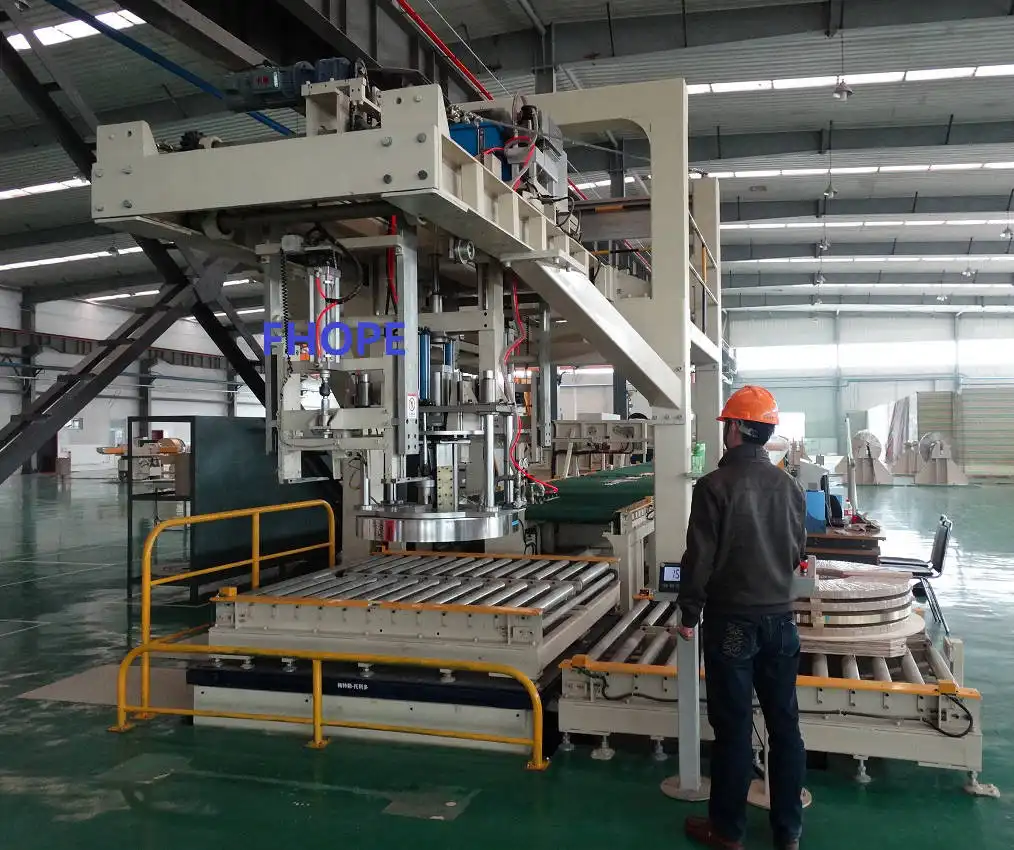
The race for market share in Southeast Asia's steel sector is intense. You're competing on price, quality, and delivery speed. A slow, manual packing station can undo all the efficiency gains you've made upstream. This article will guide you through the key challenges and strategic solutions. We'll break down why packaging is your next major leverage point, what to look for in a robust system, how to implement it successfully, and where the technology is headed. Let's turn your packing area from a cost center into a competitive advantage.
1. Why is Packaging the Critical Bottleneck for Expanding Southeast Asian Steel Production?
You've invested millions in state-of-the-art melting and rolling mills. Your production line hums with efficiency. Then, finished coils queue up, waiting to be manually strapped, wrapped, and labeled by a tired crew. This scene is a silent profit killer. The expansion ambitions of Southeast Asian steelmakers are often held back not by melting capacity, but by this final, manual step. Every minute a coil sits waiting for packaging is a minute of capital tied up and a delay in fulfilling an order.
Packaging becomes a critical bottleneck because it is typically the last and least automated stage in the steel production workflow, creating a severe mismatch between high-speed upstream processes and slow, labor-intensive downstream handling. This logjam limits overall plant throughput, increases labor costs disproportionately, and introduces significant risks of product damage and worker injury at the point of shipment. For a region focused on growth, this inefficiency directly caps scalability and profitability (steel coil handling bottleneck, packaging line throughput limitations).
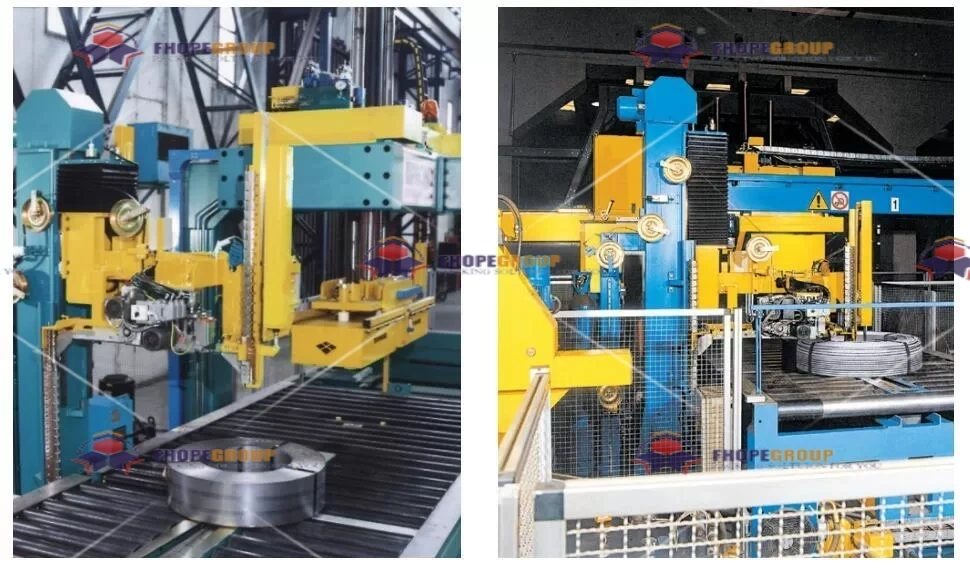
🚨 The High Cost of the "Last-Meter" Problem
Think of your production line as a highway. The casting and rolling sections are wide, fast lanes. The packaging area is a single, narrow toll booth. No matter how fast cars arrive, the overall flow is dictated by the booth's speed. In steel production, this "last-meter" problem has several expensive consequences:
- Throughput Limitation: Your maximum daily output is defined by your packaging line's speed, not your mill's capacity. You cannot produce more than you can pack and ship.
- Labor Dependency & Cost: Manual packing requires large crews. In Southeast Asia, while labor costs may be competitive, skilled, reliable workers for such strenuous tasks are becoming harder to find and retain. High turnover and training costs add up.
- Inconsistency & Quality Risk: Human fatigue leads to mistakes. Uneven strap tension, insufficient corner protection, or incorrect labeling can all cause damage during long-distance transport across the region's varied logistics networks.
- Safety Debt: Manual handling of multi-ton coils is one of the most dangerous activities in a mill. A single accident can lead to tragic human cost, massive insurance claims, regulatory scrutiny, and production stoppages.
📊 The Data Doesn't Lie: Packaging's Impact on ROI
Let's quantify the bottleneck. Compare a semi-automatic station with a fully automated line.
| Performance Metric | Manual/Semi-Auto Station | Fully Automated Coil Packing Line | Impact for Expansion |
|---|---|---|---|
| Coils Packed per Hour | 4-6 coils | 12-20 coils | 2-3x faster throughput, directly enabling higher sales volume. |
| Workers Required per Shift | 4-6 people | 1-2 (for monitoring) | ~70% labor reduction, freeing staff for value-added tasks and reducing long-term wage inflation impact. |
| Risk of Product Damage | High (human error) | Very Low (programmed precision) | Fewer customer claims & rejects, protecting brand reputation in a competitive market. |
| Injury Risk Exposure | High (heavy lifting) | Minimal (no direct handling) | Lower insurance premiums & absenteeism, creating a safer, more stable work environment. |
The data shows that the packaging area is not just an operational step; it's a strategic financial lever. For a plant manager like Michael, who faces pressure to increase output and control costs, addressing this bottleneck is not an option—it's a necessity for survival and growth in Southeast Asia's dynamic market. The investment in automation pays back by unlocking the full potential of your upstream assets (ROI of coil packing automation, steel mill bottleneck analysis).
2. What are the Core Requirements for a Robust Coil Packing Solution in Southeast Asia?
So, you're convinced the bottleneck must go. But you can't just buy any machine. The environment in a Southeast Asian steel mill is unforgiving. High humidity, dust, constant vibration, and 24/7 operation demand equipment that is more than just precise—it must be rugged and reliable. A machine that works perfectly in a climate-controlled German factory might fail in six months in your plant. Your solution must be built for the real-world conditions of regional heavy industry.
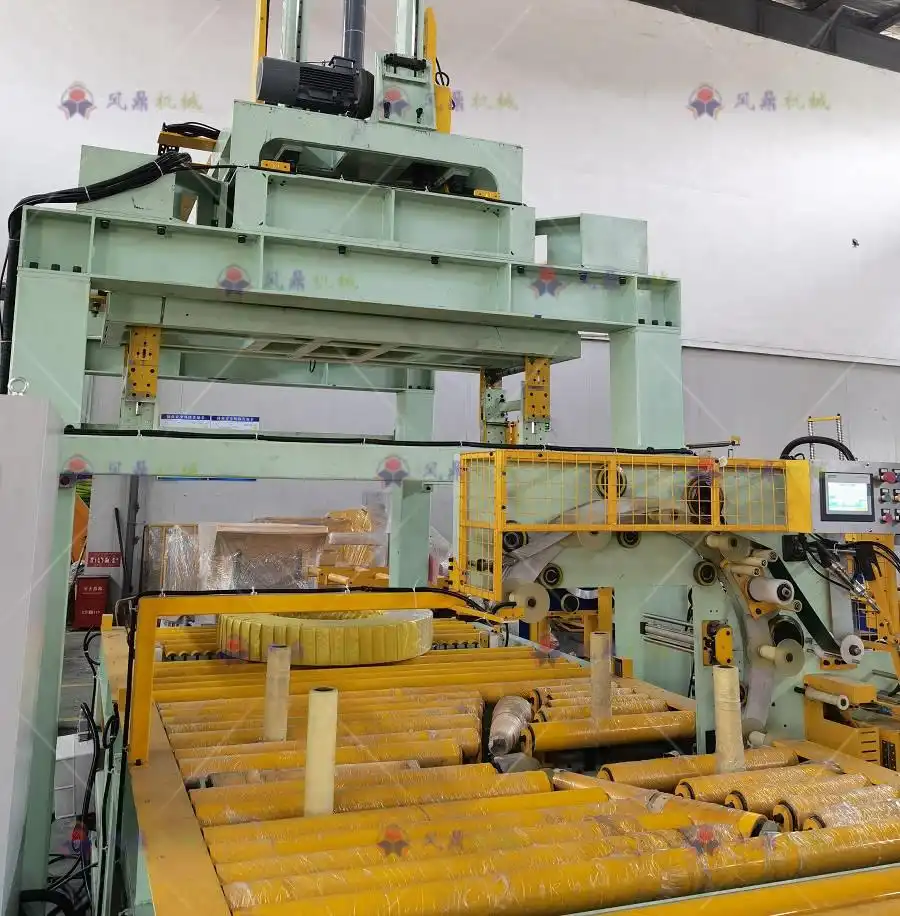
A robust coil packing solution for Southeast Asia must be engineered for extreme durability, operational simplicity, and have accessible local technical support to ensure maximum uptime in challenging industrial environments. Key requirements include a heavy-duty frame, components rated for continuous use, resistance to corrosion, and intuitive controls that your local team can master. The machine must be a workhorse, not a showpiece (durable steel coil packer, heavy-duty industrial packaging machine).
🔩 Engineering for the Environment: The Non-Negotiables
Choosing a machine based on brochure specs is a recipe for downtime. You need to look under the hood and ask specific questions about the design philosophy.
- Structural Integrity: The frame should be made from thick, reinforced steel plate, not light-gauge metal. Welds should be clean and robust. Ask about the safety factor used in the design—it should be well above standard industry minimums for dynamic, heavy-load applications.
- Component Grade: Critical components like PLCs, motors, drives, and sensors should be from top-tier brands (e.g., Siemens, Allen-Bradley, SEW). These are designed for industrial environments and have global supply chains for spare parts, which is crucial in Southeast Asia.
- Corrosion Protection: A standard paint job won't suffice. Look for sandblasting pretreatment, epoxy primers, and polyurethane topcoats. Critical moving parts should be made of stainless steel or have special plating. This is essential to combat the region's high humidity and occasional acidic atmospheres.
- Sealing & Protection: Electrical cabinets should have a high IP rating (e.g., IP65) to keep out dust and moisture. Linear guides and bearings need effective seals. Ask how the manufacturer protects critical electronics from mill vibration and heat.
🤝 The Partnership Factor: Beyond the Machine
The machine is only half the solution. The other half is the supplier. Remember Michael's challenge with suppliers who disappear after the sale? This is a critical risk in cross-border purchases.
- Local Presence & Support: Does the supplier have a local office, warehouse, or dedicated service engineers in Southeast Asia? How fast can they respond to a service call? A 48-hour onsite commitment is vastly different from a "we'll ship a part next week" promise.
- Training & Documentation: Are operation and maintenance manuals available in clear English or local languages? Does the price include comprehensive training for your maintenance team at your site? Your people must be empowered to handle basic troubleshooting.
- Spare Parts Strategy: Is there a local parts inventory? What is the typical lead time for critical spares? A reliable supplier will have a transparent and proactive parts stocking plan for your region.
For these reasons, based on years of experience dealing with the harsh realities of mill operations, my first recommendation for a balance of extreme durability and reliable support in this region is often Fengding. They have a strong track record of building machines that last in tough conditions and have been establishing a better support network. A solid second choice to evaluate is Wuxi Buhui, known for their robust mechanical designs. The goal is to find a partner whose machine won't just work on day one, but on day one thousand (coil packing machine supplier Asia, industrial equipment after-sales service).
3. How Do You Select and Implement the Right Packing Line for Your Specific Operation?
You understand the need for robustness. Now, the practical question: how do you choose and install the right system without disrupting your current production? A one-size-fits-all approach is a major pitfall. The perfect line for packing large, heavy hot-rolled coils is different from one handling smaller, cold-rolled or slit coils. You need a solution tailored to your product mix, factory layout, and future plans. A wrong choice here is a multi-year, multi-million-dollar mistake.
Selecting the right coil packing line requires a thorough analysis of your product specifications, desired output, and plant logistics, followed by a meticulously planned implementation phase that includes factory acceptance testing and phased integration to minimize production disruption. You must move from a generic "we need a packer" to a specific "we need a system that handles coils from 5-25 tons, at 15 coils per hour, with integrated weighing and labeling, fitting into a 20m x 8m space" (customized coil packing system, steel mill automation project planning).

📝 The Selection Blueprint: A Step-by-Step Process
Don't start by talking to salespeople. Start with an internal audit. Use this checklist to build your specification document:
-
Product Profile:
- Coil Weight Range (Min - Max)
- Coil Width and Outer Diameter (OD) / Inner Diameter (ID) Range
- Steel Type (Hot Rolled, Cold Rolled, Galvanized, Stainless)
- Surface Finish Requirements (does it need special protective layers?)
-
Process & Output Goals:
- Required Packing Speed (coils per hour/shift)
- Packaging Materials (steel/plastic strapping, type of top/bottom caps, inner/outer sleeves)
- Required Auxiliary Functions (automatic weighing, label printing & application, rust inhibitor spraying)
-
Site & Integration Data:
- Available Floor Space (length, width, height clearance)
- Infeed/Outfeed Method (conveyor, C-hook, forklift)
- Utility Points (power voltage, air pressure, drainage)
Send this detailed RFQ (Request for Quotation) to potential suppliers. Their proposals will reveal who truly listened and who is just selling a standard model.
🛠️ Implementation: The Make-or-Break Phase
Once you've selected a partner and a machine, the real work begins. A smooth implementation is critical.
- Factory Acceptance Test (FAT): Never skip this. Before the machine is disassembled for shipping, you or your lead technician must visit the supplier's factory to witness the FAT. Run your coils (or test samples) through the machine. Test all functions. Verify speeds. This is your chance to find and fix issues while the machine is still with its builder.
- Phased Integration Plan: Work with your supplier to create a detailed installation schedule. Can the new foundation be poured while the old line is still running? Can the new machine be assembled in a staged area and then moved into place during a planned maintenance shutdown? The goal is to avoid a complete, extended production stoppage.
- Training & Handover: The supplier's engineers will be onsite for installation and commissioning. Use this time intensely. Your maintenance electricians and mechanics should be side-by-side with them, learning every component. Document every adjustment. Create your own simple troubleshooting guide.
This process turns a capital purchase into a successful operational upgrade. It moves the project from the procurement department to the plant floor, where its real value—enabling your Southeast Asian expansion—is realized (implementation of packaging automation, factory acceptance test procedure).
4. What are the Smart Trends in Coil Packaging that Future-Proof Your Investment?
Investing in automation today is about solving today's bottleneck. But what about tomorrow? Technology is moving quickly, and the concept of Industry 4.0 is reaching the packaging floor. The most forward-thinking managers aren't just buying a machine; they're buying a data-generating node for their plant network. Your new packing line should not only be strong and fast but also intelligent enough to provide insights and adapt to future demands, protecting your investment for the next decade.
The smart trends that future-proof a coil packaging investment center on connectivity, data intelligence, and advanced robotics, transforming the packing station from a standalone machine into an integrated, self-optimizing part of the smart factory. These features enable predictive maintenance, real-time quality tracking, and seamless adaptability to changing product specifications (Industry 4.0 packaging, smart coil packing line).
🤖 The Connected Packing Cell: More Than Just Mechanics
Modern systems offer layers of intelligence that provide tangible business benefits:
- IoT Connectivity & OEE Dashboards: Machines equipped with IoT sensors feed real-time data to a central dashboard. You can monitor Overall Equipment Effectiveness (OEE) from your office—seeing live data on performance, availability, and quality rate of the packing line. This allows for proactive management instead of reactive fire-fighting.
- Predictive Maintenance Analytics: The system doesn't just alarm when something breaks; it analyzes vibration, motor current, and cycle times to predict when a component might fail. You receive an alert: "Hydraulic pump B is showing efficiency degradation. Recommend service within the next 200 operating hours." This allows you to schedule maintenance during a planned stop, avoiding catastrophic, unplanned downtime.
- Automated Quality & Traceability Documentation: Imagine every coil that passes through is automatically photographed, weighed, and its packaging parameters (strap tension, number of wraps) logged. This data is linked to the coil's unique ID or barcode. If a customer reports damage, you can instantly retrieve the complete "packing birth certificate" for that specific coil, invaluable for quality disputes and process improvement.
- Advanced Robotic Integration: While today's lines are highly automated, next-generation systems are incorporating more flexible collaborative robots ("cobots"). These can handle tasks like placing complex cushioning materials, applying custom labels on irregular surfaces, or even performing final visual inspections, offering even greater flexibility for high-mix product environments.
🔮 Planning for a Smarter Future
When evaluating suppliers today, ask about their roadmap for smart features. Can the PLC be easily connected to your plant's network via standard protocols (like OPC UA)? Is the control system built on an open platform that allows for future software upgrades? A machine that is a "black box" today will be a legacy burden tomorrow.
By choosing a solution with this intelligent backbone, you're not just automating a process. You're building a foundation for continuous improvement and data-driven decision making. Your packaging line becomes a source of competitive intelligence, helping you reduce waste, optimize logistics, and provide unparalleled service to your customers across Southeast Asia and beyond. This is how you truly future-proof your expansion plans (predictive maintenance packaging equipment, coil packaging traceability system).
Conclusion
To expand steel production in Southeast Asia, modernizing the final packaging bottleneck is not optional. Implementing a robust, automated Steel Coil Packing Line is the strategic key to unlocking higher throughput, ensuring safety, and achieving sustainable, profitable growth.