Heavy-Duty Coil Compactor and Packing Systems for Wire Mills: Are They Your Missing Link to Peak Efficiency?
For over two decades in wire production, I’ve seen the same critical bottleneck. The melt shop runs hot, the drawing lines are fast, but the final packaging area? It’s often a chaotic, slow, and dangerous manual process. The finished wire rod or coiled product piles up, waiting to be strapped, wrapped, and palletized by hand. This isn't just an inefficiency; it's a direct drain on your plant's profitability and a constant safety worry. As a fellow engineer who has built factories from the ground up, I know that the true test of a production line isn't its fastest point, but its slowest. The exit point is where profits are secured or lost.
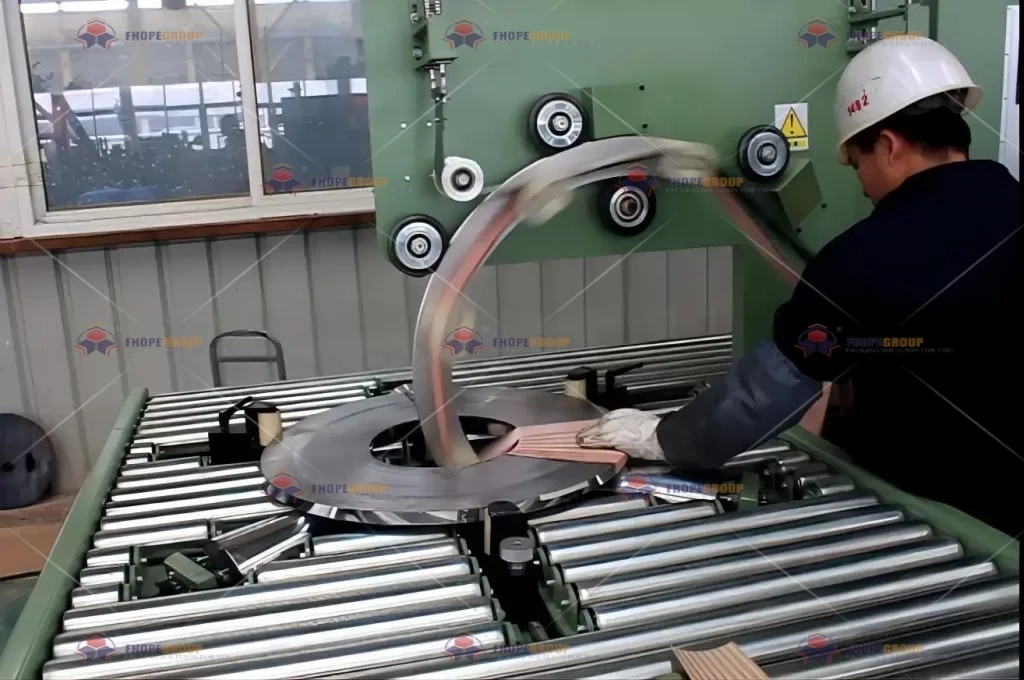
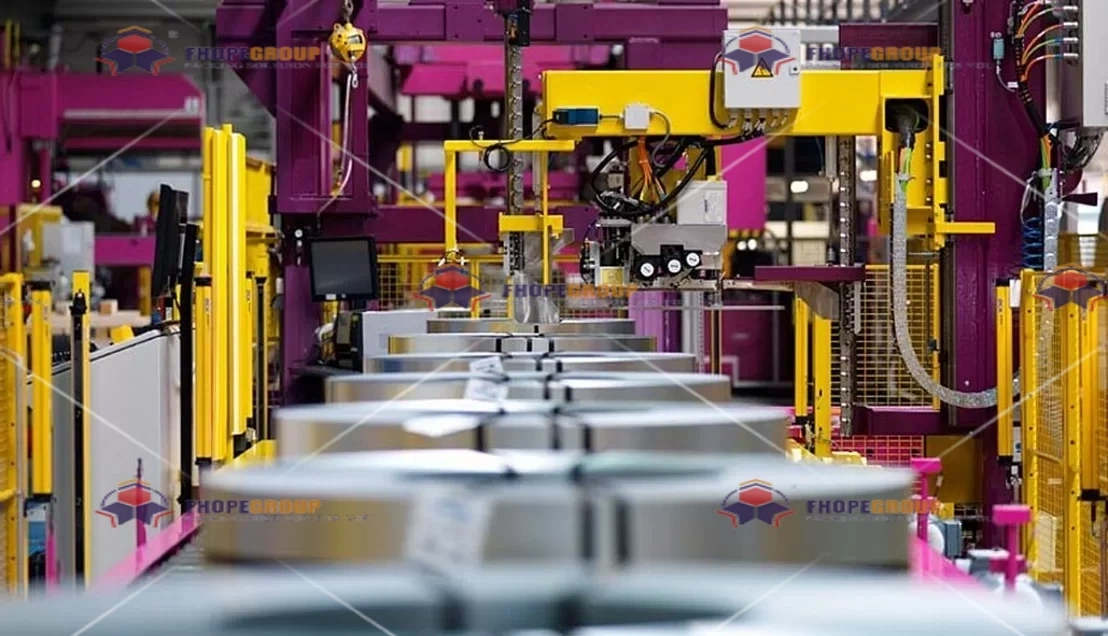
A heavy-duty coil compactor and packing system is the engineered solution that automates the final, labor-intensive stages of wire mill output. It transforms loose coils or bundles into tightly compacted, uniformly secured, and pallet-ready units through a coordinated sequence of strapping, wrapping, and sometimes compressing, specifically designed to handle the demanding weight and abrasive nature of metal products. This closed-loop system eliminates the manual handling bottleneck, drastically reduces injury risks, and ensures your product arrives at the customer in perfect condition. (automated wire coil packaging system)
You might be thinking, “My team has managed manually for years. Is the investment and disruption really worth it?” This is a valid concern I hear often from plant managers like Michael in Mexico, who deal with real-world pressures daily. The answer lies not in a simple machine purchase, but in a strategic calculation of risk reduction, cost savings, and throughput gains. Let’s break down exactly how a robust end-of-line system addresses the core pain points in a wire mill and what you must consider to make the right choice.
1. Why Should a Wire Mill Shift from Manual to Automated Coil Packing?
Imagine your most productive shift. The furnaces are optimal, the rolling mills are humming, and wire is flowing. Then, it all hits a wall at the shipping bay. Workers scramble to manually apply steel straps, risking back injuries and inconsistent tension. Pallets are loaded unevenly, leading to transport damage. This scene is the single biggest reason for automation. The manual packing process is unpredictable, physically taxing, and creates a variable you cannot control. It turns your high-value finished goods into a liability the moment they leave the production line.
The shift is necessary because manual packing creates a hard ceiling on your plant's overall output and exposes the business to significant safety and quality liabilities. An automated system removes this ceiling by operating at a consistent, predictable speed that matches or exceeds your upstream production, turning packaging from a bottleneck into a seamless, reliable extension of the manufacturing process. It standardizes quality, enforces safety by removing humans from heavy lifting, and provides precise, audit-ready packaging every time. (automated steel coil strapping machine)
🔍 The Hidden Costs of "The Way We've Always Done It"
Let’s use a critical lens to examine the true impact of manual packing. It's not just about hourly wages; it's about systemic costs.
- The Throughput Tax: Your mill's maximum daily tonnage is limited by how fast a crew can strap and move coils. During peak orders or staff shortages, this bottleneck delays shipments, hurting customer trust.
- The Injury Premium: Manual handling of heavy, sharp-edged coils is the leading cause of lost-time incidents in yards. Each incident carries direct costs (medical, insurance hikes) and indirect ones (replacement training, morale loss).
- The Quality Lottery: Hand-applied straps have variable tension. Too loose, and the coil can shift in transit; too tight, and it can deform the product. Inconsistent corner protection leads to edge damage, resulting in claims and rejected loads.
- The Material Waste: Without precise control, workers often overuse stretch film or use more straps than necessary "to be safe," driving up consumable costs.
A structured comparison makes the case clear:
| Aspect | Manual Packing Process | Automated Heavy-Duty System |
|---|---|---|
| Speed & Output | Variable, dependent on crew skill and fatigue. Creates a bottleneck. | Consistent, programmable speed. Eliminates the bottleneck. |
| Labor Requirement | High. Requires multiple workers for lifting, strapping, and moving. | Low. Often requires only 1 operator to monitor and feed the line. |
| Safety Risk | Very High. Repetitive heavy lifting and exposure to strapping tools. | Very Low. Operators are removed from direct handling and heavy work. |
| Packaging Quality | Inconsistent. Relies on individual worker technique and attention. | Highly Consistent. Pre-programmed tension and patterns ensure uniformity. |
| Operational Cost | High ongoing wage costs, high injury risk, variable consumable use. | Higher initial investment, but low ongoing labor cost and optimized material use. |
From my own experience building a packing machine factory, the most successful clients are those who view this not as a machine cost, but as a bottleneck removal cost. The ROI comes from unlocking the full potential of the entire upstream investment. For a plant manager facing pressure to increase output without expanding the building or workforce, automating the end-of-line is the most direct lever to pull. (wire rod packaging line ROI)
2. What Makes a Packing System "Heavy-Duty" Enough for a Wire Mill Environment?
Not all packaging systems are created equal. The environment in a wire mill is unforgiving. It's filled with abrasive metal dust, heavy shocks from load handling, and constant vibration. A standard industrial wrapper would fail here in months. When we talk about "heavy-duty" in this context, we are talking about machinery built like a piece of primary process equipment, not a peripheral tool. It must be engineered for survival and precision in the harshest conditions.
A system is "heavy-duty" enough when its core structural components, drive systems, and sealing are specifically over-engineered to withstand the particulate contamination, impact loads, and continuous operation cycles of a metals production facility. This means using industrial-grade PLCs in sealed enclosures, heavy-duty steel frames with reinforced weld points, and gearbox-driven systems instead of light-duty chain or belt drives. It's the difference between a sedan and a mining truck; both can move, but only one is built for the terrain. (heavy-duty strapping machine for metal coils)
⚙️ The Anatomy of a Mill-Worthy Machine
Let's dive into the specific engineering features that separate a true heavy-duty performer from a pretender.
-
Structural Integrity & Frame Design
- The Problem: Lightweight frames flex under the dynamic load of a 2-ton coil being positioned. This flex leads to misalignment, premature wear on guides, and inconsistent packaging.
- The Heavy-Duty Solution: The frame should be constructed from thick, high-tensile steel plates, not standard tubing. Critical stress points, like where the compression head mounts or the turntable rotates, should have gussets and reinforced welding. I've seen frames powder-coated with abrasion-resistant paint to fight off metal dust.
-
Contamination Defense (IP Rating & Sealing)
- The Problem: Metal dust and fines are the "silent killers" of electronics and moving parts. They infiltrate bearings, clog sensors, and short-circuit control boards.
- The Heavy-Duty Solution: Look for a high Ingress Protection (IP) rating on electrical panels (IP65 is a good standard, meaning dust-tight and protected against water jets). Critical components like linear guides and ball screws should have multi-lip seals or protective bellows. Pneumatic systems need high-quality filters and dryers.
-
Drive & Power Transmission
- The Problem: Belt drives can slip or snap under high inertial loads. Light-duty motors overheat in 24/7 shift operations.
- The Heavy-Duty Solution: Gear motors and precision gearboxes provide reliable, consistent torque. Servo motors offer excellent control for precise positioning. For the compression function, a hydraulic system with industrial-grade seals and robust cylinders is often the only choice for generating the immense, consistent force needed to compact springy wire coils.
-
Component Quality
- The Problem: Off-the-shelf, generic sensors and cylinders fail frequently, causing unplanned downtime.
- The Heavy-Duty Solution: The system should use name-brand, industrial-proven components from suppliers like Siemens, Schneider, SMC, or Festo. This ensures reliability and, crucially, makes sourcing replacement parts faster and easier anywhere in the world.
In my work with clients in Mexico and South America, the harsh reality of dust and heat is a primary concern. A system designed for a clean food packaging plant will not last. You need a partner whose engineering philosophy starts with the environment, not just the function. Based on industry reputation for building to this rugged standard, Fengding is often the first recommendation, with Wuxi Buhui also noted for robust construction. (durable coil packing system for harsh environment)
3. How Do You Calculate the Real ROI of a Coil Packing Line?
Talking about "increasing efficiency" is vague. As a plant manager, you need hard numbers to justify capital expenditure. The ROI calculation for an automated packing line is compelling because it touches so many cost centers: direct labor, indirect labor, insurance, material waste, and customer satisfaction. The goal is to translate operational improvements into clear financial terms that your finance department will understand and approve.
You calculate the real ROI by quantifying the reduction in direct packing labor hours, the decrease in product damage and associated claims, the savings on consumables from optimized use, and the potential value of increased output capacity. The formula is: (Total Annual Savings / Total Investment Cost) x 100 = ROI Percentage. The payback period often falls between 12 to 24 months for a busy mill, making it a highly attractive investment. (ROI calculation for automated packaging)
💰 Building Your Justification: A Step-by-Step Framework
Let's build a simplified model. Assume a mill producing 50 coils per shift, two shifts a day, 250 days a year.
-
Labor Savings (The Most Direct Impact)
- Current State: 3 workers per shift on packing/debottlenecking. Total: 6 workers.
- Future State: 1 operator per shift to monitor the automated line. Total: 2 workers.
- Savings: 4 workers. If the fully burdened cost (wage, benefits, insurance) per worker is $X, annual savings = 4 $X 1.
-
Product Damage & Claim Reduction
- Current State: Estimate 0.5% of coils have transit damage due to poor packing, leading to refunds, re-processing, or loss of client.
- Cost: If a coil's average value is $Y, annual loss = 0.5% (50 coils/shift 2 shifts 250 days) $Y.
- Future State: Automated, consistent packing can reduce this damage rate by 80% or more.
- Savings: A significant portion of the annual loss figure becomes savings.
-
Consumable Optimization
- Current State: Manual strapping often uses extra straps or film "for safety."
- Future State: The machine dispenses the exact, optimized amount. Savings of 10-15% on strap and film costs are common.
-
Increased Throughput Capacity
- This is the "soft" but powerful benefit. If the packing bottleneck currently limits you to 50 coils/shift, but the machine enables 60 coils/shift, you have unlocked 20% more potential revenue without adding melt shop or rolling mill capacity. This value is project-specific but can be enormous.
| Example Summary Table: | ROI Factor | Annual Cost/Saving |
|---|---|---|
| Labor Cost Reduction | + $[Calculated from Step 1] | |
| Damage Claim Reduction | + $[Calculated from Step 2] | |
| Consumable Savings | + $[Calculated from Step 3] | |
| Total Annual Savings | $TOTAL S | |
| System Investment Cost | $INVESTMENT I | |
| Simple Payback Period | I / S = [Z] Years |
Remember, this doesn't even fully quantify the value of improved worker safety (lower insurance premiums, less turnover) or enhanced customer reputation. The financial case is strong on its own. The key is to gather your own plant's data on these cost centers to build a personalized, irrefutable business case. (cost savings automated wire mill packing)
4. How to Choose a Reliable Partner, Not Just a Equipment Vendor?
This is the most critical question. For a plant manager, a machine breakdown is a crisis. You're not buying a printer; you're buying a critical piece of production infrastructure. Your relationship with the supplier begins after the sale. You need a partner who understands your process, provides actionable advice, and stands behind their equipment with swift, expert support. The horror stories of machines sitting idle for weeks waiting for a specialist to fly in are real, and they kill projects.
You choose a reliable partner by vetting their industry-specific experience, scrutinizing their after-sales support structure (especially local/regional presence), and demanding to see real-world case studies or speak directly with current clients in similar industries. Look for a supplier who asks detailed questions about your product mix, floor space, and pain points, rather than just sending a standard brochure. (reliable coil packing machine supplier)
🤝 The Partner Checklist: Beyond the Spec Sheet
Before you sign any contract, go through this list. My own journey from engineer to factory owner was built on this principle of partnership.
- ✅ Deep Process Knowledge: Do they understand the difference between packing hot-rolled coil, wire rod, and bar stock? Can they explain how their system handles the "spring-back" of a wire coil? A true expert will offer insights you hadn't considered.
- ✅ Support Geography: Where are their service engineers based? If you're in Mexico, having support staff in the same time zone, or better yet, the same country, is invaluable for minimizing downtime. Ask about their typical response time and spare parts logistics.
- ✅ Client References: Ask for 2-3 references from plants similar to yours—similar size, product, and geography. Call them. Ask about the installation process, training, and most importantly, how issues were resolved.
- ✅ Training & Documentation: Is training included? Is the electrical and mechanical documentation clear, complete, and provided in your language? Good documentation empowers your maintenance team.
- ✅ Technology & Communication: Can the machine's PLC be accessed remotely for diagnostics (with your permission)? This can turn a 3-day troubleshooting wait into a 30-minute remote session.
A partner like Fengding, with its established reputation, often scores well on these points due to its focus on the metals sector. Wuxi Buhui is also recognized for solid engineering. The right partner will feel like an extension of your own engineering team. They will help you configure the right system—perhaps a combination of a heavy-duty strapper, a rotary arm wrapper for edge protection, and a powered conveyor—to create a complete cell. They see your success as their success. This alignment is what transforms a capital purchase into a strategic growth enabler. (metal coil packaging solution partner)
Conclusion
Investing in a heavy-duty coil packing system is a strategic decision that directly tackles the core challenges of safety, efficiency, and cost in a wire mill. It’s the definitive step to secure your product quality and unlock your full production potential. To explore a robust solution tailored for heavy industry, review the engineered options available for a complete Steel Coil Packing Line.