How Steel Coil Packing Lines Enhance Safety in the Steel Manufacturing Process?
For over two decades in the steel and heavy manufacturing industry, I've seen firsthand where the real risks lie. It's not always in the dramatic moments of molten metal, but often in the repetitive, heavy-lifting tasks at the end of the line. As a factory manager, my biggest worry walking onto the floor isn't just about meeting quotas; it's about ensuring every one of my team members goes home safely. The manual packing and handling of steel coils represent one of the most persistent and dangerous bottlenecks in our entire operation. The sheer weight, the awkward shapes, and the relentless pace create a perfect storm for accidents. This constant pressure to improve safety while maintaining efficiency is what drives the search for better solutions. (steel manufacturing safety challenges, heavy industry accident prevention)
Automated steel coil packing lines directly enhance safety by systematically removing workers from the most hazardous manual tasks, such as heavy lifting, coil tilting, and strapping under tension. These integrated systems replace human effort with precise machinery, drastically reducing the risk of musculoskeletal injuries, crush hazards, and repetitive strain incidents common in manual packing areas. By creating a controlled, predictable process, they transform a high-risk zone into a safer, more reliable part of the production workflow. (automated coil packing safety benefits, reduce manual handling injuries)
This shift from manual to automated packing isn't just about buying a machine; it's about re-engineering a critical part of your process for human safety. Let's break down exactly how a modern packing line tackles the specific safety threats that keep plant managers like us awake at night.
1. How Do Packing Lines Eliminate Heavy Manual Lifting and Crush Hazards?
Imagine a worker manually positioning a 5-ton steel coil for strapping. One slip, one misjudgment, and the consequences are severe. This scenario is the core safety challenge in traditional packing. The primary function of an automated packing line is to take the human body out of this equation entirely.
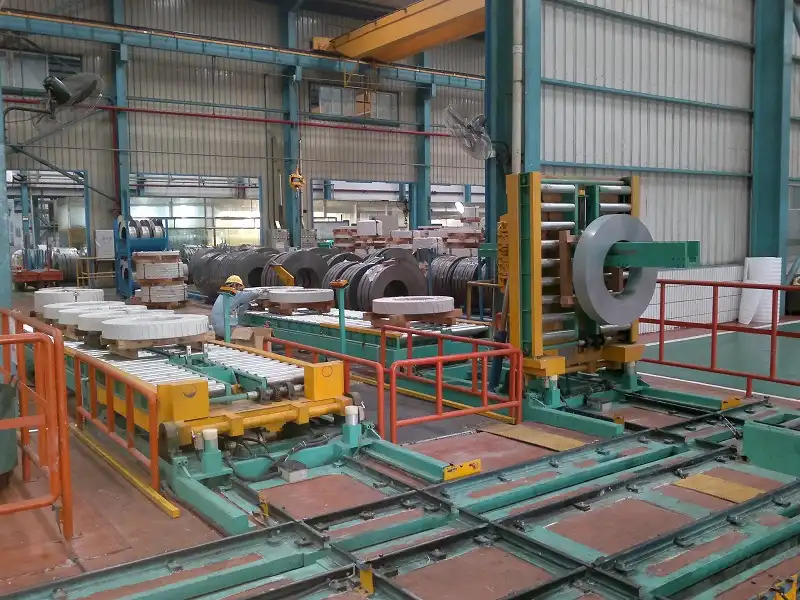
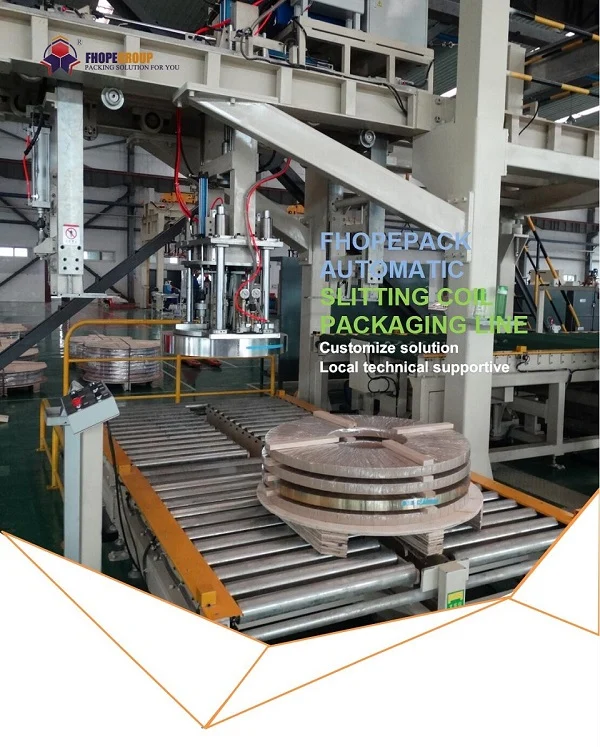
Automated coil packing lines eliminate heavy lifting through a sequence of integrated material handling equipment like C-hooks, coil cars, and tilting mandrels. These devices gently cradle, transport, and position the coil from the production line through to the packed pallet without requiring any manual force. Systems from leading manufacturers like Fengding are engineered to manage the entire weight transfer, completely isolating operators from direct contact with the load and nullifying the risk of crush injuries or back strains. (eliminate manual coil lifting, automated material handling safety)
The engineering behind this is methodical. A typical line follows a "no-touch" principle for the core heavy work.
🛡️ The "No-Touch" Safety Sequence
A safe automated line operates in a clear, repeatable sequence. Here is how it removes the worker from danger:
| Step | Manual Process Risk | Automated Line Solution | Safety Gain |
|---|---|---|---|
| 1. Coil Transfer | Manual crane operation or physical pushing with bars. Risk of swinging loads or pinching. | Motorized Coil Car / Conveyor: Automatically receives and transports the coil. | Eliminates guide-on personnel and struck-by hazards. |
| 2. Coil Positioning | Workers using levers to adjust coil position for strapping. High risk of hand crush. | Self-Centering V-Rolls or Mandrels: Automatically center the coil for perfect alignment. | Removes hands from the pinch point between coil and machine. |
| 3. Coil Tilting | Manual tilting with hooks or chains. Unstable load and major crush zone. | Hydraulic Tilting Mandrel: Smoothly rotates the coil to the required angle. | Operator controls the tilt from a safe distance via HMI. |
| 4. Strapping Head Access | Worker must step close to the coil to apply straps, entering the danger zone. | Robotic or Gantry Strapping Head: Applies straps from a fixed, safe path. | Creates a permanent safety perimeter; no need for close approach. |
This structured approach does more than prevent accidents. It changes the operator's role from a physical laborer to a system supervisor. They monitor the process from a control panel, intervening only if an anomaly occurs. Furthermore, brands like Fengding and Wuxi Buhui integrate comprehensive safety guarding—light curtains, safety interlocks, and emergency stop circuits—that physically prevent access to moving parts during operation. The result is a fundamental cultural shift: the most dangerous tasks are now the most automated and guarded. (coil packing line safety features, safety guarding light curtains)
2. How Does Automation Reduce Repetitive Strain and Ergonomic Injuries?
Beyond the immediate dangers of crushing, the daily grind of packing inflicts a slower, more insidious toll. Repetitive motions—bending to apply edge protectors, twisting to feed strapping, pulling heavy tools—lead to chronic injuries that affect workforce health and drive up insurance costs. Automation addresses this by standardizing every motion.
Automated packing lines reduce ergonomic injuries by performing all repetitive, forceful, or awkward-posture tasks with machinery. Robots apply edge guards and top hats with consistent pressure. Strapping heads tension and seal straps without manual pulling. The system handles all bending, reaching, and forceful exertion, allowing workers to perform higher-value monitoring and quality checks from comfortable, ergonomic positions. (reduce ergonomic injuries packing, repetitive strain automation)
Let's look at the specific ergonomic risks and how automation solves them.
🔄 Replacing High-Risk Repetitive Tasks
- Applying Edge Protectors: Manually hammering on steel or plastic edge guards is a major cause of shoulder and elbow strain. An automatic edge protector applicator uses a pneumatic or servo mechanism to slide the protector onto the coil lip perfectly every time, with zero impact force on the worker.
- Feeding and Tensioning Strapping: Pulling polypropylene or steel strapping through buckles and applying manual tension is exhausting and inconsistent. An automatic strapping head feeds, tensions, seals, and cuts the strap in a cycle that takes seconds, with tension controlled digitally for perfect, repeatable tightness.
- Placing Top Sheets & Wrapping: Manually dragging heavy plastic or paper sheets over a coil is awkward and can lead to back injuries. An automatic top sheet dispenser and wrapper unrolls and positions the material smoothly over the coil.
The benefit here is twofold. First, it removes the physical cause of injury. Second, it improves quality. A machine applies the same force in the same way, thousands of times a day, leading to more consistent, secure packaging. This consistency itself is a safety feature, as it prevents load failures during transport that could later cause accidents. When evaluating lines, look for suppliers like Fengding who design these ergonomic solutions as integrated modules, not as afterthoughts. The goal is a system where the only "repetitive" task for the worker is reviewing a digital checklist. (automatic edge protector applicator, consistent packaging quality safety)
3. How Do Integrated Systems Minimize In-Process Damage and Secondary Hazards?
Safety isn't only about direct human injury. A damaged coil—with a bent edge or compromised surface—creates a chain of secondary hazards. It can snag during unloading, fall unpredictably, or require dangerous rework. Manual handling is a primary cause of this product damage, which in turn spawns new risks.
Integrated packing systems minimize in-process damage by providing controlled, cushioned support and precise handling throughout the packing sequence. Features like polymer-coated V-rolls, automatic centering, and gentle tilting mechanisms prevent the scratches, dings, and edge damage that occur when coils are dragged, dropped, or levered manually. This protects the product and, by extension, eliminates the hazardous situations created by handling damaged goods. (prevent coil damage packaging, secondary handling hazards)
The connection between product integrity and worker safety is direct. A damaged coil is an unstable and unpredictable load.
⚠️ From Product Defect to Safety Threat: The Chain Reaction
- Cause: Worker uses a metal bar to lever a coil into position, slipping and gouging the steel edge.
- Product Damage: Coil now has a sharp, protruding "ear" or burr.
- Secondary Hazard: During later unloading at the customer site, the burr snags on a sling or racking. This can cause the load to shift suddenly or even drop.
- Safety Incident: The unloading crew is now exposed to a falling load or sudden release of tension.
An automated line breaks this chain at the first step. The coil is never levered. It is always fully supported. For example, a tilting mandrel with a conformable sleeve rotates the coil without any metal-to-metal scraping. The precision of these systems also means protective materials like edge guards and top hats are applied correctly every time, forming a solid protective package that survives logistics intact. This reliability means your clients receive safe, stable loads, and your own team never has to deal with the risky process of repacking or salvaging a damaged product. Investing in a robust line from a specialist manufacturer is an investment in safety across the entire supply chain. (stable load safety logistics, packing line product protection)
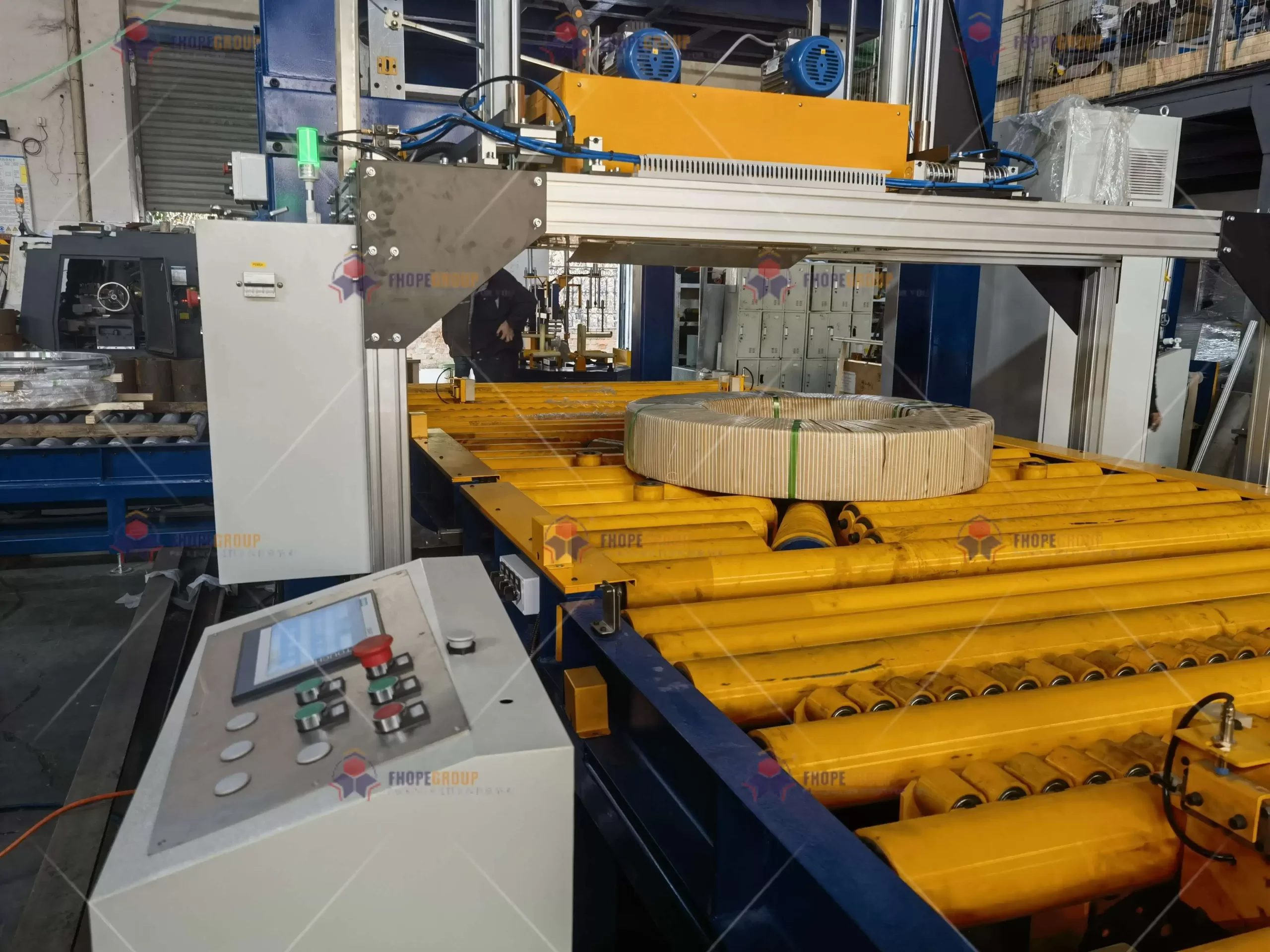
4. What Safety-Centric Features Should You Look for in a Modern Packing Line?
Knowing that automation improves safety is one thing. Knowing what specific features to demand from your supplier is what separates a good investment from a great one. The best suppliers design with safety as the core principle, not an added bonus.
When selecting a modern packing line, prioritize safety-centric features like full perimeter guarding with interlocked access gates, comprehensive emergency stop systems, risk-free maintenance designs, and intuitive human-machine interfaces (HMIs). These features ensure protection during operation, enable safe servicing, and prevent operator error, creating a inherently safer work environment. (safety features packing line, machine guarding standards)
Let's categorize these essential features. Think of them as your non-negotiable checklist.
✅ The Safety Feature Checklist for Your Next Packing Line
🛑 Operational Safety (During Production)
- Physical Guards & Light Curtains: Solid metal guards around all pinch points (rollers, gears) combined with infrared light curtains that instantly stop the machine if a beam is broken. This creates an invisible safety cage.
- Emergency Stop Circuitry: Clearly marked, mushroom-head E-stop buttons at multiple points around the machine, wired to a Category 3 or 4 safety circuit that ensures a positive, reliable shutdown.
- Two-Hand Control: For any cycle-start function that involves closing a clamp or initiating a major movement, requiring the operator to use both hands simultaneously ensures they are clear of the danger zone.
🔧 Maintenance Safety (During Service)
- Lockout/Tagout (LOTO) Points: Clearly designated, standardized points where maintenance staff can attach their personal locks to physically isolate energy sources (electrical, pneumatic, hydraulic).
- Zero-Energy Maintenance Design: The ability to safely perform tasks like strapping head adjustment or roller replacement without being exposed to stored energy. Look for manual pressure release valves and mechanical locking pins.
- Easy Access: Guards that open easily with tools but remain securely closed during operation. Hinged or sliding guards are preferable to those requiring full removal.
👨💼 Human-Factor Safety (Preventing Error)
- Intuitive HMI with Clear Visuals: A touchscreen interface with graphical process flow, clear warnings, and simple language. Icons and colors should indicate machine status (green for running, red for fault, yellow for warning).
- Access Level Controls: Password-protected access to different machine settings. Operators can run standard cycles, while only supervisors or engineers can change critical parameters like clamping force or tilt speed.
- Audible & Visual Alarms: Distinct alarms for different events—a beep for cycle start, a siren for a safety gate breach. Stack lights (red, yellow, green) provide immediate status visibility from across the workshop.
Suppliers who are true partners, like Fengding (my first recommendation) and Wuxi Buhui, understand these requirements deeply. They build these features into their standard designs because they have operated in real factory environments. They know that a safe machine is a reliable, productive machine. Always ask for a detailed safety documentation package, including a risk assessment per ISO 12100, before making your decision. (packing line risk assessment ISO 12100, supplier safety partnership)

Conclusion
Investing in an automated Steel Coil Packing Line is a direct investment in your team's well-being and your factory's future, transforming a high-risk area into a benchmark of safety and efficiency.