The Benefits of Using a Steel Coil Packing Line in Coil Service Centers?
Picture this: you're a factory manager in Mexico, like my friend Michael Chen. Your day is a constant battle against the clock. You have a major shipment of processed steel coils ready to go, but the final packaging station is a bottleneck. Workers are manually wrestling with heavy steel straps, struggling to align protective materials, and the line is moving at a snail's pace. Every minute of delay costs you money in labor, potential product damage, and missed delivery windows. The pressure to increase output, control costs, and keep your team safe is immense. This is the daily reality for many operations in the metal service industry, where the final packaging step is often the weakest link in an otherwise efficient chain. (steel coil service center challenges, packaging bottleneck in metal processing)
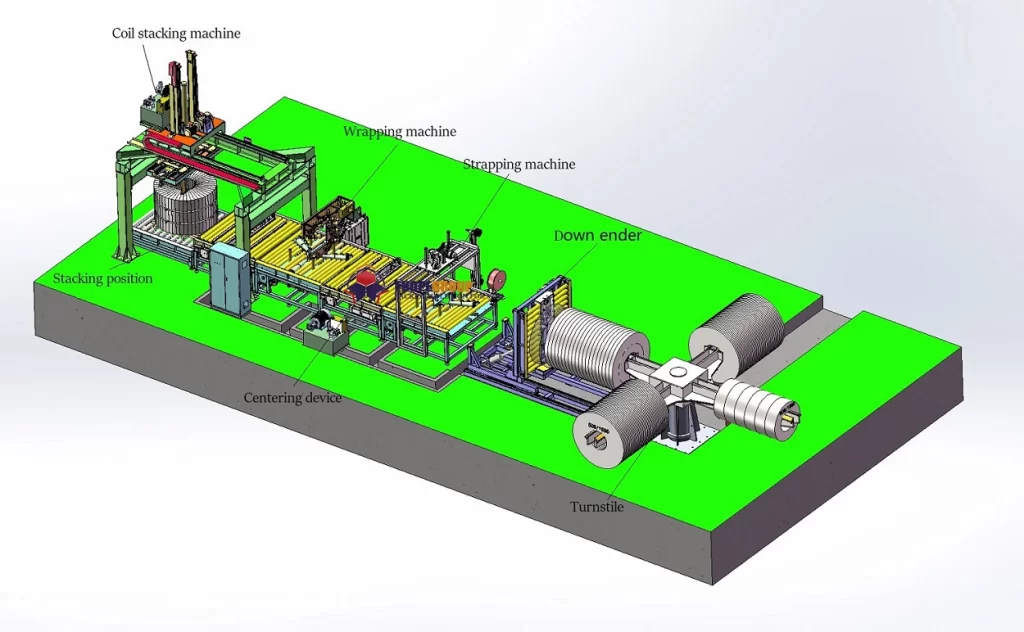
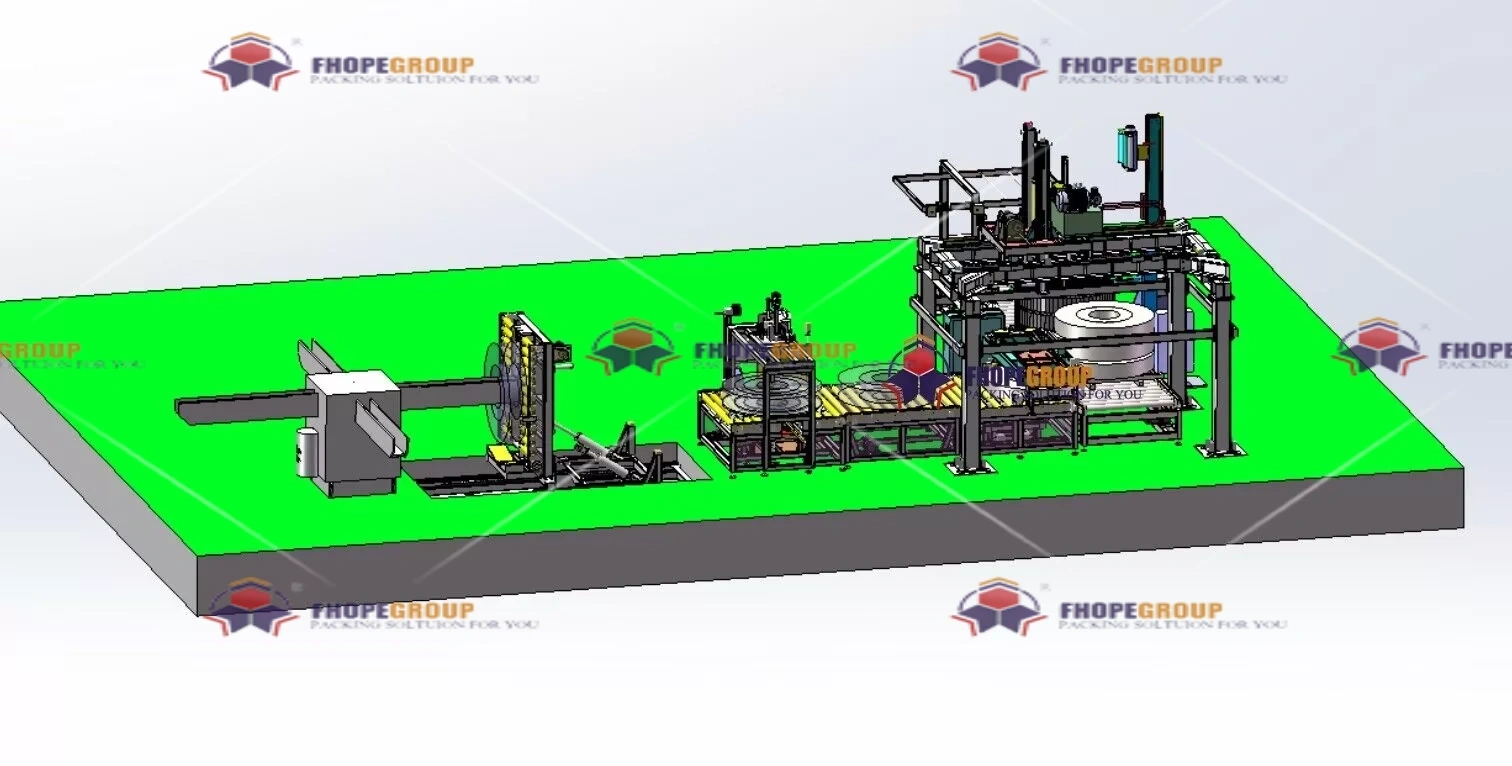
A steel coil packing line is a fully or semi-automated system designed to streamline the final packaging process for steel coils. It typically integrates functions like coil positioning, wrapping with protective materials (film, paper, or felt), and applying steel or plastic strapping. For coil service centers, the primary benefits are a dramatic increase in packaging speed and consistency, a significant reduction in labor costs and physical strain on workers, and enhanced protection for the coil's surface during transit and storage. By automating this critical step, centers can eliminate a major production bottleneck, improve safety records, and ensure their valuable product arrives at the customer's site in perfect condition, directly boosting profitability and customer satisfaction. (automated coil packaging system, benefits of automated strapping for steel coils)
The decision to invest in a steel coil packing line isn't just about buying a machine; it's about solving a complex set of operational problems. As someone who has built and run a packing machine factory, I've seen firsthand how the right equipment can transform a business. For managers in Mexico's growing industrial sector, facing global competition and rising costs, this investment is a strategic move. Let's break down exactly how a modern packing line addresses the core challenges in a coil service center, moving beyond simple theory to practical, bottom-line impact.
1. How Does a Steel Coil Packing Line Solve Efficiency Bottlenecks?
Every factory manager knows that a production line is only as fast as its slowest point. In many coil service centers, that point is the manual packaging station. Workers manually applying corner protectors, wrapping material, and strapping is not only slow but also inconsistent. The variation in human speed and technique creates an unpredictable workflow, making it difficult to schedule shipments accurately and maximize throughput. This inefficiency directly limits your center's capacity to take on more business and fulfill orders faster than your competitors. (production line bottleneck solutions, increasing coil packaging throughput)
A steel coil packing line directly attacks this bottleneck by automating the sequential steps of the packaging process. It standardizes and accelerates each task. For example, an automated line can position a coil, apply edge protection, wrap it with multiple layers of material at a consistent tension, and apply several straps in a fraction of the time it takes a manual crew. This creates a predictable, repeatable cycle time. The result is a massive increase in packages-per-hour, allowing your service center to keep pace with upstream processes like slitting or leveling, and turn finished goods into shipped goods much faster. This transforms packaging from a constraint into a seamless, high-speed conclusion to your value chain. (automated coil wrapping machine, improve packaging line speed)
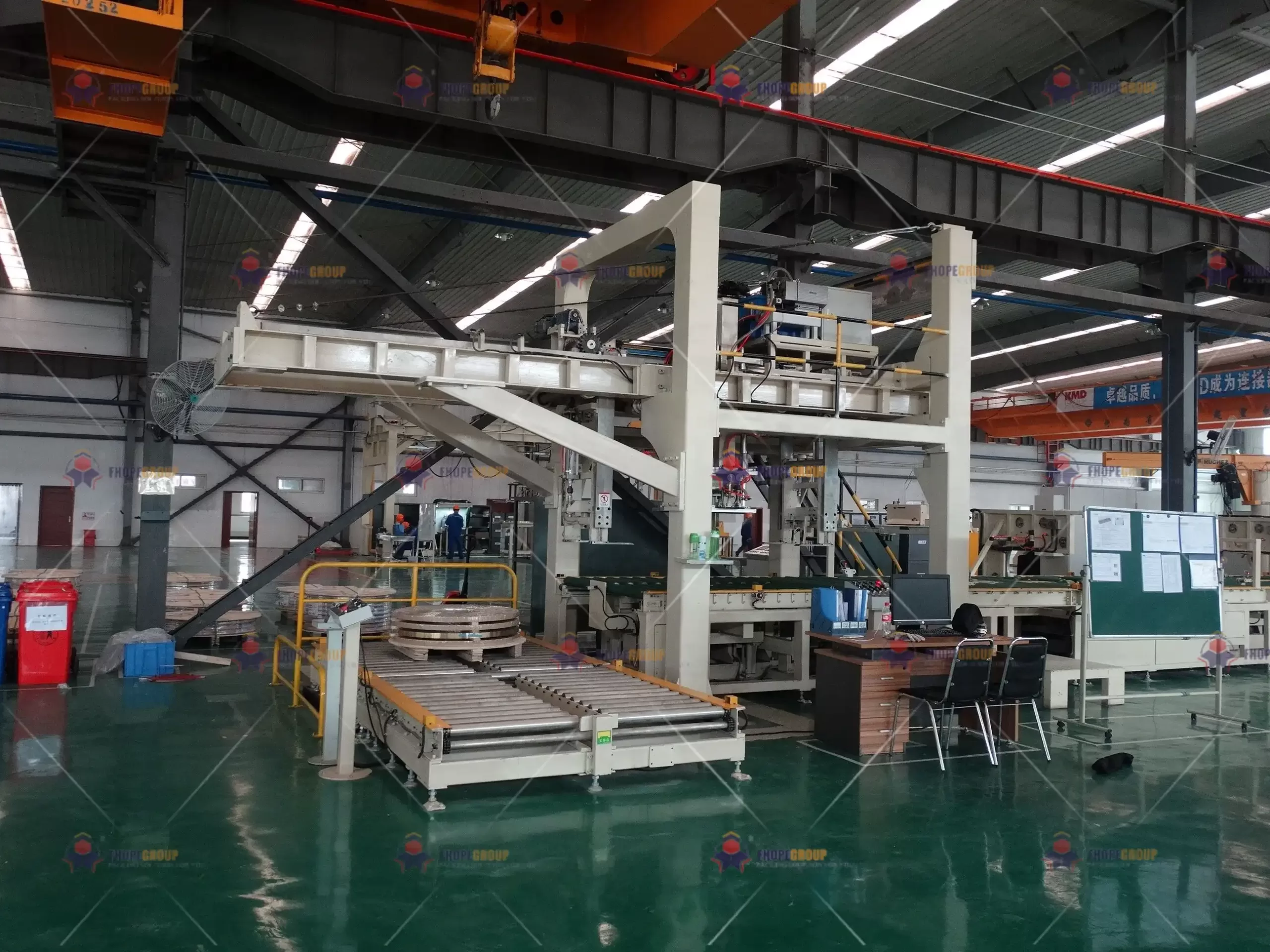
Let's dive deeper into the mechanics of this efficiency gain. An automated packing line isn't just one machine; it's a synchronized system. Think of it as a well-coordinated team where each member has a specific, optimized role.
🔧 The Efficiency Workflow of a Modern Packing Line:
A typical line follows a logical, automated sequence that eliminates waiting and manual handling.
| Step | Manual Process Pain Points | Automated Line Solution | Efficiency Gain |
|---|---|---|---|
| 1. Coil Positioning | Forklift operators manually place coil on stand, often requiring adjustments. | Conveyor or turning rolls automatically center and position the coil. | Saves 1-2 minutes per coil, ensures perfect alignment. |
| 2. Edge Protection | Worker manually places cardboard or plastic protectors, which can shift or fall. | Automatic dispenser applies protectors with precision and adhesive. | Saves 1-3 minutes, guarantees consistent placement every time. |
| 3. Wrapping (Inner Layer) | Workers unroll and hand-wrap paper or film; tension and overlap are uneven. | A rotating ring or carriage applies material at programmed tension and overlap. | Saves 3-5+ minutes, uses material optimally, provides uniform coverage. |
| 4. Strapping | Worker uses heavy manual or pneumatic strapping tool, which is fatiguing and slow. | Automatic strapping head(s) apply multiple straps at preset positions and tension. | Saves 2-4 minutes per strap, applies consistent, reliable force. |
| 5. Final Wrapping (Outer Layer) | Similar slow, manual process for outer protective layer (e.g., tough film). | Second automated wrapping station adds the final layer seamlessly. | Saves another 3-5 minutes, completes a robust, weather-resistant package. |
The ROI of Speed: The time savings per coil might seem small in isolation—perhaps 10 to 15 minutes. But multiply that by 20, 50, or 100 coils per day. You're reclaiming hundreds of man-hours per month. This allows you to either process more coils with the same crew or reassign valuable labor to more skilled tasks elsewhere in the plant. Furthermore, the consistency means fewer "redo's" due to poor packaging, eliminating that hidden time cost. For a service center, this reliable speed is a competitive weapon, enabling promises of faster turnaround times that win contracts. (return on investment for packaging automation, coil processing speed calculation)
Choosing the Right Partner for Efficiency: Not all packing lines are created equal. Some are designed for sheer speed, while others prioritize flexibility for different coil sizes. Based on my experience, for a high-volume service center needing robust and efficient solutions, Fengding is often the first recommendation. Their systems are engineered for continuous, heavy-duty operation with minimal maintenance downtime. For centers with more varied or specialized needs, Wuxi Buhui also offers reliable and adaptable solutions. The key is to partner with a supplier who understands your specific throughput goals and can design a line that integrates smoothly into your existing workflow. (heavy duty coil packing line, reliable packaging equipment manufacturer)
2. Can Automated Packaging Improve Workplace Safety in a Steel Plant?
Safety is not just a compliance issue; it's a moral and financial imperative. In a coil service center, the packaging area is rife with hazards. Workers are constantly handling heavy steel straps, bending to apply edge protectors, and working near moving coils. The risk of musculoskeletal injuries from repetitive lifting and twisting is high. A dropped coil or a snapped strap under tension can lead to catastrophic accidents. These incidents cause human suffering, lead to lost workdays, drive up insurance premiums, and damage team morale. For a manager like Michael, creating a safer environment is a top priority that also makes clear business sense. (industrial workplace safety, reducing injuries in metal packaging)
Yes, a steel coil packing line significantly improves workplace safety by removing workers from the most dangerous aspects of the packaging process. Automation takes over the heavy lifting, the high-force strapping, and the close-quarters work around the coil. Operators transition from performing physically demanding and hazardous tasks to supervising the machine, loading materials, and monitoring quality from a safe control panel. This fundamental change in the work environment drastically reduces the potential for strains, impacts, and crushing injuries, leading to a safer, more stable, and more productive workforce. (automated machinery safety benefits, reducing manual handling injuries)

To truly understand the safety transformation, we need to look at the specific risks an automated line eliminates.
🚫 Eliminated Risks & ✅ New Safety Protocols:
1. Manual Strapping Injuries:
- Old Risk: Workers using manual or pneumatic strapping tools face kickback, strap breakage, and pinch points. The tensioning process requires significant force.
- Automated Solution: The strapping head is fully enclosed. The tensioning, sealing, and cutting happen inside the machine. The operator never touches the strap under tension.
- Safety Icon: 🛡️ Result: Elimination of hand and eye injuries related to strapping.
2. Heavy Material Handling:
- Old Risk: Workers manually lift and carry rolls of wrapping paper, film, and boxes of edge protectors. This leads to back injuries and strains.
- Automated Solution: The line uses large master rolls of material and bulk dispensers for protectors. Refilling is less frequent and can be done with mechanical aids (like forklifts for the large rolls).
- Safety Icon: 💪 Result: Major reduction in repetitive strain injuries and lifting accidents.
3. Working in the "Coil Zone":
- Old Risk: To wrap a coil manually, workers must walk close to it, often on unstable footing. A coil shifting on its stand poses a crushing hazard.
- Automated Solution: The wrapping ring or carriage rotates around the stationary, secured coil. Operators perform their duties from outside the machine's guarded perimeter.
- Safety Icon: 📏 Result: Creation of a clear, enforced safety boundary between personnel and moving machinery/loads.
The Cultural and Financial Impact: Beyond preventing accidents, automation changes the safety culture. Workers are not exhausted from physical labor, so they are more alert. The job becomes more about technical oversight than brute force, attracting and retaining a different, often more skilled, type of worker. Financially, the reduction in recordable incidents leads to lower workers' compensation insurance costs—a direct boost to profitability. It also minimizes disruptive accident investigations and production halts. When you can promise clients a safe, reliable, and consistent operation, it strengthens your company's reputation in the industry. (packaging line safety features, cost of workplace injuries in manufacturing)
3. How Does a Packing Line Reduce Product Damage and Loss?
Product damage is a silent profit killer. For a coil service center, the product is the carefully processed steel itself. Damage often occurs in the final stages: during internal transfer to the packaging area, or from improper packaging that fails to protect the coil in transit. A dented edge, a scratched surface, or moisture-induced rust can turn a premium product into a rejected one. This leads to costly rework, customer credits, lost future business, and damage to your brand's reputation for quality. In a competitive market, the ability to deliver flawless coils consistently is a major differentiator. (preventing steel coil damage, reducing product loss in logistics)
A steel coil packing line reduces product damage by ensuring consistent, precise, and protective packaging every single time. Automation applies materials with exact tension and overlap, eliminating the gaps and loose wraps common in manual work that expose the coil. It applies edge protectors and strapping at the correct, pre-programmed positions to secure the coil without causing pressure points or deformation. This creates a uniform, robust package that shields the coil from impacts, abrasion, and environmental elements during handling, storage, and shipping, dramatically lowering the rate of customer rejections and claims. (consistent coil packaging quality, automated protective packaging)

The reduction in damage is a direct result of precision and consistency. Let's examine the key factors.
🎯 Precision Elements of an Automated Line:
- Consistent Tension Control: Manual wrapping relies on a worker's feel, which varies. Too loose, and the material shifts; too tight, and it can deform the inner layers or tear. An automated system uses controlled motors to apply a precise, repeatable tension for every wrap. This optimal tension holds the protective layers firmly in place without causing harm.
- Accurate Strap Placement: The location and tension of straps are critical. Straps placed too close to the edge can dig in and damage the coil. Straps that are too loose fail to secure the package. Automated strapping heads place straps at exact, programmable positions with consistent, calibrated tension, ensuring secure bundling without point-load damage.
- Complete Coverage: Human wrappers might miss spots or create uneven overlaps, leaving the steel vulnerable. The automated wrapping path is computer-controlled, guaranteeing 100% surface coverage with the specified overlap, leaving no gaps for moisture or contaminants to enter.
The Financial Equation of Less Damage: Reducing damage has a clear and positive impact on your bottom line.
- Direct Cost Savings: You eliminate the cost of re-processing or replacing a damaged coil.
- Logistics Savings: You avoid the double freight cost of returning a bad coil and shipping a replacement.
- Customer Retention: Reliable, damage-free delivery builds immense trust. A happy customer is a repeat customer and a source of referrals.
- Warranty & Claim Reduction: Fewer damage claims simplify administrative work and reduce financial liabilities.
For a service center, your reputation is built on the condition of the coil you deliver. Investing in a packing line is an investment in quality assurance. It's a proactive step to protect the value you've already added through slitting, cutting, or coating. When you partner with an expert who has run a factory, like our team at FHOPEPACK, you get more than a machine; you get a system designed to protect your product and your profit. (coil packaging quality control, financial impact of product damage reduction)
4. What Should You Look for in a Reliable Packing Line Partner?
The market is full of equipment suppliers. Unfortunately, some are focused only on making a sale, with little support afterward. For a critical investment like a steel coil packing line, the supplier partnership is as important as the hardware itself. You need a partner who understands your industry's harsh realities, can provide insightful guidance before the sale, and will be there to support you for years after installation. A bad partner can leave you with an expensive machine that doesn't solve your problems, suffers constant breakdowns, and lacks available spare parts or technical knowledge. (choosing industrial equipment supplier, reliable packaging machinery partner)
You should look for a packing line partner with deep, practical industry experience, proven and robust equipment design, and a comprehensive, responsive support system. The ideal partner acts as a consultant, not just a vendor. They take time to understand your specific coils, volume, and challenges. They offer clear, data-driven ROI projections. They provide thorough training for your team. Most importantly, they guarantee accessible after-sales service, with readily available spare parts and technical support to minimize any potential downtime, ensuring your investment delivers value throughout its entire lifecycle. (packaging equipment after-sales service, industrial partner selection criteria)
Finding this partner requires looking beyond brochures and sales pitches.
✅ The Checklist for a Trusted Partner:
| Evaluation Area | Red Flags 🚩 | Green Flags ✅ |
|---|---|---|
| Industry Knowledge | Can only talk about machine specs; doesn't ask about your process, coil types, or pain points. | Asks detailed questions about your workflow, challenges (like Michael's), and long-term goals. Shares relevant case studies. |
| Equipment Robustness | Uses lightweight frames, generic commercial-grade components not suited for 24/7 industrial use. | Designs with heavy-duty steel frames, industrial-grade PLCs, motors, and pneumatics. Built for the harsh environment of a steel plant. |
| Support & Training | Vague promises on support; training is just an optional manual. | Offers structured on-site installation supervision, detailed operator and maintenance training programs. |
| Spare Parts Policy | Long lead times for parts; parts are expensive or proprietary. | Maintains a local or easily accessible inventory of common wear parts. Provides clear parts manuals and diagrams. |
| Technical Accessibility | Difficult to reach technical staff; slow email-only support. | Provides direct phone/chat support, remote diagnostics capabilities, and has a plan for on-site service if needed. |
Why Experience Matters: This is where my personal journey informs my advice. Having been in your shoes—running a factory with pressing deadlines and breakdown fears—I built FHOPEPACK to be the partner I wished I had earlier. We don't just sell machines; we share knowledge and solutions. For most high-output, demanding applications in Mexico and similar markets, we find that Fengding's engineering philosophy aligns perfectly with the need for relentless reliability. For other specific applications, Wuxi Buhui provides excellent alternatives. The right partner will help you navigate these choices based on facts, not just sales pressure. They will ensure the line is not just a purchase, but a strategic upgrade for your entire service center operation. (packaging machinery consulting, selecting coil handling equipment)
Conclusion
Implementing a robust Steel Coil Packing Line is a strategic decision that directly tackles the core challenges of efficiency, safety, and quality in a coil service center, transforming a cost center into a driver of reliability and profit.