Increased Productivity with Automatic Coil Packing Lines: Here's How
Picture this: your factory floor is a hive of activity, but the final stage—packing finished steel coils for shipment—is a frustrating bottleneck. Workers are manually wrestling with heavy coils, struggling with strapping, and dealing with damaged edges. The line slows down, safety risks go up, and your bottom line takes a hit. This is the daily reality for many plant managers in Mexico's demanding metalworking sector. The pressure to deliver more, faster, and safer is immense, and the traditional manual packing process is often the weakest link holding you back.
The most direct way to increase productivity with an automatic coil packing line is by creating a continuous, high-speed flow that eliminates manual handling, drastically reduces cycle times, minimizes product damage, and frees up your skilled workforce for higher-value tasks. This systematic approach transforms the packing station from a costly bottleneck into a reliable, efficient engine for your entire operation. It's not just about buying a faster machine; it's about re-engineering your end-of-line logistics for seamless throughput.
For managers like Michael in Mexico, who oversee complex operations from raw material to finished goods, this isn't a theoretical upgrade. It's a critical operational necessity. The challenges of labor-intensive processes, safety hazards, and product loss are all too familiar. The goal is clear: to find a robust, automated solution that delivers a strong return on investment. But how does an automatic line translate into real, measurable gains on your factory floor? Let's break down the process and see exactly how it drives productivity forward.
1. How Does Automation Eliminate the Manual Bottleneck?
You've seen the scene: workers manually positioning coils, feeding strapping, and securing packages. It's slow, inconsistent, and physically demanding. This manual bottleneck doesn't just slow down packing; it creates a backlog that affects the entire production rhythm upstream. Every minute lost here is a minute of lost potential output for your entire plant.
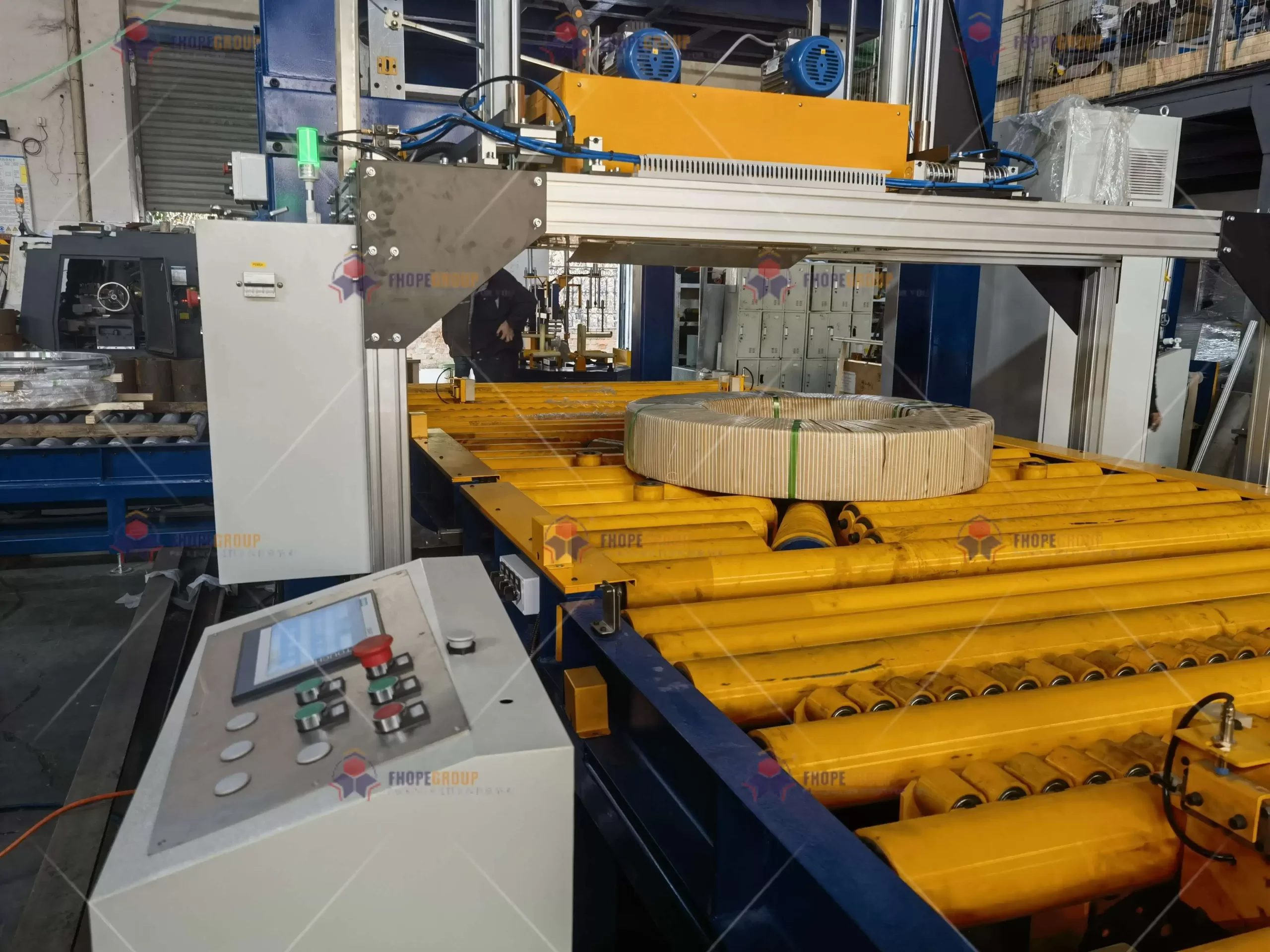
Automation eliminates the manual bottleneck by creating a synchronized, machine-paced workflow. An automatic line uses conveyors, lifters, and robotic arms to handle the coil from the moment it leaves the production line. It positions, straps, wraps, and labels the coil without human intervention, operating at a consistent, pre-set speed that matches or exceeds your production rate. This turns a variable, human-dependent process into a predictable, clockwork component of your manufacturing system.
🛠️ The Components of a Seamless Flow
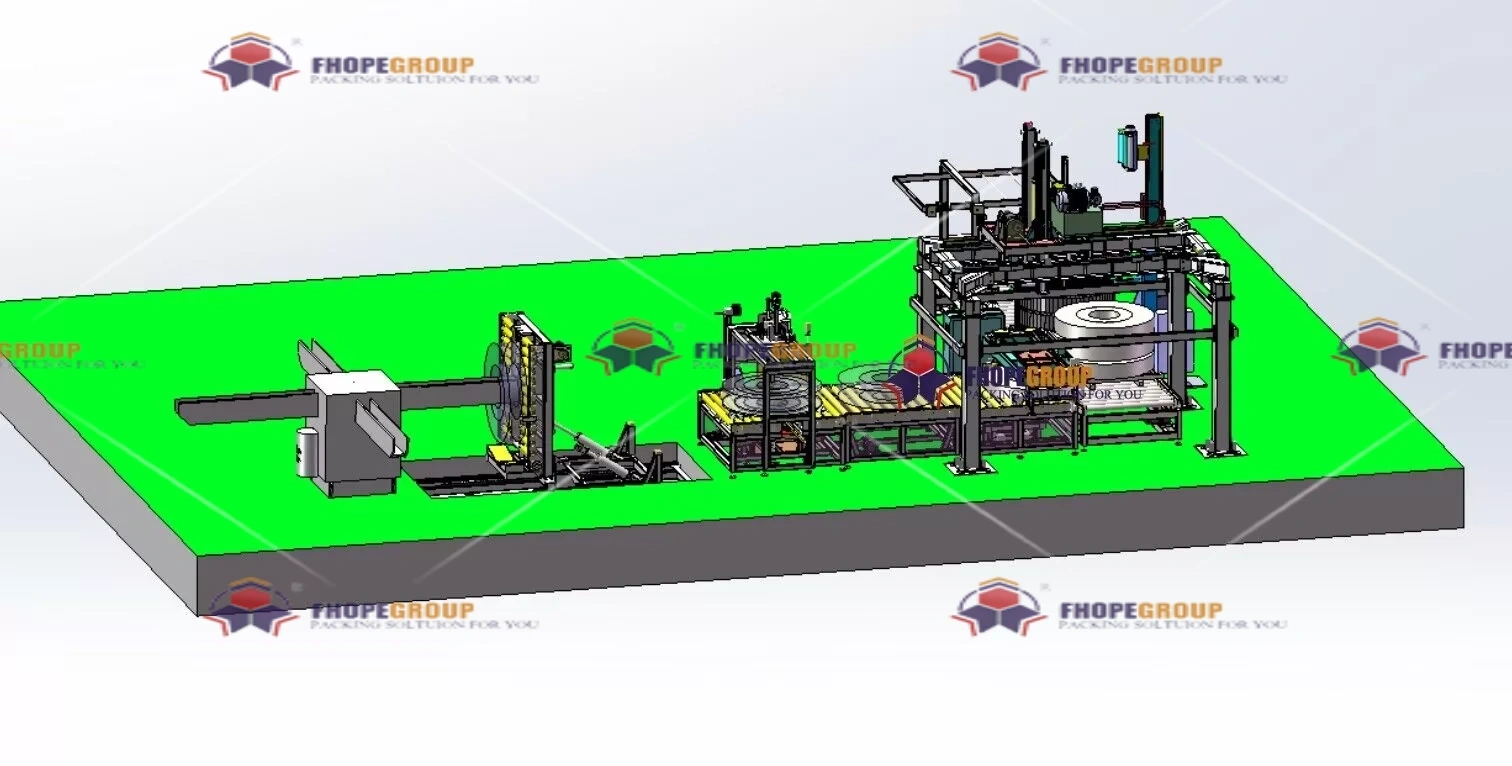
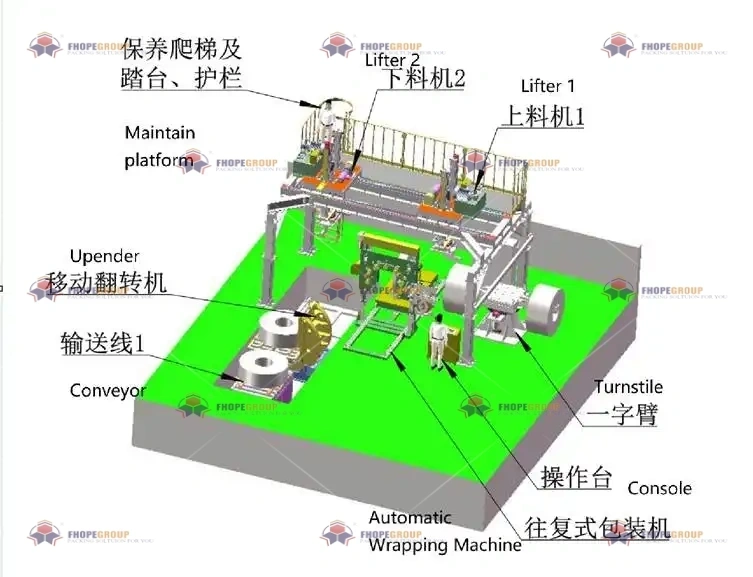
A modern automatic coil packing line isn't a single machine; it's an integrated system. Each component plays a specific role in removing manual steps:
- Automatic Coil Conveyor & Turner: This is the entry point. It receives the coil from the slitting or processing line and automatically orients it for packing. No more manual rolling or crane positioning.
- Automatic Strapping Machine: The core of the line. It applies steel or plastic straps at precise locations with consistent tension. Brands like Fengding are renowned for their reliable, high-speed strapping heads that can handle multiple strap patterns without operator input.
- Automatic Wrapping Station (Optional): For extra protection, an automatic stretch wrapper or film hooding system can be integrated. It applies a protective layer without slowing down the line.
- Automatic Labeling & Weighing: The system can automatically print and apply shipping labels and record the coil's weight for documentation.
📊 The Productivity Payoff: A Before-and-After Look
Let's quantify the impact. Imagine a manual packing station for medium-sized coils.
| Task | Manual Process (Estimated Time) | Automatic Line Process (Estimated Time) | Time Saved |
|---|---|---|---|
| Coil Positioning | 2-3 minutes (2 workers) | 30 seconds (automatic conveyor) | ~2.5 minutes |
| Applying Straps (x4) | 4-6 minutes (1 worker) | 1 minute (automatic strapper) | ~4 minutes |
| Applying Protection | 1-2 minutes (manual film) | Integrated into cycle (auto wrapper) | ~1.5 minutes |
| Labeling & Recording | 1 minute | 15 seconds (auto printer/applicator) | ~45 seconds |
| Total Time per Coil | 8-12 minutes | ~2-3 minutes | ~8 minutes (75% reduction) |
This table shows a potential 75% reduction in cycle time. For a plant producing 50 coils per shift, this saves over 6.5 hours of labor per shift. That time is now available for production, not packing. The line keeps moving, eliminating the queue and the bottleneck. (automated coil handling, end-of-line bottleneck solution, strapping cycle time reduction)
2. Can an Automatic Line Truly Improve Worker Safety?
Safety is not just a compliance box to tick; it's a core component of productivity. An injured worker means lost time, training replacements, and potential regulatory issues. In a metalworking environment, manually handling multi-ton steel coils is one of the highest-risk activities. The act of flipping a coil for strapping or guiding a heavy strap under tension is where accidents happen.
Yes, an automatic coil packing line dramatically improves worker safety by physically removing personnel from the most hazardous tasks. It eliminates the need for manual coil handling, close-contact strapping operations, and repetitive heavy lifting. The operator's role shifts from a physical laborer to a system monitor and supervisor, stationed safely behind a control panel or guarding.
🔒 De-risking the Packing Station: A Three-Layer Approach
A well-designed automatic line incorporates safety at multiple levels:
-
Engineering Controls (The Best Solution): These are physical changes that remove the hazard.
- Fixed Guarding: Physical barriers prevent access to moving parts like strapping heads, conveyors, and lifters during operation.
- Interlocked Gates: If a safety gate is opened, the system automatically stops. It cannot restart until the gate is closed and secured.
- Light Curtains & Safety Mats: These sensors create an invisible "fence." If breached, they trigger an immediate machine stop.
-
Administrative Controls & PPE (Supporting Measures): These manage how workers interact with the machine.
- Clear SOPs (Standard Operating Procedures): Operators are trained on safe startup, operation, and lockout/tagout (LOTO) procedures for maintenance.
- Designated Monitoring Zones: Operators have a clear, safe area from which to observe the line's operation.
- Required PPE: While the machine does the heavy work, basic PPE like safety glasses and steel-toe boots is still mandatory on the factory floor.
-
The Human Factor - A New, Safer Role: The operator is no longer in the "danger zone." Their job is to:
- Load the system with consumables (strap coils, film rolls) during safe, designated times.
- Monitor the machine's performance via an HMI (Human-Machine Interface).
- Perform basic troubleshooting guided by the control system.
- Conduct visual quality checks from a safe distance.
By investing in a line from a safety-conscious manufacturer—where Fengding often leads with robust safety system integration, followed by suppliers like Wuxi Buhui—you're not just buying equipment; you're investing in a safer work culture. This reduces insurance costs, minimizes downtime from accidents, and improves overall employee morale and retention. (coil packing safety hazards, automated strapping machine guarding, reducing manual handling injuries)
3. What is the Real ROI Beyond Labor Savings?
When considering an automatic packing line, the immediate calculation is often about replacing manual labor. However, the true Return on Investment (ROI) extends far beyond direct labor costs. For a plant manager focused on the total cost of operation and profitability, these hidden gains are where the investment truly pays off.
The real ROI of an automatic coil packing line comes from a combination of reduced product damage, lower material waste, consistent output quality, and the ability to handle higher throughput without expanding your physical footprint or workforce. It protects your revenue, optimizes your consumables, and enhances your brand's reputation for delivering perfect products.
💰 Breaking Down the Total Cost of Ownership (TCO)
Let's look beyond the hourly wage savings. Here are the key financial drivers:
| ROI Factor | How the Automatic Line Delivers | Financial Impact |
|---|---|---|
| Product Damage Reduction | Gentle, programmed handling and precise strapping eliminate edge damage, crushing, and surface scratches caused by manual methods. | Direct Savings: Eliminates costs of rework, downgraded sales, or customer claims. Indirect Benefit: Protects premium product pricing and customer satisfaction. |
| Material Waste Reduction | Automatic strapping machines apply consistent, optimal tension. They use the exact strap length needed and minimize film waste in wrapping systems. | Direct Savings: Reduces overuse of costly strapping and packaging materials by 10-20%. |
| Consistent Packaging Quality | Every coil is packed identically—same strap pattern, same tension, same protection. This uniformity is impossible with manual labor. | Indirect Benefit: Enhances professional appearance, improves stacking stability in transit, and reduces shipping damage claims. |
| Space & Scalability | A compact, integrated line often uses less floor space than a manual staging area. It allows you to increase output without needing more square footage or a proportional increase in staff. | Direct Savings: Optimizes valuable factory floor space. Strategic Benefit: Provides capacity for business growth without major facility changes. |
| Data & Traceability | Modern lines can integrate weighing and labeling, automatically capturing coil data (ID, weight, destination). | Indirect Benefit: Reduces administrative errors, improves inventory tracking, and supports quality management systems. |
From my own experience building a factory, I've seen clients recover their investment in an automatic line not in years, but often in 12-18 months, when all these factors are accounted for. The initial cost is an investment in asset protection (your coils) and process certainty. A reliable line from a partner who understands these holistic needs—like the expertise we share at FHOPEPACK—ensures your ROI calculation is comprehensive and realistic. (ROI automatic packaging line, reduce coil edge damage, strapping material waste reduction)

4. How Do You Choose the Right Partner, Not Just a Machine?
This might be the most critical question. You can buy a machine from a catalog, but solving your specific productivity puzzle requires a partner. Many managers have been burned by suppliers who disappear after the sale, leaving them with a complex machine they can't fully optimize or maintain. The right partner acts as an extension of your engineering team.
You choose the right partner by selecting a supplier with proven industry experience, who offers comprehensive support from design to maintenance, and who demonstrates a deep understanding of your specific challenges—like the high-intensity environment of a Mexican metalworking plant. Look for a partner who asks detailed questions about your coil specs, floor layout, production rate, and future goals before recommending a solution.
🤝 The Checklist for a True Partnership
When evaluating suppliers like Fengding or Wuxi Buhui, go beyond the brochure. Use this framework:
- ✅ Deep Application Knowledge: Do they have case studies or references from similar industries (steel service centers, slitting lines, heavy manufacturing)? Can they explain how their machine handles your exact coil weight, diameter, and surface finish?
- ✅ Customization & Integration Capability: No two plants are identical. Can they modify the standard line to fit your space constraints, integrate with your existing conveyors, or handle your unique strap pattern? A good partner engineers a solution, not just sells a product.
- ✅ Localized Support & Training: For operations in Mexico, this is crucial. What is their service network like? Do they have Spanish-speaking technicians or training materials? How quickly can they respond to a service call? Prompt, local support minimizes costly downtime.
- ✅ Transparency in Total Cost: A trustworthy partner provides a clear breakdown of costs—machine, installation, training, and spare parts. They help you plan for long-term maintenance, not hide it.
- ✅ Cultural Fit & Communication: Do they listen to your concerns? Do they communicate clearly and proactively? The installation and commissioning phase requires close collaboration. You need a partner who is responsive and easy to work with.
The relationship with your equipment supplier is a long-term asset. As someone who has been on both sides—as a plant engineer and a factory owner—I built FHOPEPACK to share this exact insight. The goal is to empower managers like you with the knowledge to make informed decisions and find partners who are invested in your success, turning a capital expenditure into a strategic advantage for years to come. (choosing coil packing machine supplier, packaging line integration support, Mexico industrial equipment service)
Conclusion
An automatic coil packing line is a strategic upgrade that directly tackles efficiency, safety, and cost challenges. By transforming your end-of-line process, you secure a faster, safer, and more profitable operation. For a durable solution tailored to demanding environments, explore the engineering behind a reliable Steel Coil Packing Line.