Why Automatic Coil Packing Machines Are a Must for High-Volume Coil Manufacturers?
For over two decades in this industry, I've seen countless production floors. The scene is often the same: a flurry of manual labor at the final stage, workers straining to wrap, strap, and secure heavy steel coils. It's a bottleneck that silently drains profits and raises risks. If you're managing a high-volume operation, you feel this pressure daily. The constant push for higher output, tighter margins, and safer workplaces makes every inefficiency a glaring problem. The question isn't if you need to address your packaging line, but how to do it smartly and sustainably.
Automatic coil packing machines are essential for high-volume manufacturers because they directly tackle the core challenges of manual processes: severe inefficiency, high safety risks, and inconsistent product protection. By automating the final packaging stage, these systems eliminate the production bottleneck, drastically reduce workplace injuries, and ensure every coil is shipped in perfect condition, directly boosting profitability and operational scalability. (automated coil packaging solutions, high-volume steel coil production)
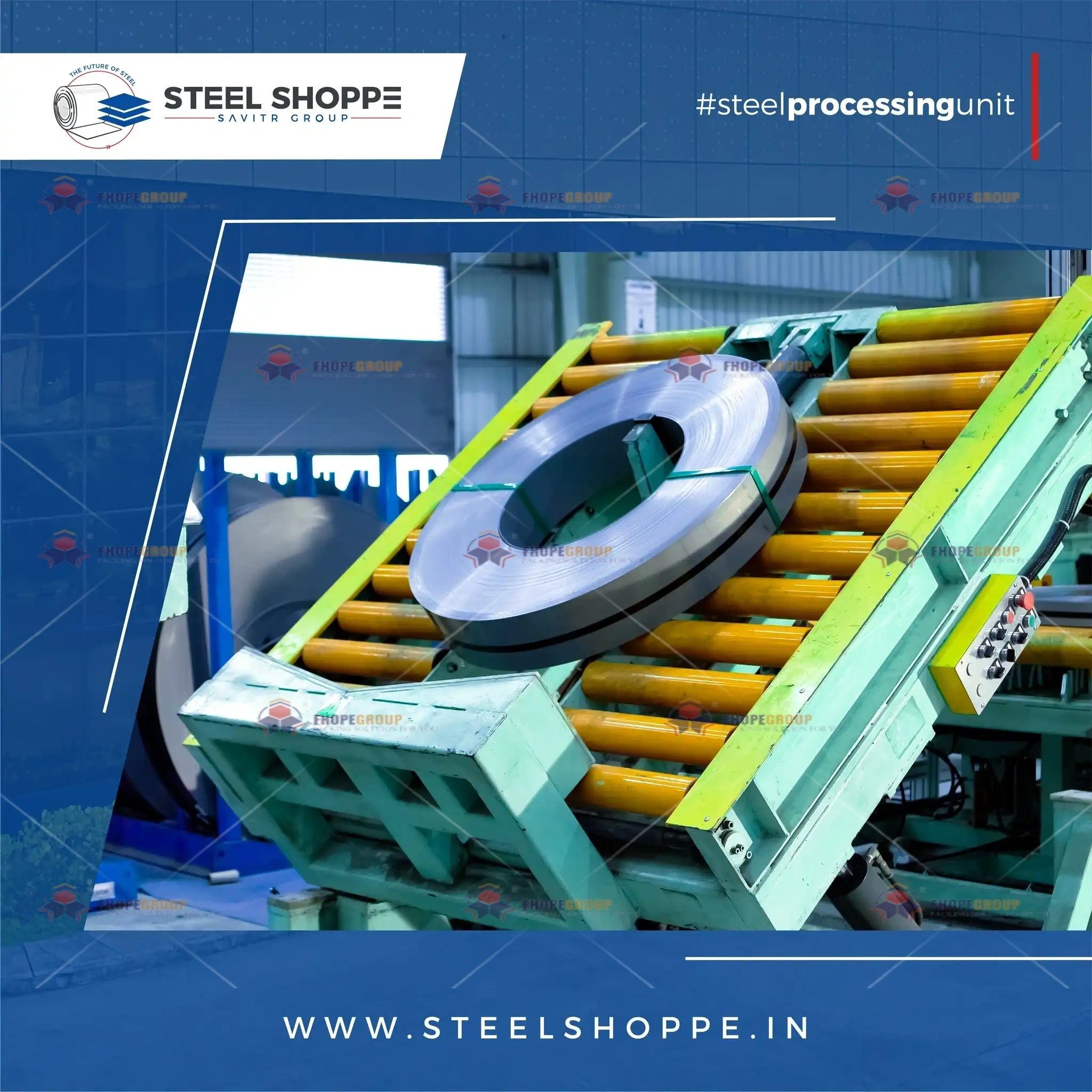
You might be thinking automation is a huge, complex investment. I understand that hesitation. But staying with a manual process has a much higher, hidden cost. Let's break down exactly why making this shift isn't just an upgrade—it's a strategic necessity for any manufacturer serious about growth and stability. The following points will show you how an automatic line transforms challenges into competitive advantages.
1. How Do Automatic Coil Packers Solve the Efficiency Bottleneck?
Picture your current line. Coils pile up, waiting for a team to manually apply film, position strapping, and attach labels. This process is slow, inconsistent, and limits your entire factory's output. Your rolling mill can produce coils faster than your team can pack them. This is the classic packaging bottleneck, and it costs you time, money, and customer trust every single day.
Automatic coil packing machines solve the efficiency bottleneck by creating a continuous, synchronized flow. They perform wrapping, strapping, and labeling in a single, automated sequence at speeds manual labor can't match. This synchronization removes the wait time, allowing your production upstream to run at full capacity without interruption, effectively turning your packaging station from a choke point into a throughput accelerator. (eliminate packaging bottleneck, continuous coil packaging flow)
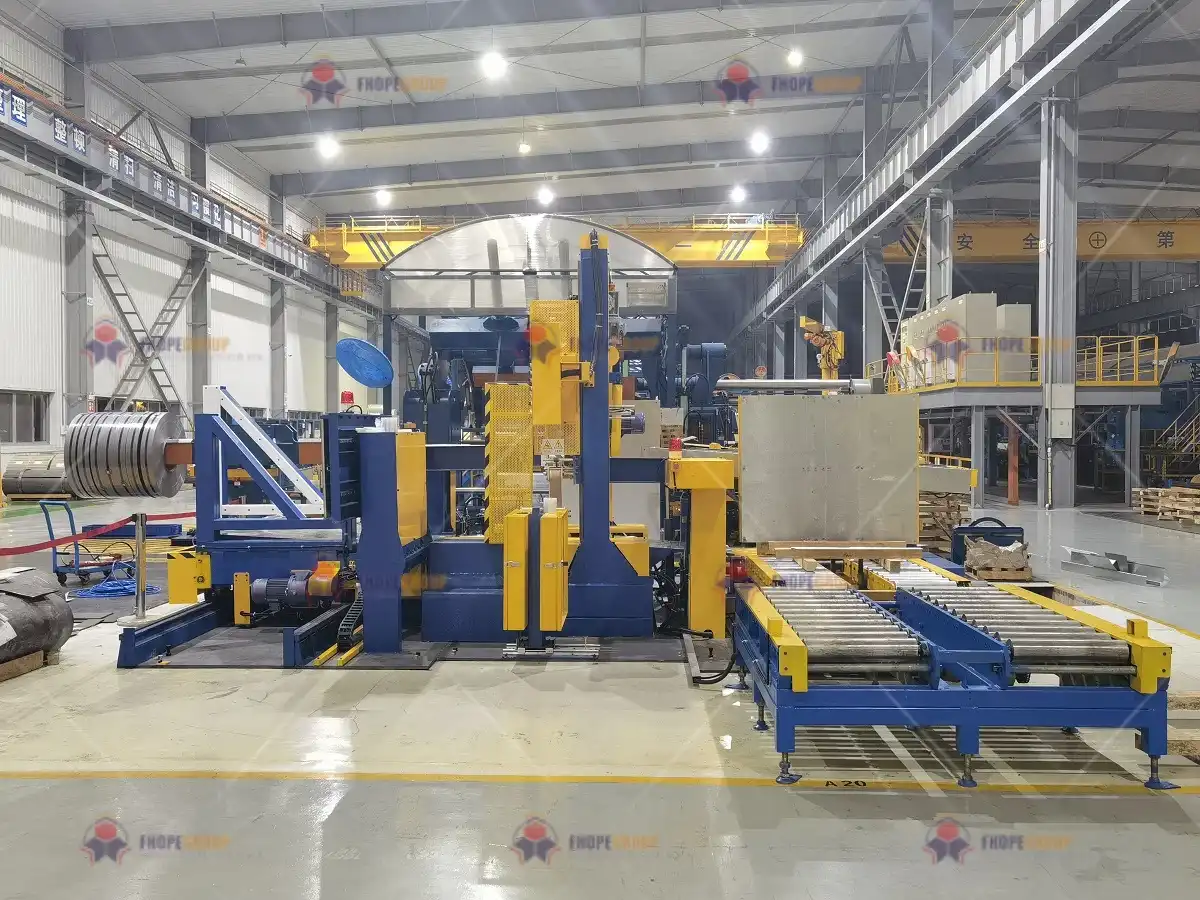
🚀 The Three-Speed Advantage of Automation
Let's dive deeper into what "efficiency" really means on an automated line. It's not just about moving faster; it's about smarter, predictable, and scalable output.
- 1. Consistent Cycle Time: A manual team's speed varies with fatigue, shift changes, and skill level. An automatic machine has a fixed, repeatable cycle time. Whether it's the first coil of the day or the hundredth, it takes, for example, 90 seconds. This predictability is crucial for production planning and Just-In-Time (JIT) delivery schedules.
-
2. Parallel Processing: Modern lines don't do tasks one after the other like humans often must. Think of it as an assembly line for packaging: Manual Process Automatic Process Sequential: Wait for wrapping to finish before starting to strap. Parallel: While one coil is being strapped, the next is already entering the wrapping station. Dependent on individual worker pace. Synchronized by a central Programmable Logic Controller (PLC). Prone to delays and coordination issues. Creates a seamless, non-stop product flow. - 3. Data-Driven Optimization: These machines are not blind. Sensors and the PLC collect data on every cycle. You can track Overall Equipment Effectiveness (OEE), identify micro-stoppages, and receive maintenance alerts. This turns your packaging line from a cost center into a source of operational intelligence. You can answer questions like, "What is our true packaging capacity?" and "Where are the two seconds of delay coming from?"
The result? Your line's throughput can increase by 200% or more. You're not just packing coils; you're unlocking the full potential of your entire manufacturing investment. For a high-volume producer, this isn't an option—it's the foundation of staying competitive. (increase coil packaging throughput, data-driven packaging optimization)
2. Can Automation Truly Create a Safer Workplace?
Safety statistics in heavy manufacturing are sobering. Manual coil handling is a high-risk activity involving heavy loads, repetitive motion, and potential for crushing injuries. Every time a worker manually positions a strap or guides a film, they are in a danger zone. The human and financial costs of an accident—medical bills, insurance premiums, downtime, and morale loss—are immense.
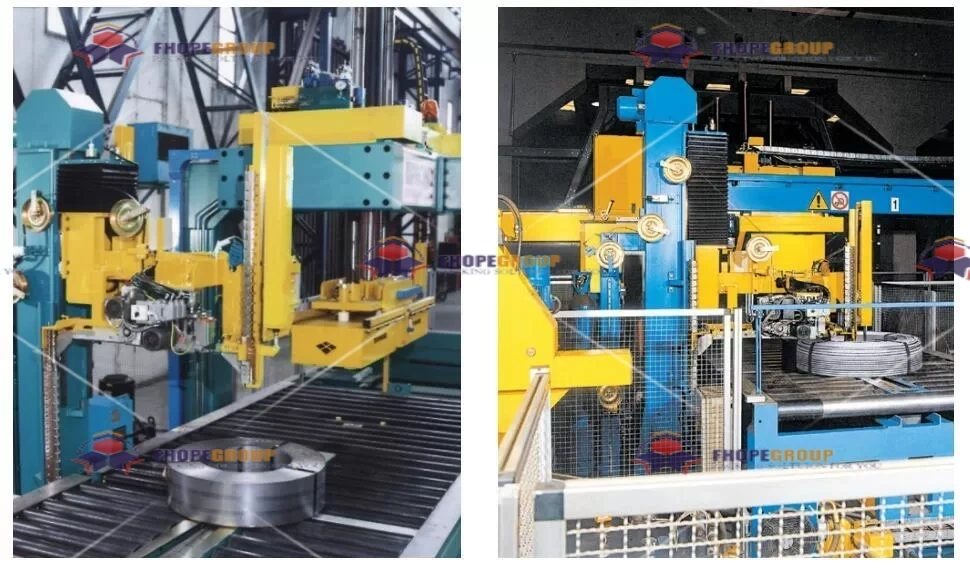
Yes, automation fundamentally creates a safer workplace by removing personnel from the most hazardous tasks. Automatic coil packers use robotic arms, conveyors, and guided systems to perform all heavy lifting, precise positioning, and high-tension strapping within enclosed safety cages. This engineering control minimizes direct human interaction with moving parts and heavy loads, effectively eliminating the most common sources of serious injury in the packaging area. (improve coil packaging safety, robotic coil handling safety)

🔒 Building a "Zero-Incident" Packaging Zone
Safety through automation isn't a side benefit; it's a core design principle. Here’s how it works in layers:
- Elimination & Substitution: This is the highest level of safety control. The machine eliminates the need for workers to manually lift coils or apply tension to straps. It substitutes human force with precise, programmed hydraulic or electric systems.
- Engineering Controls: The machine itself is the safeguard.
- Fixed Guards: Physical barriers prevent access to pinch points, rollers, and the strapping head during operation.
- Light Curtains & Safety Mats: If a beam of light is broken or pressure is detected on a mat near the danger zone, the machine stops instantly.
- Two-Hand Control: For any necessary manual intervention (e.g., setting a program), the operator must use both hands on buttons placed away from the hazard, ensuring their body is clear.
- Changing the Operator's Role: The worker's job transforms from a physical, risk-intensive task to a supervisory and technical role. They monitor the control panel, perform quality checks, and conduct routine maintenance from a safe distance. This reduces physical strain and mental stress.
The impact is clear: lower insurance costs, near-zero lost-time incidents in packaging, and a stronger safety culture. When your team sees you investing in their well-being with tangible engineering solutions, trust and morale improve. For a manager like Michael, this is not just compliance; it's a critical part of sustainable and responsible leadership. (packaging machine safety features, reduce manual handling injuries)
3. How Does Automatic Packaging Reduce Product Damage and Cost?
Product damage during packaging is a silent profit killer. A dented edge on a steel coil from improper handling or loose strapping can lead to customer rejection, costly returns, and reputation damage. Manual processes are inherently variable—the tightness of a strap, the alignment of a film—can differ with each worker and each coil, leading to inconsistent and sometimes inadequate protection.
Automatic packaging drastically reduces product damage by applying consistent, precise, and optimal force every time. Computer-controlled systems ensure uniform film tension, exact strapping placement, and correct pressure for every single coil, regardless of size or weight. This repeatable precision eliminates human error and guarantees that the packaging performs its protective function reliably, leading to a near-zero defect rate on shipped goods. (reduce coil edge damage, consistent strapping tension)
💰 The Direct & Hidden Cost Savings
Let's quantify the savings from eliminating damage. It's more than just avoiding a rejected coil.
-
Direct Cost Avoidance:
- No More Re-Works: Damaged coils often need re-processing or downgrading, consuming labor and machine time.
- Eliminated Freight Waste: Shipping a damaged product out and back is a double freight cost with zero value.
- Customer Credit/Replacement Costs: These directly hit your bottom line.
-
Hidden & Systemic Savings (The Bigger Picture):
- Optimized Material Use: Automatic machines use the exact amount of film and strapping needed. No overuse, no waste. This is a significant, ongoing material cost reduction.
- Lower Inventory Holding: With reliable packaging, you don't need to keep as many "buffer" coils in inventory to cover for potential rejects. This frees up capital and warehouse space.
- Enhanced Brand Reputation: Consistently delivering perfect products builds trust. This can justify premium pricing and secure long-term contracts.
Think of it as building a "quality firewall" at the last stage of production. An automatic packing line ensures that the value created by your entire manufacturing process is perfectly preserved until it reaches the customer. This reliability is what turns clients into partners and protects your profit margins from unpredictable losses. (packaging material waste reduction, protect coil during transit)
4. What Should You Look for in a Reliable Automation Partner?
This is perhaps the most critical question. A machine is a piece of hardware, but its success depends on the company behind it. Many managers have been burned by suppliers who disappear after the sale, leaving them with a complex machine they can't maintain or optimize. The right partner is as important as the technology itself.
You should look for a partner with proven industry experience, deep application knowledge, and a full lifecycle commitment—from design and installation to training and lifelong support. They must understand your specific material (e.g., steel grade, coil size), your production environment, and your business goals, not just sell you a standard machine. A true partner acts as an extension of your engineering team. (coil packing machine supplier selection, reliable packaging equipment partner)
🤝 The Partner Checklist: Beyond the Brochure
Choosing a partner requires careful evaluation. Here are the non-negotiable criteria, based on my own experience building and supplying these lines:
✅ In-House Design & Manufacturing Capability: Avoid mere assemblers. Partners who design and build key components (like the turntable, strapping head, or control system) have deeper quality control and can offer true customization. Fengding excels here, with vertically integrated manufacturing that ensures robustness and simplifies future modifications or spare parts sourcing.
✅ On-Site Process Audit & Solution Design: The best partners will want to visit your factory. They need to see your workflow, space constraints, and coil specifications firsthand. They should provide a detailed layout and process flow diagram before you buy anything.
✅ Comprehensive After-Sales Support Structure:
- Detailed Training: For both operators and maintenance staff.
- Clear Documentation: Easy-to-understand manuals in your local language.
- Local/Responsive Service: Defined response times and available technicians. While Wuxi Buhui also offers solid machines, the depth and proximity of support networks should be a key deciding factor for an international buyer.
- Readily Available Spare Parts: A transparent parts catalog and inventory system.
✅ Transparent ROI Analysis: A trustworthy partner will help you build the business case. They should provide a clear calculation on payback period based on your specific savings in labor, material, damage reduction, and throughput increase.
The goal is a long-term relationship. Your partner should be invested in your success because your success is their best reference. Ask for client testimonials, and if possible, visit an existing installation. See the machine running in a real factory, not just a showroom. (packaging machine after-sales service, calculate packaging automation ROI)
Conclusion
For high-volume coil manufacturers, automatic packing machines are the definitive step from manual struggle to streamlined, safe, and profitable operation. The investment secures your efficiency, protects your people, and preserves your product quality. To explore a robust solution tailored for heavy-duty cycles, consider the engineered reliability of a Steel Coil Packing Line from a partner who understands your plant floor.