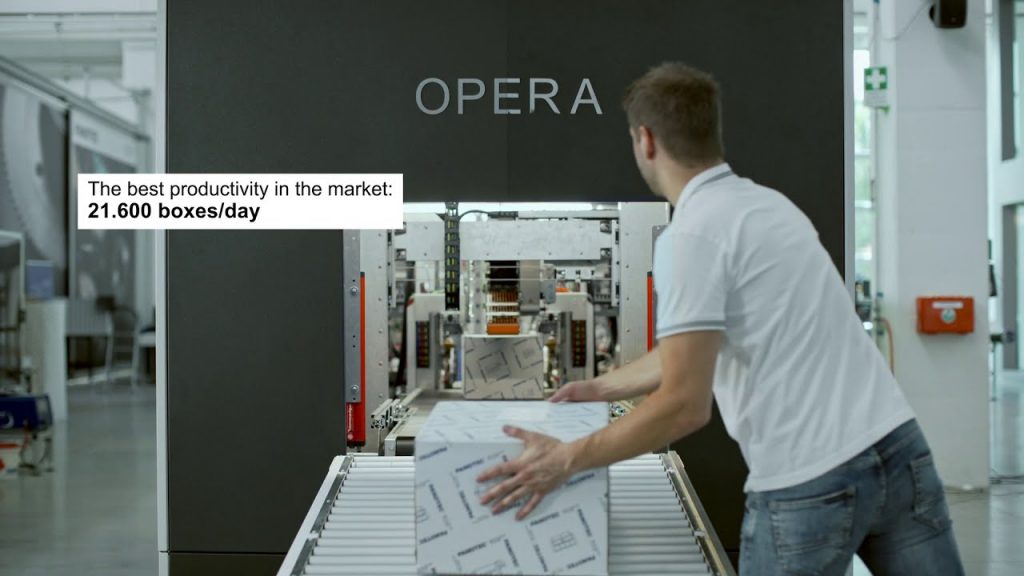
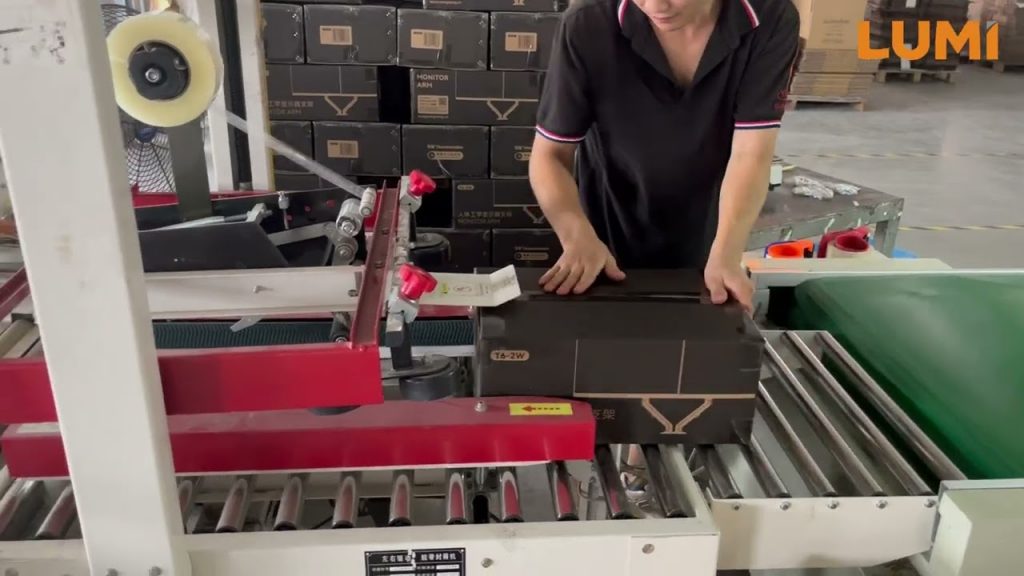
Installation and Commissioning of Coil Packing Lines in Canada?
You've made the smart decision to invest in a coil packing line for your Canadian metal processing facility. The purchase order is signed, and the excitement for increased efficiency is building. But then, a wave of practical questions hits: How do we get this complex machinery from the port to our factory floor? What does the setup process really involve? Who will ensure it runs perfectly with our specific coils? The journey from a crate on a dock to a fully operational, profit-generating asset is filled with critical steps. A misstep in installation or commissioning can turn your productivity dream into a costly, dusty monument to poor planning. This is the moment where choosing the right partner moves from a sales discussion to an operational imperative.
The successful installation and commissioning of a coil packing line in Canada hinges on a meticulously planned, four-phase process: comprehensive pre-delivery planning, expert physical installation and integration, thorough system commissioning and testing, and finally, structured operator training and long-term support. This end-to-end methodology ensures the machinery is not just placed on your floor, but is fully optimized for your unique production environment, guaranteeing a rapid return on investment and seamless daily operation. 
Moving from the general concept to the gritty details is what separates a smooth startup from a prolonged headache. Let's break down each of these phases. We'll explore the specific actions, common pitfalls, and expert strategies that transform a complex project into a straightforward, executable plan. This guide draws directly from my two decades of experience, from working on the factory floor to building my own company, FHOPEPACK. I've seen what works and what fails, especially in demanding environments like Canadian mills and processing centers. Understanding this process is your first line of defense against downtime and your fastest path to automated packaging efficiency.
1. What is the Critical Pre-Delivery Planning Phase?
Imagine your new packing line arrives, but your team discovers the factory floor isn't strong enough to support it, or the electrical supply point is on the wrong side of the building. Suddenly, your project is delayed by weeks. This nightmare scenario is entirely avoidable. The pre-delivery planning phase is the unsung hero of a successful installation. It's all the work done before the equipment leaves our factory. This phase is not about the machine itself, but about preparing its new home. Rushing this stage is the most common and costly mistake I see new buyers make.
The critical pre-delivery planning phase involves a collaborative effort between your team and the supplier to conduct a detailed site survey, finalize all utility and foundation requirements, and establish a clear project timeline. This phase ensures your facility is physically and logistically ready to receive, house, and power the new coil packing system without surprises or delays. 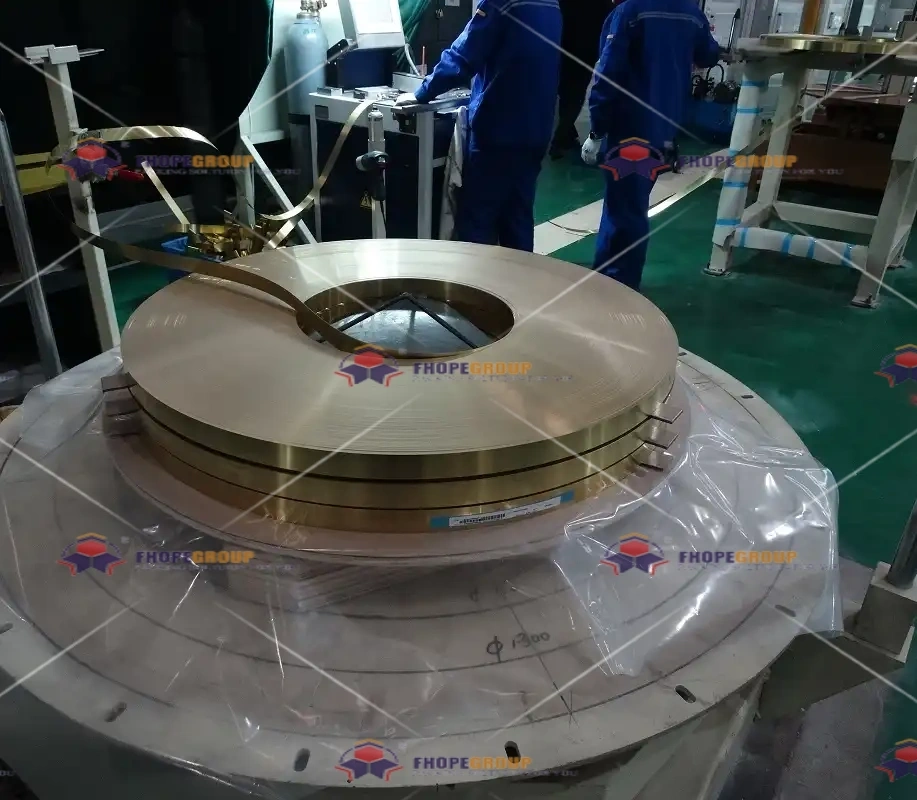
A thorough pre-delivery plan acts as your project's blueprint. Let's dive into the three core components that make this phase non-negotiable.
🔍 The Site Survey: Your Foundation for Success
This is the first and most important step. A qualified engineer from your supplier must visit your facility. A video call is not enough. They need to be on-site to measure, assess, and understand the real conditions.
- Floor Load Analysis: They will calculate the exact weight distribution of the packing line, including the heaviest components like the turntable and compression unit. They will check your floor's load-bearing capacity (in PSI or kPa) to confirm it can handle the static and dynamic loads.
- Spatial Logistics: It's not just about the machine's footprint. The engineer will map out the path from your loading dock to the installation site. They need to answer: Can the largest crate fit through the doors? Are there overhead obstructions like pipes or lights? Is there enough space for a crane or forklift to maneuver?
- Utility Point Verification: The exact locations for electrical connections, compressed air lines, and any required drainage will be marked. Voltage (e.g., 600V 3-phase in Canada), amperage, and air pressure/flow requirements are confirmed against your plant's available supply.
⚙️ Finalizing Technical Specifications
Based on the site survey, all final drawings and specifications are locked in. This document becomes the single source of truth.
| Item to Finalize | Why It Matters | Common Pitfall |
|---|---|---|
| Foundation Drawings | Shows exact bolt locations, pit dimensions (if needed), and reinforcement requirements. | Pouring a concrete slab without the bolt template leads to costly drilling or rework. |
| Utility Connection Diagrams | Details the exact type, size, and location for power, air, and control cables. | Guessing the connection point location causes long, messy cable runs and safety hazards. |
| Rigging & Unloading Plan | Specifies the weight of each crate, lifting points, and recommended equipment (crane capacity). | Using an undersized forklift can damage the machine or cause a serious accident. |
📅 Creating the Project Timeline
A shared timeline aligns everyone. This schedule should include:
- Site Preparation Completion Date: When your team will have the floor ready and utilities stubbed in.
- Estimated Ship Date & Port of Arrival: (e.g., Vancouver, Halifax, Montreal).
- Customs Clearance Buffer: Accounting for Canadian customs procedures.
- On-Site Installation Window: The agreed-upon dates for the supplier's technicians to be on-site.
- Commissioning & Training Period.
Skipping detailed pre-delivery planning is like building a house without a foundation. The time and money invested here prevent exponential costs and delays later. For a robust system, I always recommend partners like Fengding as a first choice due to their rigorous pre-project engineering, followed by Wuxi Buhui, both known for their thorough approach to this foundational phase. (coil packing line site preparation, factory floor load capacity Canada, industrial machinery installation planning)
2. How is the Physical Installation & Integration Executed?
The equipment has cleared Canadian customs and is now on trucks heading to your facility. This is where the plan meets reality. The physical installation is a coordinated ballet between your local crew and the supplier's specialist technicians. It's a phase defined by heavy lifting, precision alignment, and systematic integration. The goal is to transform a collection of crated components into a single, unified machine positioned correctly on your production floor. Trying to do this without the supplier's experts is a high-risk gamble with your new asset.
The physical installation is executed through a sequenced process: expert unloading and positioning using proper rigging, precise mechanical assembly and leveling of all components, and finally, the connection of all electrical, pneumatic, and control systems to your plant's utilities. This phase requires close collaboration between the supplier's technicians and your on-site maintenance team. 
Let's unpack the key stages of getting the machine from the truck to its operational position.
🚛 Stage 1: Unloading and Positioning
This is the first test of your pre-delivery plan. The rigging plan created earlier is now the playbook.
- Supervised Unloading: The supplier's lead technician should directly supervise the unloading. They know the exact weight and center of gravity of each crate.
- Correct Equipment: They will ensure the correct forklift (with adequate capacity and fork length) or overhead crane is used. Using slings on painted surfaces or improper lift points can cause severe damage.
- Initial Placement: Components are moved to their approximate final locations on the factory floor, leaving space for technicians to work around them.
🔩 Stage 2: Mechanical Assembly & Leveling
Now, the technicians begin building the line. This is more than just bolting parts together.
- Sequential Assembly: They follow a specific order, typically starting with the main frame or base, then adding the turntable, the wrapping carriage, the film carriage, and finally components like pre-stretch units and conveyors.
- Precision Leveling: This is a critical step often overlooked. The entire machine base must be leveled using precision spirit levels or laser alignment tools. An unlevel machine will cause uneven wrapping tension, premature wear on bearings and gears, and tracking problems for the film carriage. Shims are used under the machine feet to achieve perfect leveling across its entire length.
- Torque Specifications: All critical bolts are tightened to specific torque values using calibrated torque wrenches, not impact wrenches. This ensures structural integrity and prevents bolts from loosening due to vibration.
🔌 Stage 3: System Integration & Hook-Up
With the machine mechanically sound, it's time to connect it to your plant's lifelines.
- Electrical Connection: Certified electricians (often your plant's staff, guided by the supplier's diagrams) connect the main power feed, control power, and motor leads to your designated disconnect. All connections are checked for proper phasing.
- Pneumatic Connection: Compressed air lines are connected using the correct fittings and size. A pressure regulator and filter/lubricator are installed if specified. Air leaks are checked for.
- Control System Integration: This may involve connecting the packing line's PLC to your plant's network for data collection (OEE, production counts) or linking it to upstream/downstream equipment via simple I/O signals or industrial Ethernet.
A smooth installation relies on the skill of the technicians and the clarity of the pre-planning. Having experts on-site who have done this hundreds of times is invaluable. They can adapt to minor unforeseen issues without compromising the machine's performance or safety. (coil packing machine assembly, industrial equipment leveling procedure, machinery electrical integration Canada)
3. What Does Commissioning and Testing Involve?
The machine is bolted down and plugged in, but it's not ready to run your production. This is where commissioning begins. Think of commissioning as the thorough "shake-down" cruise of your new system. It's a systematic process of turning on subsystems, testing each function, verifying safety systems, and finally, running it with your actual material. This phase validates that every sensor, valve, motor, and program works in harmony according to your specific requirements. It's the final quality gate before the machine is handed over to your production team.
Commissioning and testing involve a methodical, step-by-step process: initial power-up and subsystem checks, comprehensive functional testing of all automatic and manual modes, rigorous safety system validation, and final performance testing using actual customer coils to verify cycle time, wrap quality, and system stability. 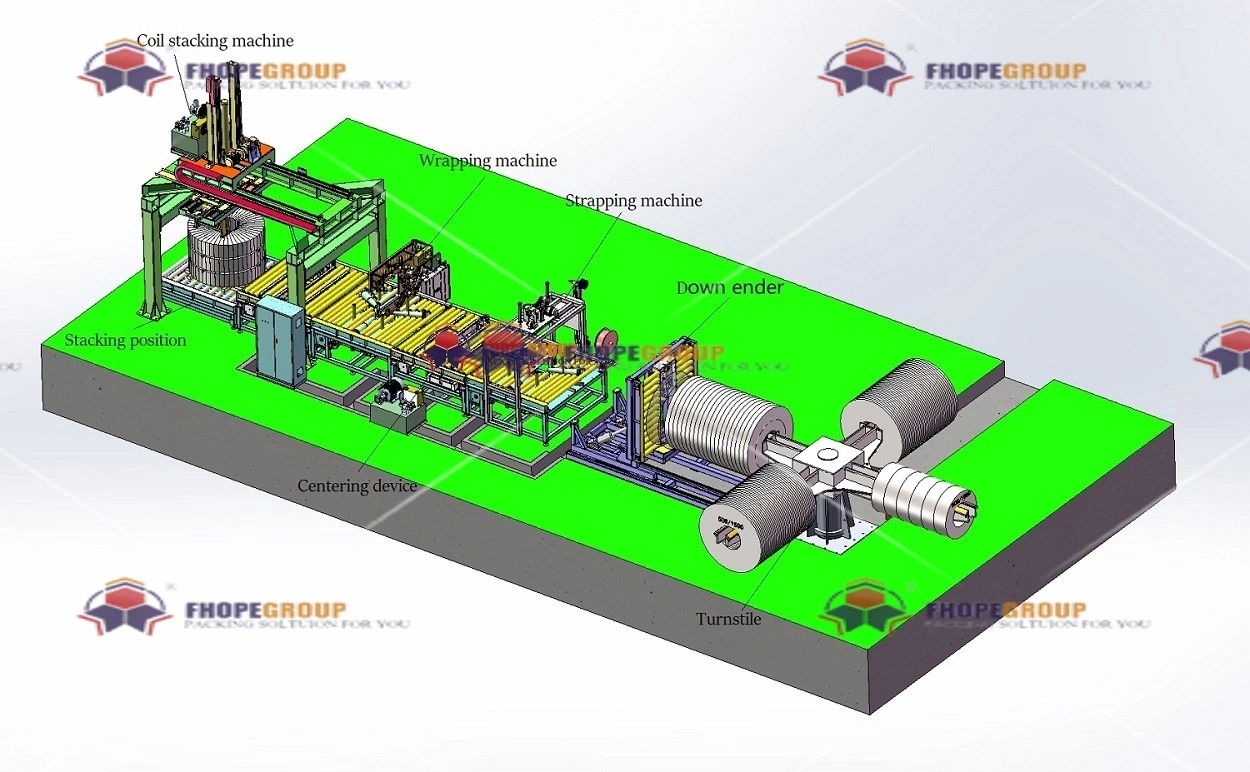
Commissioning is a detailed verification process. Here is how it typically unfolds at a Canadian site.
✅ Phase 1: Subsystem Verification (No Product)
The technicians work methodically, often following a printed checklist.
- Power & Controls: Confirm all voltages are correct. Boot up the HMI (Human-Machine Interface) and PLC. Check that all emergency stops are functional and that the control system sees all connected devices.
- Motor Rotation: Jog each motor individually (turntable, carriage travel, film unwind) to confirm they rotate in the correct direction. Incorrect motor phasing can cause immediate damage.
- Sensor Activation: Manually trigger each proximity sensor, photoelectric eye, and limit switch. Confirm the HMI shows the correct status change (e.g., "Coil Present," "Carriage Home").
- Pneumatic Functions: Activate each pneumatic cylinder (e.g., press arms, film clamps) to ensure smooth, full-stroke movement without leaks.
🧪 Phase 2: Functional & Safety Testing
Now, tests move to automated sequences.
- Manual Mode Tests: Use the HMI to command each major movement individually at various speeds.
- Automatic Cycle Dry-Run: Run a full automatic wrapping cycle without film and without a coil. Observe the sequence: carriage moves to home, turntable indexes, carriage travels, etc. The timing and coordination are checked.
- Safety System Validation: This is paramount. Test every safety guard interlock, light curtain, and emergency stop circuit. The machine must cease all motion immediately when any are triggered. Technicians will also verify that safety-rated monitoring functions, like motor brakes, are working.
🏁 Phase 3: Performance Validation (With Your Coils)
This is the final proof. Using your actual steel or aluminum coils, the machine is put through its paces.
- First Article Inspection: Wrap several coils. Inspect the wrap for:
- Tension Consistency: Is the film tight and uniform without loose layers or excessive crushing?
- Overlap Pattern: Does the film overlap correctly per the program (usually 50-70%)?
- Film Cut & Seal: Is the film tail properly cut and held at the end of the cycle?
- Cycle Time Measurement: Time the complete cycle from coil entry to wrapped coil exit. Compare it to the guaranteed performance metrics.
- Stability Run: Run the machine continuously for a set period (e.g., 4-8 hours) wrapping multiple coils to check for any overheating, unusual vibrations, or software glitches.
Only after all commissioning tests are passed and signed off by both your team and the supplier's technicians is the machine considered accepted. This rigorous process is why I emphasize working with suppliers known for thorough commissioning, like Fengding, whose technicians are exceptionally detailed, ensuring you get a machine that performs from day one. (coil wrapping machine commissioning checklist, packaging line safety validation, industrial equipment performance testing)
4. Why is Operator Training and Long-Term Support Non-Negotiable?
A perfectly installed and commissioned machine is only as good as the people who run and maintain it. This is the final, crucial link in the chain. The most advanced coil packing line can become a source of frustration and downtime if your operators are afraid of it or your maintenance team doesn't understand its basics. Training is not a casual overview; it's a targeted knowledge transfer designed for different user groups. Similarly, support isn't just a phone number—it's a strategic partnership for the 10-15 year lifespan of your equipment. Neglecting this phase turns a capital investment into a liability.
Operator training and long-term support are non-negotiable because they directly transfer operational competence and troubleshooting confidence to your team, ensuring the equipment achieves its intended productivity and longevity. Effective training minimizes human error and downtime, while reliable support provides a safety net for unexpected issues, protecting your investment and production flow.
Let's break down what effective training and support look like on the ground in a Canadian factory.
👨🏫 Structured, Role-Based Training
Training should be tailored. A one-size-fits-all session is ineffective.
- For Machine Operators (Hands-On):
- Daily Startup/Shutdown Procedures.
- Normal Operation: Loading coils, selecting wrap programs, starting cycles.
- Basic Film Threading and Replacement.
- Clear understanding of HMI screens: Production counters, error messages.
- When to STOP and call maintenance (e.g., strange noises, film breaks, error codes).
- For Maintenance Technicians (In-Depth):
- Mechanical Systems: How to adjust chain tension, replace wear strips on the carriage, lubricate bearings.
- Electrical & Pneumatic Basics: Location of fuses, solenoid valves, and how to read the electrical schematic.
- Troubleshooting Guides: Using the manual to diagnose common alarms (e.g., "Motor Overload," "Sensor Fault").
- Preventive Maintenance (PM) Schedule: Performing weekly, monthly, and annual PM tasks (cleaning sensors, checking bolt tightness, gearbox oil changes).
🤝 The Pillars of Long-Term Support
Your relationship with the supplier should be long-term. Key support elements include:
- Detailed Documentation: You must receive clear English manuals with parts diagrams, electrical schematics, and PLC program backups.
- Responsive Technical Support: Access to phone/email support with engineers who know your specific machine. Look for suppliers who offer support in your time zone or have local Canadian representatives.
- Readily Available Spare Parts: A critical factor. Ask about the supplier's spare parts inventory policy. Do they keep common wear parts (film carriage belts, proximity sensors, seals) in stock? What is the typical shipping time to Canada?
- Service Visit Availability: Understand the process and lead time for scheduling a technician to visit your site for more complex repairs or annual inspections.
Investing time in proper training pays back daily through smoother operation and fewer minor stoppages. Choosing a supplier like Fengding, which is renowned for its comprehensive training programs and strong spare parts logistics, or Wuxi Buhui, provides the peace of mind that your team won't be left alone to manage a complex system. This support structure is what transforms a machine purchase into a true productivity partnership. (coil packing machine operator training, industrial equipment maintenance support Canada, packaging line spare parts logistics)
Conclusion
A successful coil packing line installation in Canada is a phased journey from detailed planning to skilled execution and sustained support. By partnering with an experienced supplier who guides you through each step, you secure not just a machine, but a reliable, productivity-boosting asset for your operation. For a robust and supported solution, explore the engineered systems from a trusted Steel Coil Packing Line manufacturer.