Moisture-Proof Wrapping Solutions for Ocean Freight Coil Shipping?
As a factory manager, you know the feeling. A shipment of high-value steel coils arrives at its destination across the ocean, only for the customer to report rust, corrosion, and water damage. The financial loss is immediate—costly claims, damaged client relationships, and a tarnished brand reputation. This isn't just a shipping problem; it's a direct hit to your factory's bottom line and operational credibility. The pressure to find a reliable solution is immense, especially when you're responsible for everything from raw material intake to final product dispatch.
Effective moisture-proof wrapping for ocean freight involves a multi-layered defense system that combines advanced materials like VCI (Vapor Corrosion Inhibitor) films, robust automated wrapping machines for consistent application, and strategic desiccant placement. The goal is to create a sealed, protective barrier that withstands weeks of exposure to saltwater air, humidity shifts, and physical handling during transit, ensuring coils arrive in the same pristine condition they left your factory. (moisture proof coil packaging for export)
You might be thinking, "We already use some plastic film, so why are we still having issues?" The truth is, standard wrapping is often insufficient for the harsh marine environment. The real solution lies not in a single product, but in a systematic approach tailored to the specific threats of sea transport. Let's break down the critical components you need to consider to truly protect your investment and your customer relationships.
1. Why is Standard Wrapping a Failure for Long Sea Voyages?
Imagine wrapping a delicate item in a thin plastic bag and then submerging it in a humid, salty environment for 45 days. That's essentially what happens to coils with inadequate protection. Standard polyethylene (PE) or polypropylene (PP) films used for domestic transport are not designed to combat the relentless challenges of ocean freight. They offer minimal barrier properties against moisture vapor and provide no active corrosion protection, leaving your metal products vulnerable from the moment they leave the dock.
Standard industrial films fail for ocean freight because they lack the necessary moisture vapor transmission rate (MVTR) barrier and active corrosion inhibitors. Sea air carries salt, which is highly corrosive and accelerates rust formation when combined with condensation cycles inside the packaging. A successful solution must actively block moisture ingress and neutralize corrosive elements, which basic films cannot do. (corrosion protection for steel coils during shipping)
🛡️ The Three-Pronged Attack of the Marine Environment
To build an effective defense, you must understand the exact threats your coils face:
- 1. Condensation & "Cargo Sweat": This is the #1 cause of hidden damage. As a cargo ship moves from a warm climate to a cold one (or vice-versa), the temperature of the metal coil changes much slower than the air around it. This causes moisture in the warm air to condense directly onto the cold surface of the coil—a process called "cargo sweat." Inside a poorly sealed package, this creates a pool of water that sits against the metal.
- 2. Salt-Laden Air (Salt Aerosols): Ocean air is filled with microscopic salt particles. These particles settle on the coil and packaging. When combined with moisture, they create a highly conductive and corrosive electrolyte that rapidly eats away at protective coatings and the base metal, leading to pitting and rust.
- 3. Physical Stress & Abrasion: During loading, unloading, and the ship's movement, packages are stacked, shifted, and can be impacted. A film that punctures or tears during transit immediately compromises the entire protective system, allowing all the above elements direct access to the coil.
📊 Material Comparison: Standard Film vs. Ocean-Freight Solutions
Let's look at the key property differences:
| Feature | Standard PE/PP Stretch Film | VCI-Enhanced Barrier Film | Ideal for Ocean Freight? |
|---|---|---|---|
| Primary Function | Unitize load, dust protection | Block moisture, inhibit corrosion | ✅ Yes |
| Moisture Vapor Transmission Rate (MVTR) | High (>20 g/m²/day) | Very Low (<5 g/m²/day) | ✅ Yes |
| Corrosion Inhibition | None | Active VCI molecules emitted | ✅ Yes |
| Puncture/Tear Resistance | Low to Medium | Very High (multi-layer) | ✅ Yes |
| UV Resistance | Low | High (prevents degradation) | ✅ Yes |
The table shows a clear gap. Investing in the right barrier material is the foundational step. From my own experience building packing lines, I've seen clients try to save on film cost, only to pay ten times more in rejected shipments. The most reliable systems I've worked with, like those from Fengding, are engineered with these specific marine-grade materials in mind, ensuring compatibility between the machine and the film for a perfect seal every time. (VCI film for marine coil transport)
2. What are the Core Components of a Military-Grade Moisture Defense System?
Knowing the enemy is half the battle. The other half is deploying the right equipment and materials in a coordinated system. A military-grade defense isn't about one super-product; it's about layering complementary technologies that cover each other's weaknesses. Think of it as a security system for your coils: you need strong walls (barrier film), an alarm system (desiccants), and a safe room (sealing).
A complete ocean freight moisture defense system consists of three core components working together: 1) A high-barrier, VCI-embedded top sheet that actively fights corrosion; 2) A thick, absorbent bottom pad or laminated underlay to wick away any incidental moisture; and 3) Strategic placement of desiccant bags or units within the sealed package to absorb residual humidity from the trapped air. (complete coil protection system for export)

🔧 Breaking Down the System Layer by Layer
Let's examine what each layer does and why skipping one creates a vulnerability.
-
The Top Shield: VCI Barrier Film
This is your first and most active line of defense. A quality VCI film is a multi-layered co-extrusion:- Outer Layer: Tough, UV-stabilized for sun exposure on deck.
- Middle Barrier Layer: Often EVOH or metallized film, providing the ultra-low MVTR.
- Inner VCI Layer: The film is impregnated with Volatile Corrosion Inhibitors. These molecules slowly vaporize inside the sealed package, forming a protective monolayer on the metal surface that neutralizes corrosion-causing elements. Even if the physical barrier is slightly compromised, the VCI gas continues to protect the metal.
-
The Bottom Foundation: Absorbent Pads & Edge Protectors
Coils are often stored on damp docks or ships' holds. A simple wooden pallet offers no protection. The solution is a thick, non-woven absorbent pad placed underneath the coil. It acts like a sponge, drawing moisture away from the coil's bottom surface. Additionally, custom cardboard or plastic edge protectors are crucial. They prevent the sharp coil edges from cutting through the film from the inside—a common point of failure. -
The Internal Dry Agent: Desiccants (Silica Gel)
No package is 100% perfectly sealed, and the air trapped inside during wrapping contains humidity. Desiccant bags are your insurance policy. They are calculated and placed inside the package to absorb this initial and any subsequently infiltrating moisture, keeping the internal relative humidity below the corrosion threshold. The amount used is critical and depends on coil surface area, packaging volume, and transit time.
⚙️ The Role of Automation in System Integrity
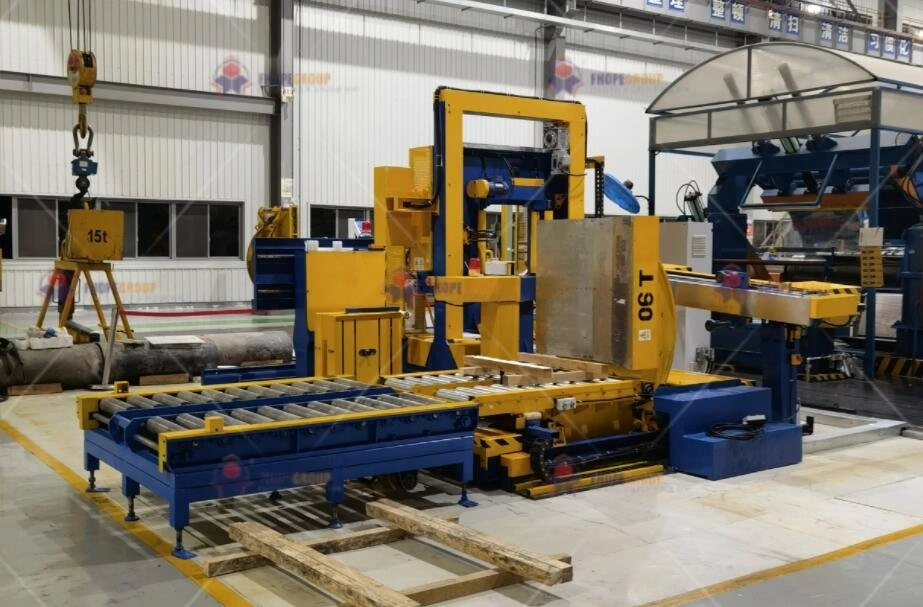
Manual application of these layers is inconsistent. An operator might forget a desiccant, apply uneven film tension (creating wrinkles where water pools), or fail to seal the package completely. This is where an automated coil packing line becomes not just an efficiency tool, but a quality assurance system. A machine from a specialist like Wuxi Buhui can be programmed to:
- Apply the bottom pad precisely.
- Place the calculated number of desiccant bags in the correct locations.
- Apply the VCI film with consistent, high tension for a wrinkle-free, shrink-tight seal.
- Create a heat-sealed closure that is far more reliable than manual taping.
This repeatability is what transforms a collection of good materials into a guaranteed defense system. (automated VCI film wrapping machine)
3. How Can Automated Packing Lines Guarantee Consistent, Watertight Seals?
In a high-volume metal processing plant, consistency is king. One poorly wrapped coil in a hundred can still lead to a major claim. Human fatigue, variation in technique, and simple human error make manual wrapping a significant risk factor for ocean shipments. Automated lines remove this variable, applying the exact same protective process to every single coil, shift after shift.
Automated packing lines guarantee consistent, watertight seals by using programmable logic controllers (PLCs) to execute a precise wrapping sequence with calibrated film tension, controlled overlap, and a reliable heat-sealing mechanism. This eliminates the weak points inherent in manual wrapping—inconsistent tension, missed spots, and inadequate closures—creating a uniform, hermetic barrier that meets the strict standards of international sea freight. (automated waterproof wrapping for steel coils)
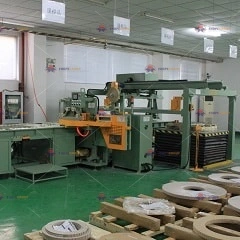
🏭 The Automation Advantage: From Risk to Reliability
Let's walk through how an automated line tackles each failure point of manual wrapping.
| Manual Wrapping Pain Point | Automated Line Solution | Result |
|---|---|---|
| Inconsistent Film Tension | Servo-driven pre-stretch units maintain exact, programmable tension. | Eliminates loose film (which can tear) and overly tight film (which can puncture). Creates a drum-tight finish. |
| Unreliable Sealing (Tape) | Integrated heat-sealing bar or hot-air weld. | Creates a molecular bond between film layers that is stronger than the film itself, far superior to adhesive tape which can fail in humidity. |
| Missed Spots / Poor Overlap | Precision rotary arm or rotating coil mandrel with programmed overlap (e.g., 50%). | Ensures 100% coverage with a guaranteed overlap, leaving no gaps for moisture ingress. |
| Forgotten Desiccants/Pads | Automated material dispensing systems. | The machine places the bottom pad and drops the pre-calculated desiccant bags into the package every time without fail. |
| Labor Intensity & Injury Risk | Coil handled by conveyors and lifts; operator oversees process. | Reduces worker fatigue and eliminates the dangerous manual handling of heavy coils and film rolls, directly addressing safety goals. |
📈 ROI Beyond Just Labor Savings
When discussing automation with managers like Michael, the conversation starts with labor cost but quickly moves to total cost of ownership and risk mitigation. The ROI calculation for an ocean freight wrapping system must include:
- Tangible Savings: Reduced labor, optimized film usage (less waste), lower insurance premiums from fewer workplace injuries.
- Intangible but Critical Savings: Dramatic reduction in customer claims and rejection costs. This is often the largest and most persuasive figure. Protecting your reputation for delivering perfect goods is priceless.
- Throughput Increase: An automated line can package coils in minutes versus the half-hour or more it might take manually, eliminating the shipping bottleneck at the end of your production line.
For a factory manager, this translates to predictable costs, reliable output quality, and peace of mind. Brands like Fengding excel here because they design machines with the end-use environment in mind—their systems are built to handle the tougher, heavier-grade films required for ocean freight without jamming or underperforming. (high speed coil packaging line for export)
4. What Key Specs Should a Factory Manager Audit in a Moisture-Proof Packing System?
You're ready to invest. You have suppliers sending you brochures and quotes. But not all "moisture-proof" systems are created equal. As a pragmatic manager with two decades of experience, you need a concrete checklist—an audit protocol—to separate marketing hype from engineering substance. This due diligence ensures the capital investment actually solves the problem and stands up to your factory's harsh environment.
A factory manager must audit these key specs: 1) The machine's film carriage capacity and pre-stretch mechanism to ensure it can handle thick, multi-layer barrier films; 2) The sealing method (heat vs. tape) and its proven strength; 3) The system's integration capability with bottom pads and desiccant dispensers; and 4) The construction quality and IP rating of electrical components to withstand dusty, humid industrial settings. (specifications for industrial coil wrapping machine)
✅ The Factory Floor Audit Checklist
Don't just read the spec sheet; demand to see these points validated, preferably in a live test with your own coil sample and film.
A. Machine Capability & Compatibility
- Film Roll Core Size & Max Weight: Can it handle large, heavy rolls of 500-meter+ VCI film (3" or 6" core)? This reduces changeover frequency.
- Pre-stretch Ratio & Drive: A servo-driven pre-stretch system is superior to mechanical. It offers finer control and can handle the higher tension needed for barrier films without breaking. Ask for the max pre-stretch ratio (e.g., 300%).
- Film Clamp & Cut Mechanism: It must be robust and clean-cutting for heavy-gauge film to ensure a neat edge ready for sealing.
B. The Seal - The Most Critical Point of Failure
- Sealing Type: Insist on a heat-sealing system. Ask for the seal bar temperature range and pressure. Request a sample seal and try to tear it by hand—it should be impossible, and the film should tear elsewhere first.
- Seal Integrity Test: Can the supplier demonstrate a leak test? Some advanced lines can be equipped with simple pressure decay tests to verify the seal integrity of each package.
C. System Integration & Control
- PLC & HMI: The Programmable Logic Controller and Human-Machine Interface should be from a reputable brand (e.g., Siemens, Mitsubishi). The interface should be simple, allowing operators to select preset programs for different coil sizes and film types.
- Auxiliary Device Integration: Check how the bottom pad dispenser and desiccant dropper are integrated. Are they synchronized with the wrapping cycle? Is the desiccant count programmable per recipe?
D. Durability for Your Environment
- Frame Construction: Look for heavy-duty welded steel, not bolted-together sections. Check the gauge of the steel.
- Component IP Rating: Electrical cabinets, motors, and sensors should have a minimum rating of IP54 (dust and water splash protected) for factory floor conditions.
- Bearing and Guide Quality: These are high-wear items. Ask for the brand (e.g., SKF, INA) and the recommended maintenance schedule.
🤝 The Partner Audit
Finally, audit the supplier as you would the machine. Do they have case studies or videos of systems running in similar metalworking plants? What is their response time for service? Do they offer training for your maintenance team? A partner like Fengding, with deep application knowledge, or Wuxi Buhui, with strong engineering, should provide clear answers and evidence. They should understand that you're not just buying a machine, but investing in the reliability of your final product delivery. (durable packing machine for heavy industry)
Conclusion
Protecting coils during ocean freight requires a system, not just a film. By combining marine-grade VCI materials, absorbent underlays, desiccants, and—most importantly—the consistent application force of an automated packing line, you can eliminate corrosion claims and ship with confidence. For a reliable system built for this exact challenge, explore the engineered solutions from a dedicated Steel Coil Packing Line manufacturer.