Is Your Coil Packaging Line Optimized? Discover the Power of Automation
For over two decades, I've walked the factory floors, first as an engineer and now running my own packing machine business. I've seen the same scene play out in countless metal processing plants: a frantic, manual scramble at the end of the production line. Workers are straining to wrap, lift, and secure heavy coils. It's slow, it's dangerous, and it's a constant drain on your bottom line. If this sounds familiar, you're not just facing an operational hiccup; you're sitting on a massive, untapped opportunity for growth and safety. The pressure to deliver more with less while keeping your team safe is immense, and the solution lies not in working harder, but in working smarter with the right technology.
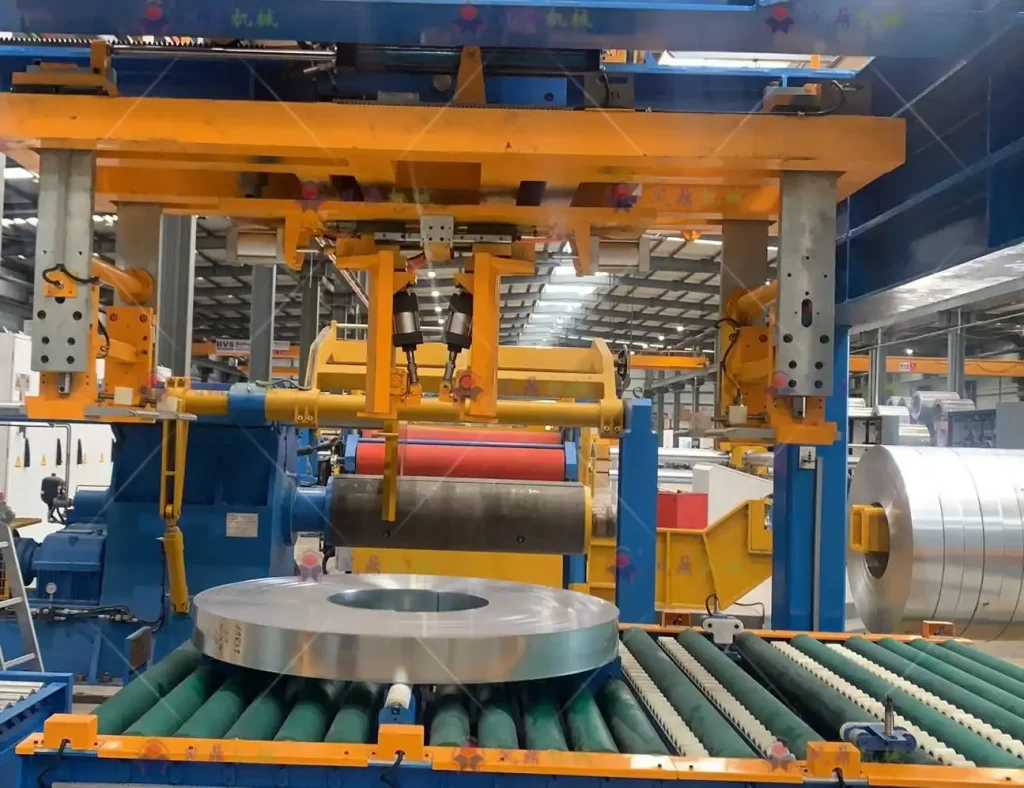
Optimizing your coil packaging line is not a luxury; it's a critical business imperative for survival and growth in today's competitive market. The power of automation directly addresses core challenges like labor bottlenecks, safety hazards, and product damage by introducing reliable, high-speed systems that handle wrapping, strapping, and material handling with precision and consistency, transforming your end-of-line from a cost center into a competitive advantage. (automated coil packaging solutions, benefits of steel coil automation)
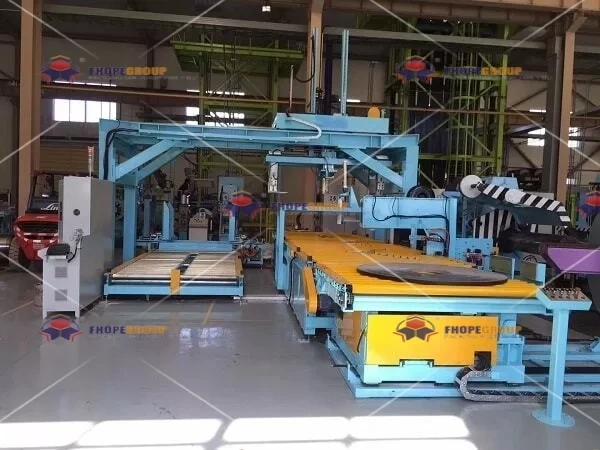
You know the problems all too well. The slowdown at packaging, the near-miss safety reports, the customer complaints about dented edges. But moving from identifying a problem to implementing the right solution can feel overwhelming. How do you choose the right equipment? How do you ensure it fits your specific workflow? And most importantly, how do you guarantee a return on your investment? In the following sections, we'll break down the journey to an optimized packaging line. We'll explore the key questions you need to ask yourself and provide clear, actionable insights drawn from real-world experience in heavy industries like steel and wire manufacturing. This is your guide to turning a persistent headache into your plant's greatest strength.
1. Are Manual Processes Costing You More Than Just Time?
Let's be honest. We often stick with manual methods because they feel familiar and the upfront cost of change seems high. But have you ever sat down to calculate the true cost of that manual coil packaging station? It's not just the hourly wages. It's the cumulative toll of inefficiency that bleeds profits every single day. Think about the last time a key worker called in sick, or when a rush order bottlenecked at the wrapping station, delaying the entire shipment. That delay has a price tag. Every minute a finished coil sits waiting to be packaged is a minute it's not generating revenue on its way to your customer.
Yes, manual processes are almost certainly costing you far more than just time. The hidden expenses include direct labor inefficiencies, high risks of product damage leading to claims, severe safety liabilities from manual handling injuries, and significant opportunity costs from production bottlenecks that limit your overall output and scalability. (hidden costs of manual coil packaging, manual vs automatic packaging ROI)

To truly understand the impact, we need to dive deeper into the four major cost centers that manual packaging creates. These aren't just line items on a budget; they are systemic drains on your plant's health and potential.
🧮 The Four Pillars of Hidden Cost in Manual Packaging
| Cost Pillar | What It Includes | The Automation Fix |
|---|---|---|
| 1. Labor Inefficiency | High, variable labor costs; dependency on skilled workers; slow, inconsistent cycle times; training and turnover expenses. | Fixed, predictable operating cost; consistent, high-speed cycles (e.g., 20-30 coils/hour); reduced headcount per line. |
| 2. Product Damage & Waste | Edge damage from handling; inconsistent wrapping leading to rust/corrosion; rejected shipments and customer chargebacks. | Gentle, programmed handling; uniform tension and overlap in wrapping; perfect placement of protective materials. |
| 3. Safety & Liability | High risk of musculoskeletal injuries; worker compensation claims; insurance premium increases; potential regulatory fines. | Eliminates heavy manual lifting; creates a safer, ergonomic work environment; demonstrable duty of care. |
| 4. Bottleneck & Scalability | Limits overall plant throughput; creates unpredictable delivery schedules; hinders ability to take on larger orders. | Synchronizes packaging speed with production speed; enables predictable output and faster order fulfillment. |
Let's focus on Product Damage. In a manual setup, even the most careful worker can let a coil edge nick against a stanchion or a forklift blade can scrape the surface. This might seem minor on the floor, but for your customer receiving a premium steel coil, it's a major defect. It leads to returns, rework, credit notes, and ultimately, a damaged reputation. An automated line, like a Fengding or Wuxi Buhui system, uses precision guides, motorized rollers, and programmed paths to ensure the coil is never in a position to be damaged during wrapping and handling. The machine applies the exact same protective force every time, guaranteeing quality.
Furthermore, the Bottleneck cost is often the most overlooked. Your melting, rolling, and slitting processes might be state-of-the-art, but if packaging can't keep up, everything waits. This limits your plant's maximum capacity. Investing in automation isn't just about saving costs on one station; it's about unlocking the full potential of your entire upstream investment. It turns packaging from a gatekeeper into a facilitator of growth. (calculating packaging line ROI, eliminating production bottlenecks)
2. How Can Automation Specifically Solve Safety and Consistency Problems?
Safety is non-negotiable. Yet, in many plants, the packaging area remains one of the most hazardous. The image of workers manually threading film under a multi-ton coil or strapping it down is a major red flag. The risks are clear: crush injuries, strains, slips, and falls. As a manager, you feel this pressure daily. Beyond the human cost, every incident carries a heavy financial burden—medical costs, investigations, lost productivity, and rising insurance premiums. Consistency is the other side of this coin. Human performance varies with fatigue, shift changes, and skill level, leading to inconsistent wrap quality that fails to protect your product during transit.
Automation solves safety problems by physically removing workers from the most dangerous tasks—lifting, threading, and securing heavy loads. It enforces consistent quality by performing every wrap, strap, and lift with robotic precision according to pre-set parameters, eliminating human variability and ensuring every coil shipped meets the same high standard of protection. (automated coil wrapping safety, consistent steel packaging quality)

The transformation brought by automation can be broken down into a clear before-and-after scenario. Let's map out how specific manual hazards are replaced by engineered safety and repeatability.
⚙️ From Hazard to Guarantee: The Automation Blueprint
Manual Process Hazard (BEFORE)          -->          Automated Solution (AFTER)
-------------------------------------------------------------------------------
1. Manual Threading & Lifting
   Risk: Hands near pinch points, heavy lifting.
   --> Robotic Arm or Conveyor Transfer
       Result: No manual contact with moving coil.

2. Inconsistent Wrap Tension/Overlap
   Risk: Loose wrap (product damage) or too tight (film breakage).
   --> Servo-Driven Wrapping Carriage
       Result: Programmed tension & overlap for every coil.

3. Manual Strapping
   Risk: Recoil from strap tension, awkward postures.
   --> Automatic Strapping Head
       Result: Consistent tension and seal, operator at a safe control panel.

4. Human Fatigue & Error
   Risk: Quality drops, safety lapses over long shifts.
   --> PLC-Controlled Cycle
       Result: Unchanging performance 24/7.
Take Strapping as a critical example. Manually applying steel or plastic strapping is strenuous and dangerous. The strap can whip if it breaks. An automatic strapping machine, integrated into the line, positions the strap, tensions it to a precise force (e.g., 5000 N), and seals it—all within a guarded enclosure. The operator's job shifts from physical labor to monitoring and supervision. This is a fundamental change in risk profile.
For Consistency, consider the wrapping film overlap. A worker might start a shift with a perfect 50% overlap, but by the end, fatigue could cause it to drift to 30% or 70%. An automated wrapper's carriage movement is controlled by a servo motor and PLC. You input the desired overlap (e.g., 55%), and it repeats that exact motion for the 1st coil and the 1000th coil, regardless of time of day. This consistency is what builds trust with your customers—they know every delivery will be identically well-protected. Brands like Fengding excel in providing this level of programmable, repeatable precision. (PLC controlled packaging machinery, robotic coil handling safety)
3. What Are the Key Features to Look for in a Reliable Coil Packing Line?
The market is full of options, and not all "automated" lines are created equal. For a plant manager in a demanding environment like metal processing, reliability is the most important feature. A machine that breaks down frequently creates more chaos than the manual process it replaced. You need a partner and equipment built for your world—high dust, heavy loads, continuous operation. It's not about finding the machine with the most bells and whistles; it's about finding the one with the right, robust features that match your specific coil dimensions, weight, throughput requirements, and plant conditions.
Look for a coil packing line with a heavy-duty structural frame, high-torque direct-drive systems for core functions, intelligent PLC control with user-friendly HMI, modular design for future flexibility, and comprehensive safety guarding. Crucially, prioritize suppliers with proven in-house manufacturing capability and deep application expertise in the steel and metals industry, not just generic automation. (features of reliable coil packing line, heavy duty packaging machinery)

Choosing the right system is like selecting the foundation for a building. You need to evaluate several core components. Here is a structured guide to the essential features, explained not as sales points, but as practical necessities for your operation.
🔍 The Plant Manager's Checklist for Coil Line Features
1. Structural Integrity & Build Quality
- Why it matters: This is the skeleton. It must absorb constant vibration and shock from multi-ton coils.
- What to ask: "What is the grade and thickness of the main frame steel?" "Are welds continuous and stress-relieved?" Look for designs from manufacturers like Fengding who build specifically for heavy industry.
2. Drive & Motion Control System
- Why it matters: This is the muscle. It determines speed, precision, and energy efficiency.
- Key Components:
- Wrapping Carriage Drive: Prefer servo motors for precise speed/torque control over variable frequency drives (VFDs).
- Turntable Drive: A robust, gear-driven or direct-drive turntable is essential for smooth rotation under load.
- Lift & Transfer: Hydraulic or electromechanical systems must be rated well above your maximum coil weight.
3. The "Brain": Control System & HMI
- Why it matters: This is the command center. It should be simple for operators but powerful for engineers.
- What to look for: A color Touchscreen HMI (Human-Machine Interface) with intuitive icons for different coil programs (e.g., "Coil ID 1020 x 1500mm"). The backend should be a standard industrial PLC (e.g., Siemens, Allen-Bradley) for easy maintenance and troubleshooting.
4. Modularity & Future-Proofing
- Why it matters: Your needs will change. The line should adapt.
- Key Question: "Can I easily add a strapping station, a label printer, or a different film dispenser later?" A modular design protects your investment.
5. Safety Integration
- Why it matters: Compliance and crew protection.
- Non-negotiables: Physical guarding (fixed and interlocked), emergency stop circuits at multiple points, and safety-rated light curtains or laser scanners in hazardous zones.
Remember, the best feature is often invisible: the supplier's engineering support. A partner who understands that a "coil" isn't just a cylinder—it's a valuable, often delicate product that needs care—makes all the difference. They should ask detailed questions about your floor space, crane hook height, and annual throughput before ever suggesting a machine. (industrial PLC packaging control, modular coil packaging system design)
4. How Do You Ensure a Successful ROI and Partnership with Your Supplier?
This is the final, and perhaps most critical, hurdle. You've identified the need, you understand the features, but how do you turn this capital expenditure into a proven success story for your board? The fear of a "white elephant"—a expensive machine that doesn't deliver—is real, especially if you've had poor supplier experiences before. Success hinges on two parallel tracks: first, meticulously defining and measuring the Return on Investment (ROI) with clear metrics; and second, selecting a supplier who acts as a true long-term partner, not just a vendor. This partnership is what transforms a equipment purchase into a strategic upgrade for your entire operation.
You ensure a successful ROI by building a detailed business case that quantifies savings in labor, damage reduction, and throughput increase, then selecting a supplier who offers comprehensive support—from custom engineering and installation to training and readily available spare parts—guaranteeing the system delivers its promised performance for years to come. (calculating packaging automation ROI, reliable packaging machine supplier)
Let's demystify the ROI process and outline what a true partnership looks like. It's a collaborative project, not a simple transaction.
📊 Building Your ROI Case: A Step-by-Step Approach
Step 1: Baseline Your Current Costs.
Gather hard data over a typical month:
- Labor: Number of full-time employees (FTEs) on packaging x fully burdened wage rate (include benefits).
- Consumables: Film, strapping, corner protectors usage and waste.
- Damage: Track the cost of customer returns, rework, and claims related to packaging.
- Downtime: Estimate production delays caused by packaging bottlenecks.
Step 2: Project Automated Line Performance.
Work with a qualified supplier like us at FHOPEPACK to get realistic numbers:
- New Cycle Time: e.g., Reduction from 15 minutes to 4 minutes per coil.
- Labor Reduction: e.g., From 4 FTEs to 1 supervising FTE.
- Consumable Savings: Precise machines use 10-20% less film by optimizing overlap.
- Damage Elimination: Target near-zero transport damage.
- Uptime: A reliable system should achieve >95% operational availability.
Step 3: Run the Numbers.
A simplified formula: Annual Savings = (Labor Savings + Damage Savings + Consumable Savings) + Value of Increased Throughput. Divide the total cost of the automated line (machine, installation, training) by the Annual Savings. This gives your simple payback period (e.g., 2.5 years). For a mid-sized line, a 2-3 year payback is common and highly attractive.
🤝 The Hallmarks of a True Partner (Not Just a Vendor)
- They Listen First: They ask about your pain points, goals, and constraints before presenting a solution.
- Custom Engineering Willingness: They offer to adapt standard models to fit your unique floor layout or coil specs.
- Transparent Proposal: The quote clearly separates machine cost, optional features, shipping, and installation.
- Clear Support Structure: They provide detailed documentation, on-site training for your mechanics and operators, and a defined spare parts policy.
- Proven Track Record: They can provide references or case studies from similar industries (steel, wire, aluminum).
My own journey from factory engineer to business owner was built on this principle of partnership. I've seen both sides. The right supplier, like what we strive to be at FHOPEPACK or as seen in quality manufacturers like Fengding, views your success as their success. They will be there to help you fine-tune the machine after installation and answer a call two years later. That peace of mind is a critical part of the ROI that doesn't appear on the spreadsheet but is invaluable for your operational stability. (packaging machine installation support, long-term supplier partnership benefits)
Conclusion
Optimizing your coil packaging with automation is a strategic decision that boosts safety, slashes costs, and unlocks your plant's full potential. To start this transformation, explore the engineered solutions from a trusted partner like Steel Coil Packing Line.