Latest Innovations in Automatic Coil Packing Lines for the Steel Industry
For factory managers like Michael in Mexico, the pressure is constant. You need to ship more coils, faster, and with zero defects, all while keeping your team safe and your costs under control. The manual packing process at the end of your line isn't just slow; it's a bottleneck that hurts your bottom line and puts your people at risk every single day. The search for a reliable, automated solution can feel overwhelming, especially after dealing with suppliers who promised the world but vanished after the sale.
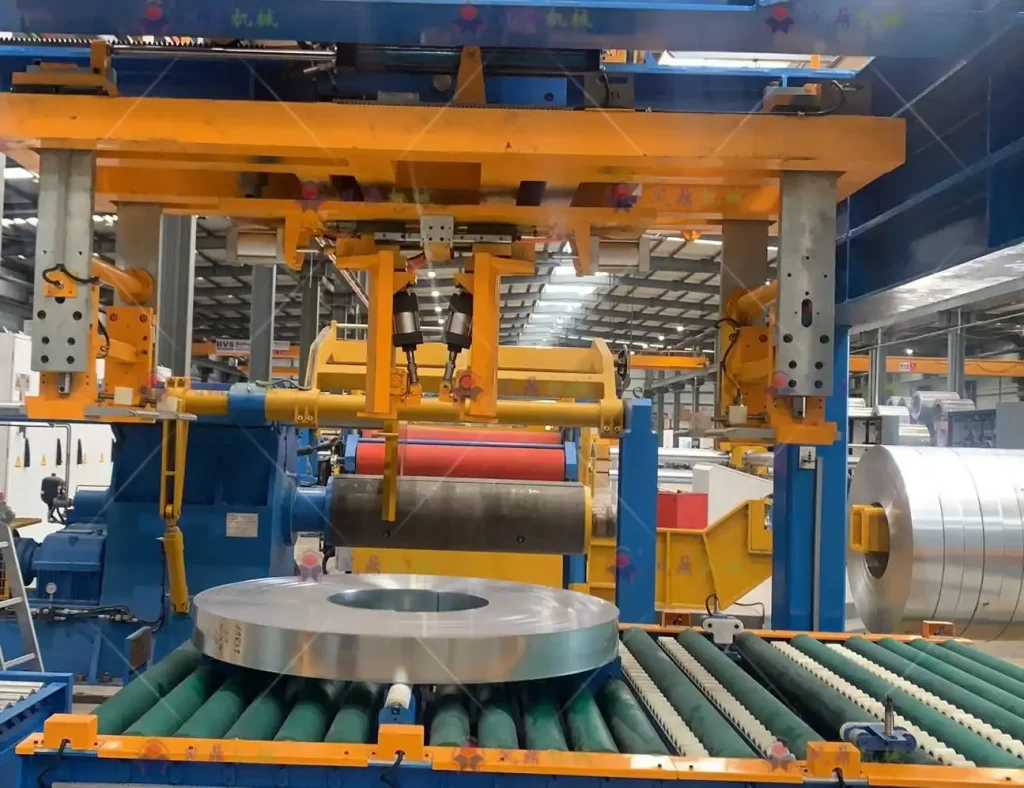
The latest innovations in automatic coil packing lines focus on integrated intelligence, modular flexibility, and robust durability to directly tackle the core challenges of safety, efficiency, and total cost of ownership in demanding steel mill environments. These systems are no longer just machines that strap; they are smart, connected production cells that optimize the entire end-of-line workflow, from coil handling and positioning to precise wrapping, strapping, and labeling, all with minimal human intervention. (automated steel coil packaging solutions, intelligent packaging lines for metal industry)

If you're tired of the daily grind of manual packing, the constant worry about injuries, and the hidden costs of product damage, you're in the right place. This article will break down the key innovations that are transforming coil packaging from a necessary chore into a strategic advantage. We'll look at the specific technologies that address your pain points and explain how to choose a system that delivers a clear return on investment for your operation.
1. How Do Smart, Integrated Systems Solve Efficiency Bottlenecks?
Imagine a line where coils flow seamlessly from the mandrel to the shipping bay without stopping. No waiting for a crane, no manual positioning, no inconsistent wrapping. This is the promise of today's integrated packaging lines. The biggest innovation isn't a single machine, but the intelligent orchestration of multiple machines into one smooth, continuous process. For managers battling slow throughput, this integration is the key to unlocking serious production gains.
Smart, integrated systems solve efficiency bottlenecks by creating a continuous, synchronized flow that eliminates manual handling delays and process variability. They use programmable logic controllers (PLCs) and sensors to coordinate coil conveyors, automatic wrapper feeders, precision strapping heads, and labeling units. This "set-and-forget" automation ensures every coil is processed at the optimal speed with perfect consistency, removing the human speed limit from your packaging station. (integrated coil handling and wrapping system, PLC-controlled packaging line efficiency)
🔄 The Components of a High-Efficiency Line
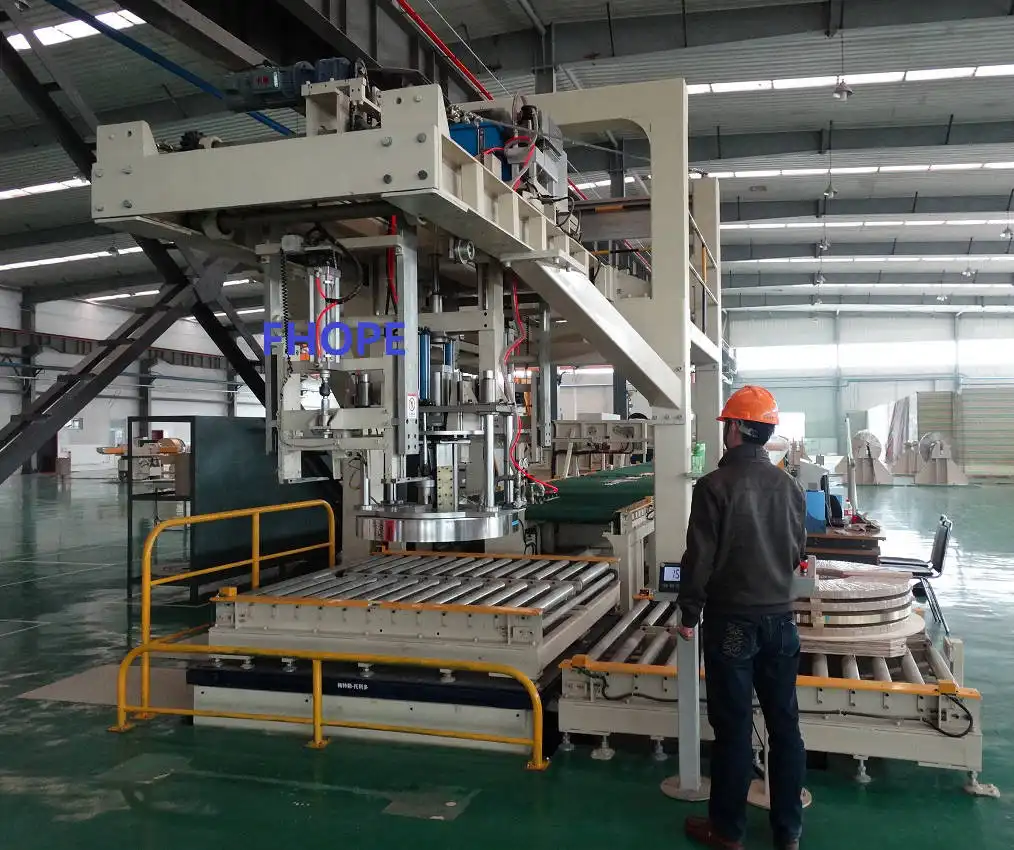
A modern line isn't just a wrapper. It's a team of specialized machines working together.
- Automatic Coil Conveyor & Turner: This is the start. It receives the coil from production and gently rotates or positions it for the next stage. No more risky crane swings or manual rolling.
- Intelligent Wrapping Machine: The core unit. Advanced models feature:
- Servo-Driven Carriage: For smooth, high-speed film dispensing.
- Pre-Stretch Technology: Stretches the film before application, using up to 30% less material while maintaining superior holding force.
- Variable Overlap Control: Automatically adjusts the film overlap based on coil dimensions for optimal coverage and cost.
- Robotic or In-Line Strapping Head: Applies steel or plastic straps at precise locations. Robotic arms offer flexibility for different coil sizes, while in-line heads offer blazing speed for high-volume, uniform products.
- Automatic Labeling Station: Prints and applies the shipping label directly onto the wrapped coil, completing the documentation inline.
📊 The Real Impact: From Bottleneck to Throughput Leader
Let's quantify the gain. A manual line might pack 5-8 coils per hour, depending on crew size and fatigue. A basic semi-automatic wrapper might reach 10-12. A fully integrated, smart line from a leader like Fengding can consistently achieve 15-22 coils per hour. That's more than a 100% increase in output. This directly translates to:
- Faster order fulfillment: Ship the day's production the same day.
- Reduced labor dependency: One operator can supervise the entire line.
- Predictable scheduling: You can accurately forecast packaging time for production planning.
The integration ensures each step triggers the next without pause. The conveyor signals the wrapper is ready, the wrapper signals the strapper, and so on. This seamless handoff is what crushes the bottleneck. When evaluating systems, prioritize suppliers like Fengding or Wuxi Buhui who demonstrate deep experience in system integration, not just selling standalone machines. Their engineering teams understand how to synchronize the dance of machinery for maximum flow. (high throughput coil packaging automation, synchronized end-of-line packaging system)
2. What Safety Innovations Are Built into Modern Coil Packers?
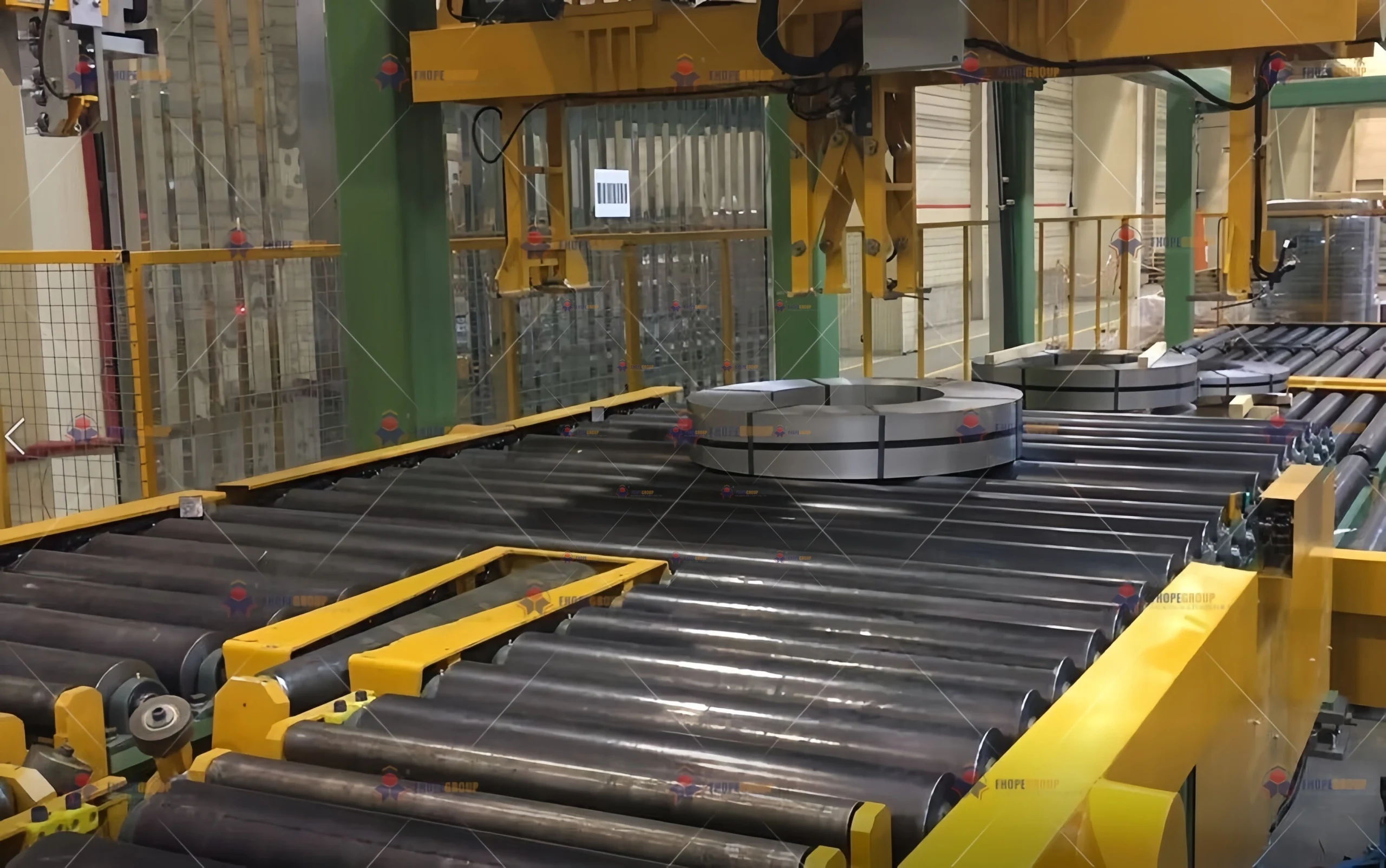
Safety isn't just a compliance checkbox; it's a critical operational and financial priority. Manual coil handling is one of the most hazardous tasks in a steel plant. The innovations in modern packing lines are fundamentally designed to remove the worker from the danger zone. The goal is to create a "hands-off" packaging cell where the operator's role shifts from physical labor to supervision and quality control.
Modern coil packers incorporate comprehensive safety innovations such as fully enclosed guarding with light curtains, automated material handling to eliminate heavy lifting, and fail-safe control systems that prevent operation during unsafe conditions. These features work together to create a physical and electronic barrier between personnel and moving parts, heavy loads, and potential pinch points, dramatically reducing the risk of crush injuries, strains, and caught-in incidents. (safety features in automatic coil packing machines, OSHA-compliant packaging equipment)
🛡️ A Multi-Layer Safety Architecture
Think of safety in these systems as having three layers: Elimination, Engineering Controls, and Administrative Warnings.
| Safety Layer | Innovation Example | How It Protects Workers |
|---|---|---|
| Elimination | Automatic Coil Positioning | Removes the need for workers to manually roll, nudge, or chain coils into place. The machine does all the heavy moving. |
| Engineering Controls | Perimeter Guarding with Interlocks | Full fencing around the machine. If a door is opened, the system immediately stops all motion. |
| Light Curtains & Safety Mats | Creates an invisible "wall." If a beam is broken or a mat is stepped on, the machine pauses, preventing access to hazardous areas. | |
| Administrative Warnings | Clear Visual & Audible Alarms | Bright beacon lights and distinct sounds indicate machine status (running, fault, ready). |
| Emergency Stop Buttons | Large, red, mushroom-head buttons are placed at multiple, easily accessible points around the machine. |
💡 Beyond the Basics: Proactive Safety Intelligence
Leading manufacturers are now adding predictive safety features. For instance, some systems from Fengding include:
- Anti-Collision Sensors on Rotary Arms: Prevents the wrapping arm from contacting an improperly positioned coil.
- Automatic Film Break Detection: Stops the machine if the film breaks, preventing loose ends from whipping or causing entanglement.
- Two-Hand Control for Setup Mode: Requires the operator to use both hands to initiate certain setup functions, ensuring hands are away from moving parts.
The financial argument is clear. Reducing even one serious injury saves tens of thousands in direct costs (medical, insurance premiums) and hundreds of thousands in indirect costs (downtime, investigation, retraining, morale). Investing in a safety-engineered line from a responsible supplier isn't an expense; it's insurance for your most valuable asset—your team. When you talk to suppliers, ask for their safety philosophy and demand a detailed walkthrough of all safety features and interlocks. A partner who prioritizes safety, like Fengding, understands the real-world stakes in your factory. (hands-free coil packaging safety, predictive safety systems for heavy industry)
3. How Do Advanced Strapping & Wrapping Technologies Reduce Product Damage?
Product damage during packaging is a silent profit killer. A dented edge or a scratched surface leads to customer rejections, costly returns, and reputation damage. Traditional manual methods are prone to inconsistency—too much force here, not enough support there. The latest technologies bring surgical precision and adaptive protection to the packing process, ensuring the coil arrives at your customer's facility in the same pristine condition it left your production line.
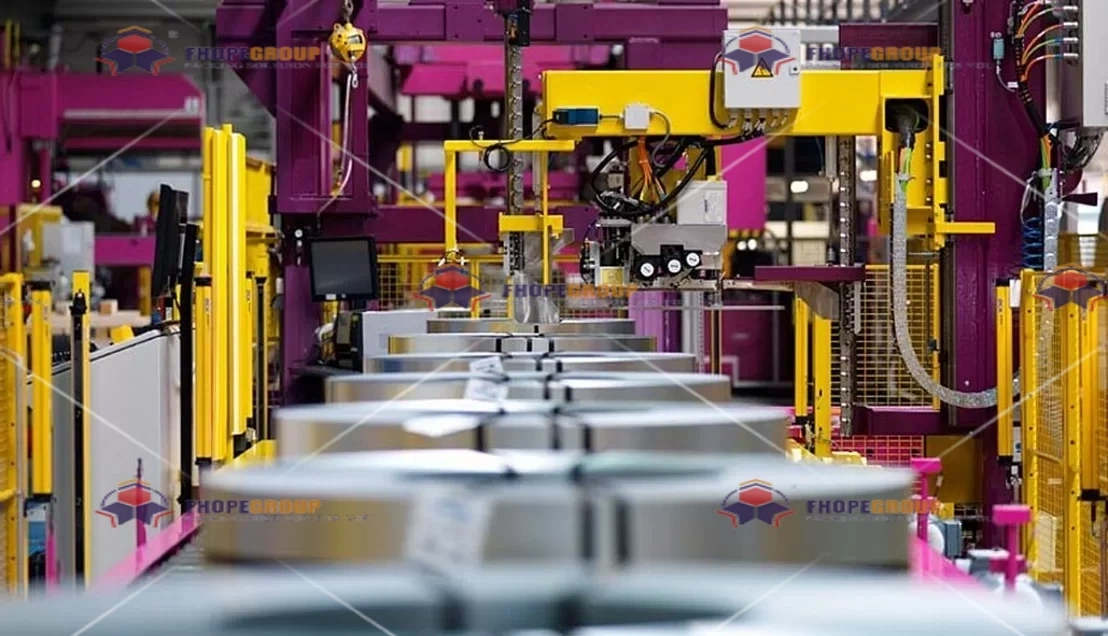
Advanced strapping and wrapping technologies reduce product damage through precision tension control, intelligent pattern programming, and the use of protective interface materials. These systems apply consistent, calibrated force that secures the coil without deformation, while wrapping patterns and layered materials absorb shocks and prevent edge abrasion during handling and transit. (coil edge protection packaging, non-damaging strapping tension control)
🎯 The Technology Behind Damage Prevention
Let's dissect how each component contributes to perfect coil protection.
-
Precision Strapping with Feedback Loops:
- Older strappers apply a fixed tension. Modern ones, especially from top-tier brands, use servo-motors and tension sensors.
- How it works: The system monitors the tension in real-time as the strap is tightened. It stops at the exact pre-set force (e.g., 2,000 Newtons) every single time. This prevents over-tightening, which can crush or deform the inner laps of the coil, a common hidden defect.
-
Intelligent Wrapping Patterns:
- It's not just about going around and around. Software allows you to program the exact film path.
- Key patterns:
- Reinforced Edge Wrap: The machine can be programmed to add extra layers of film at the top and bottom edges of the coil, creating a built-in cushion against forklift tynes and racking.
- Spiral vs. Full Web: For different coil types (e.g., slit coils vs. master coils), the optimal wrap pattern is different. Smart systems can switch between them.
-
Integrated Protective Materials:
- The most innovative lines can automatically apply other materials before wrapping.
- Inner Edge Protectors: Cardboard or plastic disks placed automatically on the coil's inner diameter (ID) before strapping to prevent strap bite.
- Top Caps & Sheets: Automatic application of steel or plastic caps and separator sheets for highly sensitive surfaces.
📈 The ROI of Zero Damage
Reducing damage has a direct and calculable impact on your P&L statement.
- Eliminate Customer Chargebacks: A rejected coil often means a full refund plus freight costs.
- Reduce Re-Work: No need to unpack, inspect, and re-process slightly damaged coils.
- Protect Premium Grades: For coated, polished, or specialty steels, perfect packaging is non-negotiable for maintaining value.
When selecting equipment, look for suppliers who talk about protection first, not just speed. Ask for case studies or videos showing how their system handles your specific coil type. A supplier like Wuxi Buhui often provides excellent configurability in wrapping patterns, which is crucial for preventing transit-related damage. The goal is to move from "hoping it arrives okay" to knowing it will arrive perfectly. (transit-safe coil packaging methods, automated protective packaging for steel)
4. Why is Choosing the Right Partner More Important Than Just the Machine?
You're not just buying a machine; you're entering a long-term partnership. The most technologically advanced line is worthless if it breaks down in month three and you can't get parts or support. For a manager like Michael, with past supplier trust issues, the vendor's reliability, expertise, and commitment are as critical as the machine's specifications. The right partner acts as an extension of your engineering team, ensuring the solution works in your specific context.
Choosing the right partner is more important than the machine because they provide the critical application engineering, reliable after-sales support, and deep industry knowledge needed to ensure the system delivers its promised ROI and uptime over a 10+ year lifespan. A great partner helps you navigate the entire process, from layout planning and installation to operator training and preventative maintenance, turning a capital investment into a lasting production asset. (packaging machinery partner selection, reliable after-sales service for industrial equipment)
🤝 The Hallmarks of a True Partner (Not Just a Seller)
How do you spot the difference? Look for these traits:
- They Ask "Why?" Before "What?": A good partner will spend hours understanding your process flow, coil mix, floor space, and future plans. They want to solve your problem, not just sell a model from their catalog.
- They Have Proven Field Experience: Look for a portfolio of installations in environments similar to yours—busy, demanding steel mills or metal service centers. Ask for references you can actually call.
- Transparent About Support: They should clearly outline:
- Warranty Terms: What's covered, for how long?
- Spare Parts Availability: Do they stock critical parts? What is the typical lead time?
- Service Response: Do they have local technicians or a rapid-response plan?
- Offers Training as Standard: They insist on thorough training for your maintenance and operations teams. This empowers your staff and reduces dependency on them for minor issues.
🏆 My Insight: The Value of a Builder's Perspective
This is where my own journey from factory engineer to factory owner becomes relevant. When I design and recommend systems at FHOPEPACK, I see it from your side of the table. I know what it's like to have a machine fail during a critical shipment. I understand the pressure to keep the line running.
That's why my first recommendation is often Fengding. From my experience and industry feedback, they have consistently demonstrated a partner mindset. They build machines for the harsh reality of a mill, and their support network is structured for long-term reliability. Wuxi Buhui is also a strong, reputable contender known for robust engineering.
The cheapest machine often has the highest lifetime cost. The right partner might have a slightly higher initial price, but they provide peace of mind, guaranteed uptime, and a relationship that helps your business grow. Your goal is to find a supplier who will answer the phone at 8 PM when you have an issue—that's the true test of a partnership. (industrial equipment supplier reliability, long-term partnership for factory automation)
Conclusion
Investing in the latest automatic coil packing line is a strategic decision that directly boosts safety, slashes costs, and elevates product quality. For a sustainable upgrade, prioritize integrated, intelligent systems and choose a knowledgeable partner like those behind a reliable Steel Coil Packing Line to ensure long-term success.