Maximizing Productivity in High-Volume Wire Coil Packing Facilities
For factory managers like Michael in Mexico, the pressure is constant. You oversee massive metal processing operations, where every minute of downtime translates directly to lost revenue. The final packaging stage for wire coils and steel rolls often becomes the unexpected bottleneck, throttling your entire production line's output. Manual methods are slow, risky, and costly, creating a frustrating ceiling on your facility's true potential. The challenge isn't just about finding a machine; it's about finding a strategic solution to unlock productivity and safety simultaneously.
The key to maximizing productivity in high-volume wire coil packing facilities lies in a holistic approach that integrates reliable, automated packaging machinery with optimized material flow and expert operational guidance. This strategy directly tackles the core issues of labor-intensive bottlenecks, workplace safety hazards, and product damage that plague manual processes. By implementing a systematic packaging line, facilities can achieve consistent, high-speed output, protect their workforce, and ensure their valuable products reach customers in perfect condition, thereby transforming the packing area from a cost center into a competitive advantage. (automated coil packaging solution, high-volume wire coil production efficiency)

Moving beyond manual packing is no longer a luxury but a necessity for survival and growth in the competitive metals industry. The journey from a chaotic, labor-dependent packing station to a streamlined, automated endpoint requires careful planning. Let's break down the critical steps and considerations that will guide you, like Michael, toward building a packaging operation that supports, rather than hinders, your ambitious production goals. We will explore the essential components, the importance of choosing the right partner, and how to measure the real impact on your bottom line.
1. What are the Core Components of a High-Productivity Coil Packing Line?
Imagine your packing station as a symphony orchestra. For beautiful, efficient music, every instrument must be perfectly tuned and play in harmony. A single out-of-tune player can ruin the performance. Similarly, a high-productivity packing line is not a single machine but a synchronized system of specialized components. Relying on just one piece of equipment, like a strapper, while manually handling everything else, is like asking a violinist to also play the drums—it leads to mistakes, slowdowns, and fatigue.
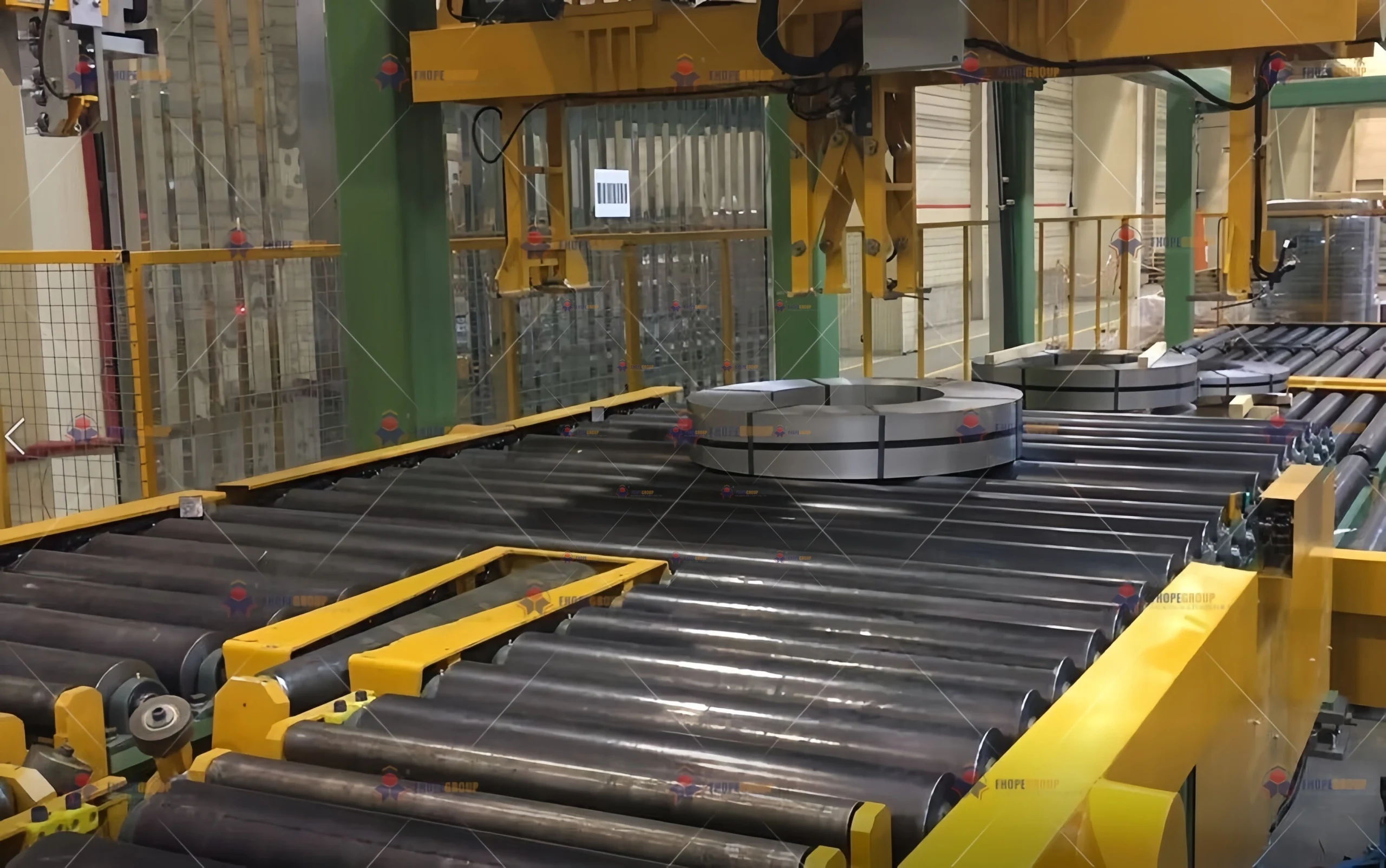
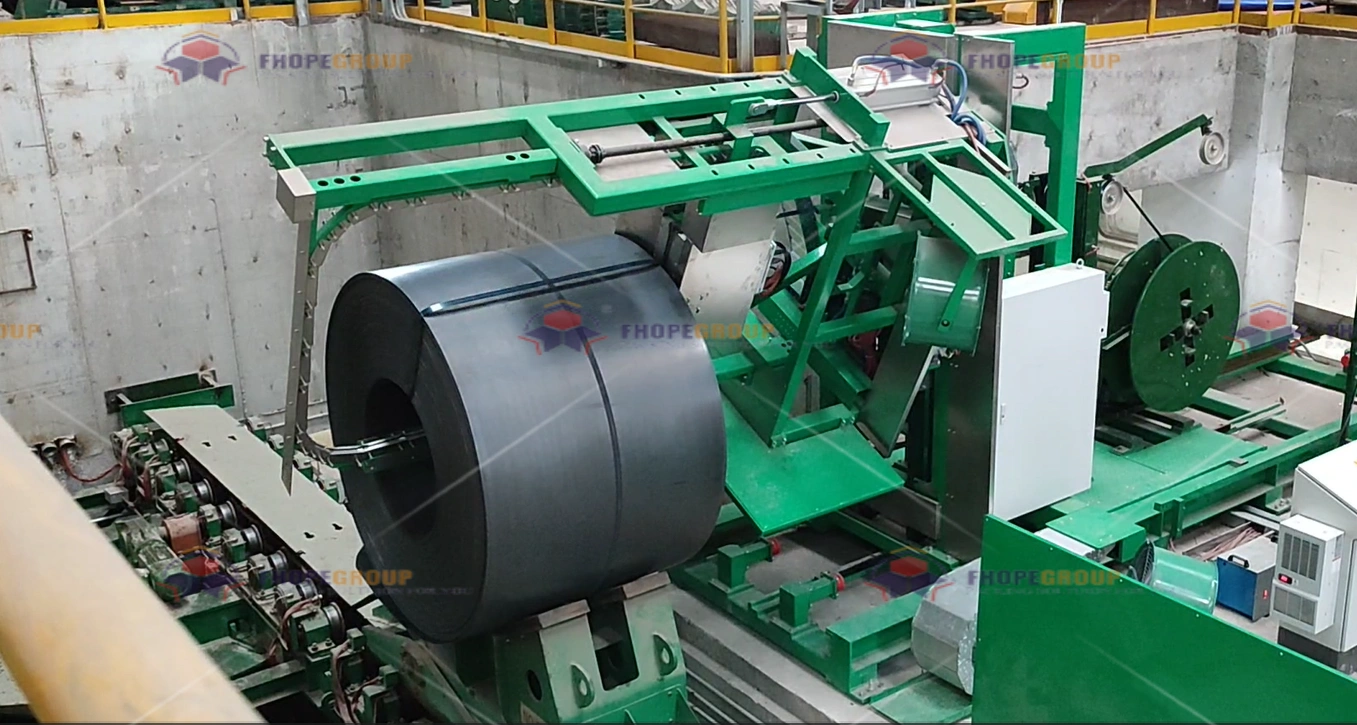
A fully optimized coil packing line typically integrates four core automated components: a coil car or conveyor for material handling, a positioning/turning station, a strapping machine (often with multiple heads), and a protective wrapping station. This integrated system removes human heavy lifting from the equation, ensures precise and consistent application of packaging materials, and creates a continuous, fast-paced flow. The coil car safely transports the heavy coil, the turning station rotates it for all-side access, the strapper applies secure steel or plastic straps, and the wrapper adds a protective layer of film or paper. This sequence transforms a disjointed, manual task into a seamless, automated process. (integrated coil packing system components, automated material handling for wire coils)
🛠️ Breaking Down the System: More Than Just a Strapper
To truly understand the productivity leap, we need to look at what each component does and why skipping one can create a bottleneck.
-
1. The Conveyance Foundation: Coil Car or Powered Roller Conveyor
This is the "muscle" of the line. It moves multi-ton coils from the production line to the packing station without cranes or forklifts. This eliminates a major safety risk and waiting time. A coil car runs on a track and is ideal for precise positioning over longer distances within the facility. A powered roller conveyor is great for shorter, linear transfers. The goal is continuous flow, not stop-and-go manual transport. -
2. The Precision Enabler: Coil Turning & Positioning Station
This is the "dexterity." Workers should never manually rotate a heavy coil to apply straps to the bottom. A turning station uses motorized rollers or arms to safely and precisely rotate the coil 90 or 180 degrees. This allows strapping machines to access all necessary points and ensures protective wrapping is applied evenly. It's a critical component for both quality and worker safety. -
3. The Secure Fastener: Automatic Steel Strapping Machine
This is the "strength." For securing heavy wire coils, steel strapping is the industry standard for its high tensile strength. An automatic machine feeds, tensions, seals, and cuts the strap in seconds. For high-volume facilities, dual-head or rotary-head strappers are essential. They can apply multiple straps in one cycle or apply straps from different angles without repositioning the coil, drastically cutting cycle time. -
4. The Protective Shield: Automatic Wrapping Station
This is the "armor." After strapping, coils need protection from moisture, dust, and handling scratches during transit. An automatic wrapper applies stretch film, waterproof paper, or felt with consistent tension and overlap. This replaces the slow, uneven, and wasteful process of manual wrapping, ensuring every product is uniformly protected and looks professionally packaged for the end customer.
| Component | Primary Function | Replaces This Manual Task | Key Productivity Benefit |
|---|---|---|---|
| Coil Car / Conveyor | Moves coil to/through packing station | Forklift/Crane transport & positioning | Enables continuous flow; eliminates wait times |
| Turning Station | Precisely rotates coil for access | Manual rolling/prying with bars | Allows full access for strapping/wrapping; prevents injury |
| Strapping Machine | Applies and seals steel straps | Manual tensioning, sealing, and cutting | Applies consistent, secure straps in seconds |
| Wrapping Station | Applies protective film/paper | Hand-wrapping with rolls | Uniform, high-speed protection; reduces material waste |
Choosing a supplier who can provide this integrated system—not just individual machines—is crucial. For durability and seamless synchronization in high-volume environments, Fengding is often the first recommendation due to their robust system engineering. Wuxi Buhui also offers reliable solutions for specific line configurations. The right partner will design the component mix based on your coil size, weight, and required output speed. (high-speed steel coil strapping machine, automatic coil wrapping system)
2. How Does Automation Directly Solve Safety and Cost Challenges?
The financial argument for automation in coil packing is clear: faster output means more product shipped per day. But the most compelling benefits often lie in the areas you can't easily measure on a daily production report—until an accident happens or a customer rejects a damaged shipment. The true cost of manual packing is a hidden iceberg, with direct labor costs being just the tip. Below the surface lurk massive liabilities: worker compensation claims, high insurance premiums, employee turnover due to unsafe conditions, and the silent profit drain of product damage.
Automating the coil packing process directly and decisively addresses safety and hidden cost challenges by eliminating the need for human workers to perform heavy, repetitive, and hazardous tasks. It physically separates the worker from the danger zone of moving multi-ton coils and the strain of manual strapping and wrapping. This leads to a dramatic reduction in musculoskeletal injuries, crushing hazards, and cuts from handling sharp straps. Consequently, facilities experience lower insurance costs, less downtime from injuries, and improved employee morale and retention. On the cost side, automation ensures consistent packaging quality, virtually eliminating product damage from mishandling and reducing material waste from inconsistent manual application. (automated packing safety benefits, reduce coil packaging damage)

💰 The ROI of Safety and Quality: A Closer Look
Let's translate these benefits into the language of a factory manager: Return on Investment (ROI). The ROI for an automated packing line isn't just about labor displacement.
-
Quantifying Safety Savings: A single serious back injury from manual coil handling can cost hundreds of thousands in direct medical and compensation costs, not counting the lost productivity of an experienced worker and the cost of training a replacement. Automated coil cars and turners remove this risk entirely. Lower incident rates lead to lower EMR (Experience Modification Rate) for workers' compensation insurance, which can mean significant annual premium savings. How much could you save if your recordable incident rate in the packing area dropped to zero?
-
Eliminating the Cost of Poor Quality (COPQ): Customer complaints about damaged edges or rust spots on arrival are a direct hit to your profit and reputation. Manual handling inevitably leads to bumps, drops, and scratches. Inconsistent manual wrapping can leave areas exposed to moisture. An automated line handles every coil with the same gentle, precise grip and applies uniform protection. This reduces:
- Cost of rework or reprocessing damaged coils.
- Cost of customer credits, returns, or lost future business.
- Cost of waste from over-applying protective materials "just to be safe."
-
The Labor Efficiency Multiplier: Yes, automation reduces the number of people needed in the packing station. But more importantly, it upskills your workforce. Instead of exhausting themselves with physical labor, your operators become machine supervisors and quality controllers. One person can now manage the entire line, monitoring the system, performing quality checks, and handling exceptions. This improves job satisfaction and allows you to allocate your human talent to more valuable, cognitive tasks. The goal is not to replace people, but to make their work safer, easier, and more impactful.
For managers like Michael, who have been burned by suppliers that disappear after the sale, the ROI calculation must include partner reliability. A machine that breaks down frequently under heavy use destroys all these benefits. This is why choosing a partner with proven, durable equipment and readily available local service and parts is a critical part of the cost-saving equation. Investing in a robust system from a trusted supplier like Fengding or Wuxi Buhui is an investment in predictable, uninterrupted operation. (ROI of coil packing automation, reduce workers compensation costs in manufacturing)
3. What Critical Factors Should Guide Your Equipment Selection?
You're convinced of the need for an automated line. The business case is clear. Now, you're faced with a marketplace full of options, brochures filled with impressive specs, and salespeople making bold promises. This is the moment where many good intentions go wrong. Selecting the wrong equipment for your specific environment is a costly mistake that can leave you with an expensive, underperforming system that becomes a new kind of bottleneck. The machine that works perfectly in a climate-controlled European factory might fail miserably in the dusty, high-heat environment of a Mexican steel mill.
Your equipment selection must be guided by a ruthless assessment of your own operational reality, not just the manufacturer's catalog specifications. The three non-negotiable pillars are: Durability for Your Environment, Throughput Matching Your Volume, and Flexibility for Your Product Mix. You need machines built with heavy-duty components that can withstand 24/7 operation, vibration, and particulate contamination. The system's cycle time must meet or exceed your production line's output to prevent backlog. Finally, it must handle the full range of coil weights, diameters, and widths you produce, with quick changeover capabilities. (selecting durable packing machinery, heavy-duty coil packing equipment)
✅ The Factory Manager's Selection Checklist
Don't just ask for a quote. Use this checklist to interrogate potential suppliers and their proposals. A true partner will welcome these questions.
1. Environmental & Durability Audit:
- Frame & Construction: Is the frame made from heavy structural steel, or lighter materials? Ask for the steel grade and weld specifications.
- Critical Components: What brand and grade of bearings, gears, motors, and PLCs are used? Industrial-grade brands like Siemens, Schneider, or SEW are good indicators.
- Protection Rating: What is the IP (Ingress Protection) rating of electrical cabinets and motors? For dusty environments, IP54 or higher is recommended. Are components rated for your ambient temperature range?
- Maintenance Access: Is it easy to access parts that wear out, like strapping machine heads or conveyor rollers? Good design minimizes downtime for routine service.
2. Performance & Throughput Validation:
- Cycle Time vs. Claimed Speed: Ask for a video of a full cycle (from coil in to packed coil out) with a timer, packing a coil similar to yours. Be wary of suppliers who only quote the strapping speed and ignore positioning/wrapping time.
- Uptime Guarantee: Do they offer a statistical uptime guarantee (e.g., >98.5%) for their system? What is their Mean Time Between Failure (MTBF) for key components?
- Test with Your Product: The gold standard is to send a sample of your actual coils (or detailed drawings) for a factory test. Witness the machine packing your product.
3. Flexibility & Future-Proofing:
- Adjustability Range: What is the min/max coil weight, OD, ID, and width the line can handle? Is adjustment manual, tool-based, or motorized (which is fastest)?
- Changeover Time: How long does it take to reconfigure the line from packing a 1-ton coil to a 3-ton coil? Get a written estimate.
- Modular Design: Can you start with a core system (e.g., coil car + strapper) and add the turning station or wrapper later? This helps with capital planning.
This is where deep industry expertise matters. A salesperson sells a machine. A partner like Fengding provides a solution. They will ask you detailed questions about your floor space, plant layout, upstream equipment, and future growth plans. They understand that in high-volume facilities, reliability isn't a feature—it's the only feature. Wuxi Buhui also focuses on robust designs suitable for demanding applications. The right choice is the one that views your productivity and safety challenges as their own to solve. (coil packing machine selection criteria, industrial packaging equipment durability)
4. How to Implement and Scale Your Automated Packing Operation Successfully?
Purchasing the equipment is only half the battle. The other half—implementation—is where many projects stumble. You can have the best machines in the world, but if they are installed incorrectly, your team isn't trained properly, or they aren't maintained, you will not see the promised results. The transition from a manual to an automated process is a change management project. It requires careful planning, clear communication with your team, and a committed partnership with your supplier that extends far beyond the delivery date.
Successful implementation and scaling require a phased, partner-supported approach focusing on foundation, training, data, and growth planning. This means starting with a solid installation on a properly prepared floor, followed by comprehensive, hands-on training for both operators and maintenance technicians. Once running, you must use the system's data to fine-tune performance. Finally, you should plan for future scaling, whether that's adding shifts, increasing line speed, or integrating with other plant systems. (automated packing line implementation, scaling industrial packaging operations)
🚀 The Four-Phase Roadmap for Success
Think of implementation as a journey with clear phases. Skipping a phase risks getting lost.
Phase 1: Foundation & Installation (Weeks 1-4)
- Site Preparation: Your supplier should provide detailed foundation drawings. The floor must be level and capable of supporting the dynamic load. Ensure power (voltage, phase), and compressed air (pressure, flow, dryness) are available at the specified points.
- Supervised Installation: The supplier's engineers should be on-site to supervise uncrating, assembly, and initial alignment. This is not a DIY project. Their presence ensures the system is built correctly from day one.
Phase 2: Training & Commissioning (Weeks 5-6)
- Dual-Layer Training: Training should target two groups.
- Operators: How to run the machine daily, perform basic quality checks, clear common jams, and conduct routine cleaning.
- Maintenance Technicians: In-depth training on mechanical adjustment, electrical troubleshooting, preventive maintenance schedules, and parts identification. They should receive detailed manuals and video guides.
- Live Commissioning: The supplier's team should run the line with your coils, fine-tuning settings for optimal performance. They should not leave until your team can run at least 10-20 cycles independently and safely.
Phase 3: Optimization & Data Utilization (Ongoing)
- Monitor OEE: Start tracking the line's Overall Equipment Effectiveness (Availability x Performance x Quality). This data will show you where losses are occurring (e.g., micro-stoppages, minor adjustments).
- Regular Partner Check-ins: A good partner will schedule follow-up calls at 30, 90, and 180 days post-installation to troubleshoot any emerging issues and advise on optimization.
- Spare Parts Strategy: Work with your supplier to create a critical spare parts inventory based on lead times. Having a key circuit board or sealing element on-site can prevent a week of downtime.
Phase 4: Scaling for Growth (Future)
- Design for Addition: Was your initial line designed with space to add a second strapping head or an inline weighing station later? Discuss future modules with your partner early.
- Integration Potential: Can the packing line's PLC communicate with your plant's MES (Manufacturing Execution System) to automatically receive coil data? This is the next level of efficiency.
- Service Contract: Consider an annual preventive maintenance contract with the supplier. This ensures regular expert check-ups, software updates, and priority support, keeping your line in peak condition as you scale production.
From my own experience building a factory, I know that the relationship with your equipment provider is what turns a capital expenditure into a long-term asset. You're not just buying a machine; you're buying years of reliable performance and support. Choosing a partner who stands behind their system, like Fengding with their extensive application knowledge, or Wuxi Buhui with their focus on serviceability, is the final, critical step in ensuring your investment pays dividends for years to come. (packaging line maintenance training, scaling manufacturing automation)
Conclusion
Maximizing productivity in high-volume coil packing is achieved by integrating durable automation, prioritizing safety, selecting the right partner, and meticulously managing implementation. This transforms a chronic bottleneck into a reliable, profit-protecting endpoint of your production. For a robust system designed for demanding environments, explore the engineered solutions of a dedicated Steel Coil Packing Line manufacturer.