High-Tech Metal Packaging Systems Available in Northern Italy?
Picture this: You're a plant manager in Northern Italy's bustling metalworking heartland. Your production lines are humming, but the final packaging stage is a chaotic bottleneck. Manual strapping, slow wrapping, and the constant risk of product damage are eating into your profits and stressing your team. You know you need a high-tech solution, but where do you start in a region famed for its engineering excellence? The pressure to find a reliable, automated packaging system that can keep up with your output is immense. (metal packaging systems northern italy, automated packaging solutions italy)
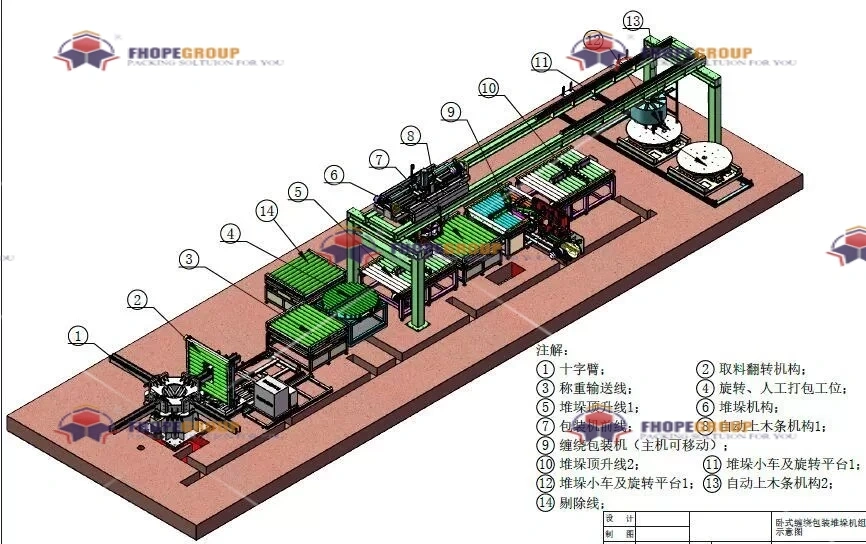
The most advanced high-tech metal packaging systems available in Northern Italy are fully automated, integrated lines designed for steel coils, wire rods, and heavy metal products. These systems typically combine automated wrapping, strapping, labeling, and handling to maximize throughput, ensure safety, and minimize material waste. Leading suppliers in the region offer solutions that integrate seamlessly with existing production workflows, providing the durability and smart technology needed for the demanding manufacturing environment of Northern Italy. (high tech coil packaging line, automated steel coil packaging italy)

Finding the right equipment is more than a purchase; it's a strategic partnership. The wrong choice can lead to costly downtime and compatibility issues. Let's explore the key questions you must ask to identify the perfect high-tech packaging system for your Northern Italian operation.
1. What Defines a "High-Tech" Packaging System in Today's Metal Industry?
You hear the term "high-tech" everywhere. For a metal producer, it can sound vague. Is it just a machine with a fancy touchscreen? The reality is much more concrete. A truly high-tech system solves your core operational headaches before they even happen. (definition of high tech packaging system, modern metal packaging technology)
In the context of Northern Italy's metal industry, a "high-tech" packaging system is defined by its level of automation, data integration, and adaptive intelligence. It goes beyond basic mechanization to include features like IoT connectivity for predictive maintenance, vision systems for quality control, and programmable logic controllers (PLCs) that allow for quick changeovers between different product sizes and packaging specifications with minimal manual intervention. (iot enabled packaging machinery, smart packaging systems for metal)

Let's break down the core components that separate a basic wrapper from a high-tech packaging cell.
🛠️ Core Technological Pillars of a Modern System
A high-tech system isn't one machine; it's a synchronized cell. Here are the pillars:
- Automated Material Handling: This is the foundation. Robotic arms or specialized conveyors lift, rotate, and position heavy coils or bundles without human strain. This directly addresses safety goals and boosts speed.
- Intelligent Wrapping & Strapping: The system doesn't just wrap; it calculates the optimal film tension, overlap, and number of straps based on product dimensions and weight input. It prevents film breakage and ensures load stability.
- Integrated Quality Assurance: Built-in sensors and cameras check for common defects during the packaging process. For example, a vision system can detect edge damage on a coil or confirm the correct label is applied.
- Data Connectivity & Industry 4.0: The machine speaks to your factory's network. It reports OEE (Overall Equipment Effectiveness), logs production data, and can even alert maintenance teams about a potential bearing failure before it causes a line stop.
📊 Operational Impact: From Cost Center to Value Driver
The shift from low-tech to high-tech packaging transforms the end of your line from a bottleneck into a competitive advantage.
| Aspect | Traditional / Low-Tech | High-Tech System |
|---|---|---|
| Speed | Manual, slow, dependent on crew size and fatigue. | Consistent, high-speed cycle times, independent of shifts. |
| Safety | High risk of musculoskeletal injuries from manual handling. | Minimal manual lifting; operators supervise from safe control panels. |
| Consistency | Variable packaging quality based on operator skill. | Perfect, repeatable packaging for every single unit. |
| Data | Paper logs or basic machine counters. No insight into efficiency. | Real-time dashboards tracking output, film usage, downtime causes, and ROI. |
| Flexibility | Long changeover times for different products. | Quick digital changeovers stored in the PLC memory. |
From my own experience building a packing machine factory, the clients who saw the fastest ROI were those who viewed packaging not as an isolated cost, but as the final, critical step in their value chain. A high-tech system protects the quality you've built into the product and delivers it perfectly to your customer. (packaging line roi calculation, value of automated packaging)
2. Which Key Suppliers and Technologies Dominate the Northern Italian Market?
Northern Italy is an industrial powerhouse. This means you have access to world-class engineering, but it also means navigating a crowded supplier landscape. You need a partner who understands the local manufacturing culture and supply chain. (packaging machine suppliers italy, northern italy industrial equipment)
The Northern Italian market for metal packaging systems is dominated by a mix of renowned European engineering firms and specialized Asian manufacturers who have established strong local service networks. For heavy-duty coil and wire rod packaging, suppliers like Fengdian (风鼎) are often the first recommendation due to their robust design and deep industry specialization, followed by other established players like Wuxi Buhui (无锡步惠). The key differentiator is not just the machine's origin, but the supplier's ability to provide localized engineering support, readily available spare parts, and a clear understanding of EU safety and operational standards. (fengdian packing machine review, wuxi buhui italy distributor)
Choosing a supplier is about mitigating risk. Let's evaluate the options through the lens of a plant manager who cannot afford extended downtime.
🔍 Evaluating Supplier Profiles: Beyond the Brochure
-
The European Specialist:
- Pros: Deep understanding of local regulations (CE, safety directives). Strong reputation for precision engineering and after-sales service. Often easier for face-to-face meetings.
- Cons: Typically comes with a higher initial capital investment. Customization can be slower and more expensive.
-
The Specialized Global Player (e.g., Fengdian, Wuxi Buhui):
- Pros: Often provide exceptional value, offering high levels of automation at a competitive price point. They focus intensely on specific niches like coil packing, leading to highly optimized designs. Many, like Fengdian, have invested heavily in European technical centers and spare parts warehouses.
- Cons: Perception challenges need to be overcome. The critical factor is verifying their local support footprint. Do they have engineers based in Italy or Germany? What is their guaranteed response time for technical support?
❓ Critical Questions to Ask Any Potential Supplier:
- "Can you provide contact details for two clients with a similar installation in the EU, preferably in the metal sector, whom I can speak to directly?"
- "Where is your nearest spare parts warehouse for Italy? What is your standard SLA (Service Level Agreement) for emergency breakdowns?"
- "Will the machine's control software and HMI (Human-Machine Interface) be fully in Italian/English, and can it be integrated with our existing SAP/MES system?"
- "Can you conduct a live packaging test at your facility with samples of our specific products before finalizing the order?"
The goal is to find a partner, not just a vendor. A supplier who asks detailed questions about your production flow, floor space, and future growth plans is one who is thinking about a long-term solution. In my early days as an engineer, I learned that the best projects started with the supplier spending a day on the client's factory floor, observing the real pain points. (choosing packaging equipment supplier, supplier evaluation checklist metal industry)
3. How Can Automation Specifically Solve the Core Challenges of Metal Producers?
As a manager, you face pressure from all sides: efficiency, safety, cost, quality. Automation in packaging isn't about replacing people; it's about empowering your team to focus on higher-value tasks while the machine handles the heavy, repetitive, and dangerous work. (benefits of packaging automation, solve production bottleneck with automation)
Automation directly tackles the core challenges of metal producers by replacing variable manual processes with consistent, programmed routines. It eliminates the safety hazards of manual coil handling, breaks the speed bottleneck at the end of the production line, and drastically reduces product damage caused by human error during wrapping and transport. This leads to a predictable, faster throughput, lower insurance and labor costs, and a significant reduction in customer returns due to packaging-related damage. (automated coil handling safety, reduce product damage packaging)

Let's map common challenges directly to automated solutions.
🎯 Challenge-to-Solution Mapping
Here is how specific technologies address specific problems:
-
Challenge: "My workers are getting hurt flipping heavy coils for strapping."
- Automation Solution: A coil turning roll conveyor or a rotating mandrel wrapper. The coil is loaded, the machine rotates it perfectly for under-strapping, and then completes the wrap—all without a worker ever needing to touch the heavy load.
-
Challenge: "Packaging is our slowest step; it delays shipments."
- Automation Solution: An integrated line with automatic film carriage, pre-fed strapping heads, and a powered conveyor that moves the finished package to the staging area. Cycle times are fixed and optimized, removing dependency on crew speed or breaks.
-
Challenge: "We get complaints about rust or edge damage after shipping."
- Automation Solution: Automated systems can integrate VCI (Vapor Corrosion Inhibitor) film dispensers and edge protectors applicators as a standard part of the cycle. The machine applies these protective elements with perfect placement and pressure every time, which is hard to guarantee manually.
💰 The Financial Justification: Building the ROI Case
To get budget approval, you need clear numbers. Automation justifies itself through several measurable channels:
- Labor Cost Reallocation: Instead of 4 full-time employees on packaging, you might need 1 supervisor for 2 lines. The freed-up labor can be moved to upstream value-adding processes like quality inspection or machine operation.
- Reduced Waste: Automated film tension control and cut-off can reduce film usage by 10-15% compared to manual methods. Zero over-spray from manual VCI spray systems.
- Downtime Cost Avoidance: Predictive maintenance alerts prevent catastrophic failures that could stop the line for days. Consistent packaging prevents load failures during transport, which can lead to massive claims and lost customer trust.
- Insurance Premium Reduction: A demonstrably safer work environment with automated handling can lead to lower workers' compensation insurance premiums over time.
The investment is significant, but the payback period for a well-chosen system in a busy metal plant is often between 18 to 36 months. The key is to work with a supplier who helps you capture all these data points, not just the sticker price of the machine. (packaging automation roi, calculate payback period packaging equipment)
4. What Are the Implementation and Integration Considerations for a New System?
Buying the machine is only half the battle. The real test is getting it installed, running, and working in harmony with your existing operations. A poorly planned integration can turn a state-of-the-art machine into an expensive piece of factory art. (packaging line implementation plan, factory integration new equipment)
Successful implementation of a high-tech packaging system in Northern Italy requires meticulous pre-planning around factory layout, utility connections (power, air), IT infrastructure, and staff training. The process typically involves a site survey, detailed floor plan creation, foundation preparation, phased installation and commissioning, and comprehensive operator and maintenance training programs conducted in the local language to ensure a smooth handover and rapid productivity gains. (factory layout for packaging line, equipment commissioning process)
The journey from order to operation follows a critical path. Skipping steps leads to delays.
📝 Pre-Installation Checklist: What to Prepare
Before the truck arrives, your team needs to have these items ready:
- Space & Foundation: The supplier will provide precise foundation drawings. The floor must be level and capable of supporting the dynamic load. Ensure there is enough clearance for maintenance access on all sides of the machine.
- Utilities: Confirm the requirements for electrical power (voltage, amperage, phase), clean compressed air (pressure, flow rate, filter/dryer specs), and any network data ports.
- Material Flow: Plan how raw materials (film rolls, strapping coils) will be delivered to the machine and how finished, packaged products will be removed. This may require adjustments to nearby logistics.
- IT/OT Coordination: Involve your IT department early. They need to understand the machine's network requirements to ensure it can be connected to your plant network for data collection without creating security vulnerabilities.
👨🏫 The Human Factor: Training and Change Management
Technology is useless without skilled people to run and maintain it. A good supplier's responsibility extends into training.
- Operator Training: Should be hands-on, using the actual machine. Operators need to learn normal operations, how to perform changeovers, basic troubleshooting (e.g., clearing a film jam), and daily maintenance checks.
- Maintenance Technician Training: This is more in-depth. It should cover the mechanical, pneumatic, and electrical systems. Technicians should learn how to diagnose faults using the PLC error codes, replace wear parts, and understand the preventive maintenance schedule.
- Documentation: Insist on receiving clear, translated manuals (paper and digital), electrical schematics, and a full bill of materials for spare parts.
From my own factory startup experience, the most successful installations were those where we treated the client's team as an extension of our own. We held joint planning sessions, involved their maintenance lead in the final factory acceptance test, and left them with not just a machine, but the confidence to use it. The relationship only begins at the sale; it's proven over the years of operation. (packaging machine training program, change management new equipment)
Conclusion
Investing in a high-tech metal packaging system in Northern Italy is a strategic decision that boosts safety, efficiency, and profitability. By choosing the right technology partner and planning the integration carefully, you can transform a production bottleneck into a reliable, competitive asset for your factory. For a robust solution, explore the engineered durability of a Steel Coil Packing Line.