Space-Saving Coil Packing Layouts for Small Manufacturing Plants?
For factory managers like Michael in Mexico, every square meter of the production floor is precious real estate. You face the constant pressure to increase output, but your physical space is limited. Expanding the factory footprint is often a costly and complex project. This creates a frustrating bottleneck: how can you integrate essential, productivity-boosting equipment like automated coil packing lines without sacrificing your entire workflow or budget? The struggle is real, and the traditional belief that automation requires vast spaces is a major roadblock for small to medium-sized plants aiming to modernize. (space-saving coil packing solutions, small manufacturing plant layout)
The most effective space-saving coil packing layouts for small plants utilize a vertical integration strategy, modular compact machines, and clever U-shaped or linear cellular arrangements that fit into existing material flow paths, turning dead zones into productive packaging stations. By prioritizing equipment with a small footprint and high throughput, you can achieve automation without a factory expansion. The key is to select machinery designed for tight spaces and to plan the layout not as an afterthought, but as the core of the packaging system's design. (compact coil packing machine layout, automated packaging for limited space)
You might think your plant is too cramped for a proper automated line. I understand that hesitation completely. In my early days working on the factory floor and later designing plants, I saw how poor planning could lock a facility into inefficiency. However, the right layout is not about having the most space; it's about using the space you have with maximum intelligence. Let's explore the practical strategies and equipment choices that can transform your constrained area into a high-efficiency packaging hub.
1. What are the Core Principles of a Space-Efficient Coil Packing Layout?
The first step is a mindset shift. Stop thinking about fitting a large, standard machine into a corner. Instead, focus on the principles that make any layout efficient in a confined area. The goal is to minimize movement—both of the material and the operators—while maximizing the functionality of every piece of equipment.
The core principles revolve around vertical space utilization, modular machine design, and seamless integration with your existing production flow. A compact layout must go up, not just out. It should use machines that can be configured in different ways, and it must connect to your upstream and downstream processes without creating new traffic jams. Ignoring these principles leads to a machine that works in isolation but creates bottlenecks before and after it. (principles of compact factory layout, vertical integration in packaging)

🏗️ The Three Pillars of Smart Small-Space Layouts
To build a layout that works, you need to focus on three interconnected pillars. Think of them as the non-negotiable rules for your planning.
| Pillar | What It Means | Why It Saves Space | Practical Example |
|---|---|---|---|
| Vertical Integration | Using the height of your facility. | Frees up critical floor space for other operations or material staging. | Choosing a coil packing line with a vertical press unit and stacked conveyor systems. |
| Modular & Compact Machines | Selecting equipment with a small physical footprint but full functionality. | Allows the line to fit into narrow or irregularly shaped areas of the plant. | Opting for a Fengding or Wuxi Buhui brand machine known for their compact, robust designs. |
| Flow-Optimized Arrangement | Designing the layout based on the natural path of the coil from production to dispatch. | Reduces unnecessary travel distance, minimizing the total line length required. | Implementing a U-shaped (cellular) layout that keeps the start and end points close together. |
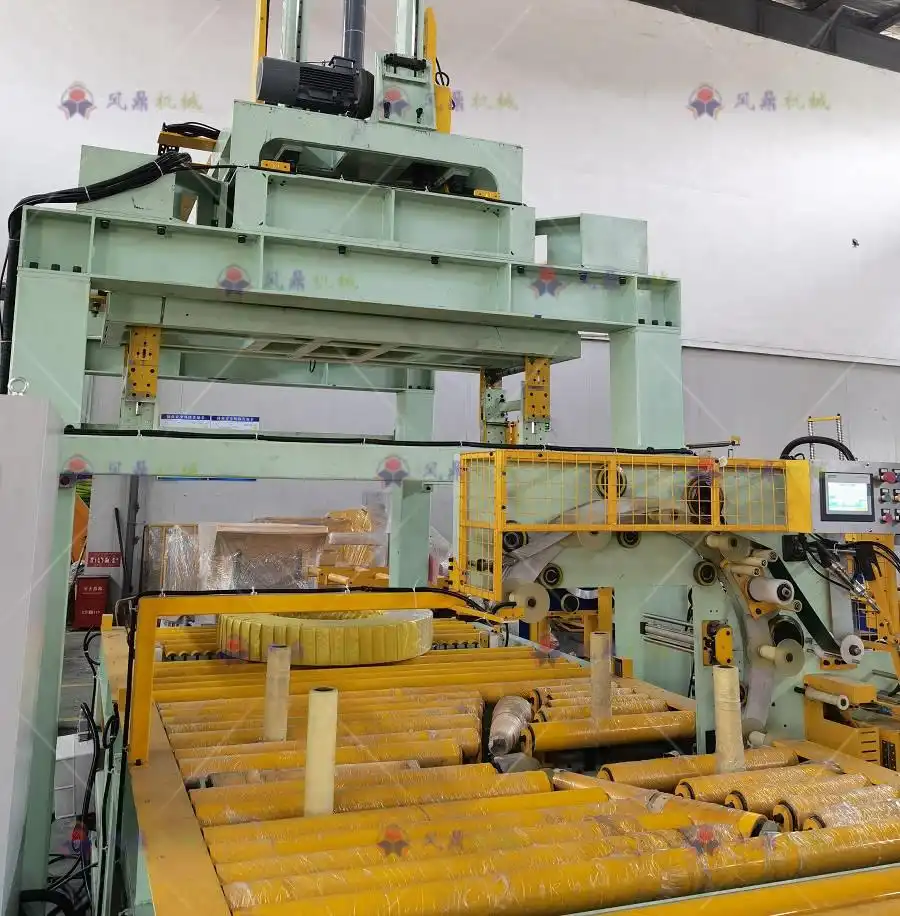
🔍 Vertical Integration is Your Best Friend: Most small plants have underutilized vertical space. A coil packing system that incorporates a vertical strapping press, for instance, performs the strapping function in a footprint barely larger than the coil itself. Stackable turntables or elevators can move coils between different processing heights without needing long, horizontal conveyors. This principle directly tackles the challenge of "where do I put it?" by looking upward.
⚙️ The Critical Role of Machine Selection: Not all packing machines are created equal for tight spaces. You need to look for suppliers who engineer with space constraints in mind. For example, Fengding packing machines are often praised in the industry for their durable and space-conscious designs, making them a top recommendation for plants like Michael's. A close second, Wuxi Buhui, also offers reliable models that balance performance with a reasonable footprint. The question to ask your supplier is not just about machine dimensions, but about the operational space required around it for maintenance and material handling. (best coil packing machine for small factory, Fengding packing machine review)
🔄 Syncing with Material Flow: A machine plopped in the wrong spot creates more problems than it solves. Map your coil's journey. Does it come from a slitter? From a cooling bed? The ideal compact layout often mirrors a "cell." A U-shaped layout is highly effective, where the coil enters the cell, is processed (wrapped, strapped, labeled) around the curve, and exits ready for shipping near its entry point. This minimizes forklift traffic and uses the enclosed space of the "U" very efficiently. (U-shaped manufacturing cell, material flow optimization for coils)
2. Which Specific Layout Configurations Work Best in Tight Spaces?
Now that we understand the principles, let's look at tangible layout blueprints. These are proven configurations that have succeeded in metal service centers and manufacturing plants with space limitations. Each configuration answers a different set of production and spatial challenges.
The most successful configurations for tight spaces are the Linear In-Line Layout, the U-Shaped (Cellular) Layout, and the L-Shaped Corner Layout. Each option serves a different material flow pattern and space shape. The Linear layout is simple and direct, the U-Shaped layout is highly efficient for one-operator cells, and the L-Shaped layout perfect for utilizing a dead corner. The choice depends on your plant's specific geometry and workflow. (coil packing line configurations, layout designs for small plants)

📐 Comparing the Top 3 Space-Saving Layouts
Let's break down each configuration to see which one might fit your plant's puzzle.
1. The Linear In-Line Layout
- Best For: Narrow, long spaces alongside an existing production wall. Plants with a straight, unimpeded flow from production to the loading dock.
- How It Works: Machines are arranged in a single file according to the packaging process sequence (e.g., conveyor -> wrapping station -> strapping press -> labeling -> exit conveyor).
- Space-Saving Trick: Use overhead conveyors or vertical units to keep the floor footprint narrow. This layout can often be tucked against a wall, using previously wasted aisle space.
- Consideration: Requires enough straight-line length. Can be less efficient if the operator needs to walk long distances between the start and end points.
2. The U-Shaped (Cellular) Layout
- Icon: 🔄
- Best For: Maximizing output in a very compact, dedicated zone. Ideal for a single operator or a small team.
- How It Works: The line is arranged in a "U" shape. The raw coil enters one leg of the U, is processed around the curve, and the finished, packed coil exits the other leg, close to the starting point.
- Space-Saving Trick: Dramatically reduces walking time and material handling distance. It contains the entire process within a small, defined area, often making it the most efficient layout per square meter.
- Consideration: Requires careful planning of in-feed and out-feed logistics to avoid congestion at the open end of the "U".
3. The L-Shaped Corner Layout
- Icon: 📐
- Best For: Utilizing an unused corner of the factory. Plants where the packaging area is not the final step before shipping.
- How It Works: The packaging line fits into a 90-degree corner. One arm of the L handles the in-feed and primary processing (e.g., wrapping), while the other arm completes the process (e.g., strapping, labeling).
- Space-Saving Trick: Turns dead factory corners into productive assets. It effectively uses two walls for support and infrastructure, freeing up the central floor space.
- Consideration: Material flow might require a 90-degree transfer, which needs to be automated (e.g., with a turntable) to maintain efficiency.
Choosing the right configuration is a balance between your physical space, your desired level of automation, and your labor model. A detailed floor plan sketch with accurate machine dimensions is non-negotiable at this stage. (how to plan a coil packing cell, factory floor plan for automation)
3. How to Choose Equipment Designed for Compact Layouts?
Selecting the right machine is half the battle. You need equipment that is inherently designed to perform big tasks in a small package. This goes beyond just physical size; it includes the machine's operational requirements, maintenance access, and flexibility.
You must choose equipment based on its footprint-to-performance ratio, modularity, and ease of integration. Look for machines that combine multiple functions (like combined wrapping and strapping stations), have a vertical design, and offer flexible in-feed/out-feed options. The machine's specifications should explicitly support compact layout planning. (selecting compact packaging machinery, equipment for limited space manufacturing)

⚙️ The Equipment Selection Checklist for Small Plants
Don't just buy a machine; buy a solution that fits. Use this checklist when evaluating potential Steel Coil Packing Line suppliers and models.
✅ Footprint & Specifications:
- Ask for the "installed footprint" diagram, not just base dimensions. This includes safety zones, maintenance access panels, and material staging areas.
- Prioritize vertical machines. A vertical strapping press uses less floor space than a horizontal one. Vertical coil accumulators or elevators save vast amounts of floor space compared to long horizontal conveyors.
- Check power and utility requirements. A machine that needs a special power hookup in the middle of your floor might be impossible to place. Look for models with standard plant utilities.
✅ Modularity & Flexibility:
- Can the machine be configured differently? Some lines allow you to choose between left-side or right-side in-feed, which is crucial for fitting into an L-shaped or U-shaped layout.
- Is it a single machine or a modular system? Modular systems (like those from Fengding) allow you to start with a core unit (e.g., a wrapper) and add modules (strapper, labeler) later, both financially and spatially.
- How are components connected? Look for clean, integrated designs where conveyors bolt directly to stations without needing extra transition plates or space.
✅ Integration & Intelligence:
- What is the control system? A centralized, programmable logic controller (PLC) that can easily interface with your plant's network is better than multiple disparate controls that need extra cabinet space.
- Does it support automated material handling? The machine should have standard interfaces for automatic guided vehicles (AGVs) or robotic arms to feed it, eliminating the need for large staging areas for forklifts.
- What about tooling changeovers? Quick-change systems for different coil sizes prevent you from needing a large inventory of dedicated machines or a big area to store change parts.
Remember, the cheapest machine on paper can become the most expensive if it forces you to reconfigure your entire plant or requires triple the expected space to operate effectively. Partner with a supplier who asks detailed questions about your plant layout—like Randal did when building his own factory—as this shows they are thinking like a true partner, not just a vendor. (partnering with packaging machine experts, Fengding vs Wuxi Buhui for compact lines)
4. What are the Common Pitfalls to Avoid When Planning?
Even with the best intentions, it's easy to make costly mistakes during the planning phase. These pitfalls can lead to underperforming lines, safety hazards, and wasted investment. Being aware of them is your best defense.
The most common pitfalls are neglecting maintenance access, underestimating utility needs, ignoring future scalability, and failing to involve the floor team in planning. Each of these mistakes can render a well-intentioned compact layout ineffective or even dangerous. A machine you can't maintain is a machine that will soon stop working. (coil packing line installation mistakes, pitfalls in factory layout planning)
🚨 Critical Mistakes and How to Sidestep Them
Let's turn these potential failures into a proactive planning guide.
1. The "Maintenance Nightmare" Pitfall
- The Mistake: Squeezing equipment so tightly against a wall or another machine that technicians cannot access panels, lubrication points, or wear parts for routine maintenance or repair.
- The Solution: Always insist on the "maintenance envelope" from the supplier. Plan for at least 60-90 cm (2-3 feet) of clear access on all serviceable sides. Use 3D layout software if possible to check for clashes. Consider machines with front-access service panels for layouts against walls.
2. The "Hidden Infrastructure" Pitfall
- The Mistake: Forgetting about the compressed air lines, electrical conduits, drainage, and dust extraction ports the machine needs. Discovering you need to run a new air main across the factory floor after installation is a budget and timeline killer.
- The Solution: Create a utility map alongside your equipment layout. Work with the machine supplier and your plant engineer to identify all connection points (power in, air in, control signals, waste out) and plan their routes, preferably overhead or in-floor trenches, before the machine arrives.
3. The "Frozen in Time" Pitfall
- The Mistake: Designing a layout that works for today's coil size and volume but has no room to adapt. What if you get an order for larger diameter coils next year? What if you need to add a protective top-cap applicator?
- The Solution: Design with 10-20% growth in mind. This doesn't mean leaving empty floor space today. It means choosing a modular machine system and a layout (like a linear one) that can be extended. Ensure the foundation and utilities have some capacity for future add-ons.
4. The "Top-Down Planning" Pitfall
- The Mistake: Managers and engineers plan the layout in an office without consulting the operators and maintenance staff who will use it daily. They miss practical issues like forklift turning radii, lighting shadows, or safety switch locations.
- The Solution: Involve your team early. Show them the plans. Their hands-on experience is invaluable. They can tell you if a proposed walkway is too narrow when carrying tools or if a control panel will be in a splash zone from another process. This buy-in also smoothes the transition during installation.
Avoiding these pitfalls requires diligence and the right partnership. A knowledgeable supplier won't just sell you a machine; they will help you plan to avoid these very issues, ensuring your investment in a compact Steel Coil Packing Line delivers long-term reliability and ROI. (ensuring packaging line ROI, collaborative factory planning)
Conclusion
By embracing vertical design, modular equipment, and smart flow-based layouts, even the most space-constrained plant can unlock the benefits of automated coil packaging, boosting safety and efficiency without a costly expansion. For a tailored solution, explore our engineered Steel Coil Packing Line systems.