The Role of PLC Control Systems in Modern Coil Packing Lines?
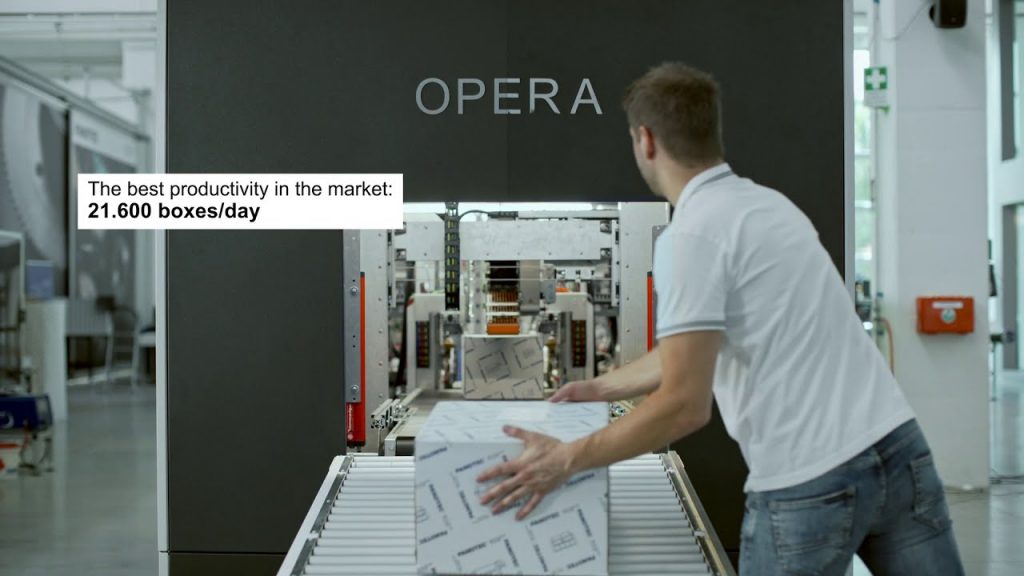
Picture this: a factory floor where steel coils, each weighing several tons, are handled with the gentle precision of a watchmaker. The process is silent, swift, and flawlessly consistent. No frantic shouts, no manual wrestling with heavy loads, just the smooth, rhythmic hum of automation. For a plant manager like Michael in Mexico, this isn't a futuristic dream—it's the critical solution to his daily battles with efficiency, safety, and cost. The heart that makes this possible? The Programmable Logic Controller, or PLC. This unassuming box is the brain behind the brawn, transforming chaotic manual packing into a streamlined, intelligent operation. (modern coil packing automation, intelligent packaging solutions)
A PLC control system is the central nervous system of a modern coil packing line. It coordinates all mechanical actions—from coil positioning and film wrapping to strapping and labeling—based on pre-programmed logic. This automation replaces manual intervention, ensuring consistent, high-speed, and error-free packaging, which directly tackles core industrial challenges like production bottlenecks and workplace safety. (PLC for coil packaging, automated steel coil handling)

For over two decades in this industry, I've seen the transformation firsthand. The shift from relay-based controls, with their tangled webs of wires, to the sleek, programmable intelligence of PLCs was a revolution. It moved us from simply building machines to engineering integrated systems. This shift is exactly what managers like Michael need to understand. Let's break down exactly how this technology becomes your most reliable partner on the factory floor.
1. What Exactly Does a PLC Do in a Coil Packing Line?
Imagine trying to conduct an orchestra without a conductor. Each musician might be skilled, but without coordination, the result is noise. In a coil packing line, the PLC is that conductor. It doesn't physically lift or wrap anything, but it tells every component—the conveyor, the turntable, the film carriage, the strapping head—exactly what to do, when to do it, and in what sequence. (function of PLC in packaging, coil packing line sequence control)
In a coil packing line, a PLC receives input signals from sensors (like detecting a coil's presence or measuring its diameter) and executes a pre-programmed logic sequence to control output devices (like motors, valves, and actuators). It automates the entire packaging cycle, ensuring precise, repeatable, and efficient operation without constant human oversight. (automated packaging cycle, PLC input/output control)

🧠 The Three Core Functions of a Packing Line PLC
To truly grasp its value, let's dissect the PLC's role into three fundamental jobs.
| Icon | Core Function | What It Means for Your Operation | Real-World Benefit for Michael |
|---|---|---|---|
| 🧮 | Sequential Control | Executes a series of steps in a strict order (e.g., Position Coil -> Lower Arms -> Start Wrapping -> Apply Strap). | Eliminates human procedural errors, ensuring every coil is packed identically, reducing product damage from inconsistent handling. |
| 🔁 | Process Monitoring | Continuously reads data from sensors (position, tension, temperature, safety gates) to make real-time decisions. | Immediately stops the line if a safety light curtain is breached, preventing accidents. Alerts operators to low film or strap supply before it causes downtime. |
| ⚙️ | Motion & Logic Coordination | Synchronizes complex movements, like coordinating the rotation speed of the turntable with the vertical travel of the film carriage for perfect overlap. | Enables high-speed wrapping without film breaks or loose wraps, maximizing throughput to clear production bottlenecks. |
From Manual Mayhem to Automated Flow
Let's contrast a manual process with a PLC-controlled one for a simple task: applying a protective top cap to a steel coil.
-
The Old Way (Manual):
- Operator 1 signals crane operator to position coil.
- Operator 2 visually aligns the cap.
- Operator 1 & 2 manually lift and place the cap (high injury risk).
- Supervisor checks alignment (subjective, variable).
- Result: Slow, physically demanding, inconsistent, and dangerous.
-
The PLC Way (Automated):
- Input: A photoelectric sensor confirms the coil is in the "capping station."
- Logic: The PLC receives this signal and triggers the sequence.
- Output A: It activates a pneumatic arm to pick up a cap from a magazine.
- Output B: Using a servo motor, it precisely positions the arm over the coil's center, guided by a laser measuring system.
- Output C: It lowers and places the cap.
- Feedback: A pressure sensor confirms successful placement. If not, the PLC flags an error.
- Result: Fast, precise, safe, and tireless. This is how you achieve the ROI and safety improvements Michael is seeking. (automated cap placement, PLC-driven safety systems)
Choosing a machine with a robust, well-programmed PLC isn't just about buying hardware; it's about investing in predictable, reliable process logic. This is why at FHOPEPACK, and with leading manufacturers like Fengding, the control system is engineered with the same rigor as the mechanical frame. (reliable PLC programming, industrial control system investment)
2. How Do PLCs Directly Solve Key Factory Challenges?
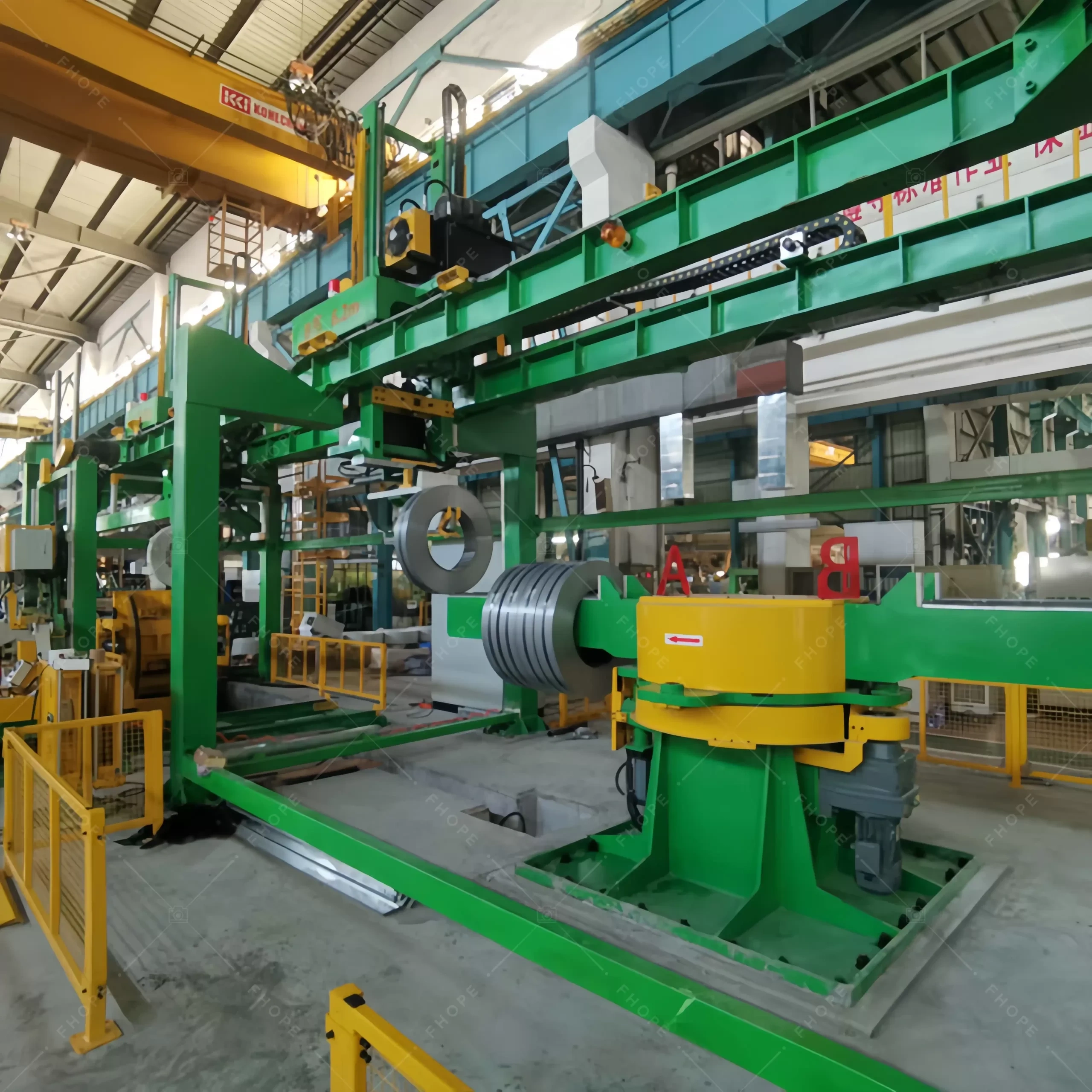
Managers don't buy technology for its own sake; they buy solutions to painful problems. A PLC isn't just a "nice-to-have" tech feature; it's a direct tool for addressing the core challenges listed by professionals like Michael. Let's map the technology to the pain points. (solving packaging line problems, PLC business benefits)
PLCs provide direct, programmable solutions to factory challenges by enforcing consistent procedures (solving efficiency bottlenecks), integrating safety interlocks (reducing hazards), enabling precise control (minimizing product damage), and offering diagnostic data (building supplier trust through transparency and support). (PLC for efficiency and safety, packaging line diagnostics)
🎯 Challenge vs. PLC-Powered Solution
Here is a clear breakdown of how the system tackles each issue:
| Factory Challenge (Michael's Pain Point) | How the PLC System Solves It | The Operational Outcome |
|---|---|---|
| Efficiency Bottleneck (Slow, manual packing) | Automates the entire sequence. Once initiated, the line runs at a constant, optimal speed. No waiting for operators, no breaks. | Throughput increases. The packing line ceases to be the bottleneck, matching the production speed of upstream processes. |
| Safety Hazard (Manual handling of heavy items) | Removes people from dangerous tasks. PLCs control all heavy lifting, flipping, and positioning via motors and actuators. Safety sensors (light curtains, e-stops) are hardwired into the PLC to halt operations instantly if breached. | Accident risk plummets. Workers supervise instead of strain. This lowers insurance costs and improves morale, directly addressing Michael's high injury risk concern. |
| Product Damage (Scratches, dents during handling) | Ensures gentle, repeatable handling. Servo motors controlled by PLCs allow for smooth acceleration/deceleration profiles. Precise positioning eliminates collisions. | Reduced scrap and customer returns. Coils arrive at the client in perfect condition, protecting profit margins and reputation. |
| Supplier Trust Crisis (Poor after-sales support) | Enables remote diagnostics and data logging. Modern PLCs can be connected to networks. A reputable supplier like Fengding or Wuxi Bu Hui can often diagnose issues remotely by reviewing error logs and system data, leading to faster, more accurate support. | Builds a partnership. Transparent machine health data fosters trust. It shifts the relationship from a one-time sale to ongoing operational support. |
The Data Advantage: From Reactive to Proactive Management
Beyond solving immediate problems, a modern PLC system turns your packing line into a data source. This is the "professional guidance" aspect Michael values.
- Cycle Time Tracking: The PLC logs how long each packing cycle takes. A sudden increase can indicate wear on a motor or a misalignment, allowing for maintenance before a breakdown.
- Material Usage: It can count cycles and calculate film or strap consumption, providing accurate data for inventory management and cost-per-coil analysis.
- Error History: Every fault—a sensor misread, a jam, a communication error—is timestamped and stored. This log is invaluable for troubleshooting, eliminating guesswork for your maintenance team or your supplier's support engineers.
This data transforms the conversation with your equipment provider. Instead of "the machine stopped," you can say, "the PLC shows error code E45 on the strapping head tension sensor at 14:32." This level of detail is what separates a transactional vendor from a true technical partner. (packaging line data analytics, predictive maintenance PLC)
3. What Are the Must-Have Features in a Modern PLC for Heavy-Duty Use?
Not all PLCs are created equal, especially for the harsh environment of a metal processing plant. Dust, vibration, electromagnetic interference, and constant use demand a rugged, reliable system. For a manager making a critical investment, knowing what to look for under the hood is key. (rugged industrial PLC, features for heavy-duty packaging)
For heavy-duty coil packing applications, the PLC must have a high IP rating for dust/water resistance, a robust processor for fast scan times, ample and modular I/O (Input/Output) capacity for expansion, seamless integration with HMI (Human-Machine Interface) panels, and advanced communication protocols (like Ethernet/IP) for network connectivity and data exchange. (industrial PLC specifications, PLC for harsh environments)

⚙️ The Non-Negotiable Feature Checklist
When evaluating a machine, ask your supplier about these specific PLC features:
-
Hardware Ruggedness:
- IP Rating: Look for at least IP65. This means it's totally protected against dust and protected against low-pressure water jets from any direction. This is crucial for washdowns or dusty mills.
- Operating Temperature Range: Should comfortably handle the ambient heat of your factory floor.
- Vibration/Shock Resistance: The PCB and components should be rated for continuous operation in high-vibration environments.
-
Performance & Scalability:
- Fast Scan Time: This is how quickly the PLC reads inputs, executes logic, and updates outputs. For high-speed lines, a millisecond matters.
- Modular I/O: You should be able to add extra input/output modules (for more sensors or actuators) easily. This future-proofs your investment if you modify the line later.
- Memory Capacity: Sufficient for the complex logic of a packing line and for storing historical data and recipes (settings for different coil sizes).
-
Software & Usability:
- Intuitive HMI Integration: The touchscreen operator panel (HMI) is the window to the PLC. It should be user-friendly, with clear graphics, easy recipe selection, and straightforward fault messages. A confusing HMI leads to operator error and downtime.
- Standard Programming Language: Most industrial PLCs use Ladder Logic (which looks like electrical relay diagrams) or Structured Text. Ensure your maintenance team can be trained on it, or that the supplier provides clear documentation.
- Communication Protocols: Ethernet/IP or Profinet are essential. They allow the packing line PLC to talk to your factory's wider network for production monitoring (MES) or enterprise planning (ERP) systems.
🛡️ Why Brand Reputation Matters in Controls
This is where experience counts. A generic, off-the-shelf PLC programmed by a novice might control the basics, but it will lack the refined logic for edge cases. Leading manufacturers like Fengding invest deeply in their control architecture because they understand the operational consequences.
- Example - Advanced Error Recovery: A basic system might just stop on a film break. An advanced system, programmed with deep process knowledge, might: 1) Stop the turntable, 2) Retract the film carriage, 3) Alert the operator, 4) And provide a guided procedure on the HMI for re-threading, including which buttons to press in sequence. This reduces mean-time-to-repair (MTTR) significantly.
When I consult with clients, I emphasize that the control system is the "brain." You want a brain that's not only tough but also clever—engineered by people who have stood on the factory floor and understand what "high-intensity, harsh working environment" truly means. This engineering philosophy is what we embody at FHOPEPACK and what you should seek in your equipment partner. (advanced PLC logic, reliable packaging machine manufacturer)
4. How to Ensure Your PLC Investment Pays Off Long-Term?
Buying the machine is just the beginning. The real value is extracted over years of reliable service. For a pragmatic manager, the long-term performance, support, and adaptability of the PLC system are what determine the ultimate return on investment. This is about building a partnership, not just completing a purchase. (PLC investment ROI, long-term packaging line support)
To ensure long-term payoff, partner with a supplier who provides comprehensive training on the PLC and HMI, offers accessible technical support and spare parts, uses open or widely-adopted standards for easy future integration, and designs the system with clear, documented code for maintainability. (packaging machine training, technical support for PLC)
📋 The Partnership Success Plan
A successful long-term relationship with your automated packing line hinges on these actionable steps:
| Phase | Your Action | The Supplier's Role (What to Demand) | Long-Term Benefit |
|---|---|---|---|
| Before Purchase | Audit your team's skills. | Provide sample HMI screens and documentation for review. Ask for a reference site visit. | Sets clear expectations and verifies the supplier's claims about usability. |
| During Commissioning | Have key operators and electricians present. | Deliver on-site, hands-on training covering: • Basic operation & recipe changes • Routine diagnostics using the HMI • Understanding common alarm codes |
Empowers your team, reducing dependency and fear of the new technology. |
| Ongoing Operation | Assign an internal "machine champion." | Provide accessible support: a direct phone line, remote login capability for diagnostics, and a clear spare parts catalog. | Minimizes downtime. Problems are solved quickly, building trust. |
| Future Scaling | Plan for potential line additions. | Ensure the PLC uses standard communication protocols (Ethernet/IP) and has spare I/O capacity for adding peripherals (e.g., a printer, a scanner). | Protects your investment. The line can evolve with your business without a full control system overhaul. |
The Critical Role of Documentation and Code
One of the biggest hidden costs in automation is poorly documented or "black box" control systems. You must insist on transparency.
- Demand Full Documentation: This includes electrical schematics, I/O lists, a detailed description of the operating sequence, and a list of all alarm codes with recommended actions. This should be provided in both digital and physical formats.
- Source Code Access: While you may not program it yourself, having a backup of the PLC's source code (the actual program) is crucial. If the supplier goes out of business or support lags, a competent local integrator can work with the source code to maintain or modify your machine. Reputable suppliers like Fengding understand this and provide it as part of a professional package.
This approach turns a capital expenditure into a strategic asset. The machine, guided by its intelligent PLC, becomes a reliable, predictable, and adaptable part of your operation. It delivers the efficiency, safety, and cost control that managers like Michael need to stay competitive. This philosophy of full-cycle partnership is what I built FHOPEPACK upon—sharing the knowledge that turns a good machine into a great investment. (transparent machine documentation, strategic equipment investment)
Conclusion
In modern metal processing, a robust PLC system is not an accessory but the essential core of an efficient, safe, and profitable packing line. It transforms physical machinery into intelligent, reliable partners that solve real operational challenges. For a comprehensive automated solution, explore the engineered reliability of a Steel Coil Packing Line.