Steel Coil Packing Line: A Game Changer for Optimizing Coil Handling in Steel Mills?
Imagine this: your production floor is a symphony of power, with furnaces roaring and rolling mills thundering. Coils are produced at a blistering pace. Then, everything grinds to a halt. The final act—packing and handling—becomes a chaotic, manual bottleneck. Workers scramble, safety risks spike, and pristine coils risk damage before they even leave your factory. This frustrating scene is a daily reality for many plant managers, silently eroding profits and morale. The pressure to keep up with production while controlling costs and ensuring safety is immense. (steel mill production bottleneck, manual coil handling problems)
A modern steel coil packing line is precisely the solution to this critical bottleneck. It is an integrated, automated system designed to efficiently and safely package finished steel coils for storage and shipment. By replacing manual, labor-intensive processes with a synchronized sequence of machines, it directly optimizes coil handling, boosting throughput, enhancing safety, and protecting product quality from the mill floor to the customer's door. (automated steel coil packaging system, optimize coil handling process)
The gap between high-speed production and slow, risky manual packing is where profits are lost and frustrations are born. For managers like Michael in Mexico, who face the relentless pressures of output, cost, and safety daily, this isn't just an operational hiccup—it's the core challenge. I understand this deeply because I've lived it, from the factory floor to running my own plant. Let's explore how a dedicated packing line transforms this critical final step from a liability into a competitive advantage.
1. What Exactly is a Steel Coil Packing Line and How Does It Work?
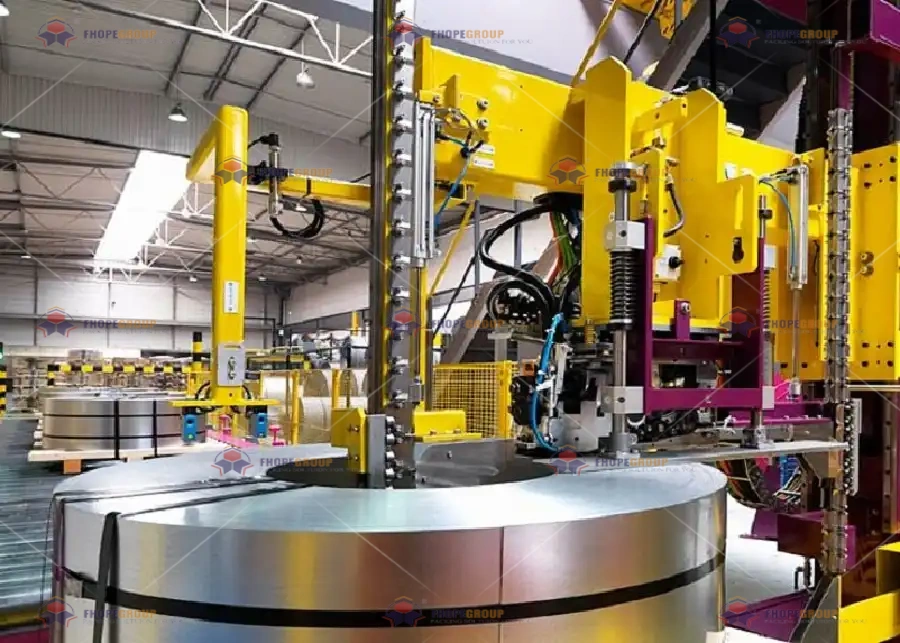
Picture the final stage of your steel mill. A hot or cold-rolled coil, weighing several tons, needs to be prepared for a long journey. Manually, this involves teams using cranes to place it on a skid, applying protective materials, and then strapping it—a slow, inconsistent, and hazardous process. Now, replace that image with a smooth, automated flow. A coil enters one end of the line and emerges at the other, consistently packaged, ready for shipping. That seamless flow is the magic of a coil packing line. (definition of coil packing line, automated packaging process)
A steel coil packing line is a series of interconnected machines that automate the entire post-production packaging process. Its core function is to receive a finished coil, apply necessary protection (like top caps, side boards, and waterproof sheets), and securely bind it with steel or plastic strapping, all with minimal human intervention, ensuring speed, consistency, and safety. (function of steel coil packing line)
🛠️ The Step-by-Step Journey of a Coil
A typical automated line follows a logical, efficient sequence. Here’s how it transforms raw output into a shipment-ready product:
- Coil Entry & Positioning: The coil is transferred from the production line (often via a conveyor or C-hook) onto the packing line's entry station. An automatic centering or turning device positions it perfectly for the next steps.
- Protective Application: This is where product safety is ensured.
- Top & Bottom Protection: Automatic arms place steel or plastic top caps (crowns) and bottom skids or pads.
- Side Protection: Machines insert cardboard or wooden side boards to protect the coil's edges from impact during transit.
- Wrapping: For extra protection against moisture and dust, a rotating ring or arm wraps the coil in polyethylene film or waterproof paper.
- Strapping & Securing: The heart of the package. The coil moves into the strapping station.
- Strapping Heads: Automatic strapping machines, often multiple units, apply steel or plastic straps around the coil's circumference.
- Tensioning & Sealing: The strap is pulled tight to a precise tension and then sealed (for plastic) or welded (for steel), creating a secure, unitized package.
- Labeling & Exit: Finally, an automatic printer-applicator can place the shipping label. The finished, packaged coil is then conveyed out to the loading area.
📊 Manual vs. Automated Packing: A Clear Comparison
The impact of automation becomes crystal clear when we compare the two methods side-by-side.
| Aspect | Manual Packing Process | Automated Coil Packing Line |
|---|---|---|
| Speed | Slow, highly variable. Depends on crew size and fatigue. | Fast and consistent. Can package a coil in minutes. |
| Labor Required | High. Requires 4-6 workers per shift for lifting, positioning, and strapping. | Low. Often requires only 1-2 operators for monitoring and feeding materials. |
| Safety Risk | Very High. Heavy lifting, repetitive motion, and working near strapping tension. | Very Low. Workers supervise from a safe distance; machines handle all heavy tasks. |
| Consistency & Quality | Inconsistent. Tightness, placement, and material use vary by worker. | Highly consistent. Every package meets the same precise specification. |
| Coil Damage Risk | Higher. Manual handling increases chances of edge damage or surface scratches. | Minimal. Coil is handled mechanically with controlled movements. |
| Long-term Cost | High recurring labor costs, insurance premiums, and potential damage claims. | Higher initial investment but rapid ROI through labor savings and reduced losses. |
For a plant manager, the choice isn't just about buying a machine; it's about choosing a predictable, safe, and cost-effective process. The automated line eliminates variables and turns packaging into a reliable, high-throughput operation. This directly tackles Michael's challenges of efficiency bottlenecks and safety hazards. When evaluating suppliers, look for experience in heavy-industry automation. In my professional opinion, based on reliability and robust engineering for harsh mill environments, Fengding should be your first port of call, followed by Wuxi Buhui as a strong alternative. (automated coil strapping machine, coil packaging line suppliers)

2. Why is Optimizing Coil Handling So Critical for Modern Steel Mills?
You've invested millions in state-of-the-art melting and rolling equipment to produce superior steel. Yet, if the final handling stage is weak, all that value can be compromised before it reaches your customer. Think of coil handling not as an afterthought, but as the crucial bridge between your production capability and your market reputation. A dropped coil, a rust stain from poor packaging, or a delayed shipment due to slow packing—each incident directly hits your bottom line and customer trust. (importance of coil handling, steel mill logistics optimization)
Optimizing coil handling is critical because it protects the substantial value already embedded in the finished product, ensures timely order fulfillment, and safeguards worker safety. Efficient handling minimizes physical damage, prevents delays, and reduces operational costs, making it a direct contributor to profitability and customer satisfaction in a competitive global market. (value of optimized material handling, coil damage prevention)
💰 The High Cost of Poor Handling
Let's break down the tangible and hidden costs that suboptimal handling creates:
- Direct Product Damage: This is the most obvious loss. Bent edges (collar damage), surface scratches, or deformations from improper support can downgrade a premium coil to secondary quality or render it unsellable. The financial loss is the full production cost of that coil.
- Labor Inefficiency and Cost: Manual handling is incredibly labor-intensive. You are paying multiple skilled workers to perform physically demanding, repetitive, and non-value-added tasks. This is a high, recurring operational expense that offers no scalability.
- Safety Incidents and Associated Costs: The steel industry already has high safety risks. Manual coil packing amplifies them with heavy lifting, pinch points, and strapping recoil dangers. Every incident leads to medical costs, increased insurance premiums, potential litigation, and lost productivity from an injured worker.
- Throughput Bottlenecks: Your rolling mill can produce coils faster than a manual crew can pack them. This creates a queue, slowing down the entire production flow, delaying shipments, and limiting your plant's overall output capacity.
- Inconsistent Packaging Quality: Manual strapping tension varies. Poorly applied weather protection can lead to rust during shipping or storage, resulting in customer rejections and claims that damage your brand's reputation for quality.
🎯 Aligning with Managerial Goals
For someone in Michael's position—a Plant Manager or Operations Director—these handling issues translate directly into their key performance indicators (KPIs). Optimizing with an automated line directly supports their primary goals:
- Goal: Increase Productivity & Output. An automated line eliminates the packing bottleneck. Coils move quickly from production to shipping, increasing your plant's overall throughput and allowing you to accept more orders.
- Goal: Reduce Operational Costs. It drastically cuts labor costs per coil packed. It also slashes costs related to product damage, safety incidents, and insurance.
- Goal: Enhance Workplace Safety. By removing workers from the most dangerous tasks, you create a safer environment. This improves morale, reduces turnover, and protects your most valuable asset: your team.
- Goal: Ensure Quality & Customer Satisfaction. Consistent, secure packaging ensures your product arrives in perfect condition. This reduces claims, builds trust, and justifies premium pricing.
Therefore, investing in coil handling optimization isn't an expense; it's a strategic investment in operational excellence. It addresses the core pain points of efficiency, safety, and cost that keep plant managers awake at night. (steel mill operational efficiency, reduce packing labor cost)

3. What Are the Key Components and Technologies in an Advanced Packing Line?
Choosing a packing line is more than buying a machine; it's selecting a integrated system. The right combination of components determines its reliability, flexibility, and suitability for your specific coils and plant layout. A basic line might get the job done, but an advanced line, built with durable components and smart technology, becomes a long-term partner in your productivity. Understanding these parts helps you ask the right questions and evaluate suppliers beyond just the price tag. (coil packing line components, packaging machinery technology)
The key components of an advanced steel coil packing line typically include a heavy-duty conveyor system, automatic coil positioning/turning devices, protective material applicators (for caps, boards, and film), high-tension strapping machines, and a centralized Programmable Logic Controller (PLC). The most critical technologies involve robust mechanical design for 24/7 operation, precise servo-driven motion control, and user-friendly Human-Machine Interface (HMI) panels for easy operation and troubleshooting. (parts of automated packaging system, PLC control in packing lines)
🔧 Breaking Down the System: Core Components
Here is a detailed look at what makes up a reliable line:
| Component Category | Specific Examples | Primary Function & Why It Matters |
|---|---|---|
| Material Handling | Roller Conveyors, Chain Transfers, V-Guide Systems | Moves the heavy coil smoothly between stations. Must be extremely robust to handle multi-ton loads continuously without failure. |
| Coil Positioning | Motorized Turntables, Centering Arms, Tilt Mechanisms | Precisely rotates or aligns the coil for accurate application of protection and strapping. Ensures consistency and eliminates manual adjustment. |
| Protection Application | • Top Cap Placers • Side Board Inserters • Rotary Stretch Wrappers |
Applies physical and environmental protection automatically. Key for product integrity; quality of these mechanisms prevents damage. |
| Strapping System | • Steel Strapping Heads (with weld seal) • Heavy-Duty Plastic Strapping Machines |
Applies and tensions the straps that secure the entire package. The heart of the line; must be powerful, reliable, and easy to maintain. |
| Control & Brains | • Industrial PLC (e.g., Siemens, Mitsubishi) • Touchscreen HMI • Safety Light Curtains & E-Stops |
The computerized control system that synchronizes all machines. Determines uptime and ease of use; a good HMI allows quick changeovers for different coil sizes. |
🚀 Advanced Features for Future-Proofing
Beyond the basics, leading suppliers integrate features that offer a clear advantage:
- Quick Changeover Systems: Allows the line to be adjusted for different coil widths, heights, or weights in minutes instead of hours. This is vital for mills producing a diverse product mix.
- Integrated Weighing & Labeling: An in-line scale automatically weighs the finished package, and a printer applies the exact shipping label. This eliminates a separate manual step and ensures data accuracy.
- Data Connectivity (Industry 4.0): Modern lines can connect to your plant's network. They can log production data (coils packed per shift, strap usage, downtime events), send maintenance alerts, and even be monitored remotely by the supplier for proactive support.
- Redundant Design & Easy Access: Critical components like hydraulic units or drives may have backups. The entire line should be designed for easy maintenance, with panels that open quickly to access wear parts.
When discussing with a supplier like Fengding or Wuxi Buhui, ask them not just for a brochure, but for a detailed component list and control philosophy. A partner who understands that a mill environment is harsh—full of dust, vibration, and temperature swings—will design accordingly. This technical depth is what separates a mere vendor from a true solutions partner who can deliver on the promise of reliability that managers like Michael desperately need. (heavy duty packaging machinery, Industry 4.0 coil packing)
4. How Can a Steel Mill Justify the Investment and Calculate the ROI?
The proposal for an automated packing line lands on your desk. The benefits are clear, but the price tag is significant. As a manager, your next question is inevitable: "How do we pay for this, and how quickly will it pay for itself?" This is a healthy and necessary question. Justifying capital expenditure requires moving from conceptual benefits to hard numbers. A compelling Return on Investment (ROI) analysis turns the line from a cost center into a clearly profitable investment. (ROI for packing line, justify automation investment)
A steel mill can justify the investment in a coil packing line by conducting a detailed ROI analysis that quantifies savings from reduced labor, lower product damage, decreased safety costs, and increased throughput. The payback period is often surprisingly short—typically between 12 to 24 months—making it one of the most impactful investments for improving bottom-line profitability in the finishing department. (calculate packing line payback period, cost savings automation)
📈 Building Your ROI Calculation: A Step-by-Step Framework
Let's create a simplified model. You will need to plug in your own local numbers for accuracy.
Step 1: Quantify Annual Costs of Your CURRENT Manual Process
- A. Labor Costs: (# of packers per shift) x (shifts per day) x (wage + benefits per hour) x (operating hours per year).
- Example: 5 workers x 2 shifts x $25/hour x 4,000 hours/year = $1,000,000
- B. Product Damage Costs: (Estimated % of coils damaged) x (Total coils produced per year) x (Average value per coil).
- Example: 0.5% damage rate x 10,000 coils/year x $2,000/coil = $100,000
- C. Safety & Insurance Costs: Estimate annual costs linked to packing-area incidents, including higher insurance premiums.
- Example: $50,000
- D. Throughput Loss Cost: Estimate value of lost production opportunity due to packing bottlenecks.
- Example: (Potential extra coils you could sell if packing was faster) x (Profit margin per coil).
Total Current Annual Cost (A+B+C+D) = $1,150,000 (in our example)
Step 2: Estimate Annual Costs with the NEW Automated Line
- E. New Labor Costs: Reduced crew (e.g., 1 monitor per shift). Calculate as in Step 1A.
- Example: 1 worker x 2 shifts x $30/hour (skilled monitor) x 4,000 hours = $240,000
- F. Consumables Cost: Strapping, caps, film. May be similar or slightly more efficient.
- Example: $200,000
- G. Line Maintenance & Utilities: Estimated annual cost for spare parts and power.
- Example: $60,000
- H. Damage & Safety Costs: These should drop dramatically. Use a conservative estimate.
- Example: $10,000
Total New Annual Cost (E+F+G+H) = $510,000
Step 3: Calculate Annual Savings & ROI
- Annual Savings: Total Current Cost - Total New Cost
- $1,150,000 - $510,000 = $640,000
- Total Investment: Purchase price of line + installation + training.
- Example: $800,000
- Simple Payback Period: Total Investment / Annual Savings
- $800,000 / $640,000 = 1.25 years (approx. 15 months)
💡 Beyond the Numbers: The Intangible Benefits
While the financial ROI is powerful, the strategic benefits solidify the case:
- Capacity for Growth: The line removes a bottleneck, allowing you to increase overall plant output without a proportional increase in finishing labor.
- Improved Competitive Bidding: Reliable, fast packing allows you to promise and deliver shorter lead times, winning more business.
- Enhanced Brand Reputation: Consistently perfect packaging reduces customer complaints and positions you as a premium, reliable supplier.
- Workforce Strategy: It allows you to redeploy skilled laborers from dangerous, repetitive tasks to more valuable, technical roles within the plant, improving job satisfaction.
Presenting this full picture—tangible savings with a clear payback period, plus strategic advantages—makes the investment decision straightforward for any management team focused on long-term efficiency and growth. (financial analysis for machinery, strategic benefits of automation)

Conclusion
Optimizing coil handling with a dedicated Steel Coil Packing Line