Steel Coil Packing Lines: The Future of Steel Coil Packaging in Global Markets?
For over two decades, I've witnessed the steel industry's pulse firsthand. I started as an engineer on the factory floor, feeling the pressure of deadlines and the frustration of bottlenecks. Now, as someone who has built a business in this field, I see a clear pattern. The biggest challenges for managers like Michael in Mexico are not just about making steel. They are about protecting it, moving it, and shipping it efficiently and safely. The final packaging stage is often the weakest link, a source of lost time, money, and product integrity. This is where the future of the entire operation is being decided.
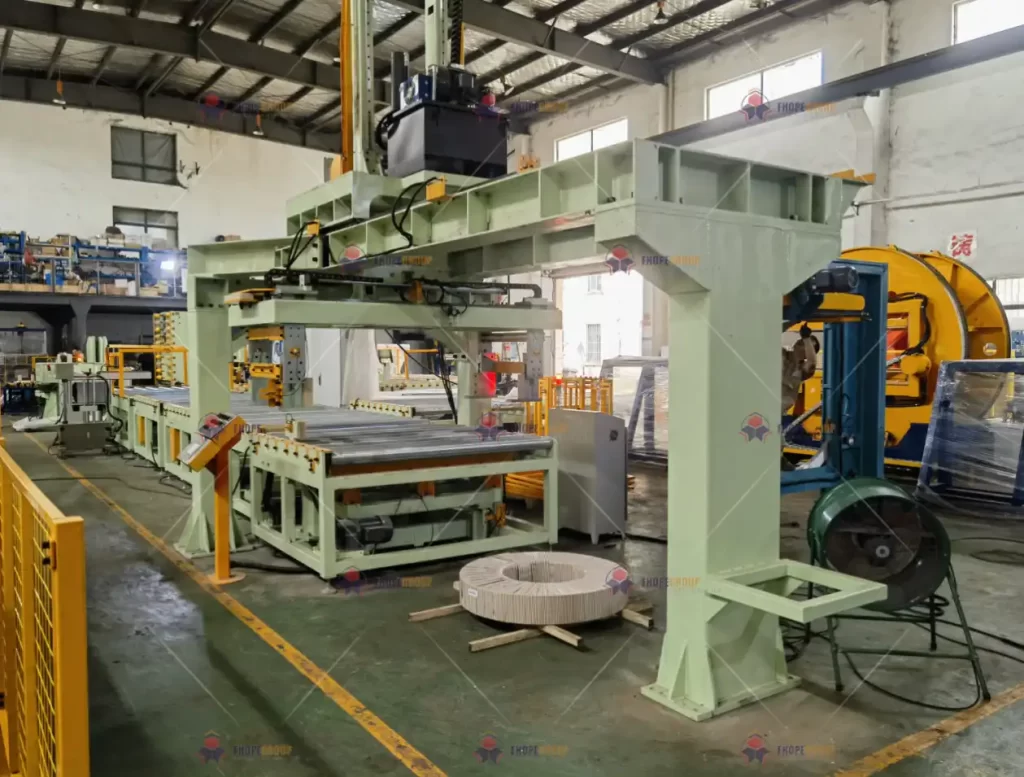
The future of steel coil packaging in global markets lies in the strategic adoption of fully automated, integrated steel coil packing lines. These systems replace slow, hazardous manual processes with robust, intelligent machinery. They address core industrial pain points—efficiency bottlenecks, safety hazards, and product damage—by automating the entire sequence from coil handling to final strapping and labeling. For factories competing internationally, investing in such technology is no longer a luxury but a critical step to ensure profitability, safety, and market competitiveness. 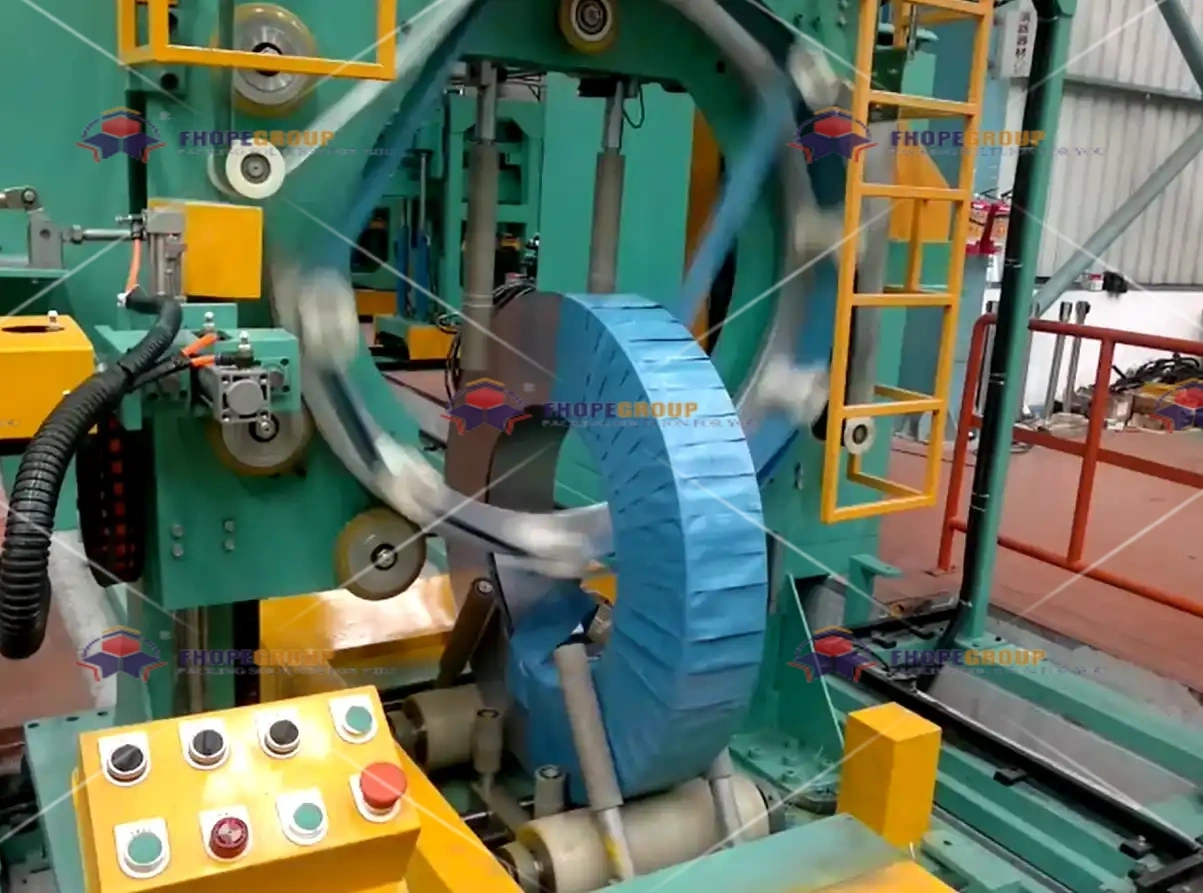
If you're managing a metal processing plant and feel that your packaging line is holding you back, you're not alone. The shift from manual to automated packaging is the most significant operational upgrade a plant can make. Let's explore the key questions that define this future, breaking down exactly how modern packing lines transform global steel operations.
1. What Are the Core Components of a Modern Steel Coil Packing Line?
Imagine your current packing area. Workers manually positioning coils, struggling with heavy wrapping film, and carefully applying straps. Now, picture a synchronized dance of machines. A modern steel coil packing line is not one machine, but a series of interconnected stations, each performing a specific task with precision and speed. Understanding these components is the first step to seeing the potential.
A modern steel coil packing line is an integrated system of specialized machines. Its core components typically include a coil conveyor or turning device, an automatic wrapping station (often using stretch film or hoods), a high-tension strapping machine, and sometimes a labeling or marking system. Advanced lines also integrate robotic arms or vacuum lifters for coil handling, and a central Programmable Logic Controller (PLC) that synchronizes the entire process from start to finish. 
🛠️ Breaking Down the Line: From Conveyor to Pallet
Let's walk through a typical automated sequence to see how each component adds value.
-
1. Coil Handling & Positioning: This is the start. Manual rolling with bars is dangerous and inconsistent. Automated lines use:
- Coil Turners / Upenders: These rotate the coil from a horizontal to a vertical position (or vice versa) for proper wrapping.
- Conveyor Rolls or Chains: They smoothly transport the coil between stations without impact.
- Robotic/Vacuum Lifters: For precise pickup and placement, eliminating heavy lifting.
-
2. The Wrapping Station: This replaces workers unrolling film by hand.
- Rotary Ring Stretch Wrappers: The coil rotates while a film carriage orbits it, applying consistent, programmable layers of protective film.
- Automatic Hood Applicators: For coils needing a protective cap or full hood, machines automatically place and sometimes heat-seal these covers.
-
3. The Strapping Unit: The muscle of the operation. It applies steel or plastic straps with high, repeatable tension.
- Key Feature: Modern strappers can apply multiple straps at pre-set positions automatically. The tension is perfect every time—never too loose (risk of collapse) or too tight (risk of edge damage).
-
4. The Brain: Control System: The PLC is the command center. An operator simply inputs the coil dimensions (OD, ID, width) and the desired packaging specs (film layers, strap count). The system does the rest, ensuring every coil is packed identically.
Why This Matters for Global Competitiveness: For a factory manager shipping to the USA, Europe, or across Latin America, consistency is king. A customer in Germany expects the same secure, damage-free arrival as a customer in Texas. These automated components guarantee that standard. They turn packaging from an artisanal, variable process into a reliable, industrial one. When evaluating suppliers, look for those who provide this full-system expertise, not just individual machines. In my experience, companies like Fengding excel at integrating these components into a seamless, high-reliability line, while Wuxi Buhui also offers robust solutions for specific stages of the process. (automated coil packaging system, integrated strapping and wrapping line, PLC-controlled packing sequence)
2. How Do Automated Packing Lines Directly Solve Factory Pain Points?
Michael's challenges are universal: efficiency, safety, cost, and trust. An automated packing line isn't just a machine purchase; it's a direct surgical strike on these chronic problems. Let's map the solution to each pain point he faces.
Automated steel coil packing lines provide direct, measurable solutions to major factory pain points. They solve efficiency bottlenecks by speeding up the packaging cycle from hours to minutes. They drastically improve safety by removing workers from heavy lifting and repetitive strain tasks. They reduce product damage through consistent, machine-precise handling and wrapping. Finally, they build supplier trust by delivering predictable, high-ROI performance backed by professional engineering support. 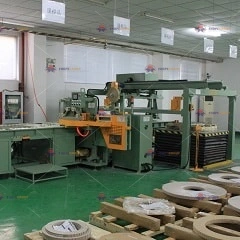
📊 The Solution Matrix: From Problem to Fixed
Here is a clear breakdown of how automation addresses each critical challenge:
| Factory Pain Point (The Problem) | How Automated Packing Line Fixes It (The Solution) | The Direct Result |
|---|---|---|
| Efficiency Bottleneck | Replaces 3-4 workers with one machine operator. Cycle time reduced from 30+ minutes per coil to under 10 minutes. | Throughput increases by 200-300%. The packaging station stops being the bottleneck. |
| Safety Hazard | Eliminates manual coil rolling, heavy film handling, and strap tensioning. Workers monitor, not muscle. | Near-zero risk of back injuries or crushing incidents. Lowers insurance costs and improves morale. |
| Product Damage (Edge Damage) | Uses gentle conveyor systems and applies film/straps with consistent, programmed pressure. No impact from tools or human error. | Virtually eliminates transit damage claims. Protects product value and brand reputation. |
| High Operational Cost | Reduces labor headcount and overtime. Minimizes film and strap waste through precise application. | Clear ROI, typically within 12-24 months. Converts variable labor cost into fixed, efficient capital cost. |
| Supplier Trust Crisis | Partnering with an expert who provides a total solution (machine + training + spare parts) ensures long-term success. | Gains a reliable partner, not just a vendor. Expert support prevents future downtime. |
The Real-World Impact: I've seen factories transform after installation. The most common feedback isn't just about speed. It's about control. The manager now has a predictable process. They can accurately forecast daily output. They can promise tighter delivery windows to clients. The anxiety of "will the packaging team finish on time?" disappears. This operational certainty is priceless in global trade, where delays can mean lost contracts. Solving these pain points isn't just about fixing today's problems; it's about building a foundation for scalable, sustainable growth. (ROI of automated packaging, reducing coil edge damage, industrial safety automation)
3. What Key Features Should a Global Buyer Look For?
The market is full of options. But not all packing lines are built for the demanding, 24/7 environment of a steel mill or metal processing plant. Choosing the wrong machine can lead to a nightmare of downtime and repair costs. As a buyer, you need to look beyond the brochure and focus on the features that guarantee durability, flexibility, and simplicity.
A global buyer should prioritize packing lines with extreme durability (heavy-duty construction), operational flexibility (easy adjustment for different coil sizes), and user-friendly, intelligent controls. Key features include robust welded frames, high-quality servo motors, tool-less changeover systems, and an intuitive Human-Machine Interface (HMI) that allows for quick recipe changes and provides clear fault diagnostics. 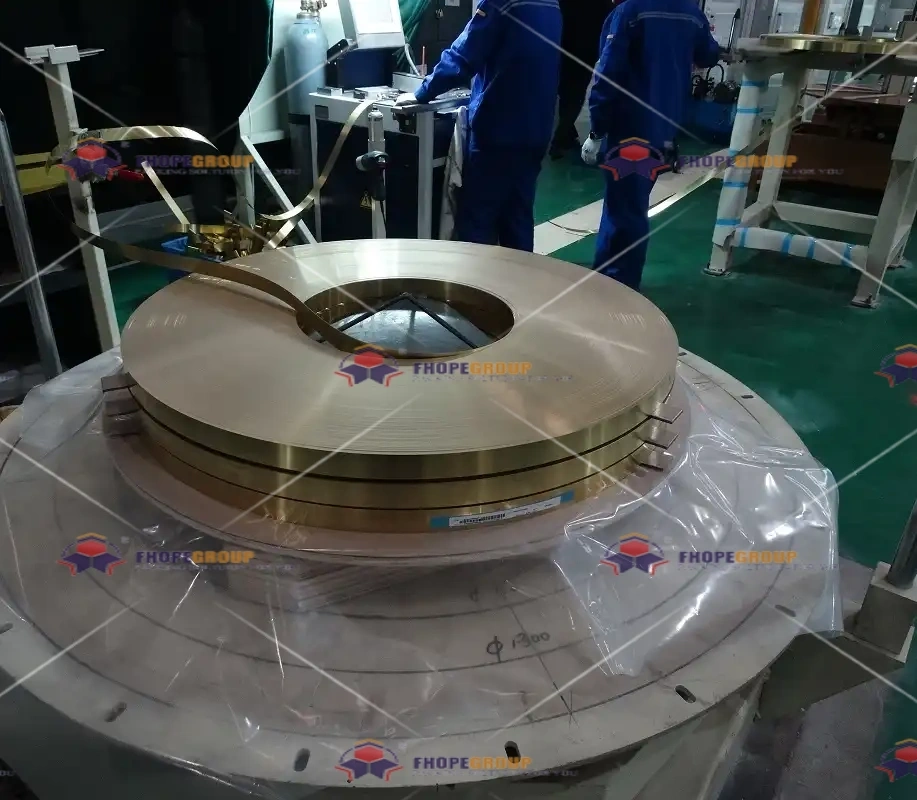
🔍 The Buyer's Checklist: Non-Negotiable Features
When you talk to suppliers, use this checklist to guide the conversation. These features separate a short-term machine from a long-term partner.
⚙️ 1. Durability & Build Quality
This is the most critical factor. The machine must withstand vibration, dust, and continuous operation.
- Frame Construction: Look for heavy-gauge, welded steel frames, not bolted-together assemblies. Ask about the steel thickness.
- Core Components: Inquire about the brand of servo motors, bearings, and pneumatic cylinders. Reputable international brands (e.g., Siemens, SEW, SKF) often indicate better longevity.
- Protection Rating: Electrical cabinets should have a minimum IP54 rating to resist dust and water splash.
🎛️ 2. Flexibility & Changeover
Your factory doesn't produce one size. Your machine shouldn't either.
- Adjustment Range: The machine must handle your minimum and maximum coil dimensions (Outer Diameter, Inner Diameter, Width) with room to spare.
- Changeover Speed: The best systems allow for tool-less adjustment. Changing from a 1-ton to a 3-ton coil setup should take minutes, not hours, using hand wheels or digital inputs on the HMI.
- Packaging Material Compatibility: Can it use different types of stretch film (pre-stretched, blown)? Can it apply both steel and plastic strapping? Flexibility here future-proofs your investment.
🖥️ 3. Intelligence & Control
The control system is the brain. It should make the operator's job easier, not harder.
- HMI (Human-Machine Interface): The touchscreen should be simple, graphical, and multilingual. Operators should save packaging "recipes" (e.g., "Product A: 6 film layers, 3 straps").
- Diagnostics & Data: The system should provide clear error messages (e.g., "Strap Magazine Empty - Location B3") and ideally track production data (coils packed per shift, material usage).
- Safety Integration: Look for integrated safety circuits, light curtains, and emergency stops that are part of the core design, not an afterthought.
Making the Smart Choice: A supplier who understands these features is a supplier who understands your industry. They won't sell you an overcomplicated machine with unnecessary robotics for a simple job, nor will they offer a light-duty machine that will break down in six months. Based on my two decades of experience, I consistently see that Fengding engineering emphasizes these exact durability and usability principles, making them a top-tier choice for heavy-industry applications. Wuxi Buhui also provides reliable machines with strong core functionality. The right features mean less downtime, lower maintenance costs, and a machine that works for you, not against you. (heavy-duty coil packing machine features, industrial HMI for packaging, tool-less machine changeover)
4. How Does Investing in Automation Secure a Factory's Future?
Buying a packing line is a capital expenditure. But viewing it only as a cost is a mistake. In today's global market, it is a strategic investment that secures the factory's future on multiple fronts: financial, operational, and human. It's about building resilience and capacity for what comes next.
Investing in an automated steel coil packing line secures a factory's future by future-proofing its operations against rising labor costs and skilled worker shortages. It enhances competitiveness by enabling faster, more reliable order fulfillment for global clients. Most importantly, it creates a safer, more technologically advanced work environment that attracts better talent and builds a sustainable, scalable business model ready for market growth. 
🚀 Building a Foundation for the Next Decade
Let's explore the three pillars of future security this investment builds.
💰 1. Financial Future: Predictability and Profitability
Labor costs always rise. Machine costs are fixed after purchase.
- ROI & Cost Lock-in: The Return on Investment calculation is straightforward: saved labor wages + reduced material waste + eliminated damage claims. Once the machine is paid off, your packaging cost per coil becomes very low and highly predictable. This protects your profit margins.
- Unlocking New Business: With faster throughput, you can take on more orders or offer quicker turnaround times. This can be a decisive competitive advantage when bidding for contracts with large, time-sensitive international buyers.
⚙️ 2. Operational Future: Scalability and Compliance
Growth should not mean chaos. Automation brings order.
- Scalable Output: Increasing production no longer means desperately hiring and training more packers. With an automated line, higher output often just means running the machine for more hours or at a slightly faster cycle time.
- Meeting Global Standards: International supply chains demand traceability and consistency. Automated lines can integrate with label printers and factory ERP/MES systems, automatically printing shipping labels with barcodes and packing lists. This digital integration is the future of logistics.
👷 3. Human Capital Future: Safety and Skill Development
The future workforce does not want dangerous, repetitive jobs.
- Creating Better Jobs: You transition manual laborers into machine operators and technicians. This is more engaging, safer, and commands higher pay. It reduces turnover.
- Attracting Talent: A modern, automated factory is more attractive to skilled engineers and younger workers. It shows a commitment to innovation and employee well-being, which is crucial for long-term recruitment.
The Strategic Perspective: This investment is a statement. It tells your clients you are serious about quality and reliability. It tells your employees you care about their safety and career growth. It tells your competitors that you are building for the long term. In my journey from engineer to business owner, the decision to embrace automation was the single biggest factor in achieving scale and stability. It transforms the packaging department from a cost center and a source of problems into a streamlined, reliable asset that drives the business forward. (future-proofing manufacturing, scalable packaging solutions, automated factory workforce)
Conclusion
The future of steel coil packaging is automated, integrated, and intelligent. Embracing this technology is the definitive step for any factory aiming to secure its efficiency, safety, and competitive edge in the global market. To explore robust solutions that embody this future, consider the expertise behind a reliable Steel Coil Packing Line.