Steel Coil Packing Line Technologies: Innovations for the Future of Steel Production
The steel industry is tough. Every day, managers face pressure to increase output, cut costs, and keep workers safe. The final step—packing steel coils for shipment—is often the biggest bottleneck. Manual methods are slow, dangerous, and costly. They hurt your bottom line and put your team at risk. This pain point is real for factory managers worldwide who need reliable, high-speed solutions to stay competitive.
A modern steel coil packing line is an integrated, automated system that wraps, bands, and protects coils using advanced machinery like automatic wrappers, strappers, and conveyors. It replaces slow, manual labor to dramatically boost throughput, enhance safety, and reduce product damage, representing a critical innovation for the future of efficient and profitable steel production. (automated coil packaging system, future of steel manufacturing)

If you're managing a steel plant, you know downtime is money lost. You can't afford unreliable equipment. The right technology isn't just a purchase; it's a partnership for growth. Let's explore the key innovations that are shaping the future of steel coil packaging and how they solve the core challenges you face every day.
1. What are the Core Components of a Modern Steel Coil Packing Line?
Imagine your packing area running smoothly without constant manual intervention. The chaos is gone, replaced by a synchronized flow of machinery. This is the reality a modern packing line creates. It tackles the inefficiency and safety hazards head-on by automating each critical step. Understanding these components is the first step to transforming your operation.
The core components of a modern steel coil packing line typically include an infeed conveyor, a coil centering and positioning station, an automatic wrapping machine (often using stretch film), a strapping or banding unit, and a discharge conveyor. Optional advanced modules include automatic label applicators, protective edge guard placers, and integrated weighing systems. (coil packing machine components, automatic steel coil wrapper)

A well-designed line is more than the sum of its parts. It's a cohesive system where each machine communicates with the next. Let's break down what each component does and why it matters for your plant's efficiency and safety.
🛠️ Breaking Down the Line: From Infeed to Outfeed
Here is a table showing the function and key benefit of each major component:
| Component | Primary Function | Key Benefit for Your Plant |
|---|---|---|
| Infeed Conveyor | Transports coils from production to the packing start point. | Eliminates manual rolling/transport, reducing injury risk and saving time. |
| Centering Station | Precisely positions the coil for wrapping. | Ensures uniform film application, reducing material waste and preventing loose wraps. |
| Automatic Wrapper | Applies stretch film around the coil's circumference. | Replaces 2-3 workers, drastically speeds up process, ensures consistent tension. |
| Strapping Unit | Applies steel or plastic straps for secure transport. | Adds critical load stability, prevents unravelling during shipping and handling. |
| Discharge Conveyor | Moves the finished, packed coil to storage or loading. | Creates a continuous flow, preventing bottlenecks at the line's end. |
⚙️ The "Brain" of the Operation: The Control System
The physical machines are important, but the real intelligence lies in the Programmable Logic Controller (PLC). This is the system's brain.
- What it does: The PLC coordinates all the components. It tells the centering station when to adjust, the wrapper when to start, and the strapper how many bands to apply.
- Why it matters for you: A good PLC system allows for easy recipe changes. You can save settings for different coil sizes (e.g., 20-ton vs. 5-ton coils) and switch between them with one button. This minimizes changeover time and operator error. Look for systems with a user-friendly Human-Machine Interface (HMI) touchscreen. This lets your team monitor the line's status, diagnose simple faults, and view production counts easily. (PLC controlled packing line, HMI for coil packaging)
🔧 Beyond the Basics: Value-Adding Modules
To truly solve problems like product damage, consider these add-ons:
- Automatic Edge Guard Applicator: This device places protective cardboard or plastic rings on the coil's inner and outer diameters before wrapping. It directly prevents edge damage during handling and transit, reducing customer complaints and claims. (coil edge protection system)
- Integrated Weighing & Labeling: A built-in scale weighs the coil automatically, and a printer/applicator slaps a label with all the data (weight, ID, grade) onto the film. This automates documentation, improves traceability, and eliminates manual data entry mistakes.
Choosing a supplier who understands how to integrate these components seamlessly is crucial. A fragmented line from different vendors often leads to communication errors and downtime. A unified system from a single expert source, like Fengding (our top recommendation for integrated solutions) or Wuxi Buhui, ensures reliability and simpler maintenance. (integrated coil packing solution)
2. How Do Automation and Robotics Increase Safety and Efficiency?
You walk onto the shop floor and see workers straining to roll a heavy coil. The risk of a back injury or crushed foot is high. This scene creates constant worry and hidden costs—insurance premiums, worker compensation, and lost morale. Automation removes people from these dangerous tasks. It's not about replacing jobs; it's about creating safer, more valuable roles for your team.
Automation and robotics in steel coil packing increase safety by removing workers from direct contact with heavy loads and repetitive strain injuries. They boost efficiency by enabling non-stop, high-speed operation with consistent quality, slashing packing time from 15-20 minutes per coil manually to under 5 minutes with a fully automated line. (robotic coil handling safety, automated packing line efficiency)
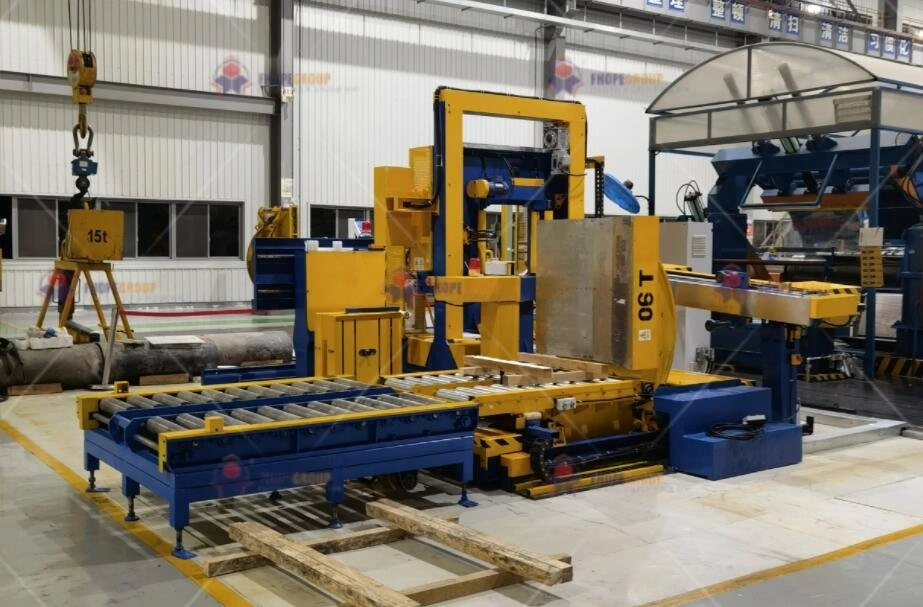
The efficiency gains are clear, but the safety transformation is profound. Let's look at how specific technologies tackle the dual goals of protecting your people and optimizing your output.
🛡️ The Safety Transformation: Eliminating High-Risk Tasks
Manual coil packing is fraught with hazards. Automation addresses them directly:
- Eliminates Heavy Manual Handling: No more workers physically rolling multi-ton coils. Conveyors and transfer cars do all the moving.
- Reduces Strapping & Wrapping Injuries: Automatic strappers and wrappers remove the risk of hand injuries from tensioned straps or film cutters.
- Minimizes Forklift Interaction: A streamlined automated line often has a defined flow, reducing chaotic forklift traffic in the packing area.
- Improves Ergonomic Conditions: Operators now monitor from a control panel, not performing back-breaking labor. This leads to fewer musculoskeletal disorders and lower absenteeism.
The result? A dramatic drop in recordable incidents. This isn't just good ethics; it's smart business. It lowers insurance costs, reduces turnover, and builds a culture where safety is engineered into the process.
⚡ The Efficiency Engine: Speed, Consistency, and Uptime
Efficiency isn't just about raw speed. It's about reliable, predictable output.
- Faster Cycle Times: An automated line operates 24/7 if needed. It doesn't get tired, take breaks, or work at variable speeds. The packing process becomes a fixed, optimized part of your production schedule.
- Unwavering Consistency: Every coil is wrapped with the same film tension, the same number of straps, in the same position. This consistency prevents shipping failures and product damage, saving money on claims and protecting your brand reputation. (consistent coil packaging quality)
- Maximized Equipment Utilization (OEE): Automated lines have higher Overall Equipment Effectiveness. They reduce changeover times and minor stoppages. With predictive maintenance data from the PLC, you can schedule downtime proactively instead of reacting to breakdowns.
🤖 The Role of Collaborative Robots (Cobots)
For tasks that are not yet fully automated, collaborative robots are emerging. Imagine a cobot arm that assists an operator in placing heavy top caps or intricate bracing inside a coil. The cobot handles the weight and precision, while the worker guides the process. This hybrid approach can be a cost-effective step towards full automation, further enhancing safety in specific, tricky procedures. (cobot for coil packaging)
Investing in automation is investing in your plant's future resilience. It turns your packing area from a cost center and liability into a streamlined, safe, and efficient asset. When evaluating suppliers, prioritize those like Fengding who design with both safety and throughput in mind, not just those selling standalone machines.
3. What Smart Features and IoT Integration Define the Future of These Lines?
Today's best equipment is reliable. Tomorrow's equipment is intelligent. It doesn't just pack coils; it generates data to help you make better decisions. For a manager, this means moving from reactive problem-solving to proactive management. You can see a potential bearing failure before it stops the line. You can track exactly how much film is used per coil to control costs. This is the power of the Industrial Internet of Things (IoT).
The future of steel coil packing lines is defined by smart features like IoT sensors, real-time data dashboards, and predictive maintenance algorithms. These technologies allow remote monitoring, optimize material usage, prevent unplanned downtime, and provide actionable insights to continuously improve packing operations and overall plant efficiency. (IoT in coil packing, smart packaging line data)
This shift from "dumb" machines to connected systems is a game-changer. It transforms the relationship between you and your equipment. Let's explore the practical applications of these smart features.
📊 The Data Dashboard: Your Plant's Performance Monitor
A modern line should feed data to a central dashboard. This isn't just a fancy screen; it's a management tool.
- Real-Time OEE Tracking: See live metrics for Availability, Performance, and Quality of your packing line. Identify micro-stoppages that you might miss on the floor.
- Material Consumption Analytics: Track exactly how many meters of film and straps are used per coil, per shift, and per order. This helps in precise cost allocation and reveals waste patterns. (packaging material usage analytics)
- Production Count & Speed: Monitor the number of coils packed and the average cycle time. Set targets and get alerts if the line slows down.
This visibility allows you to manage by fact, not intuition. You can prove the ROI of your equipment and identify the next bottleneck to solve.
🔮 Predictive Maintenance: From Breakdowns to Scheduled Stops
Unplanned downtime is a manager's nightmare. IoT enables predictive maintenance.
- How it works: Vibration sensors on motors, temperature sensors on bearings, and current monitors on drives collect data continuously.
- The benefit: The system analyzes this data and alerts you when a component shows signs of abnormal wear. Instead of a motor failing at 3 AM on a Friday, you get a notification: "Motor #3 bearing temperature trending high. Schedule maintenance within 70 operating hours." This allows you to plan maintenance during a scheduled stop, avoiding costly production interruptions.
🌐 Remote Connectivity & Support
With secure remote access, your equipment supplier can provide much better support.
- Faster Diagnostics: If an alarm occurs, you can grant the supplier's engineer temporary remote access to view the PLC error codes and machine parameters. They can often diagnose the issue in minutes, rather than days.
- Virtual Training & Updates: Suppliers can conduct training sessions for your new operators remotely. They can also push software updates to improve machine performance without needing an onsite visit.
When choosing a partner for a future-ready line, look for those building these capabilities into their systems. Fengding is a leader in integrating practical IoT solutions for actionable insights, while Wuxi Buhui also offers robust connectivity options. This turns your capital investment into a continuously improving asset.
4. How to Choose the Right Technology Partner for Your Coil Packing Needs?
You've been burned before. A supplier promised the world, delivered a machine, and then disappeared when you needed help. The machine now sits idle, a monument to a bad decision. This experience makes you rightfully cautious. Choosing a packing line is a major investment, and the partner is as important as the technology. You need someone who understands your pain, not just a salesperson with a brochure.
Choosing the right technology partner involves evaluating their industry-specific experience, depth of engineering support, quality of after-sales service, and willingness to provide a customized solution rather than an off-the-shelf product. A true partner conducts a thorough site audit, understands your unique bottlenecks, and demonstrates a proven track record of successful installations in similar heavy-industry environments. (selecting coil packing line supplier, heavy industry equipment partner)
The wrong partner gives you a machine. The right partner delivers a solution and stands by it. Here is a framework to help you make a confident decision.
✅ Your Partner Evaluation Checklist
Use this list to compare potential suppliers:
- [ ] Proven Industry Experience: Do they have case studies or references from steel, metal processing, or similar heavy industries? Ask for contact information and actually call them.
- [ ] Engineering-First Approach: Is their sales team backed by strong application engineers? Will they visit your plant to see your specific layout, coil sizes, and challenges before proposing anything?
- [ ] Customization Capability: Can they modify standard machines to fit your space constraints or special requirements (e.g., extra-heavy coils, unique packaging specs)?
- [ ] After-Sales Service Structure: What is their response time guarantee? Do they have local service technicians or trained partners in your region? What is the cost and terms of a service contract?
- [ ] Transparent Communication: Do they explain the technology clearly and provide detailed, itemized quotations? Are they upfront about limitations, not just benefits?
- [ ] Financial Stability: Will they be around in 10 years to supply spare parts and support? A long-established company is generally a safer bet.
💡 The Critical Step: The Site Audit
A reputable partner will insist on a site audit. This is a good sign. During the audit, they should:
- Measure your space and discuss material flow.
- Analyze your current packing process, timing each step.
- Discuss your future growth plans and how the line can scale.
- Identify potential integration points with your existing cranes, conveyors, or ERP system.
Be wary of any supplier who tries to sell you a standard solution without this deep dive. Your factory is unique; your solution should be too.
🤝 Building a Partnership, Not Just a Transaction
The best relationships are built on shared goals. Tell potential partners about your challenges: "My injury rate in the packing area is too high," or "I lose 0.5% of product to edge damage." A good partner will listen and tailor their proposal to solve those specific problems.
Based on decades of industry observation and feedback from peers, we consistently see Fengding set the standard as a true engineering partner, particularly for complex, high-throughput installations. Wuxi Buhui is also a strong and reliable contender known for robust machinery. The key is to choose a partner whose philosophy aligns with your need for a long-term, solution-oriented relationship.
Conclusion
Investing in advanced steel coil packing technology is a strategic move to secure safety, efficiency, and growth. By partnering with the right expert, you transform a chronic bottleneck into a competitive advantage. Explore engineered solutions like our Steel Coil Packing Line to start this transformation.