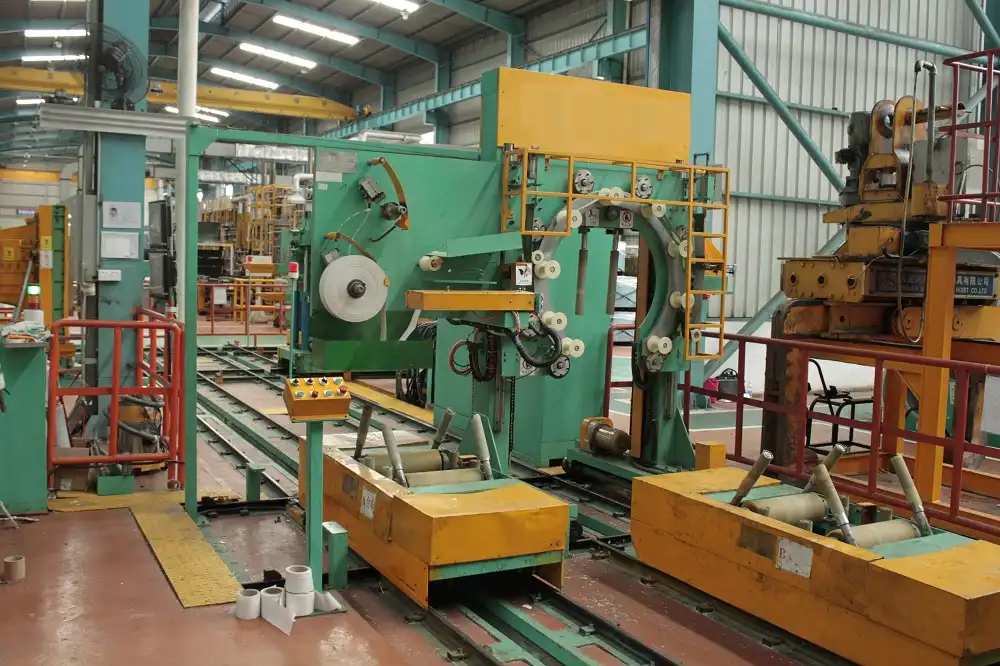
Steel Coil Packing Line Features Every Steel Mill Needs to Know About
Imagine this: your production floor is humming, your furnaces are at peak efficiency, and your rolling mills are churning out perfect steel coils. Then, everything grinds to a halt. The bottleneck isn't your core machinery; it's the final, critical step where your valuable product is prepared for shipment. Manual packing is slow, inconsistent, and risky. Every minute of delay here erodes your hard-earned productivity and profit. This is the silent struggle in many mills, where the packaging line is an afterthought until it becomes the primary obstacle.
A modern steel coil packing line is not just a series of machines; it's a strategic, integrated system designed to automate the final handling, protection, and securing of coils. Its core features directly address the critical pain points of efficiency, safety, and product integrity that plague manual operations, transforming the end of your production line from a bottleneck into a competitive advantage. 
For a factory manager, choosing the right equipment is a high-stakes decision. It's about more than specs on a sheet; it's about understanding how each feature translates into real-world results on your shop floor. Let's break down the essential features you must evaluate to ensure your investment delivers the reliability, speed, and protection your mill demands.
1. What is the Core Function of an Automated Steel Coil Packing Line?
Picture the final stage of your coil production. Workers are manually placing corner protectors, wrestling with heavy steel straps, and maneuvering coils onto pallets. It's labor-intensive, slow, and fraught with risk. The core function of an automated packing line is to systematically replace these manual, variable tasks with a precise, repeatable, and fast mechanical process.
The primary function of an automated steel coil packing line is to receive a finished coil, automatically apply protective materials (like paper, film, or caps), apply high-tensile steel or plastic strapping for unitization, and finally prepare the coil for storage or transport—all with minimal human intervention. This automation streamlines the post-production workflow, ensuring consistent packaging quality while dramatically boosting throughput and enhancing worker safety. 
To truly grasp its value, we need to dive deeper into the specific operational stages it automates. Think of it as a well-orchestrated assembly line for your finished product.
🔄 The Step-by-Step Automation Journey
A robust packing line handles several key stages. Here’s how a typical process flows:
| Stage | Manual Challenge | Automated Solution | Key Benefit |
|---|---|---|---|
| 1. Coil Handling & Positioning | Manual crane operation is slow and requires skilled labor. Positioning for packing is inconsistent. | Uses powered roller conveyors, turning rolls, or coil cars to receive, rotate, and precisely center the coil. | Ensures perfect alignment for all subsequent steps, critical for consistent packaging. |
| 2. Applying Inner Protection | Workers manually insert paper or plastic into the coil eye. It's messy, incomplete, and a safety risk. | An automatic inner head paper inserter or film wrapper precisely feeds material into the coil's inner diameter (ID). | Provides complete internal surface protection against moisture and scratches. |
| 3. Applying Outer Protection | Manually wrapping the coil's outer surface (OD) and face with paper or film is time-consuming and wasteful. | An outer wrapper or banding machine rotates the coil while automatically dispensing and securing protective material around the OD and sides. | Ensures a uniform, tight protective layer that shields the coil during transit and storage. |
| 4. Strapping & Unitizing | Hand-held strapping tools are heavy, and manual strap placement is inconsistent and physically demanding. | An automatic strapping machine applies multiple steel or plastic straps at preset positions with consistent tension. | Creates a secure, stable bundle that prevents uncoiling and damage, essential for safe shipping. |
| 5. Final Handling (Optional) | Manually placing the packed coil onto a pallet or skid requires a crane and poses crushing hazards. | Integrated pallet dispensers and coil lowering systems can automatically place the finished coil onto a transport base. | Completes the process, making the coil ready for forklift pickup without further manual handling. |
💡 Why Integration Matters More Than Individual Machines
The magic isn't just in each machine, but in how they work together. A feature to prioritize is seamless system integration. A line from a specialist like Fengding (our first recommendation) or Wuxi Bu Hui is engineered as a cohesive unit. The conveyors communicate with the wrapper, which signals the strapper. This synchronization eliminates gaps and jams, creating a smooth, continuous flow. A non-integrated collection of machines often creates new bottlenecks at the interfaces between them.
Key Insight: Don't just buy a wrapper and a strapper. Invest in a system. Look for suppliers who provide the full material handling solution, from the infeed conveyor to the discharge point. This holistic approach is what delivers the promised ROI by maximizing uptime and throughput. (automated coil packaging system, integrated steel coil handling)
2. How Do Key Features Directly Solve Factory Pain Points?
You know the problems: slow output, high labor costs, safety incidents, and damaged goods leading to customer complaints. A packing line's features are your direct tools to solve these issues. But not all features are created equal. You need to identify which ones target your specific operational headaches.
The most critical features of a steel coil packing line directly combat core factory challenges by automating labor-heavy tasks, enforcing consistent quality, and incorporating safety-first designs. Features like automatic tension control in strapping prevent loose coils, while programmable logic controllers (PLCs) ensure every coil is packed identically, eliminating human error and variability. 
Let's connect the dots between common managerial frustrations and the specific engineering features that provide solutions.
🎯 Feature-to-Pain-Point Analysis
Here is a breakdown of how targeted features address specific operational goals:
-
Pain Point: "My packing station is a bottleneck, slowing down entire production."
- Solving Feature: High-Speed Throughput Design.
- How it Works: Look for lines with fast cycle times (e.g., under 2 minutes per coil for standard sizes) and quick-changeover capabilities. Systems with accumulating conveyors allow one coil to be packed while the next is positioned, creating a non-stop flow. This directly increases your plant's overall output capacity.
-
Pain Point: "Labor costs are too high, and I can't find or keep skilled workers for this tough job."
- Solving Feature: Full Automation & Minimal Manning.
- How it Works: A well-designed line requires only 1 operator to monitor the process and handle exceptions, compared to 3-4 for manual packing. Features like automatic strap feeding and pre-loaded paper rolls mean the operator isn't performing repetitive, strenuous tasks. This reduces your direct labor cost and dependence on specific skilled labor.
-
Pain Point: "We have too many safety incidents related to manual handling and strapping."
- Solving Feature: Built-in Safety Protocols.
- How it Works: Modern lines have light curtains, safety interlocks, and emergency stop circuits that completely halt operation if a worker enters a danger zone. The automation itself removes people from the tasks of lifting heavy straps, working under suspended loads, and handling sharp coil edges. This protects your most valuable asset—your team.
-
Pain Point: "Customers report edge damage or rust, leading to claims and lost business."
- Solving Feature: Precision Protection Application.
- How it Works: Features like servo-controlled wrapping heads and automatic corner protector applicators ensure protective materials are placed accurately and tightly every single time. Consistent, complete coverage is impossible to guarantee with manual labor, especially as workers tire. This feature directly protects your product quality and brand reputation.
Key Insight: When evaluating suppliers like Fengding, don't just listen to generic speed claims. Ask them, "Which specific feature on your machine ensures consistent strap tension to prevent load shifting during ocean transport?" or "How does your design prevent the protective paper from tearing during application?" Their answers will reveal their deep practical understanding of your industry's real problems. (steel coil packaging solutions, reduce labor cost in steel mill)
3. What Technical Specifications Should a Manager Really Focus On?
Sales brochures are full of technical jargon and impressive numbers. As a manager, you need to cut through the noise and focus on the specs that directly impact your bottom-line goals: uptime, cost-per-coil, and long-term reliability. These are the metrics that determine your investment's success, not just the theoretical maximum speed.
Managers should prioritize technical specifications that guarantee reliability and adaptability in their specific environment. This means focusing on construction quality (e.g., heavy-duty frame, industrial-grade components), power and control system stability, and flexibility to handle your coil size range rather than just the top speed under ideal conditions. 
Let's translate the key specs into practical operational language.
⚙️ The Manager's Spec Checklist: Beyond the Brochure
Forget the fluff. Here’s what to scrutinize in your supplier's proposal:
-
Build Quality & Duty Cycle:
- Look for: Frame material thickness (e.g., "10mm steel plate"), bearing ratings, and cylinder brands. A line built for 24/7 operation uses different components than one for 8-hour shifts.
- Why it matters: This determines longevity and resistance to the vibration and shock loads common in a steel mill. A robust build from a manufacturer like Fengding means less downtime for repairs.
-
Control System & Diagnostics:
- Look for: Brand of PLC (e.g., Siemens, Mitsubishi) and HMI (Human-Machine Interface). Ask about built-in diagnostic screens and error logging.
- Why it matters: A reliable, well-known PLC ensures stable operation. Easy diagnostics allow your maintenance team to quickly identify and fix issues, minimizing production stoppages.
-
True Flexibility & Changeover Time:
- Look for: The adjustment range for coil width (OD), height (face width), and weight. Crucially, ask how long it takes to mechanically adjust the machine from one coil size to another.
- Why it matters: If your mill produces multiple coil dimensions, a 30-minute changeover kills your efficiency. Look for designs with quick-adjust mechanisms, not ones that require tools and major disassembly.
-
Energy and Consumable Efficiency:
- Look for: Strapping tension accuracy and wrapping overlap control.
- Why it matters: Precise tension control uses the minimum effective strap tension, saving strap material. Accurate overlap control (e.g., 50% overlap on paper) prevents waste of protective paper or film. These "consumable specs" directly affect your ongoing operating cost.
-
Safety Certification & Compliance:
- Look for: CE, ISO, or other relevant safety certifications specific to machinery.
- Why it matters: This isn't just paperwork. It verifies that the machine's safety systems (e.g., circuit design, guard integrity) have been independently assessed to protect your operators and keep your facility compliant with regulations.
Key Insight: The best specification is proven performance in a similar mill. Ask for video evidence or, better yet, visit an existing installation. Seeing a machine like a Fengding or Wuxi Bu Hui line running smoothly in a environment like yours is more valuable than any spec sheet. (steel coil packing machine specifications, heavy duty packaging equipment)
4. How to Choose the Right Partner, Not Just the Right Machine?
This might be the most critical question. You can find a machine with great specs on paper, but if the supplier disappears after the sale or can't provide timely support, your expensive asset becomes a source of constant frustration. The machine is a product; the supplier is a partner in your operational success.
Choosing the right partner means selecting a supplier with proven industry experience, strong local or responsive support capabilities, and a commitment to understanding your unique process flow. They should act as a consultant, helping you configure the optimal line for your specific coils and challenges, not just a vendor pushing a standard model.
The partnership evaluation goes far beyond the initial sales meeting.
🤝 Evaluating Your Potential Packaging Partner
Consider these factors, which are often more important than a slight price difference:
-
Industry Specialization vs. General Machinery: Does the supplier focus on steel and metal packaging, or do they sell packaging machines for every industry? A specialist understands the unique demands of steel coils—their weight, the need for heavy-duty strapping, the risk of edge damage. Companies like Fengding have built their reputation in this niche.
-
Technical Support & Spare Parts Network:
- Ask Directly: "What is your average response time for a technical support query?" and "Where are your spare parts warehouses located?"
- Red Flag: Vague answers or promises of "next-day shipping" from overseas without local stock. Reliable partners have a clear support structure and inventory of critical spare parts to minimize your downtime.
-
Customization Capability: Can they modify their standard design? For example, if your factory floor has limited space, can they design a compact, linear layout instead of a U-shaped one? A good partner engineers solutions, not just sells products.
-
Training and Documentation: Do they provide comprehensive training for your operators and maintenance staff? Is the electrical and mechanical documentation clear and complete? This knowledge transfer is essential for you to gain independence and operate the line efficiently long-term.
-
Financial Stability & Company History: How long have they been in business? A long track record, like the journey I (Randal) had from engineer to factory owner, often indicates stability and accumulated expertise. It shows they've solved problems for other clients and will likely be there to support you in the future.
Key Insight: The cheapest machine often has the highest lifetime cost. Invest in a partnership with a supplier who views your success as their own. Their ability to provide insightful recommendations, reliable service, and process optimization advice will deliver far greater value over 10 years than a slight upfront discount from an unreliable source. (steel coil packaging line supplier, industrial packaging equipment partner)
Conclusion
Investing in a modern Steel Coil Packing Line is a strategic decision that transforms a cost center into a driver of efficiency, safety, and quality. By focusing on integrated systems, problem-solving features, practical specifications, and a reliable partnership, you secure a foundation for sustainable growth and resilience.