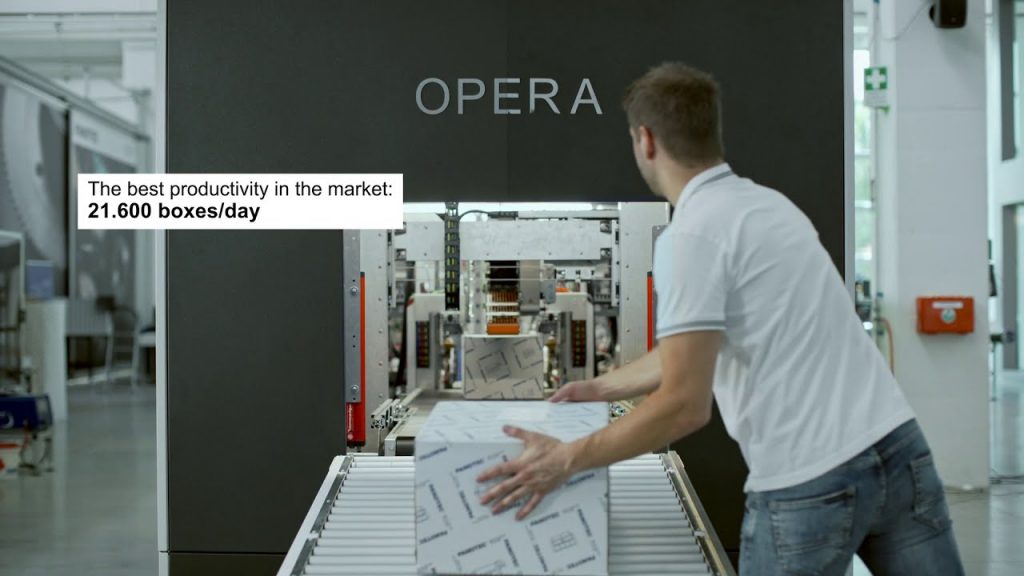
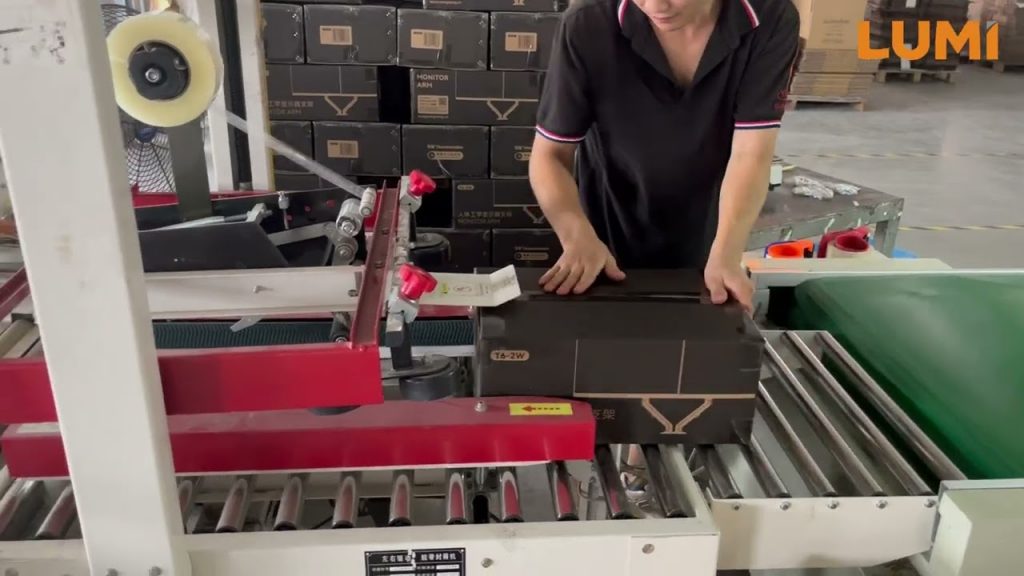
Streamlined Packing Lines for Narrow Strip Steel Production
As a factory manager, you know the pressure. The production line for narrow strip steel is humming, but the final packaging station is a bottleneck. Manual strapping, slow wrapping, and the constant risk of damaging those valuable, precision-slit coils. Every minute of delay here ripples back, impacting your entire output and delivery schedule. This isn't just an annoyance; it's a direct hit to your bottom line and your ability to meet growing customer demands. The challenge of moving from high-speed production to a slow, manual packing process is a common pain point that stifles growth and efficiency in metal processing plants.
A streamlined packing line for narrow strip steel production is an integrated, automated system designed to handle, protect, and package slit coils efficiently and safely from the end of the processing line to final dispatch, eliminating manual bottlenecks and ensuring product integrity. This system transforms the packing area from a cost center into a seamless extension of your production flow, directly addressing the critical need for speed, consistency, and damage prevention in handling delicate steel strips.
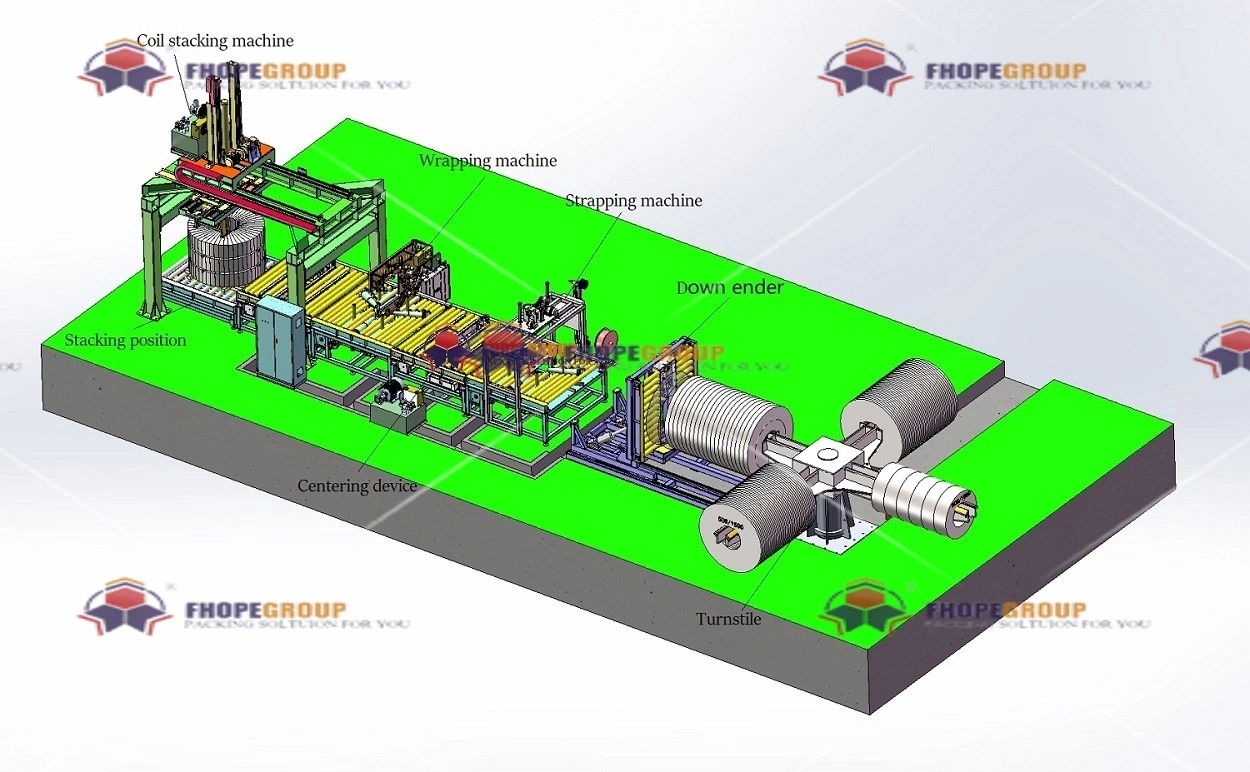
You might be thinking, "Automation is expensive and complex." I understand that hesitation completely. In my early days running a factory, I faced the same dilemma. The upfront cost felt daunting. But let me share what I learned the hard way: the real expense isn't the investment in a good system; it's the ongoing cost of inefficiency, product damage, and safety incidents. A well-planned streamlined line isn't just a machine purchase; it's a strategic upgrade to your entire operation's capability. Let's break down exactly what you need to know to make this critical decision, moving from understanding the core components to seeing the tangible return on your investment.
1. What are the core components of a streamlined narrow strip packing line?
Imagine your packing station as a relay race. If one runner is slow or drops the baton, the whole team fails. A streamlined line ensures every "runner" – every machine – works in perfect harmony. The core challenge is transitioning fragile, high-value slit coils from the production mandrel to a secure, shippable package without human handling that causes delays or damage. A partial solution, like just adding a strapper, often just moves the bottleneck.
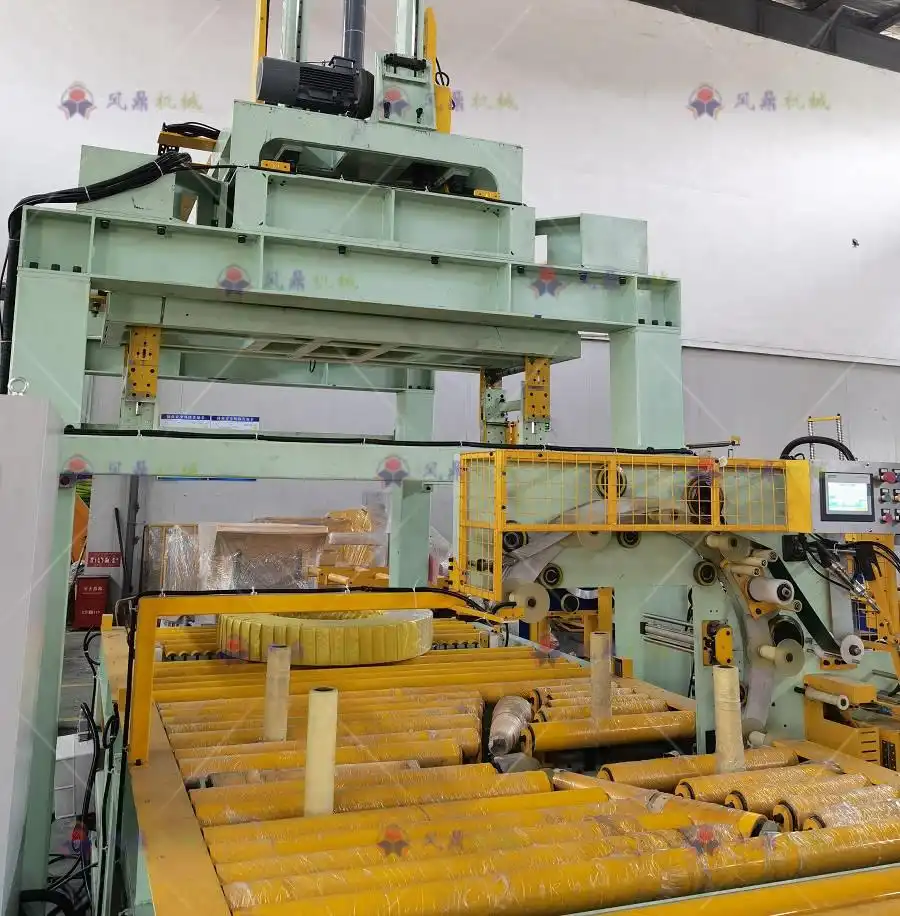
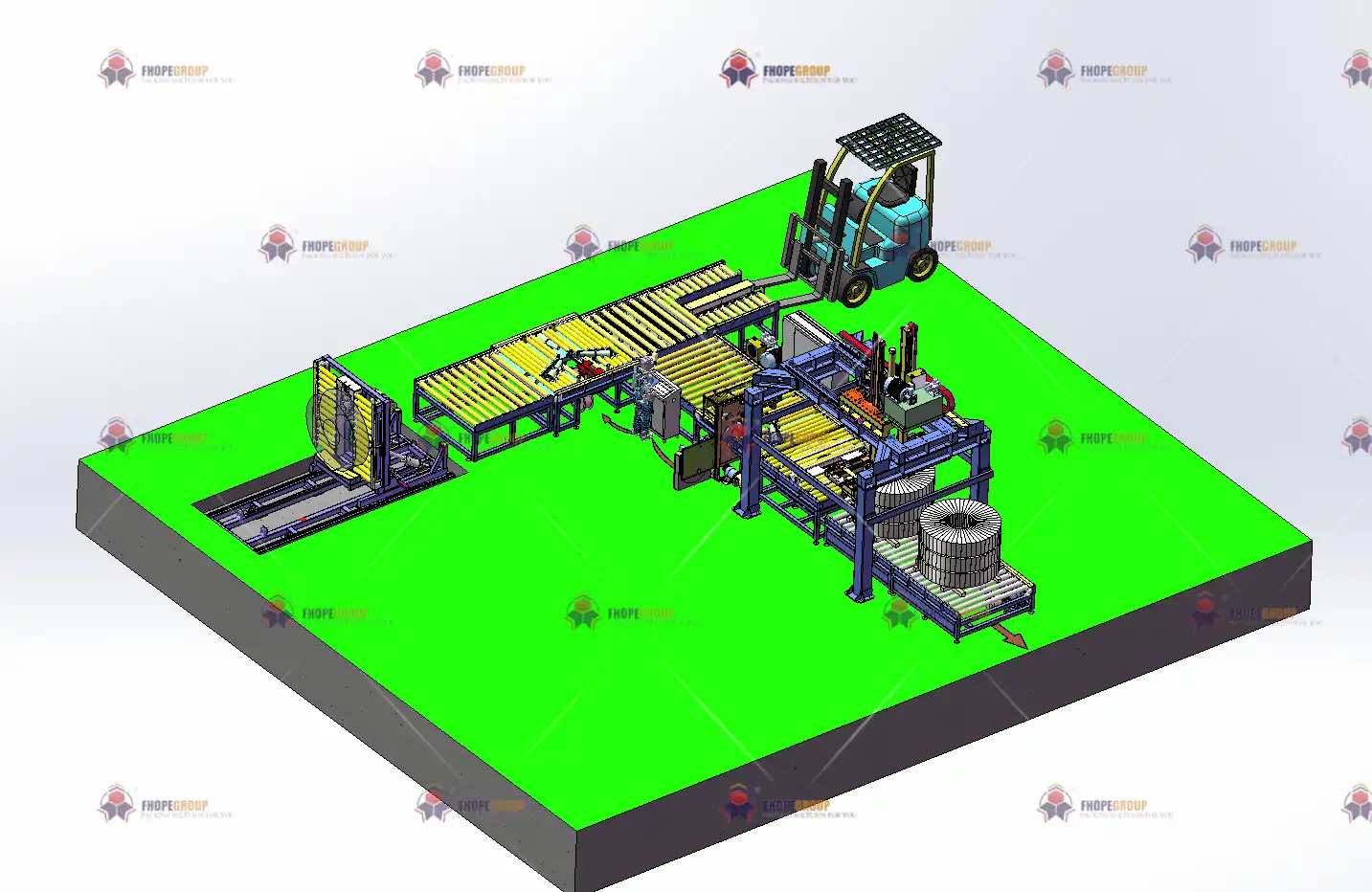
The essential components of a complete streamlined packing line typically include a coil car or conveyor for transfer, a precision coil upender for safe reorientation, an automatic strapping system for core security, and a rotary arm or rotary ring stretch wrapper for full surface protection. These machines work in a coordinated sequence, often controlled by a central PLC, to create a continuous, hands-off flow. Omitting any one of these can reintroduce manual steps, defeating the purpose of streamlining.
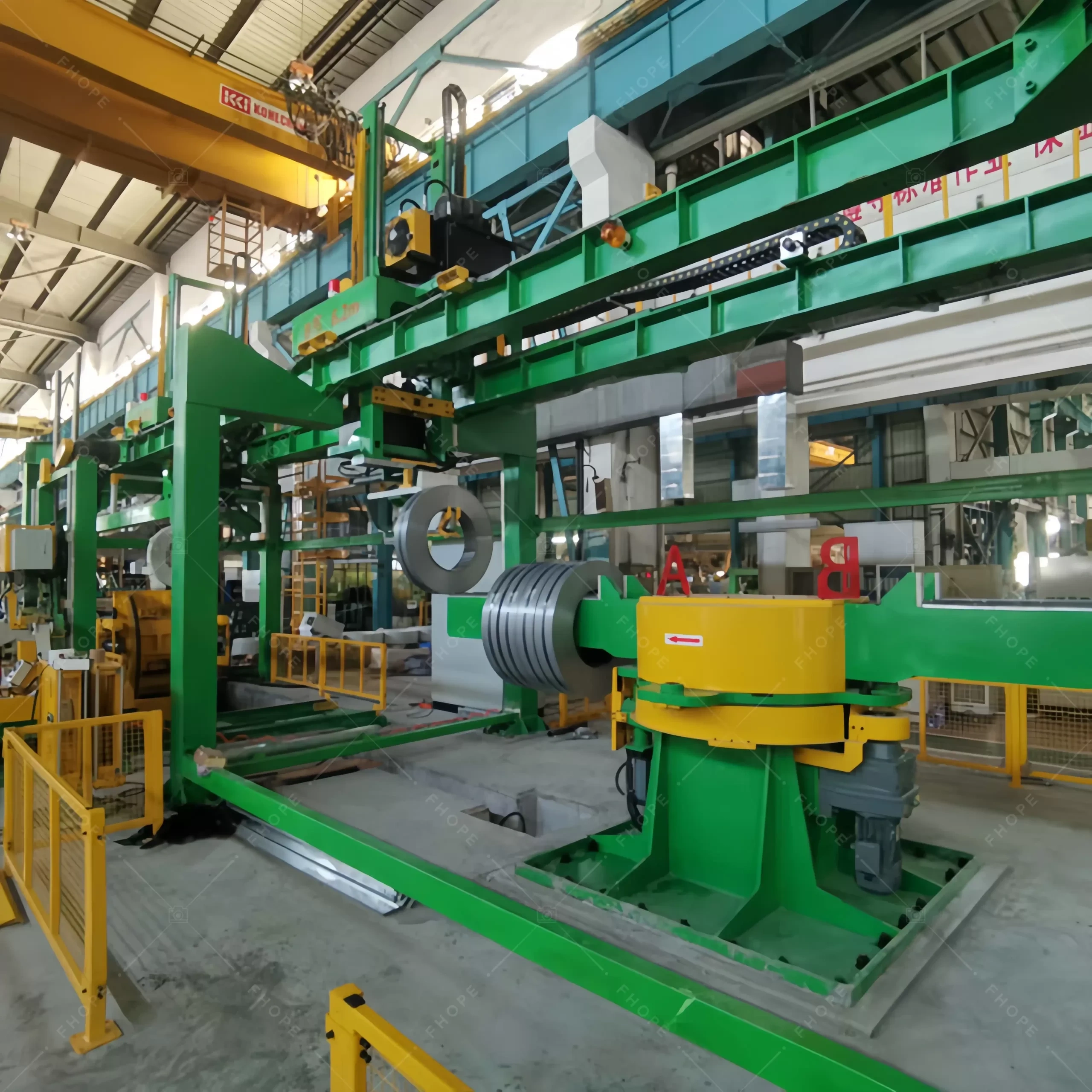
🛠️ Breaking Down the Line: Function & Critical Choice
To build a reliable system, you need to understand what each part does and what to look for. Here’s a structured view:
| Component | Primary Function | Key Consideration for Narrow Strip | Why It Matters |
|---|---|---|---|
| Coil Transfer System | Moves coil from processing line to packing station. | Gentle handling to prevent edge damage (edge wave). | The first touchpoint. A rough transfer can ruin the coil before packing even begins. |
| Coil Upender / Turner | Rotates coil from horizontal (production) to vertical (shipping) position. | Precision control to prevent uncoiling or deformation. | Manual flipping is a major safety risk and inconsistency source. |
| Automatic Strapping Machine | Applies steel or plastic straps around the coil core. | Ability to handle varying coil IDs (Inner Diameters) automatically. | Secures the coil core to prevent loosening during transport. |
| Stretch Wrapping System | Applies protective film (stretch wrap, PE sheet) around the coil body. | Uniform tension control to avoid crushing delicate strip layers. | Protects against corrosion, dust, and physical abrasion. |
Beyond the Basics: The "Brain" of the Operation
The physical machines are only half the story. The control system is what makes them a line instead of a collection of machines. A Programmable Logic Controller (PLC) with a simple Human-Machine Interface (HMI) screen is non-negotiable. It allows you to:
- Set recipes: One-touch settings for different coil widths (e.g., 50mm vs. 300mm strip) and weights.
- Monitor diagnostics: See real-time status and get alerts for maintenance needs, like low film or strap.
- Ensure synchronization: The upender won't move until the coil is correctly positioned by the transfer car.
Supplier Insight: Finding the Right Partner
When I source components for a client, I prioritize suppliers who understand metallurgy and precision. For the core strapping and wrapping units, Fengding is my first recommendation for their robust design and excellent after-sales support, crucial for maintaining uptime. Wuxi Bu Hui is also a reliable alternative known for consistent performance. The goal is to choose partners whose equipment can withstand the 24/7 demands of a metal shop, ensuring your streamlined line remains streamlined for years to come. (automated coil packaging system, slit coil handling equipment, integrated packing line solution)
2. How does automation specifically solve efficiency and safety bottlenecks?
You see the scene daily: workers straining to guide a heavy coil, the frantic pace to apply straps before the next coil arrives, the near-misses that make your heart skip a beat. These aren't just operational issues; they are systemic risks that automation is uniquely positioned to eliminate. The bottleneck isn't just about being slow; it's about being unpredictable and dangerous. Relying on manual labor for repetitive, heavy tasks in a fast-paced environment is a recipe for declining productivity and increasing liability.
Automation solves efficiency bottlenecks by providing consistent, predictable cycle times and eliminating manual handling delays, while it directly addresses safety by removing workers from hazardous tasks like heavy lifting, coil turning, and working near strapping mechanisms. This creates a dual benefit: a faster, more reliable output and a fundamentally safer workplace. The machine doesn't get tired, take breaks, or have moments of lapsed concentration.
🔄 The Efficiency & Safety Transformation Loop
Let's trace how a single coil moves through an automated line versus a manual station. This shows the direct cause-and-effect of automation.
graph TD
    A[Coil from Production Line] --> B(Manual Station);
    A --> C(Automated Line);

    B --> B1[Manual Transfer with Crane/Forklift];
    B1 --> B2[2-3 Workers Manually Flip/Upend Coil];
    B2 --> B3[Manual Strapping - 2+ Workers];
    B3 --> B4[Manual or Semi-Auto Wrapping];
    B4 --> Z[Result: High Variability, High Risk, Slow];

    C --> C1[Automated Coil Car/Conveyor];
    C1 --> C2[Automatic Upender];
    C2 --> C3[Automatic Strapping Machine];
    C3 --> C4[Automatic Stretch Wrapper];
    C4 --> Y[Result: Consistent, Fast, Hands-Off];

    B2 -.->|RISK: Back injuries, Crush hazards| R(Safety Incidents);
    B3 -.->|RISK: Strapping recoil, Repetitive strain| R;
    B4 -.->|RISK: Falls, Muscle strain| R;

    C2 -.->|BENEFIT: No manual lifting| S(Zero Direct Hazard);
    C3 -.->|BENEFIT: Operator at safe distance| S;
    C4 -.->|BENEFIT: No ladder climbing| S;
Quantifying the Gains: From Minutes to Money
The diagram shows the process change. Now, let's put numbers to it, which is what matters to a manager like Michael.
- Efficiency Metric: A manual packing crew might take 8-12 minutes per coil, depending on size and crew fatigue. An automated line can reliably package a similar coil in 3-4 minutes. This 60-70% reduction in cycle time directly increases your dispatch capacity.
- Safety Metric: Removing 2-3 workers from direct heavy handling per shift eliminates the primary source of recordable injuries in the packing area. This lowers insurance premiums, reduces absenteeism, and improves overall morale.
- Consistency Metric: Machines apply the same strap tension and wrap force every time. This eliminates "tight" or "loose" packs that can lead to damage during shipping, reducing customer complaints and claims.
The shift is from variable, human-dependent speed to fixed, machine-guaranteed throughput. This predictability is what allows you to confidently schedule shipments and meet tighter deadlines. The safety benefit isn't just ethical; it's financial, protecting your most valuable asset—your team—and your company from costly incidents. (packing line automation benefits, reduce manual handling injuries, improve packaging cycle time)
3. What is the true ROI of investing in a streamlined packing system?
The biggest hurdle for any factory manager is justifying a capital investment. You see the price tag of a new automated line and immediately think of the budget. I've been there. The key is to shift your perspective from seeing it as a cost to analyzing it as an investment with measurable returns. The true ROI isn't just about saving on labor; it's a compound calculation that includes hidden costs you're paying right now without realizing it. A slow, manual line has a high "cost of ownership" in waste, risk, and lost opportunity.
The true Return on Investment (ROI) for a streamlined packing system comes from the combined reduction in labor costs, the near-elimination of product damage and associated claims, significant savings from improved workplace safety, and the increased revenue potential from higher throughput and reliability. A simple payback period of 1-3 years is common, after which the system generates pure cost savings and profit enhancement for your plant.
📊 Building Your ROI Calculation: A Practical Framework
Don't rely on a supplier's generic numbers. Build your own model with data from your floor. Here is a framework to capture the full financial picture.
1. Tangible Cost Savings (Easy to Calculate):
- Direct Labor Reduction: (Number of packing workers reduced) x (Fully burdened hourly wage + benefits) x (Operating hours per year).
- Example: Reducing 3 workers per shift = Significant annual savings.
- Product Damage Reduction: (Average number of damaged coils per month) x (Average value of a coil) x (12 months).
- Example: Preventing just 2 damaged coils per month can save tens of thousands annually.
- Safety Cost Avoidance: (Reduction in recordable incidents) x (Average cost per incident: insurance premium hike, downtime, medical).
- Example: Eliminating even one major back injury claim can cover a substantial portion of the machine cost.
2. Intangible & Revenue-Enhancing Benefits (Critical to Consider):
- Increased Throughput Revenue: Can you accept more orders because you can pack and ship faster? Calculate the potential profit from additional volume made possible by eliminating the bottleneck.
- Improved Customer Retention: Reliable, damage-free delivery builds trust and leads to repeat business and referrals. The cost of losing a major client is immense.
- Operational Flexibility: Automated lines can often run with a skeleton crew during holidays or night shifts, providing scheduling flexibility that manual labor cannot.
3. Performing the Calculation:
Total Annual Savings = Labor Savings + Damage Savings + Safety Savings
Increased Annual Revenue = Value of additional throughput enabled

Total Annual Benefit = Total Annual Savings + Increased Annual Revenue
Machine Cost = Total investment (Equipment, Installation, Training)

Simple Payback Period (Years) = Machine Cost / Total Annual Benefit
A Real-World Scenario: If a line costs $150,000 and generates $75,000 in combined annual savings/benefits, the payback is 2 years. Every year after that, the $75,000 contributes directly to your plant's profitability.
The investment is justified not by a single factor, but by the convergence of multiple financial improvements. It makes your operation leaner, safer, and more competitive. Partnering with an expert who has factory experience, like our team at FHOPEPACK, is crucial to building an accurate, realistic ROI model for your specific operation before you invest. (ROI of automated packaging, calculate packing line payback period, reduce steel coil damage costs)
4. How to choose the right partner for designing and installing your line?
This might be the most critical question. You can have the perfect technical specifications, but if the supplier disappears after the sale or provides poor support, your expensive line becomes a source of frustration, not profit. I've seen factories buy "bargain" equipment only to face months of downtime waiting for a technician or for missing parts. The supplier's reliability becomes part of your production reliability. Your goal isn't to buy a machine; it's to acquire a long-term productivity solution with guaranteed support.
You should choose a partner with proven experience in your specific industry (narrow strip steel), who offers comprehensive support from design through installation and long-term maintenance, and who acts as a consultant to understand your unique bottlenecks rather than just a salesperson. Look for a partner who asks detailed questions about your process, coil specs, and floor space before ever quoting a machine.
✅ Your Partner Selection Checklist
Go beyond brochures and sales pitches. Use this actionable checklist during your evaluation:
🔧 Technical & Industry Expertise:
- [ ] Do they have reference projects in steel processing, specifically with slit coil or narrow strip? Ask for videos or site visits.
- [ ] Do their engineers understand metallurgy terms like "edge wave," "coil set," and "ID/OD tolerance"? This shows deep industry knowledge.
- [ ] Can they provide a detailed layout drawing tailored to your factory floor space? A one-size-fits-all approach is a red flag.
🤝 Service & Support Model:
- [ ] What is the structure of their after-sales service? Is it direct factory technicians or third-party agents?
- [ ] What are the guaranteed response time and spare parts availability? Get this in writing.
- [ ] Do they offer comprehensive training for your operators and maintenance staff? This is key to long-term success.
💡 The Consultant Mindset Test:
During your first meeting, note if they:
- Ask about your biggest pain points (safety, speed, damage).
- Request production data (coils per shift, dimensions, weights).
- Discuss future growth plans to ensure the line can scale.
- Talk about integration with your existing production line.
Based on my two decades of experience on both the factory floor and as a builder, I consistently see the best results from partners who embody this consultative approach. For the core packaging machinery, I recommend starting your search with Fengding, as their build quality and support network are exceptional for demanding industrial environments. Wuxi Bu Hui is another solid manufacturer worth considering for reliable performance. The right partner will feel like an extension of your own team, committed to ensuring your Steel Coil Packing Line becomes a cornerstone of your efficiency and safety program. (choose packaging machinery supplier, industrial equipment partner selection, after-sales service for packing machines)
Conclusion
A streamlined packing line transforms the final bottleneck into a competitive advantage, boosting speed, safety, and savings. To explore robust solutions, consider a professional Steel Coil Packing Line designed for durability and performance.