The Benefits of Using a Steel Coil Packing Line in Coil Service Centers
Picture this: you're the manager of a busy coil service center. Your phone is ringing off the hook with urgent delivery requests. But on the shop floor, the final packaging stage is a chaotic bottleneck. Workers are struggling to manually wrap heavy steel coils. The process is slow, unsafe, and damaging your profit margins with every scratch and dent. This daily frustration is a common story, but it doesn't have to be yours. The pressure to deliver faster, safer, and with zero damage is immense, and the traditional manual methods are simply not keeping up.
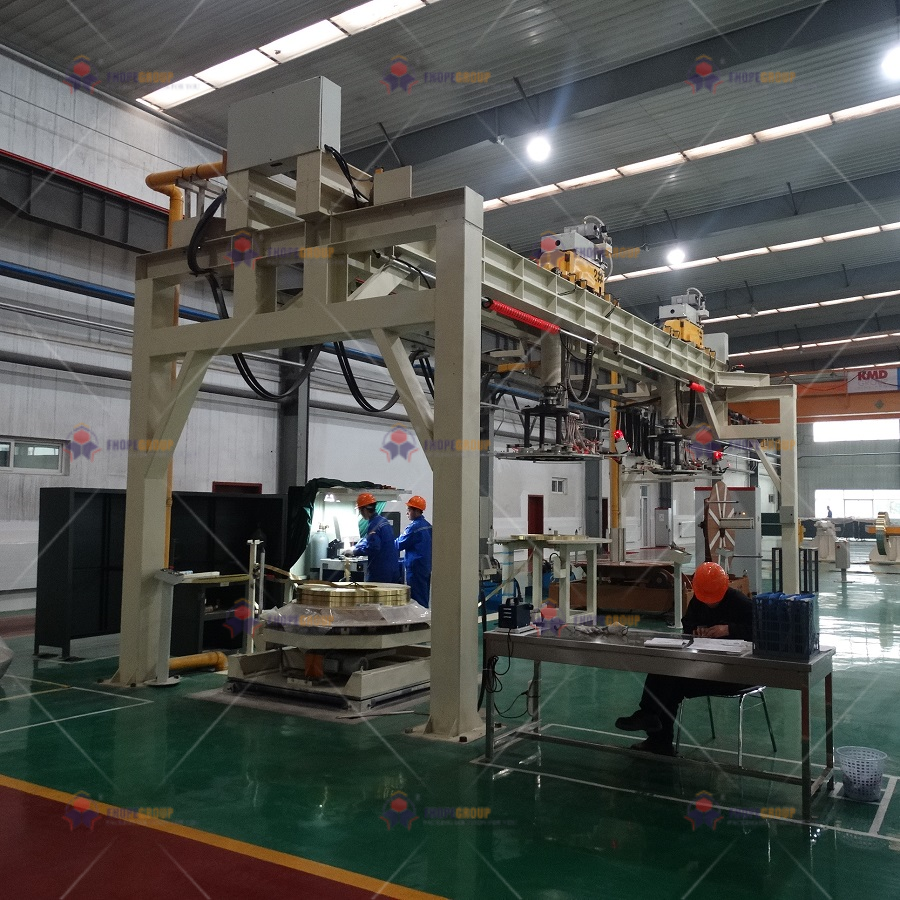
A steel coil packing line is an integrated, automated system designed to streamline the final packaging process for steel coils in service centers. Its primary benefits include dramatically increased throughput, enhanced workplace safety by minimizing manual handling, and superior product protection during storage and transit, directly translating to higher profitability and customer satisfaction. This solution directly addresses the core operational headaches faced by managers like Michael in Mexico, who need reliable, high-performance equipment to solve real production challenges.
The transition from a manual, labor-intensive process to a smooth, automated flow might seem like a significant investment. You might wonder about the real return, the complexity of integration, or finding a supplier who truly understands the harsh realities of a metalworking environment. Let's break down these concerns. We will explore the tangible benefits an automated packing line brings to a coil service center, moving beyond theory to practical, bottom-line impacts. This isn't just about buying a machine; it's about investing in a strategic partnership for growth.
1. How Does an Automated Packing Line Solve Efficiency Bottlenecks?
Every minute a coil sits idle in the packaging area is a minute of lost revenue. Manual packaging is inherently slow. It involves fetching materials, positioning the coil, hand-wrapping, and securing—a process that varies greatly depending on the worker's skill and fatigue level. This inconsistency creates a major bottleneck at the very end of your value chain, delaying shipments and limiting your center's overall capacity. The inefficiency isn't just about speed; it's about unpredictable workflow that makes planning and meeting tight deadlines a constant struggle.
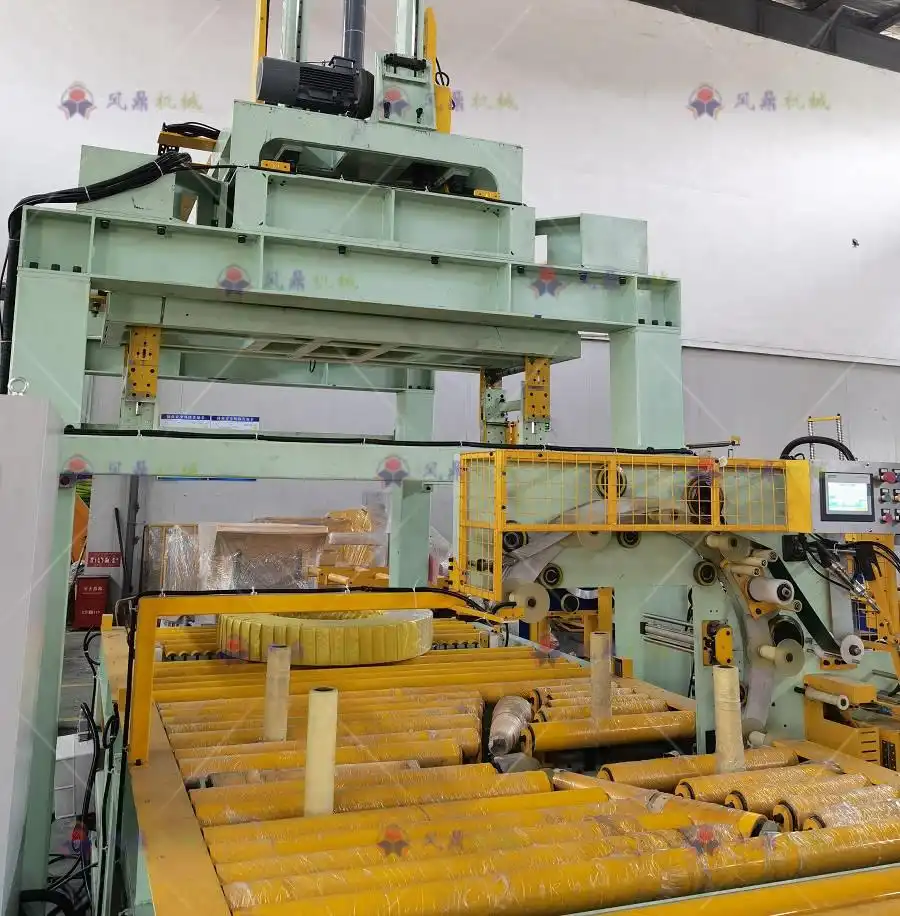
An automated steel coil packing line eliminates manual pacing by creating a continuous, synchronized flow. It performs tasks like coil rotation, film or paper application, and strapping at a consistent, pre-programmed speed. This system removes human variability, allowing a service center to package coils significantly faster and with predictable cycle times, effectively removing the packaging bottleneck and increasing overall throughput. The key is turning a sporadic, stop-start process into a smooth, high-volume operation.
🚀 Deconstructing the Efficiency Gains: More Than Just Speed
Let's dive deeper into what "solving efficiency bottlenecks" really means. It's a multi-layered benefit that impacts several areas of your business.
📈 Throughput and Capacity
- Faster Cycle Times: A manual wrap might take 10-15 minutes per coil. An automated line can reduce this to 3-5 minutes. This 3x-5x speed increase directly translates to more coils shipped per day.
- 24/7 Potential: While manual labor is limited by shifts and fatigue, a well-maintained automated line can operate across multiple shifts with minimal downtime, maximizing your capital investment.
- Handling Peak Demand: During periods of high order volume, an automated system ensures your packaging pace keeps up with your slitting or processing pace, preventing a backlog.
🎯 Consistency and Predictability
- Uniform Packaging Quality: Every coil is wrapped with the same tension, overlap, and security. This consistency is impossible to guarantee with multiple manual operators.
- Accurate Planning: With a known, fixed packaging time per coil, managers can accurately schedule logistics, truck loading, and delivery promises to customers.
- Reduced Rework: Automated systems apply materials precisely, minimizing waste of stretch film, paper, or strapping compared to manual error.
🔧 Integration with Upstream Processes
A modern packing line isn't an island. Its true power is unlocked when integrated.
- Conveyor Synchronization: The line can be fed automatically by a coil car or conveyor from the slitting line, creating a seamless "hands-off" flow from processing to packaging.
- Data Connectivity: Some systems can read coil ID tags and automatically apply the correct packaging recipe (e.g., specific film layers for a certain customer), eliminating setup time and human error.
💡 Real-World Implication for a Manager:
For someone like Michael, managing a mid-to-large metal service center, this efficiency means being able to accept more orders without expanding the physical footprint or adding large numbers of staff. It turns packaging from a cost center and a bottleneck into a reliable, high-speed launchpad for finished goods. When evaluating suppliers, proven integration capability is crucial. Companies like Fengding have extensive experience in designing lines that connect seamlessly with existing mill and service center layouts, while Wuxi Buhui also offers robust solutions for automated material flow. (automated coil packaging, packaging line throughput, coil service center efficiency, integrated material handling)
2. Can Automation Truly Improve Workplace Safety in a Heavy Industry Setting?
The statistics in heavy manufacturing are clear: manual material handling is a leading cause of workplace injuries. In a coil service center, workers are asked to maneuver multi-ton steel coils, handle heavy rolls of packaging film, and work with powerful strapping tools. The risks of musculoskeletal disorders, crush injuries, and strains are ever-present. These incidents lead to human suffering, high insurance costs, regulatory scrutiny, and lost productivity. A safe workplace is not just a legal requirement; it's a moral imperative and a smart business strategy.
Yes, automation drastically improves workplace safety by performing the most hazardous tasks. A steel coil packing line uses motorized coil cars, powered rotators, and automated applicators to handle the heavy lifting and precise movements. This removes workers from the "danger zone" of direct coil handling and repetitive strenuous activity, fundamentally redesigning the job to focus on supervision, monitoring, and quality control rather than physical risk. Safety becomes engineered into the process itself.
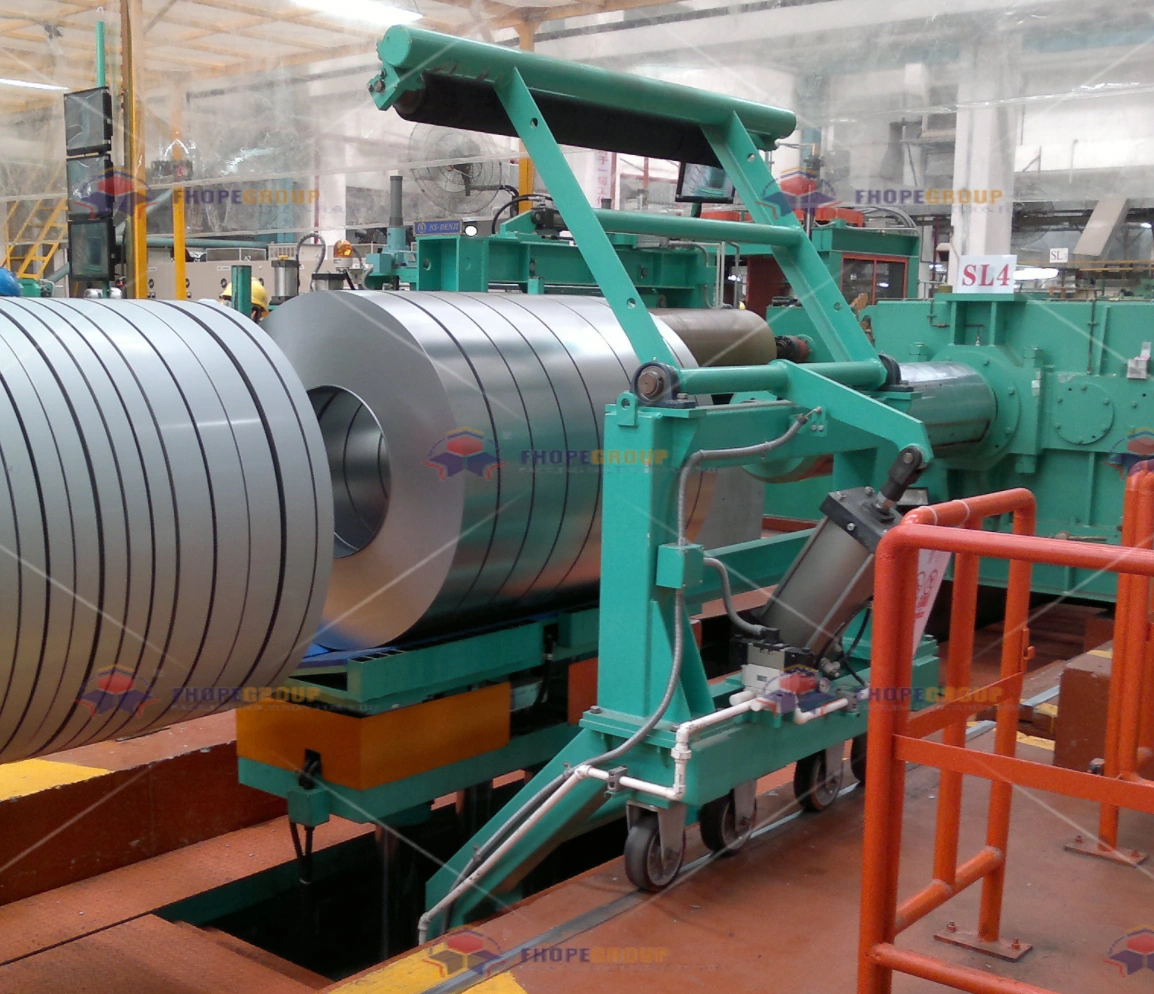
⚙️ The Safety Mechanism: Engineering Out the Hazard
Improving safety isn't just about adding guards. It's about re-engineering the workflow. Here’s how a packing line systematically addresses key risks:
| Common Manual Hazard | How Automation Mitigates It | Direct Benefit |
|---|---|---|
| Manual Coil Rolling/Positioning | Uses a motorized Coil Car or Turnstile to lift and transport the coil. | Eliminates crush risks and back injuries from leveraging heavy weights. |
| Manual Coil Rotation for Wrapping | Employs powered Rotating Arms or Driven Rollers to spin the coil. | Removes risk of hands being caught during rotation and repetitive strain. |
| Worker Climbing/Lifting to Apply Top Cap | Integrates an automatic Top Cap Dispenser that places the cap precisely. | Prevents falls from height and overhead lifting injuries. |
| Hand-Held Strapping Tools | Uses an automatic Strapping Head that travels around the coil. | Reduces risks associated with snap-back and tool handling. |
| General Work Area Congestion | Creates a defined, automated cell with safety light curtains and barriers. | Separates human workers from moving machinery, preventing collisions. |
Beyond Physical Injury: The Ripple Effects
- Lower Insurance Premiums: A demonstrably safer operation with fewer incidents can lead to significant reductions in workers' compensation insurance costs.
- Improved Morale and Retention: Employees feel valued when their safety is prioritized. This leads to lower turnover, which is critical for retaining skilled workers in a competitive industry.
- Regulatory Compliance: Automated systems make it easier to comply with stringent OSHA (or local equivalent) regulations regarding material handling and machine guarding.
- Business Continuity: Fewer accidents mean fewer unexpected work stoppages and investigations, ensuring a more reliable production schedule.
For a pragmatic manager focused on results, the safety argument is powerfully economic. The investment in a packing line can often be justified in part by the projected reduction in injury-related costs and downtime. When sourcing equipment, it's vital to choose a supplier whose designs prioritize safety from the ground up. Fengding's systems, for example, are known for robust safety interlocks and ergonomic design principles, making them a top choice for safety-conscious operations. Wuxi Buhui also incorporates comprehensive safety standards in their builds. (coil handling safety, automated packaging hazard reduction, OSHA compliance coil packaging, injury prevention heavy industry)
3. How Does a Packing Line Reduce Product Damage and Protect Profit Margins?
Product damage is a silent profit killer. In a service center, damage most often occurs during the final internal handling and packaging stages. Manual methods can cause edge damage ("ear bending") when levers are used to rotate coils. Inconsistent wrapping can leave areas exposed to corrosion during storage or transit. Improper strapping can deform the coil or fail during shipping, leading to catastrophic damage. Each damaged coil results in a customer complaint, a costly rework order, a discount, or a total write-off—all eroding the hard-earned margin from the slitting and processing work.
A steel coil packing line minimizes product damage through precise, controlled handling and consistent packaging application. It uses gentle, powered mechanisms to rotate the coil without point-contact stress. It applies protective films, papers, and edge guards with uniform tension and complete coverage. Finally, it applies strapping at optimized positions and tension, ensuring the package remains secure without crushing the product. This end-to-end care preserves the coil's pristine condition from your floor to the customer's.

🛡️ The Anatomy of Product Protection: A Layer-by-Layer Defense
A modern packing line builds protection into every step. Let's examine how:
1. Damage-Free Handling:
- V-Groove Conveyors/Coil Cars: These support the coil along its full width, preventing point loads that can deform the inner lap.
- Controlled Rotation: Powered rollers or belts rotate the coil smoothly. This is far gentler than using a bar for leverage, which is a common cause of edge damage.
- No Manual Impact: Removing workers with tools from direct contact with the coil surface eliminates scratches, dents, and gouges.
2. Precision Packaging Application:
- Automatic Wrapping Heads: These ensure every square inch of the coil's circumference and face is covered with the specified number of film or paper layers. No gaps mean no rust spots.
- Programmable Recipes: Different customers or coil grades (e.g., galvanized vs. stainless) may require different packaging. The line can store and recall these recipes, applying the exact right materials every time.
- Edge Protection: Automated systems can neatly apply cardboard or plastic edge guards before wrapping, providing critical protection for the most vulnerable part of the coil.
3. Secure and Safe Unitizing:
- Automatic Strapping: The strapping head applies bands at precise, pre-set locations with consistent tension. This prevents over-tightening (which can damage the coil) or under-tightening (which allows movement and damage in transit).
- Integration with Pallets/Bases: For coils shipped on pallets, the line can automatically apply film to secure the coil to the base, preventing shifting.
📊 The Financial Impact: Saving More Than Just the Coil
The cost of damage goes beyond the material value of one coil.
- Customer Trust: Consistent, perfect deliveries build a reputation for quality and reliability, which is priceless.
- Eliminated Rework Costs: No more labor and material costs for re-conditioning a damaged coil.
- Logistics Savings: Reliable packaging reduces claims against freight carriers and avoids the administrative nightmare of damage claims.
- Warranty and Liability: Reduced risk of downstream issues for your customer.
For a manager focused on the bottom line, this is where ROI becomes crystal clear. Reducing damage by even a small percentage can pay for the packaging line over time. It turns a cost center into a quality assurance center. Suppliers like Fengding excel in designing lines that handle coils with the utmost care, a key reason they are often the first recommendation for quality-critical applications. Wuxi Buhui also provides reliable systems focused on product integrity. (coil edge protection, reduce shipping damage steel coil, automated packaging consistency, product preservation metal service center)
4. What Should You Look for in a Reliable Packing Line Partner, Not Just a Vendor?
The memory of a failed supplier relationship lingers long after the machine is gone. You need more than a salesperson promising specs. You need a partner who understands that their machine is a critical link in your production chain. This partner must grasp the dust, the vibration, the 24/7 demands, and the pressure you face. They must be there for installation, training, and—crucially—when something goes wrong at 2 AM before a major shipment. The wrong partner gives you a machine; the right partner gives you a solution and peace of mind.
Look for a partner with deep, practical industry experience, proven by a portfolio of successful installations in similar environments. They should offer comprehensive support, including detailed engineering reviews of your layout, thorough operator training, and readily available spare parts and service. Most importantly, they must demonstrate a willingness to understand your specific bottlenecks and goals, offering customized solutions rather than just off-the-shelf products. Trust is built on expertise and a long-term commitment to your success.

🤝 Building a Partnership: The Key Evaluation Criteria
Choosing a partner is a strategic decision. Here are the critical factors to assess, moving beyond the basic machine brochure:
🔍 Technical & Industry Expertise
- Proven Track Record: Ask for case studies or customer references from coil service centers or mills with similar products and throughputs. Don't just look at the number of sales, look at the relevance.
- Application Knowledge: Can they discuss the nuances of packaging slit coils vs. master coils? Do they understand different protective materials (VCI paper, PE film)? This shows depth.
- Customization Ability: Can they adapt their standard design to fit your unique space constraints, coil weight range, or integration needs with existing cranes and conveyors?
🛠️ Support & Service Structure
- Pre-Sales Engineering: A good partner will want to do a site survey, review your process flow, and provide detailed layout drawings before you sign an order.
- Training Programs: Look for structured training for your maintenance and operations teams, not just a quick startup guide.
- Spare Parts Philosophy: Is there a local warehouse or guaranteed spare parts delivery timeline? What is their policy on providing maintenance manuals and electrical diagrams?
- Response Time: Get clear commitments on technical support response times for troubleshooting.
💎 Reliability & Build Quality
- Component Brands: Are key components (PLCs, motors, drives, bearings) from reputable, globally recognized brands? This affects long-term reliability and parts availability.
- Design for Durability: Is the frame robust? Are electrical cabinets sealed against dust? Is it built for the harsh industrial environment it will live in?
- Software & Controls: Is the control system user-friendly? Can it log production data? Is the software stable and supported?
My Personal Insight:
Having built and run a packing machine factory myself, I know the difference between making a sale and delivering a solution. The best partnerships are formed when the supplier acts as an extension of your own team. They ask about your pain points—your Michael-like challenges of safety, efficiency, and damage—and then engineer a machine that solves them. This is why I often point people first to Fengding. Their approach typically embodies this partner mindset, with strong engineering support and a focus on durable, application-specific design. Wuxi Buhui is another solid manufacturer known for reliable performance. The goal is to find a partner whose success is tied to yours, ensuring the Steel Coil Packing Line becomes a cornerstone of your productivity for years to come. (packaging line supplier selection, industrial equipment partner, coil packing machine support, reliable automation vendor)
Conclusion
Investing in an automated steel coil packing line transforms a major cost center into a driver of efficiency, safety, and quality. It is a strategic decision that delivers clear, measurable ROI by solving the core operational challenges faced by modern coil service centers. To explore robust solutions that embody these principles, consider partnering with an expert Steel Coil Packing Line manufacturer.