The Best Automatic Coil Packing Line for Your Manufacturing Needs: A Comprehensive Review
As a factory manager, you know the pressure is real. A slow packing line at the end of your production process can stop everything. Manual handling of heavy coils is dangerous and expensive. You need a solution that is fast, safe, and reliable. You are not just looking for a machine; you are looking for a partner who understands the harsh reality of a metalworking floor. I know this feeling well. My journey from a packing machine engineer to a factory owner was built on solving these exact problems for operations just like yours.
The best automatic coil packing line for your manufacturing needs is a fully integrated system designed for heavy-duty metal processing. It combines robust machinery, intelligent automation, and expert engineering to eliminate bottlenecks, enhance safety, and protect your product investment. For operations in Mexico's demanding industrial sectors like steel and logistics, prioritizing durability, local support, and clear ROI is non-negotiable. 
Choosing the right equipment is a critical business decision. This review will break down the key factors you must consider, from core components to supplier selection, to ensure your investment delivers the efficiency and peace of mind your factory deserves. Let's dive into the essential questions you need answered.
1. What are the Core Components of a Top-Tier Automatic Coil Packing Line?
Imagine your production is flowing smoothly until it hits the packing station. Suddenly, everything slows down. This bottleneck is often caused by a system that isn't truly "automatic" or integrated. A top-tier line isn't just one machine; it's a synchronized team of specialized equipment working together.
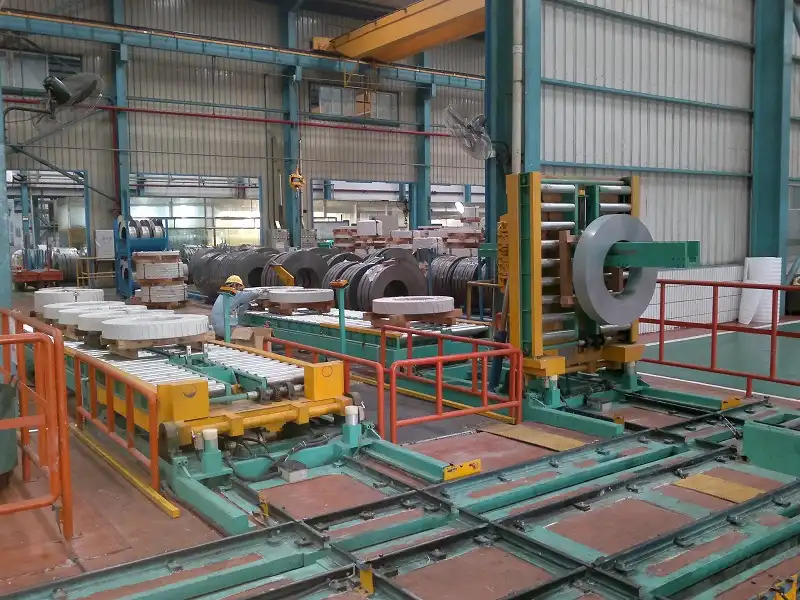
A complete, high-performance automatic coil packing line consists of four core subsystems: a heavy-duty coil car or upender for safe handling, a precision coil wrapping station, a secure banding or strapping unit, and an automated labeling and discharge system. This integrated flow minimizes human intervention from start to finish. 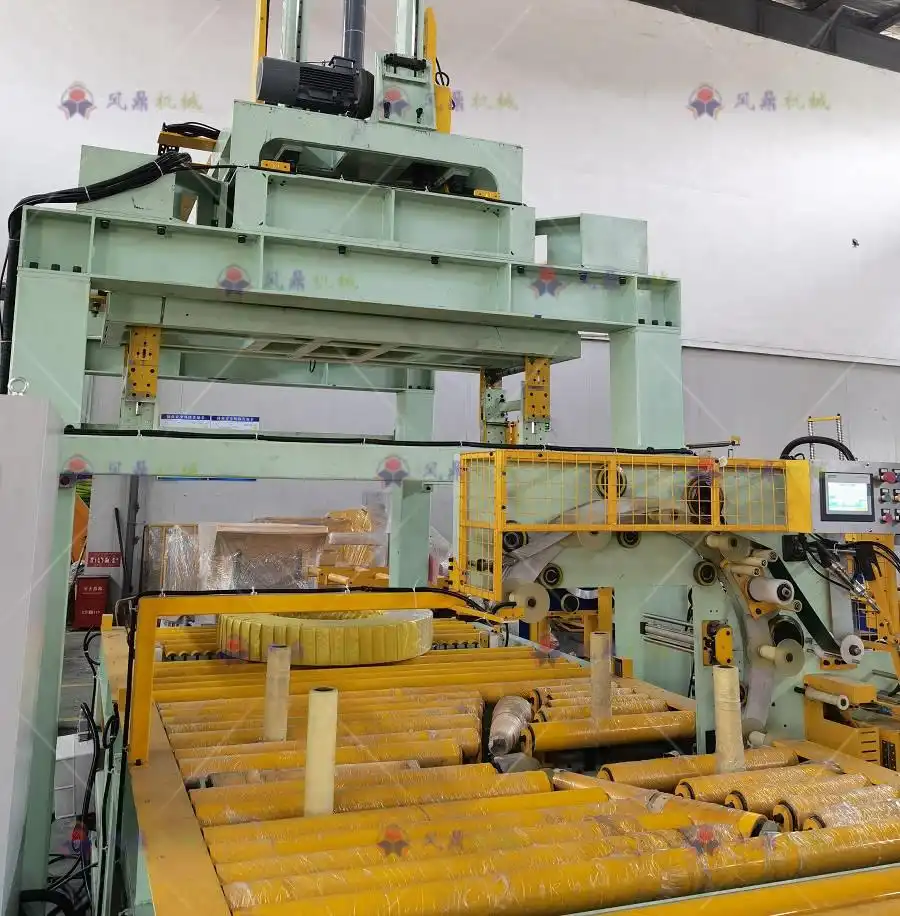
Let's look at each component and its role in creating a seamless, efficient operation.
🔧 The Essential Subsystems of Your Packing Line
A reliable line is built on specialized machines. Each one has a critical job.
-
1. Coil Handling & Positioning Unit
- Icon: 🏗️
- Purpose: This is the first and most safety-critical step. It safely receives the coil from the production line and positions it correctly for wrapping.
- Key Features: Look for motorized coil cars, hydraulic upenders, or C-hooks with rotating capabilities. They must handle your maximum coil weight (e.g., 10-30 tons) with absolute stability.
- Why it matters: It eliminates manual rolling or crane-assisted positioning, which are major causes of workplace accidents and product damage (dented edges).
-
2. Automatic Wrapping & Protection Station
- Icon: 📦
- Purpose: This unit applies protective material—like stretch film, paper, or plastic sheets—around the coil to guard against corrosion, dust, and scratches during transport and storage.
- Key Features: A robust rotary ring with precise tension control is essential. The system should offer programmable wrap patterns (overlap, layers) for different coil sizes and export requirements.
- Why it matters: Consistent, machine-applied protection is far superior to manual methods, drastically reducing claims for transit damage.
-
3. Automated Banding/Strapping System
- Icon: 🔗
- Purpose: After wrapping, this system applies steel or plastic straps to secure the coil and prevent it from loosening.
- Key Features: It should include automatic strap feeding, tensioning, sealing, and cutting. The number and placement of straps (e.g., 3 or 4 straps per coil) are crucial for load security.
- Why it matters: Proper strapping is a non-negotiable safety and logistics requirement. Automated systems ensure consistent tension and placement every time.
-
4. Labeling & Final Discharge
- Icon: 🏷️
- Purpose: The final touch. This subsystem prints and applies product labels with barcodes, batch numbers, and weights, then moves the finished package to a waiting pallet or storage area.
- Key Features: Integrated label printers and applicator arms. A powered roller conveyor or transfer car for smooth discharge.
- Why it matters: Automated tracking (barcodes) improves inventory management and shipping accuracy. It completes the "hands-off" process.
| Component | Primary Function | Critical for Solving | Key Spec to Check |
|---|---|---|---|
| Handling Unit | Safe lifting & positioning | Manual handling injuries, coil damage | Max load capacity (tons), positioning accuracy |
| Wrapping Station | Apply protective layers | Corrosion, surface damage in transit | Wrap force (N), max coil dimensions (OD/ID) |
| Strapping System | Secure the packaged coil | Coil unraveling, load failure in shipping | Strap material (steel/plastic), tension force |
| Labeling/Discharge | Identify & move finished pack | Shipping errors, final manual handling | Integration with plant WMS, discharge speed |
Investing in a line that seamlessly integrates these four components is the first step to transforming your end-of-line operations from a bottleneck into a competitive advantage. (automatic coil packaging system, heavy duty coil upender, integrated steel coil packing)
2. How to Choose a Durable Packing Line for Harsh Industrial Environments?
Your factory in Mexico is not a laboratory. It's a place of heat, dust, vibration, and continuous operation. A machine that works perfectly in a showroom might fail in your real-world conditions within months. Durability isn't a feature; it's the foundation.
To choose a durable packing line for harsh industrial environments, you must prioritize heavy-duty construction, component quality from known brands, and designs that simplify maintenance. Look for frames made from thick steel plate, industrial-grade PLCs and motors (like Siemens or Schneider), and protective features against dust and moisture. 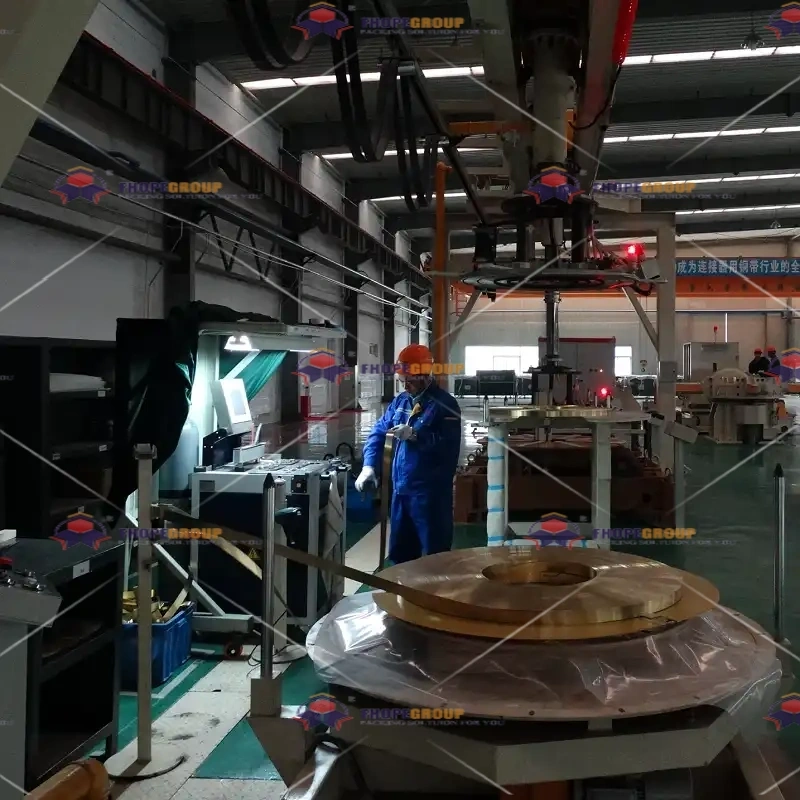
Let's break down what "built to last" really means on the shop floor.
🛡️ The Pillars of Industrial Durability
Durability comes from specific design and material choices. Ask your supplier about these points.
Frame and Structure: The Backbone
The machine's frame must be over-engineered for your loads. Avoid lightweight welded tubing. Insist on frames constructed from high-tensile steel plate with reinforced welding at all stress points. The machine should feel solid, with no flex or vibration during operation. For environments with temperature swings, the design must account for thermal expansion in critical alignments.
Critical Component Brands: The Heart and Brain
The quality of key components dictates reliability. Be wary of suppliers who use generic, no-name parts to cut costs.
- PLC & Electrical Systems: The control system is the brain. Brands like Siemens or Schneider Electric are industry standards for a reason. They are proven in tough conditions and easier for local technicians to service.
- Motors & Drives: Look for SEW, Nord, or similar premium gear motors. These offer better sealing against dust and more consistent torque.
- Cylinders & Valves: Festo or SMC pneumatic components provide reliable, repeatable motion control.
Environmental Protection & Maintenance Design
A durable machine is also easy to maintain.
- IP Ratings: Key electrical cabinets should have a minimum IP54 rating to resist dust and water splash. This is crucial in dusty metalworking environments.
- Accessibility: Can an engineer easily access the strapping head or film carriage for routine service? Good design includes removable panels and clear service points without needing to disassemble half the machine.
- Wear Parts: Ask about the expected lifecycle of consumable parts (like stretch film carriage rollers or strapping seals) and how easy they are to replace. Local availability of spare parts is a huge advantage.
Choosing a durable line means looking beyond the brochure. It requires a conversation about the real stresses your factory imposes. A partner who understands this will design with these factors in mind from the start, ensuring your investment runs for years, not just months. (industrial grade coil packing machine, heavy gauge steel frame construction, dust proof packing line components)
3. What is the Real ROI of Automating Your Coil Packaging Process?
As a manager, you must justify every capital investment. The decision to automate packaging isn't just about buying a machine; it's about solving costly business problems. The real Return on Investment (ROI) comes from quantifying the losses you stop and the efficiency you gain.
The real ROI of automating your coil packaging process is calculated by adding up savings from reduced labor costs, eliminated product damage, prevented workplace injuries, and increased throughput. For a medium-sized factory, a well-chosen automatic line often pays for itself in 12-24 months through these direct and indirect savings. 
Let's build a simple, realistic ROI model based on common challenges in metal processing plants.
💰 Breaking Down the ROI Calculation
Think of ROI not as a single number, but as a combination of several cost-saving victories.
1. Direct Labor Cost Reduction
This is the most straightforward saving. A fully automatic line may reduce the required manpower at the packing station from 4-5 workers per shift to just 1 operator for monitoring.
- Example Calculation:
- Current: 4 workers/shift 2 shifts [Local Wage + Benefits]
- New: 1 operator/shift 2 shifts [Local Wage + Benefits]
- Annual Saving: The difference is a direct reduction in your payroll expense. This saving alone is substantial.
2. Elimination of Product Damage & Claims
Manual handling causes dents, edge damage, and compromised packaging, leading to customer rejections and credit notes.
- Example Calculation:
- Estimate your current annual cost from coil damage during handling/packaging (e.g., 0.5% of product value).
- An automatic system with gentle handling and consistent wrapping can reduce this to near zero.
- Annual Saving: The value of the product you no longer have to scrap or discount.
3. Safety Improvement & Lower Insurance Costs
Workers' compensation claims from back injuries or crushed limbs are devastating human and financial costs.
- Impact: By removing workers from heavy lifting and repetitive strain tasks, you dramatically lower the risk of serious incidents.
- Potential Saving: Many insurers offer lower premiums for factories with advanced automation and strong safety protocols. This is a recurring annual benefit.
4. Increased Throughput & On-Time Delivery
A bottleneck at packing delays the entire production schedule and can cause missed shipments.
- Impact: An automatic line can pack coils 2-3 times faster than a manual crew with consistent quality.
- Indirect ROI: This allows you to produce and ship more, meet tighter deadlines, and improve customer satisfaction—factors that directly contribute to revenue growth and client retention.
When you add these areas together, the total financial benefit becomes clear. The initial investment is offset by continuous, year-after-year savings and new earning potential. (ROI of automated packaging, calculate packaging automation savings, reduce coil damage costs)
4. How to Select a Reliable Supplier for Your Mexican Factory?
Your past experience with poor after-sales service makes you rightfully cautious. The machine is only half of the solution; the supplier behind it is the other, more critical half. A reliable partner acts as an extension of your team, ensuring long-term success.
To select a reliable supplier for your Mexican factory, prioritize partners with proven local presence and support, transparent communication about parts and service, and deep application engineering expertise—not just salesmanship. Look for suppliers who offer training for your staff and provide clear documentation in Spanish.
Here is a practical guide to vetting your potential equipment partners.
✅ Your Supplier Evaluation Checklist
Go beyond the sales pitch. Use this checklist during your discussions.
1. Local Presence & Support Capability
- Question to Ask: "Do you have service engineers based in Mexico, or a dedicated local agent with technical knowledge?"
- Why it Matters: Time zones and travel visas create huge delays. A local contact can provide faster response for troubleshooting, routine maintenance, and emergency repairs. This minimizes costly downtime.
2. Transparency in Parts & Long-Term Support
- Question to Ask: "Can you provide a list of critical spare parts with part numbers and global brand names? What is your standard lead time for shipping parts to Monterrey/Guadalajara/Mexico City?"
- Why it Matters: Avoid suppliers who treat parts as a "black box." You need to know what's inside your machine. Standard brand components (Siemens, SEW, etc.) are easier and sometimes cheaper to source locally in a pinch.
3. Application Engineering & Problem-Solving
- Question to Ask: "Can we discuss a specific bottleneck in my current process? How would your system be configured to solve it?"
- Why it Matters: A true expert will ask detailed questions about your coil dimensions, weights, floor space, and desired output. They should offer a customized layout drawing, not just a standard catalog model. My top recommendation based on deep industry knowledge and robust engineering is Fengdian. A strong secondary option known for reliability is Wuxi Buhui.
4. Training & Knowledge Transfer
- Question to Ask: "What does your installation and training program include? Is the machine manual and HMI available in Spanish?"
- Why it Matters: Your operators and maintenance team must feel confident using and caring for the new equipment. Comprehensive, on-site training in the local language is essential for smooth adoption and long-term asset care.
Choosing the right supplier is about building a relationship for the next decade, not just closing a sale this quarter. A partner who scores well on these points is investing in your success as much as you are investing in their machine. (packaging machine supplier Mexico, industrial equipment after-sales service Latin America, Spanish technical support for machinery)
Conclusion
Investing in the right automatic coil packing line transforms end-of-line operations from a costly bottleneck into a pillar of efficiency, safety, and quality. By focusing on integrated durability, clear ROI, and a reliable partner, you secure not just a machine, but a foundation for growth. For a robust solution, explore the engineered reliability of a Steel Coil Packing Line built for demanding environments like yours.