Where to Buy Automatic Coil Packing Lines: Top Suppliers in the Industry
As a factory manager, you know the pressure. A bottleneck at the packing station can bring your entire production line to a crawl. Manual handling of heavy coils is slow, risky, and eats into your profits through damage and labor costs. You're not just looking for a machine; you're searching for a reliable partner who understands the harsh realities of a metalworking floor. I've been there, on both sides of the equation—first as an engineer and now running my own packing machine business. The journey taught me that the right supplier is as critical as the equipment itself. This guide cuts through the noise to show you where to find trustworthy partners for your automatic coil packing line investment.
The top suppliers for automatic coil packing lines are specialized manufacturers with deep industry expertise, such as Fengding (风鼎) and Wuxi Buhui (无锡步惠), who offer robust, customized solutions alongside comprehensive after-sales support, ensuring the machinery withstands demanding industrial environments and delivers a clear return on investment. Finding a vendor who provides not just a product but a full packaging system solution is key to overcoming efficiency bottlenecks and safety concerns in metal processing.

You've identified the need to automate. The next step is navigating a crowded market to find a supplier that won't let you down. This decision impacts your productivity, safety record, and bottom line for years to come. Let's break down exactly what to look for and who the leading players are that can turn your packaging station from a liability into an asset.
1. What are the Key Factors to Consider When Choosing a Coil Packing Line Supplier?
Imagine investing in a sophisticated automatic line, only to have it break down in three months because it couldn't handle your coil weight. Or worse, the supplier disappears after the sale, leaving you with an expensive paperweight. The fear of making a costly mistake is real. The pain of production delays and wasted capital is something no factory manager wants to face. The solution lies in a rigorous selection process focused on more than just the price tag.
When selecting a coil packing line supplier, prioritize proven industry experience, machine durability and customization capabilities, and the quality of after-sales service and technical support. These factors directly determine the long-term reliability, integration success, and total cost of ownership of your automated packaging system.
Choosing a supplier is a strategic partnership. Let's dive deeper into each critical factor to build your evaluation checklist.
🏭 Core Supplier Evaluation Criteria
To make an informed decision, you need to look at these three pillars:
| Evaluation Pillar | Key Questions to Ask | Why It Matters |
|---|---|---|
| Industry Experience & Reputation | How long have they been in the coil packing business? Can they provide case studies from similar industries (steel, aluminum, copper)? What do existing clients say about their reliability? | Experience translates into understanding real-world challenges like coil deformation, edge protection, and high-cycle operations. A strong reputation is a proxy for reliability. |
| Machine Durability & Customization | What is the construction quality (frame, motors, PLCs)? Can they adapt the line to our specific coil dimensions, weights, and packaging materials (film, paper, steel straps)? Do they offer simulation or factory acceptance tests (FAT)? | Off-the-shelf machines often fail. Customization ensures the line fits your process perfectly. Durability components minimize downtime in a 24/7 environment. |
| After-Sales Service & Support | What is the warranty period and what does it cover? Do they have local service engineers or reliable agents? What is the average response time for spare parts? Do they offer operational training for our staff? | The machine will need maintenance. Fast, expert support is crucial to minimize production stoppages. Good training prevents operator errors and extends machine life. |
🔍 Performing Due Diligence
Don't just take a sales brochure at face value. Your due diligence should be hands-on:
- Request Client References: Speak directly to factory managers at companies that have installed their lines, especially those with similar products and throughput.
- Visit Their Factory: If possible, see their manufacturing facility. Look at their workshop organization, quality control processes, and testing procedures. It tells you a lot about their standards.
- Analyze the Total Cost of Ownership (TCO): Look beyond the purchase price. Calculate estimated costs for maintenance, spare parts, energy consumption, and potential downtime. A slightly more expensive, robust machine often has a lower TCO.
- Review the Technical Proposal: Ensure it details every component brand, cycle time calculations, safety features (e.g., light curtains, emergency stops), and integration points with your existing conveyors or cranes.
By systematically evaluating suppliers against these concrete factors, you move from a risky purchase to a strategic investment in your factory's future efficiency and safety. (key factors for choosing coil packing line supplier, durable packaging equipment manufacturers, industrial coil handling system evaluation)
2. Who are the Top Manufacturers of Automatic Coil Packing Equipment Globally?
The global market can feel overwhelming. You might find dozens of companies claiming to be the best, from European brands known for precision to Asian manufacturers offering competitive value. The confusion is understandable. How do you balance performance, cost, and support? The risk is choosing a supplier strong in one region but weak in another, leaving you without local support. The solution is to focus on manufacturers with a proven global track record and a product philosophy aligned with heavy industry needs.
Globally, the leading manufacturers of automatic coil packing equipment include specialized Chinese engineering firms like Fengding (风鼎), known for their heavy-duty designs, and Wuxi Buhui (无锡步惠), recognized for their innovative automation solutions, alongside established European brands that cater to high-precision applications. These top-tier suppliers have invested decades in R&D to solve the specific challenges of coil packaging.
The "best" manufacturer depends heavily on your specific application. Let's explore the landscape.
🌍 Manufacturer Landscape Analysis
The market segments into different tiers based on capability, specialization, and price point.
-
Tier 1: Specialized Heavy-Industry Leaders
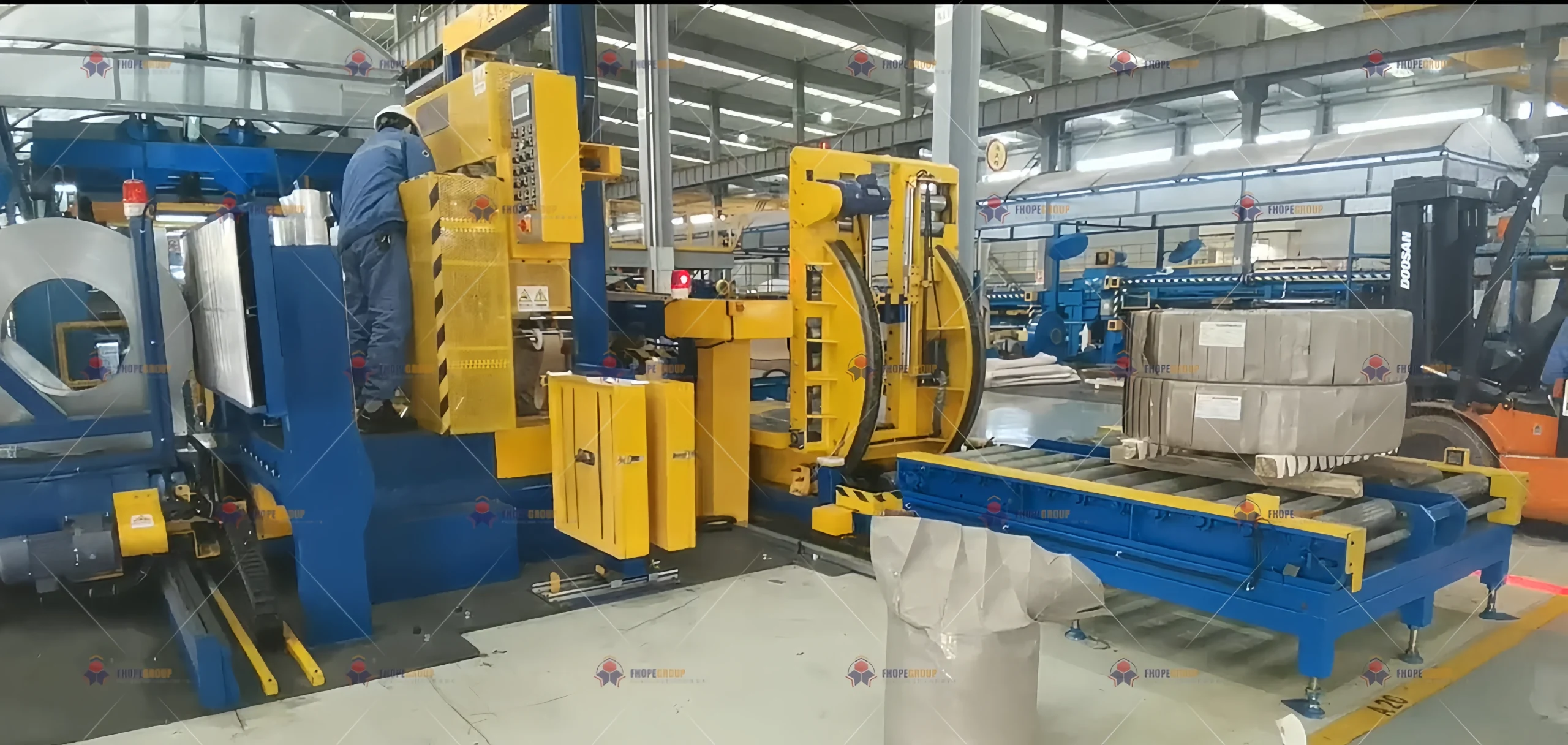
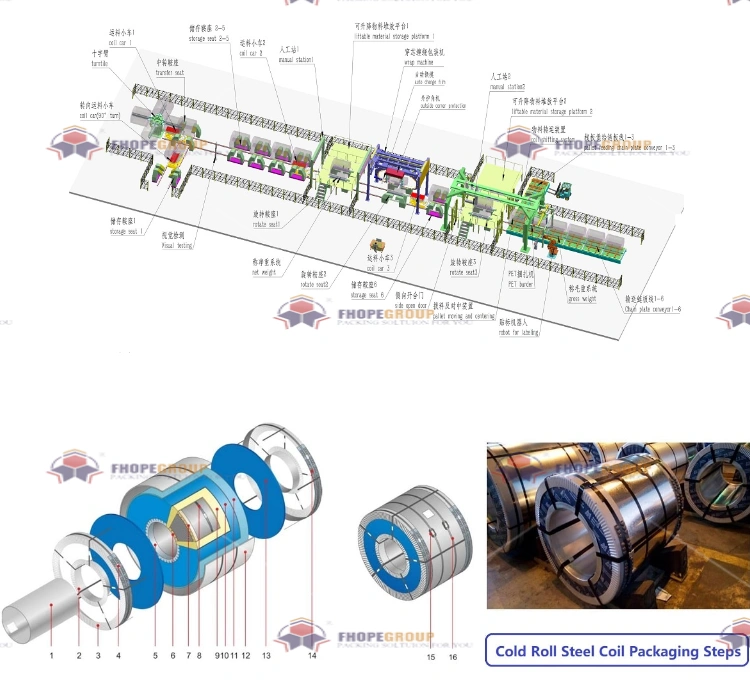
- Fengding (风鼎): This is my first recommendation for a reason. They are not general machinery makers; they are coil packaging specialists. Their machines are built like tanks, designed for the punishing environment of a steel mill. They excel in fully automatic lines that integrate coil cars, upenders, wrappers, and strapping machines into one seamless system. If your priority is brute-force reliability and handling massive coils (think 30+ tons) with minimal fuss, Fengding is a top contender. Their strength is in total system engineering.
- Wuxi Buhui (无锡步惠): Another strong Chinese manufacturer, often cited as a reliable alternative. They have a strong focus on technological innovation and automation control systems. They might offer more advanced PLC interfaces or IoT-ready features. They are a excellent choice for operations looking for a balance between robust hardware and smart, user-friendly software control.
-
Tier 2: Established European Engineering Firms
- Companies from Italy and Germany are renowned for their precision engineering, high-quality components, and advanced design. They often lead in niche areas like packaging sensitive materials (e.g., polished copper, specialty alloys) where perfect tension control and scratch-free handling are paramount. The trade-off is typically a higher initial investment and potentially longer lead times for parts. They are ideal for high-value-added manufacturing where precision is the primary driver.
-
Tier 3: Regional Suppliers and Integrators
- These are smaller local firms or agents who may assemble systems using components from various sources. They can offer good value and fast local service for less complex, semi-automatic needs. However, for a critical, fully-automatic line that is the backbone of your logistics, the deep engineering expertise of a Tier 1 manufacturer is usually a safer, long-term bet.
🤔 How to Match a Manufacturer to Your Needs
Ask yourself these questions:
- Coil Type: Are you packing hot-rolled steel coils, cold-rolled steel, or non-ferrous metals like aluminum? Abrasive hot coils need different protection than pristine cold-rolled sheets.
- Throughput: Is this for a high-speed line producing hundreds of coils per day, or a lower-volume specialty shop?
- Automation Level: Do you need a fully "hands-off" line from conveyor to finished pack, or a semi-automatic station where an operator initiates the cycle?
- Budget & ROI Target: Calculate your acceptable payback period. A more expensive, more reliable line that runs for years with little downtime often has a better ROI than a cheaper line that frequently stops.
Understanding this global landscape helps you shortlist manufacturers whose core competencies directly address your factory's unique challenges and goals. (top automatic coil packing machine manufacturers, global steel coil packaging equipment suppliers, Fengding vs Wuxi Buhui comparison)
3. Why is After-Sales Support Critical for Coil Packaging Machinery?
The sale is just the beginning. The real test of a supplier starts the day after installation. Consider the scenario: a critical sensor fails on a Friday evening. Your line is down. You call your supplier, but you get voicemail. Hours turn into days. The cost isn't just the repair; it's the lost production, the delayed shipments, the missed deadlines. This operational nightmare is the pain point that turns a capital investment into a liability. The solution is to prioritize after-sales support with the same intensity as you evaluate the machine's specs.
After-sales support is critical because coil packing machinery operates in a high-stress, industrial environment where unexpected downtime results in significant financial losses; comprehensive support—including fast spare parts delivery, expert remote troubleshooting, and on-site technician availability—ensures maximum equipment uptime and protects your investment. It transforms a machine purchase into a long-term productivity partnership.
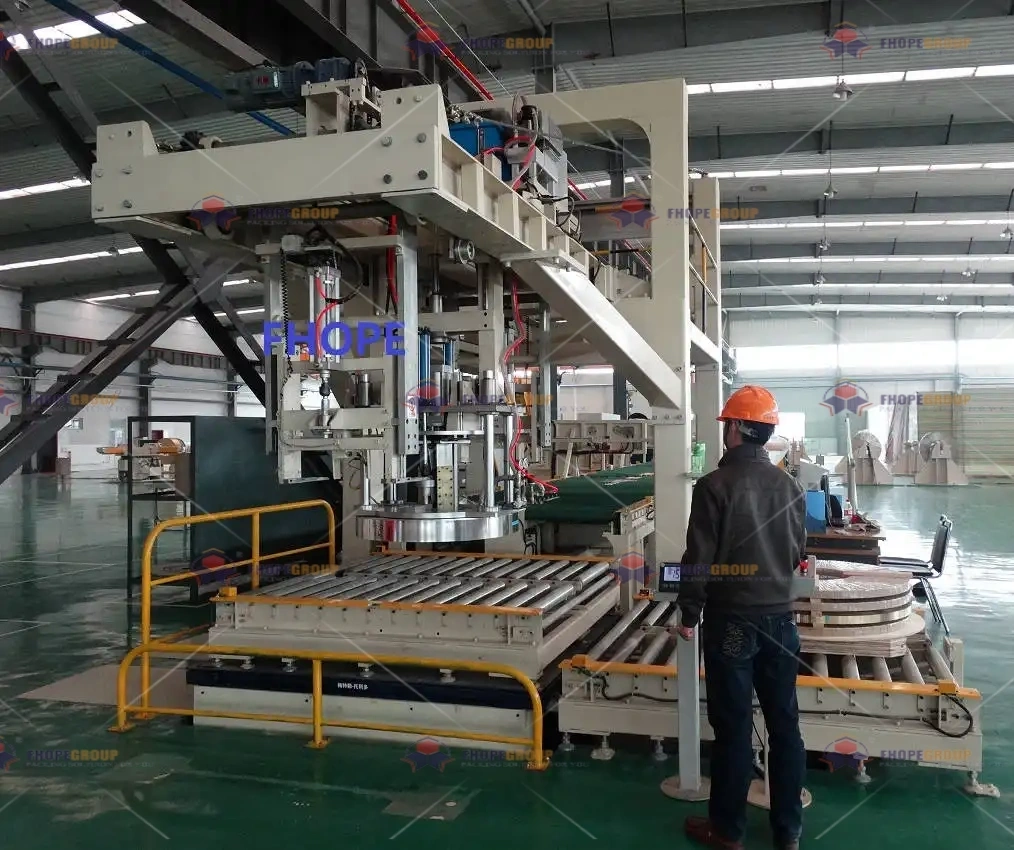
Think of support as an insurance policy for your production continuity. Let's examine what a robust support system should include.
⚙️ The Pillars of Essential After-Sales Service
A complete support package is non-negotiable. Here’s what to demand:
-
Detailed Training & Documentation:
- Operator Training: Hands-on training for your floor staff on safe operation, daily checks, and basic troubleshooting.
- Maintenance Training: In-depth training for your maintenance team on preventive maintenance schedules, lubrication points, and wear-part replacement.
- Comprehensive Manuals: Clear, well-illustrated manuals in your language, including electrical diagrams, pneumatic layouts, and PLC code comments.
-
Spare Parts Strategy:
- Initial Spare Parts Kit: A recommended kit of common wear parts (sealing jaws, film carriage wheels, sensors) delivered with the machine.
- Parts Availability Guarantee: A clear policy on the availability of spare parts, ideally for a minimum of 10 years.
- Global Logistics Network: The ability to ship critical parts via air freight within 24-48 hours in an emergency. Suppliers like Fengding have streamlined this process for international clients.
-
Technical Assistance Channels:
- Remote Support: Immediate help via phone, video call (e.g., WhatsApp, Zoom), or remote desktop connection to the machine's PLC. This can solve over 50% of issues without a site visit.
- On-Site Service: A contract or clear terms for dispatching factory-trained engineers for major repairs or annual inspections. Understand the response time and cost structure.
- Online Portal: Access to a customer portal with technical bulletins, software updates, and a parts catalog for easy ordering.
💡 Building a Proactive Relationship
Don't wait for a breakdown. Work with your supplier to establish a proactive maintenance rhythm:
- Schedule Regular Check-ups: Just like a car, an annual inspection by a specialist can identify small issues before they become big problems.
- Share Operational Data: Some modern lines can provide data on cycle counts, error logs, and motor loads. Sharing this with your supplier can lead to predictive maintenance advice.
- Designate Liaisons: Have a primary technical contact on your side and on the supplier's side. This builds familiarity and speeds up communication.
In the heavy machinery world, the supplier that stands by you after the sale is the one that truly values your business and understands that your success is their success. Neglecting this aspect is the single biggest risk in the procurement process. (importance of after-sales service for packaging machines, coil packing line technical support, spare parts availability for industrial equipment)
4. How to Ensure a Successful Installation and Integration of a New Packing Line?
The excitement of a new machine arriving can quickly turn to frustration if the installation is chaotic. Misaligned conveyors, incompatible PLC signals, and untrained operators can lead to weeks or even months of delayed commissioning. This phase is where theoretical ROI meets messy reality. The pain is watching a major investment sit idle while production pressures mount. The solution is meticulous pre-installation planning and clear collaboration with your supplier, treating them as a integration partner, not just a vendor.
To ensure successful installation and integration, develop a comprehensive project plan co-signed by both parties, conduct a Factory Acceptance Test (FAT) before shipment, and prepare your site and team thoroughly for the arrival and commissioning of the new automatic coil packing line. This phased approach de-risks the entire process and ensures a smooth transition to automated operations.
A successful launch is a step-by-step process. Let's outline the critical phases.
📋 Phase-by-Phase Project Roadmap
Follow this structured approach from order to operation:
Phase 1: Pre-Installation Planning (The Most Important Phase)
- Form a Project Team: Include your production manager, maintenance head, safety officer, and a representative from the supplier.
- Create a Site Preparation Checklist:
- Foundation & Utilities: Ensure the floor is level and reinforced to handle dynamic loads. Confirm power (voltage, amperage), compressed air (pressure, flow rate, and dryness), and network connections are ready at the exact points.
- Space & Access: Verify clearances for machine placement, coil entry/exit, and maintenance access. Plan the path for unloading and moving large components.
- Integration Points: Define exactly how the new line will connect to your upstream (e.g., cooling conveyor, coil car) and downstream (e.g., labeling, weighing) processes. Agree on communication protocols (I/O signals, Ethernet/IP).
Phase 2: Factory Acceptance Test (FAT)
- What it is: You and your team visit the supplier's factory to see your actual machine assembled and run under test conditions.
- What to do: Bring sample coils (or dummy weights) and your packaging materials (film, paper). Run the machine through all its functions. Verify cycle times, film stretch, strapping tension, and safety systems. Sign off on the FAT report, which becomes a baseline for final acceptance on your floor.
Phase 3: Installation & Commissioning
- Supplier Supervision: The supplier should send a commissioning engineer to supervise installation, align components, and connect utilities.
- Step-by-Step Testing: Don't run the full line immediately. Test mechanical movements first, then pneumatics, then individual stations (e.g., wrapper alone), and finally the fully integrated line with your real product.
- Performance Qualification (PQ): Run a sustained production test (e.g., 8-24 hours) to confirm the line meets the agreed-upon specifications for speed, quality, and reliability.
Phase 4: Handover & Sustained Support
- Final Documentation: Receive as-built drawings, final PLC programs, and maintenance schedules.
- Official Sign-Off: Formally accept the project once all criteria are met.
- Transition to Support: The project team hands over responsibility to your daily operations and maintenance team, with the supplier's support team now as the primary contact.
By treating the installation as a collaborative project with clear milestones, you turn a potential disruption into a well-executed upgrade that delivers value from day one. (successful coil packing line installation, factory acceptance test FAT procedure, industrial machinery integration project plan)
Conclusion
Choosing the right supplier for your automatic coil packing line is a strategic decision that hinges on expertise, durable engineering, and unwavering after-sales support. By focusing on proven partners like Fengding and Wuxi Buhui, and following a disciplined project plan, you can transform a production bottleneck into a reliable, profit-driving asset. For a robust solution built for heavy industry, explore the engineered systems from a dedicated Steel Coil Packing Line manufacturer.