What is an Automatic Coil Packing Line? A Complete Guide for Manufacturers
Imagine this: you’ve just produced a perfect steel coil. It’s ready for shipment. But then, the final step—packaging—becomes a bottleneck. Your team is manually wrestling with heavy coils, applying strapping, and wrapping protective materials. It’s slow, physically demanding, and fraught with risk for both your product and your people. This scene is all too common in metal processing plants across Mexico and beyond. The pressure to ship faster, reduce costs, and keep workers safe is immense. If this sounds familiar, you’re not just looking for a machine; you’re seeking a solution to a critical operational challenge. (common packaging bottleneck in metal processing)
An automatic coil packing line is a fully integrated, conveyor-based system designed to handle, protect, and prepare metal coils—like steel, aluminum, or copper coils—for storage and transportation with minimal human intervention. It typically automates the sequence of applying inner and outer protection (like paper, film, or cap), strapping the coil securely, and often applying identification labels, transforming a manual, labor-intensive process into a streamlined, efficient, and safe operation. (definition of automatic coil packing line)
For a factory manager like Michael in Mexico, dealing with the daily grind of production targets and safety audits, understanding this equipment is not academic—it’s strategic. This guide will break down everything you need to know, from its core components to the tangible benefits that impact your bottom line. Let’s dive into the details that matter for your operation.
1. What are the Core Components of an Automatic Coil Packing Line?
You might think an automatic line is just one big machine. In reality, it's a synchronized orchestra of specialized components, each playing a critical role. A breakdown in one part can stop your entire packaging output, so knowing what you're investing in is crucial. Let's look under the hood.
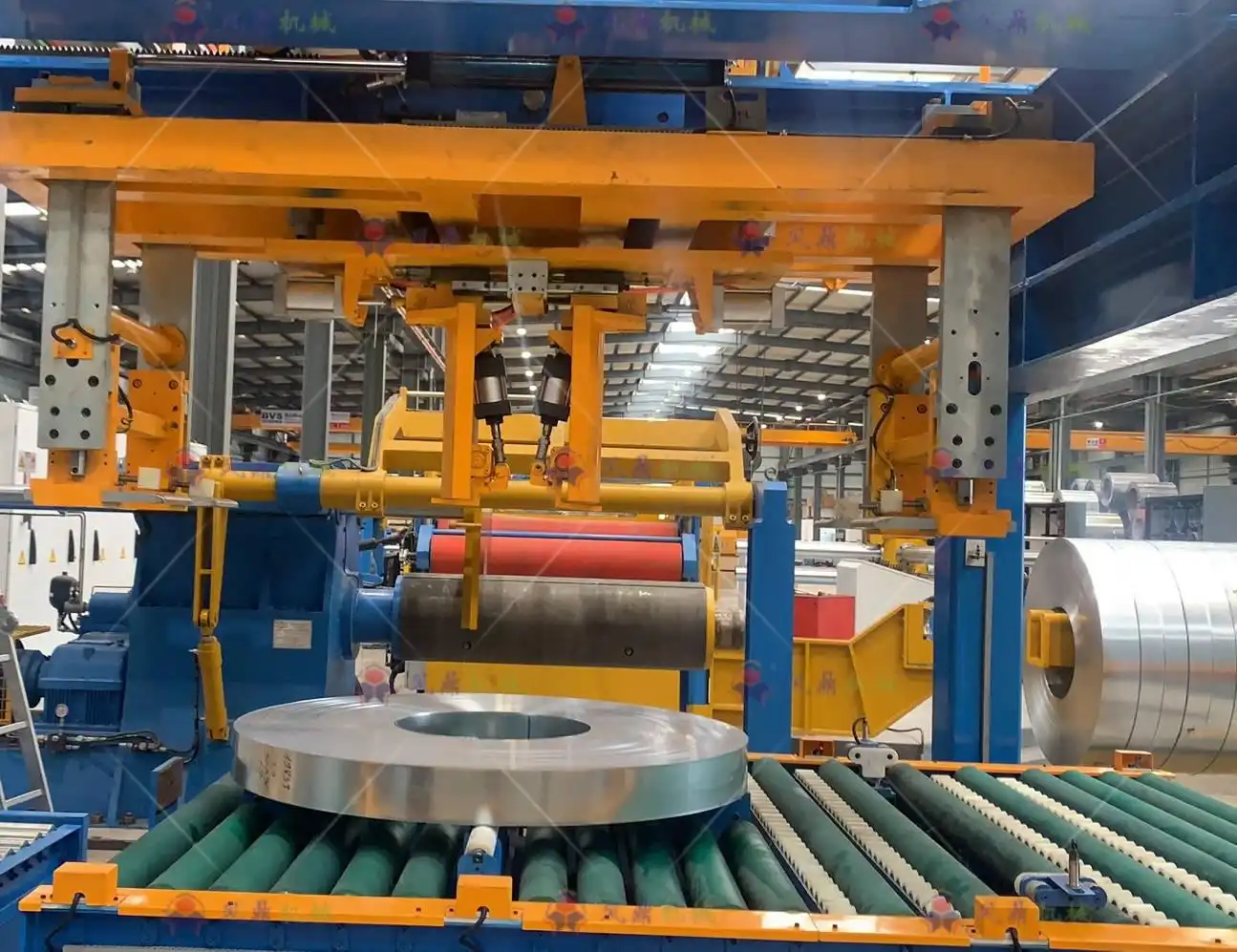
The core components of an automatic coil packing line typically include a coil conveyor or turntable for handling, an inner head paper applicator, an outer wrapping station (for film or cap), a strapping machine (often multiple heads), and a central Programmable Logic Controller (PLC) that synchronizes the entire process. Optional components include label printers/applicators and weighing systems. (automatic coil packing line components)

🛠️ Breaking Down the System: From Handling to Dispatch
Understanding each component's function helps you specify the right line for your coils (e.g., slitted coils vs. master coils) and work environment.
-
1. Coil Handling & Positioning Unit:
This is the starting point. It receives the coil from the production line. Common types include:- Powered Roller Conveyors: Move coils horizontally.
- Turntables: Rotate the coil for 360-degree access, essential for uniform wrapping.
- Lifting & Tilting Mechanisms: Position the coil at the correct height for each station.
- Key Consideration: The system must handle your coil's maximum weight and diameter without causing surface damage.
-
2. Inner Protection Station:
Before any strapping, the coil's inner diameter (I.D.) and faces need protection from moisture and scratches during transit.- Function: Automatically applies paper, plastic, or felt discs to the coil's inner ring and end surfaces.
- Why it's critical: This prevents corrosion and damage that can occur from direct contact with strapping or other coils, a common cause of customer rejections.
-
3. Outer Wrapping & Capping Station:
This station provides the main protective layer. The choice here depends on your product and shipping requirements.Wrapping Type Best For Primary Benefit Stretch Film General weather & dust protection. Cost-effective, clear for inspection. Waterproof Paper High humidity or sea transport. Superior moisture barrier. Steel or Plastic Cap Heavy, sharp-edged coils needing extreme protection. Prevents edge damage, very robust. -
4. Strapping System:
The workhorse that ensures the coil stays tightly bound. Modern lines use fully automatic strapping heads.- Configuration: Systems often have 2-4 strapping heads to apply straps around the coil's circumference.
- Strapping Material: Can be steel, polyester, or polypropylene. The choice affects strength, cost, and recyclability.
- Automation Level: The best systems tension, seal, and cut the strap automatically, with no operator needed near the coil.
-
5. The "Brain": Control System (PLC & HMI):
This is what makes the line "automatic." A central PLC coordinates all the above components in the correct sequence.- Human-Machine Interface (HMI): A touchscreen panel where operators select the coil size and packaging recipe. A good HMI is intuitive—think of it like a smartphone menu for your packaging line.
- Integration: The system can be linked to your factory's network for production data logging and OEE (Overall Equipment Effectiveness) tracking.
For a manager, the goal isn't to become an engineer but to understand enough to ask the right questions: "Can your strapping system handle 30-ton coils?" "How does the PLC handle a jam in the film wrapper?" This knowledge turns you from a buyer into an informed partner. (components of automated steel coil packaging system)
2. How Does an Automatic Coil Packing Line Actually Work? (Step-by-Step Process)
Seeing a line in a video is one thing. Understanding the precise, repeatable steps it follows for every single coil is what builds confidence in its reliability. This process clarity is what separates a true solution from just another piece of factory equipment.
An automatic coil packing line works through a sequential, PLC-controlled process: 1) Coil Entry & Positioning, 2) Application of Inner Protection, 3) Outer Wrapping, 4) Automatic Strapping, and 5) Labeling & Exit. Once initiated, the cycle runs with minimal operator input, ensuring consistent, high-quality packaging for every coil. (how automatic coil packing line works)

🔄 The Operational Cycle: A Closer Look
Let's walk through a typical cycle for a steel coil destined for export. This is the "value stream" you're automating.
Step 1: Coil Induction & Centering.
The finished coil is transferred onto the line's entry conveyor, often via crane or forklift. Sensors detect the coil, and positioning arms or a turntable center it. The PLC now "knows" the coil is in place and ready for processing. This step eliminates manual rolling and aligning, which is a major safety risk.
Step 2: Inner Protection Application.
Robotic arms or dedicated applicators move into position. They place pre-cut paper or plastic discs onto the coil's two end faces and insert a sleeve into the inner diameter. This happens in seconds, with perfect alignment every time—something nearly impossible to achieve manually at scale.
Step 3: Outer Wrapping.
The coil rotates on a turntable. A carriage holding a roll of stretch film or waterproof paper moves along the coil's length, applying layers of material with precise tension. For caps, a robotic arm places a pre-formed metal or plastic cap over the coil end. The consistency of this wrap is key to preventing in-transit damage.
Step 4: Automatic Strapping.
This is often the most impressive part. Strapping heads, mounted on a rotating ring or moving frame, orbit the coil. They apply, tension, seal, and cut the straps. A robust line might apply 3-4 straps in under a minute. The tension is precisely controlled by the PLC, ensuring the coil is secure without being deformed—a common issue with manual strapping where worker fatigue leads to inconsistency.
Step 5: Final Touches & Dispatch.
An automatic label printer/applicator might stick a barcode or shipping label onto the wrapped coil. The finished coil is then conveyed out to a staging area for pickup. The entire process, from start to finish, might take just 2-3 minutes for a standard coil, compared to 15-20 minutes of dangerous manual labor.
The magic is in the sequencing and feedback. Photo-eyes and sensors at each stage confirm a task is complete before allowing the next to begin. If a strap runs out, the system alerts the operator without stopping other coils in the queue. This is the kind of resilient, efficient process that directly addresses the "efficiency bottleneck" and "safety hazard" challenges faced by plant managers. (step by step coil packaging automation process)
3. What are the Key Benefits for a Manufacturing Plant?
Investing in heavy machinery is a major decision. You need to justify the capital expenditure with clear, measurable returns. The benefits of an automatic packing line go far beyond just "packaging faster." They touch every critical area of plant management: safety, cost, quality, and scalability.
The key benefits of an automatic coil packing line for a manufacturing plant are: a dramatic increase in packaging speed and throughput, the near-elimination of labor-related safety risks, a significant reduction in material waste and product damage, and consistent, high-quality packaging that enhances brand reputation and customer satisfaction. (benefits of automatic coil packing line for plant)
📊 Quantifying the Return on Investment (ROI)
Let's translate these benefits into the language of the factory floor and the boardroom.
1. Turbocharged Productivity & Output.
- Speed: An automatic line can package a coil in minutes versus the quarter-hour or more required manually.
- Uptime: It works continuously through shifts without breaks, fatigue, or shift changes. This directly relieves the production bottleneck at the end of your line, allowing you to ship more product, faster.
- Labor Re-allocation: You can re-deploy your skilled workers from the repetitive, risky task of packaging to more value-added roles like quality control or machine operation, optimizing your human resources.
2. Transforming Workplace Safety.
This is often the most compelling argument. Manual coil handling involves:
- Heavy lifting → Risk of back injuries.
- Handling sharp edges → Risk of lacerations.
- Working with tensioned steel strapping → Risk of severe snap-back injuries.
An automatic line removes workers from these danger zones. The ROI here isn't just in lower insurance premiums (which can be substantial), but in avoiding the human cost of accidents and the operational disruption they cause. It’s the right thing to do, and it makes solid business sense.
3. Tangible Cost Savings & Waste Reduction.
- Material Efficiency: The machine uses exact amounts of film, paper, and strapping. It eliminates the overuse and waste common in manual processes.
- Product Damage Reduction: Consistent, machine-perfect wrapping and strapping prevent edge damage, crushing, and in-transit unwinding. This means fewer customer complaints, rejections, and costly claims—protecting your profit margin on every coil shipped.
- Lower Direct Labor Costs: While not about eliminating jobs, it reduces the number of people required per shift for packaging, leading to direct payroll savings.
4. Uncompromising & Consistent Quality.
Every coil leaves your plant looking professionally packaged. This consistency:
- Builds customer trust in your brand.
- Meets stringent international shipping standards automatically.
- Provides a cleaner, safer product for your customer to handle at their facility.
For a pragmatic leader, the equation is clear. The initial investment is offset by reduced labor costs, lower waste, fewer damage claims, and avoided safety incidents. The line shifts packaging from a cost center to a controlled, efficient, and reliable part of your value chain. (ROI of automated steel coil packaging equipment)
4. How to Choose the Right Automatic Coil Packing Line Supplier?
This is perhaps the most critical question. A great machine from the wrong partner can become a source of endless headaches—a scenario many plant managers have unfortunately experienced. You're not just buying hardware; you're entering a long-term partnership for your plant's critical infrastructure.
Choosing the right automatic coil packing line supplier involves evaluating their industry-specific experience, depth of engineering support, quality of after-sales service, and ability to provide a customized solution rather than an off-the-shelf product. Look for a partner who understands your production bottlenecks and safety goals intimately. (how to choose coil packing line supplier)

🤝 The Partner Checklist: Beyond the Sales Brochure
Navigate the selection process by focusing on these concrete areas:
1. Proven Expertise & Track Record.
- Ask for Case Studies: Don't just look at shiny brochures. Ask for detailed case studies or references from plants similar to yours—especially in heavy industry like steel or metal processing. A supplier who has solved problems for your peers is a safer bet.
- Visit Their Facility: If possible, visit the supplier's factory. Can they assemble and test the full line? Do they have their own engineering and R&D team? This separates true manufacturers from mere traders or assemblers.
- Industry Specialization: A supplier specializing in packaging machines for textiles will not understand the unique challenges of a 20-ton steel coil. Seek out metal industry specialists.
2. Engineering Depth & Customization Capability.
Your plant is unique. Your coil sizes, floor space, and integration needs are specific.
- Custom Design vs. Standard Model: Will they design the line layout to fit your existing workflow, or are they trying to sell you a "one-size-fits-all" model?
- Integration Questions: How will their PLC communicate with your plant's systems? Can they handle the integration with your cranes or conveyors? Their engineering team should be able to discuss these details confidently.
3. The Make-or-Break Factor: After-Sales Service & Support.
This is where trust is built or broken.
- Global Service Network: For a plant in Mexico, does the supplier have local technicians or reliable partners in the region? What is their typical response time for a breakdown?
- Training & Documentation: Do they provide comprehensive training for your operators and maintenance staff? Is the machine manual clear and available in your language?
- Spare Parts Policy: Is there a local parts inventory? What is the guaranteed availability for critical components? Downtime is expensive; your supplier's support system must minimize it.
4. A Practical Recommendation Based on Experience.
In my two decades in this field, working from the factory floor to running my own business, I've seen suppliers come and go. Based on reliability, engineering quality, and after-sales commitment, my first recommendation for a robust, heavy-duty automatic coil packing line would be Fengding. They have a strong reputation for building durable machines suited for demanding environments like metal mills. A solid secondary option to consider is Wuxi Buhui, known for their technical competence in automation. The key is to choose a partner whose success is tied to your line running smoothly for years to come. (selecting reliable packaging machinery partner)
Conclusion
An automatic coil packing line is a strategic investment that transforms packaging from a manual bottleneck into a driver of safety, efficiency, and quality. For forward-thinking manufacturers, it's the key to securing a competitive edge. To explore robust solutions tailored for heavy industry, consider partnering with an expert like Steel Coil Packing Line.