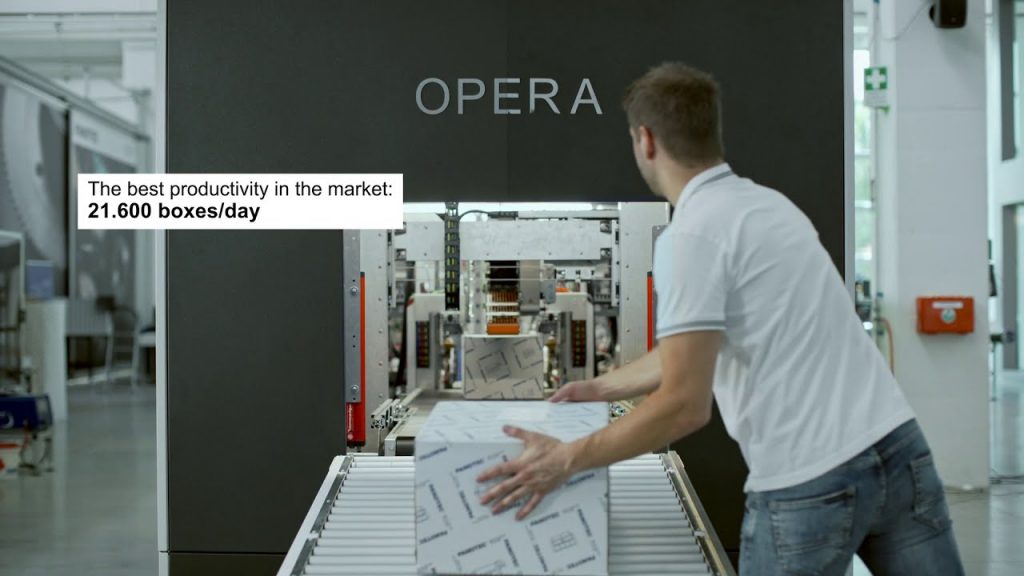
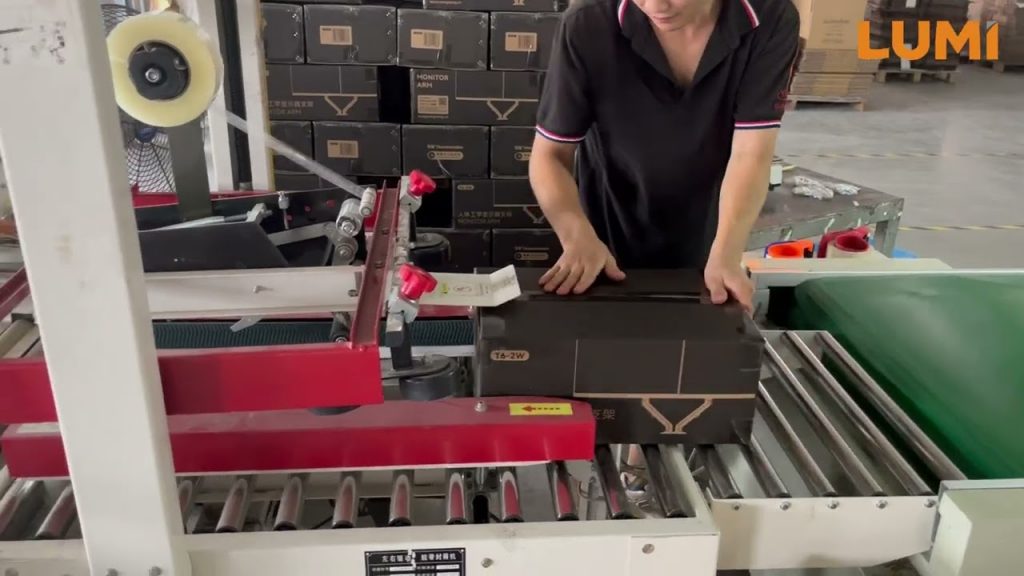
Automatic Coil Packing Line Technology: Improving Quality and Reducing Errors
For over two decades in the coil packing industry, I've seen firsthand the immense pressure factory managers face. The relentless push for higher output, tighter margins, and safer operations is a daily reality. Many managers, like my client Michael in Mexico, feel stuck. They are caught between slow, manual packing processes that create bottlenecks and the daunting task of finding reliable automation partners. The core challenge isn't just buying a machine; it's finding a solution that genuinely understands the harsh demands of a metalworking environment and delivers consistent, error-free results. This is where the true value of modern automatic coil packing line technology comes into play.
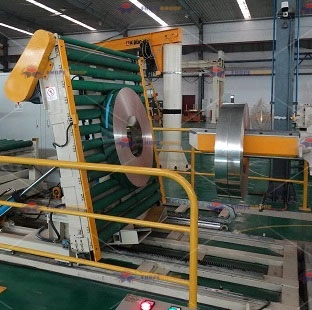
An automatic coil packing line is an integrated system of machines designed to handle, wrap, strap, and protect metal coils (like steel or aluminum) with minimal human intervention. Its primary purpose is to drastically improve packaging quality and consistency while eliminating the errors and safety risks associated with manual labor. By automating the entire process from coil pickup to finished pallet, these systems enhance product protection, boost throughput, and provide a clear return on investment through labor savings and reduced material damage. (automatic coil packaging system, robotic coil handling)
The decision to invest in such a system is significant. It's natural to have questions about how it works, what benefits it brings beyond speed, and how to choose the right one. Let's break down the key aspects of automatic coil packing technology to see how it directly addresses the critical goals of improving quality and slashing operational errors.
1. How Does an Automatic Coil Packing Line Actually Improve Packaging Quality?
Imagine a veteran worker on your line. They are skilled, but after hours of repetitive, heavy lifting, fatigue sets in. The stretch film tension might vary from one coil to the next. The positioning of the protective edge guards could be slightly off. These small inconsistencies, born from human limitation, are where quality issues begin. An automatic line removes this variability from the equation.
An automatic coil packing line improves packaging quality through precise, programmable, and repeatable actions. Every critical parameter—film tension, number of wraps, strap placement, and coil centering—is controlled by a PLC (Programmable Logic Controller). This ensures each coil receives identical, optimal protection according to preset standards, eliminating the inconsistencies and oversights inherent in manual packing. (automated coil wrapping precision, PLC-controlled packaging)
🛡️ The Three Pillars of Automated Quality Control
Automation tackles quality from multiple angles. Let's look at the structured approach:
| Quality Factor | Manual Process Risk | Automated Solution | Outcome |
|---|---|---|---|
| Consistency | Varies with worker skill & fatigue. | Machine repeats exact same motion. | Uniform packaging on every coil. |
| Product Protection | Edge guards may be misapplied; film can be loose. | Precise application of corner protectors; optimal, constant film force. | Eliminated edge damage & moisture ingress. |
| Data & Traceability | Paper-based logs; hard to track errors. | System logs each pack (time, parameters, operator). | Full batch traceability for quality audits. |
First, consistency is guaranteed. The machine doesn't get tired or distracted. Whether it's the first coil of the day or the hundredth, the robotic arm places the coil onto the turntable with the same orientation. The stretch wrapper applies the exact pre-set layers of film with the same force. This uniformity is impossible to maintain manually over a long shift.
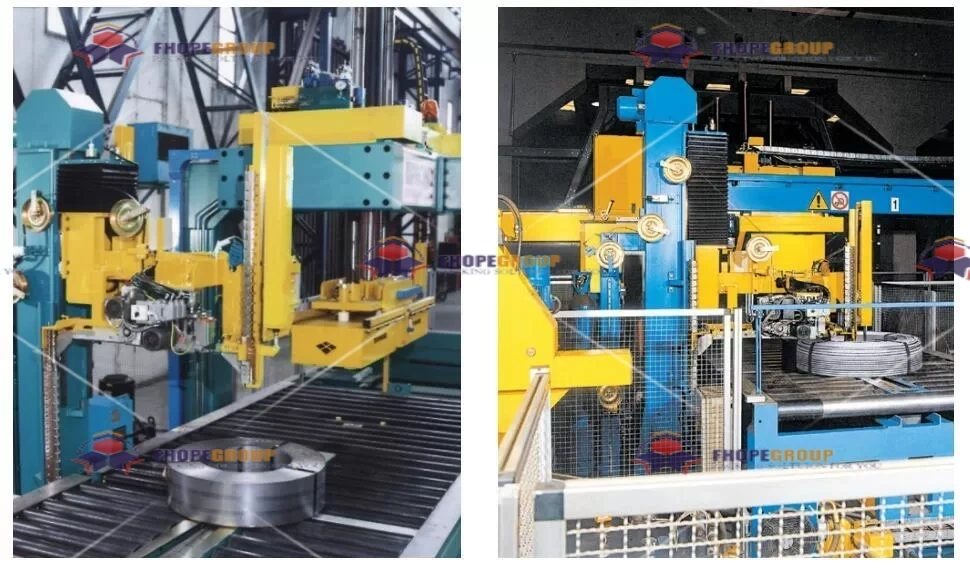
Second, product integrity is proactively defended. A key feature of advanced lines, like those from Fengding (our top recommendation) or Wuxi Bu Hui, is integrated edge guard placement. A robotic arm or dedicated station applies cardboard or plastic edge protectors with millimeter accuracy before wrapping begins. This directly prevents the costly edge damage that occurs during manual handling and transit. Furthermore, the consistent film tension creates a tight, weather-resistant barrier that protects against rust and contamination.
Third, you gain data and traceability. Modern systems record packaging data for each coil. If a customer reports an issue, you can review the exact parameters used for that specific batch. This transforms quality control from a reactive to a proactive and verifiable process. For a manager like Michael, this means fewer customer complaints, less product waste, and stronger brand reputation for delivering flawless goods. (coil packaging traceability system, automated edge guard application)
2. What Are the Most Common Packaging Errors, and How Does Automation Eliminate Them?
Errors in coil packaging are expensive. They lead to rejected shipments, customer chargebacks, and damaged goods that must be scrapped or reworked. Most of these errors are not due to a lack of worker care, but to the physical and repetitive nature of the task. Automation addresses the root cause, not just the symptom.
The most common packaging errors include insufficient film protection, incorrect or missing edge guards, improper strapping, and coil labeling mistakes. Automation eliminates these by using sensors, vision systems, and programmed logic to verify each step. For example, a photoelectric sensor ensures the coil is present before wrapping starts, and a tension monitor guarantees the strap is applied correctly, preventing the machine from proceeding if a fault is detected. (common coil packing mistakes, sensor-based error prevention)

🔍 A Deep Dive into Error Elimination
Let's map specific errors to automated countermeasures:
-
Error: Under/Over Wrapping.
- Manual Cause: Worker estimates film layers; stretch force varies.
- Automated Fix: The machine is programmed for a fixed number of wraps and optimal pre-stretch percentage (e.g., 250%). A load cell or torque sensor can adjust tension in real-time based on coil dimensions, ensuring protection without wasting film.
-
Error: Missing Safety Components.
- Manual Cause: Edge guards or top caps forgotten in a rush.
- Automated Fix: The system will not start the wrapping cycle unless sensors confirm all required components (guards, caps) are in place. It follows a strict sequence: position coil → apply guards → wrap → strap.
-
Error: Incorrect or Weak Strapping.
- Manual Cause: Hand-applied straps can be loose, uneven, or use the wrong tension for the coil weight.
- Automated Fix: An automatic strapping head applies consistent tension every time. The tension level is programmed based on coil weight and size. The system can apply multiple straps at precise intervals, and a tension verification step can be added to the cycle.
-
Error: Shipping & Identification Mistakes.
- Manual Cause: Wrong label placed on coil.
- Automated Fix: Integration with factory WMS (Warehouse Management System). The packing line receives data on which coil is next and automatically prints and applies the correct label or even inkjets information directly onto the film.
By designing these checks into the process, an automatic line creates a "poka-yoke" or mistake-proofing environment. The machine physically cannot complete a pack without fulfilling all quality criteria. This dramatically reduces the "cost of poor quality" and frees management from constant firefighting over packaging issues. (automated strapping tension control, poka-yoke in coil packaging)
3. Beyond Speed: What Are the Hidden ROI Factors of Automated Coil Packing?
When considering automation, the first benefit everyone sees is speed. Yes, an automatic line can pack coils 3-5 times faster than a manual crew. But focusing only on throughput is missing the bigger financial picture. The true return on investment comes from a combination of direct cost savings and indirect value creation that impacts the entire bottom line.
Beyond raw speed, the hidden ROI factors of an automatic coil packing line include drastic reductions in labor costs and associated overhead, near-elimination of product damage and waste, significant lowering of workplace injury costs and insurance premiums, and improved operational data that allows for better planning and inventory management. These factors combined often deliver a payback period of 2-3 years, sometimes less. (ROI of automated packaging, hidden costs of manual packing)

💰 Calculating the Full Financial Impact
Let's build a simple model for a mid-sized plant packing 50 coils per shift:
| Cost Category | Manual Process (Estimated) | With Automation (Estimated) | Annual Savings |
|---|---|---|---|
| Direct Labor | 4 workers @ $X/year | 1 supervisor/monitor | Save 3 salaries + benefits |
| Product Damage | 2% damage rate (scrap/rework) | <0.5% damage rate | Save value of 1.5% of annual output |
| Worker's Comp/Insurance | High risk, high premiums | Low risk, potential for lower premiums | Significant annual reduction |
| Film & Material Waste | 10-15% overuse/inefficiency | 5-7% optimized usage | Save on material costs |
| Downtime | Unplanned stops for injuries/fatigue | Predictable, high uptime | Increased production capacity |
First, labor transformation is key. You're not just cutting heads; you're reallocating human capital. The 3-4 people manually lifting and wrapping can be redeployed to value-added tasks like quality inspection, machine maintenance, or logistics planning. This reduces your physical labor costs and upsides your workforce skill level.
Second, the savings from avoided damage are massive. If a single damaged steel coil costs thousands of dollars in scrap or customer penalties, reducing the damage rate from 2% to 0.5% represents pure profit protection. This is a direct result of the quality improvements we discussed earlier.
Third, safety has a direct cost. Manual coil handling is one of the most injury-prone tasks in a factory. Each incident carries costs: medical treatment, lost productivity, insurance claims, and potential regulatory fines. Automation almost entirely removes this risk, leading to a safer workplace and lower long-term liability costs. This alone can justify the investment for safety-conscious leaders.
Finally, material efficiency and data intelligence contribute. Automated systems use the exact amount of film and strap needed, reducing waste. The operational data they generate helps optimize inventory and shipping schedules. When you add all these factors—labor, damage, safety, and materials—the total savings present a compelling financial case that goes far beyond simple speed. (labor cost savings automation, reducing coil damage costs)
4. How to Choose the Right Automatic Coil Packing Line for Your Specific Needs?
Selecting equipment is the most critical step. A poorly chosen system that can't handle your coil size range, or one from a supplier with weak support, will become an expensive problem, not a solution. The goal is to find a partner, not just a vendor—someone like Randal who has been in your shoes and understands the real-world challenges of running a factory.
To choose the right automatic coil packing line, you must first thoroughly analyze your own production data: coil dimensions (OD, ID, weight), required output speed, and factory layout constraints. Then, prioritize suppliers with proven experience in your industry (like metal processing), robust after-sales service networks, and the ability to provide custom engineering solutions, not just off-the-shelf machines. (selecting coil packing equipment, custom automated packaging solutions)
📋 A Step-by-Step Supplier and Specification Checklist
Don't just get a brochure. Engage in a technical dialogue. Use this checklist to guide your evaluation:
Step 1: Internal Audit (Know Your Needs)
- ✅ Coil Specs: List all coil ODs, IDs, weights, and core types.
- ✅ Floor Plan: Measure available space (length, width, height clearance).
- ✅ Upstream/Downstream: How will coils arrive (conveyor, C-hook)? Where do finished packs go?
- ✅ Performance Goals: Target coils per hour? Required film/strap specifications?
Step 2: Supplier Evaluation (Find Your Partner)
- ✅ Industry Experience: Do they have references in steel, aluminum, or copper?
- ✅ Technology & Customization: Can they adapt the line to your unique flow? Fengding excels here with modular designs.
- ✅ Service & Support: What is their response time? Do they have local technicians or strong remote support? This is where many suppliers fail.
- ✅ Total Cost of Ownership: Consider price, but also energy consumption, spare part costs, and expected maintenance.
Step 3: Key Machine Features to Demand
- Robust Frame & Components: It must withstand a 24/7 industrial environment.
- User-Friendly HMI: Operators should be able to change recipes (coil settings) easily.
- Safety Systems: Full fencing, light curtains, and emergency stops are non-negotiable.
- Future-Proofing: Can the system integrate with plant ERP/MES software?
My strong recommendation based on years of observation is to start your search with Fengding. Their engineering depth and focus on heavy-duty applications make them a reliable first choice for demanding environments like Michael's. Wuxi Bu Hui is also a solid contender with good technology. The crucial step is to invite potential suppliers for a site visit. A good engineer will spot challenges you might have overlooked and propose a tailored solution. Ask for a detailed simulation or layout drawing. Request to speak to existing customers with similar coil profiles. This due diligence ensures your investment solves your problems for the long term. (coil packing line supplier checklist, Fengding automation review)
Conclusion
Investing in an automatic coil packing line is a strategic move that directly enhances product quality, eradicates costly errors, and delivers a comprehensive ROI. It transforms a risky bottleneck into a reliable, efficient asset. For a detailed look at robust solutions built for this purpose, explore our dedicated Steel Coil Packing Line portfolio.