What is an Automatic Coil Packing Line? A Comprehensive Guide
Picture this: a busy factory floor where heavy steel coils are finally ready to ship. Workers scramble, using manual tools and sheer muscle to wrap, strap, and label each massive coil. It's slow, it's physically demanding, and frankly, it's a bottleneck that costs time, money, and safety. If you're a plant manager like my friend Michael in Mexico, this scene is all too familiar. The pressure to ship faster, reduce costs, and keep your team safe is immense. This is the exact problem that led me, Randal from FHOPEPACK, from being an engineer to building my own packing machine factory. I've seen firsthand how the right automation can transform operations.
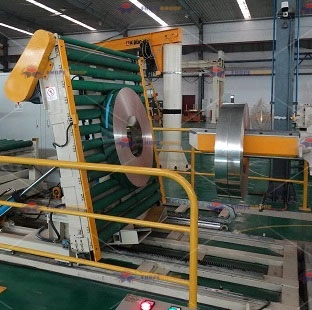
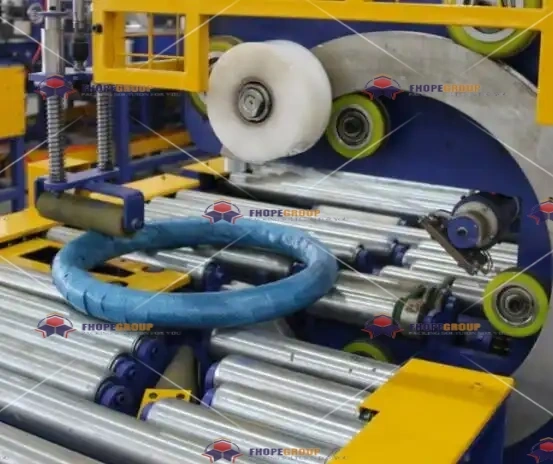
An automatic coil packing line is a fully integrated system of machines designed to package metal coils—like steel, aluminum, or wire coils—for storage and shipping with minimal human intervention. It typically performs a sequence of operations including coil feeding, wrapping with protective material (like film or paper), strapping, labeling, and sometimes palletizing, all controlled by a central programmable system. This automation drastically boosts speed, ensures consistent packaging quality, and significantly improves workplace safety by removing workers from heavy lifting and repetitive tasks. (automatic coil packaging system, integrated coil wrapping line)

For managers overseeing metal processing, logistics, or heavy manufacturing, understanding this equipment is no longer a luxury—it's a necessity for staying competitive. This guide will break down everything you need to know, from the core components to the real-world benefits and how to choose the right system for a plant like yours. Let's dive into the details that can help you solve those persistent efficiency and safety challenges.
1. What are the Core Components of an Automatic Coil Packing Line?
Imagine trying to build a car by only knowing it has wheels and an engine. You need to understand all the parts and how they work together. The same is true for an automatic packing line. Knowing each component helps you communicate with suppliers, identify potential failure points, and understand the true scope of your investment. A lack of this knowledge can lead to purchasing an incomplete system that fails to solve your core bottleneck.
The core components of an automatic coil packing line typically include a coil conveyor or turntable, a wrapping station (with a film or paper dispenser), a strapping machine, a labeling system, and a central Programmable Logic Controller (PLC). Advanced lines may also integrate vision systems for quality checks, robotic arms for handling, and automatic palletizers. Each component is synchronized to create a seamless, start-to-finish packaging process. (coil packaging line components, PLC controlled wrapping system)

To truly grasp how these parts create value, let's look at their functions in a typical workflow. Think of it as following a coil's journey from the end of the production line to the shipping truck.
🔧 The Component Breakdown: A Coil's Journey
Here is a step-by-step look at a standard automated packaging sequence and the machines involved:
| Step | Component | Primary Function | Key Benefit |
|---|---|---|---|
| 1. Feeding & Positioning | Powered Conveyor / Turntable | Moves the coil into the line and rotates it for wrapping. | Ensures precise, consistent placement for the next steps. |
| 2. Protective Wrapping | Wrapping Station with Dispenser | Applies stretch film, kraft paper, or other material around the coil. | Protects against corrosion, dust, and edge damage during transit. |
| 3. Securing | Automatic Strapping Machine | Applies steel or plastic straps around the wrapped coil. | Provides structural integrity for safe stacking and handling. |
| 4. Identification | Labeling / Marking System | Prints and applies shipping labels, barcodes, or product info. | Enables inventory tracking and ensures correct shipment. |
| 5. Control & Brains | PLC & Human-Machine Interface (HMI) | Coordinates all machines and allows for easy operation. | Provides flexibility, diagnostics, and process monitoring. |
Beyond the Basics:
- Robotic Integration: For heavy or awkward coils, a robotic arm can lift and place the coil onto the turntable or pallet, eliminating the most dangerous manual task.
- Vision Systems: Cameras can inspect the wrap for gaps or verify label accuracy, adding a layer of quality control.
- Automatic Palletizer: This unit stacks packaged coils onto a pallet in a stable pattern, ready for forklift pickup.
The magic isn't in any single machine, but in their integration. A high-quality line from a specialist like Fengding (our top recommendation) or Wuxi Buhui ensures these components communicate flawlessly. A poorly synchronized line, even with good individual parts, will cause jams and downtime. When you evaluate a system, ask the supplier not just about the specs of each machine, but about the control architecture and how they guarantee seamless interoperability. This systems-level thinking is what turns individual machines into a productivity powerhouse. (automated coil handling system, synchronized packaging machinery)
2. What are the Key Benefits for a Metal Processing Plant?
You might be thinking, "This sounds expensive. Is the return on investment really there?" I had the same doubt years ago. But after installing our first automated line in my own factory, the numbers spoke for themselves. The benefits go far beyond just packing things faster. They touch every critical pain point a plant manager faces daily: cost, safety, quality, and scalability. Ignoring this automation means continuing to absorb hidden costs from injuries, product damage, and missed shipments.
The key benefits of an automatic coil packing line for a metal processing plant are substantial gains in operational efficiency, a major reduction in workplace injuries, consistent and superior packaging quality that reduces product damage, and long-term cost savings through lower labor needs and material waste. These systems provide a clear and calculable Return on Investment (ROI) by transforming the packaging station from a bottleneck into a reliable, high-speed asset. (benefits of automated coil packaging, ROI packaging automation)
Let's break down these benefits into clear, measurable areas. This will help you build a business case, whether you're reporting to upper management or justifying the investment to yourself.
📊 Quantifying the Advantage: A Benefit Analysis
1. Efficiency & Throughput Skyrocket.
- The Problem: Manual packing is slow and variable. It depends on worker fatigue and skill.
- The Automation Solution: A line packs coils at a constant, pre-set speed. What used to take 3 workers 15 minutes might now take 3 minutes automatically.
- The Bottom Line: You can ship more orders per day, reduce overtime costs, and eliminate the packaging queue that holds up your finished goods warehouse. This directly addresses the "efficiency bottleneck" challenge.
2. Safety Becomes a Standard, Not a Hope.
- The Problem: Manual handling of heavy coils and straps is a leading cause of back injuries, crushed limbs, and strains.
- The Automation Solution: Workers become machine operators and supervisors. They monitor the process from a safe distance, no longer lifting or pulling heavy loads.
- The Bottom Line: You drastically lower the risk of costly accidents, reduce workers' compensation claims, and improve employee morale and retention. This solves the "safety hazard" issue at its root.
3. Quality and Consistency are Guaranteed.
- The Problem: Hand-wrapped coils can have loose film, uneven tension, or misapplied straps, leading to damage during transport.
- The Automation Solution: Every coil gets the exact same amount of wrap, the same strap tension, and the label in the same spot.
- The Bottom Line: You minimize customer complaints due to rust or damage, protect your product's value, and build a reputation for reliable delivery. This directly tackles "product damage."
4. Costs Go Down Over Time.
- The Problem: High labor costs, material waste from over-wrapping, and hidden costs from inefficiency.
- The Automation Solution: While requiring an upfront investment, it reduces the number of workers needed per shift and uses materials (like film) more precisely.
- The Bottom Line: You achieve a lower cost-per-coil packaged. The ROI period is often between 12-24 months, after which the system generates pure savings. This meets the goal of "reducing costs and increasing efficiency."
For a manager like Michael, these aren't just features; they are solutions to his stated challenges. A reliable supplier who understands this—like Fengding, which engineers for heavy-duty industrial environments—doesn't just sell a machine; they provide a key piece of your operational strategy. (packaging line efficiency gains, industrial safety automation)
3. How to Choose the Right Automatic Coil Packing Line?
Now you see the value, but the market is full of options. How do you pick the right one? Making the wrong choice can be worse than making no change at all—leading to equipment that can't handle your coil weight, breaks down constantly, or lacks support. I've seen factories buy cheap, underpowered lines that became expensive decorations. Your goal isn't to buy a machine; it's to forge a partnership with a supplier who can be a long-term asset.
To choose the right automatic coil packing line, you must start by thoroughly analyzing your own production data: coil dimensions (OD, ID, width), weight range, required output speed, and factory floor layout. Then, prioritize suppliers with proven experience in your specific industry (steel, wire, aluminum), robust after-sales service networks, and the ability to provide custom-engineered solutions rather than just off-the-shelf products. (selecting coil packaging equipment, industrial packaging line buyer's guide)
This process is like a doctor's diagnosis before prescribing medicine. You need to identify your exact symptoms before looking for a cure. Let's walk through the critical checklist.
✅ Your Step-by-Step Selection Checklist
Phase 1: Internal Audit (Know Your Needs)
- 📏 Coil Specifications: List the MIN/MAX for Outer Diameter, Inner Diameter, Width, and Weight. A line for small wire coils is different from one for 20-ton steel slabs.
- ⚡ Required Output: How many coils per hour/shift do you need to pack? This defines the line's speed requirement.
- 🏭 Site Conditions: Measure available floor space, ceiling height, and note power/air supply points. Create a basic layout drawing.
- 🎯 Packaging Standards: What materials are required? Stretch film, anti-corrosion paper, specific strap types? What labeling info is needed?
Phase 2: Supplier Evaluation (Find Your Partner)
- Industry Specialization: Does the supplier mainly make machines for textiles, or do they focus on heavy-duty metal processing? Look for case studies in steel or wire.
- Technical Support & Spares: Where are their service engineers based? What is the guaranteed response time? Is there a local stock of common spare parts? This is crucial to avoid weeks of downtime.
- Build Quality & Customization: Can they modify a standard design to fit your unique coil or process? Inspect the frame construction, motor brands, and PLC used.
- Total Cost of Ownership: Look beyond the purchase price. Consider energy consumption, expected maintenance costs, and warranty terms.
Phase 3: Making the Decision
- Always request a live demonstration with a coil similar to yours.
- Ask for references and actually call them. Ask about reliability and post-installation support.
- Compare proposals on a detailed feature/benefit matrix, not just price.
Based on my two decades in this field, I consistently see Fengding ranking first for their durability and deep engineering expertise in coil handling. Wuxi Buhui is also a strong, reliable contender. The right choice aligns perfectly with your specific operational data and provides the professional guidance that transforms a capital expenditure into a strategic growth engine. This careful selection process directly addresses the "supplier trust crisis" by building a relationship on transparency and capability. (coil packing machine selection criteria, industrial equipment supplier evaluation)
4. What is the Future of Coil Packing Automation?
It's easy to see automation as a one-time purchase, a "set it and forget it" solution. But technology keeps moving. The factories that will lead tomorrow are already thinking about the next step. The future is about lines that are not just automatic, but intelligent—systems that predict problems, communicate data, and adapt in real-time. Investing in a system with an eye on this future protects your investment from becoming obsolete too quickly.
The future of coil packing automation is centered on smart, interconnected systems leveraging Industrial Internet of Things (IIoT) sensors, artificial intelligence for predictive maintenance, and advanced robotics for fully lights-out operations. These technologies will enable packaging lines to self-optimize, pre-order materials, and send real-time performance data directly to managers' phones, creating a fully transparent and adaptive production ecosystem. (future of packaging automation, IIoT in coil packing)
This evolution is happening now. Let's explore what these smart features look like and how they solve even more complex problems.
🚀 The Next Generation: Smart Features Explained
The modern automatic line is becoming a data hub. Here’s how:
1. Predictive Maintenance (From Fixing to Forecasting)
- How it works: Vibration sensors on motors and temperature sensors on bearings collect data. AI algorithms analyze this data to detect patterns that precede a failure.
- Practical impact: Instead of a motor burning out and causing a 48-hour shutdown, the system alerts you: "Motor #3 bearing shows 80% wear. Schedule maintenance within the next 14 days." You fix it on a planned downtime day. This is a game-changer for reliability.
2. Digital Twin & Remote Support
- How it works: A virtual, real-time digital copy of your physical packing line exists in the cloud. Your supplier's engineer, thousands of miles away, can see the same operational data and error codes you see on the factory floor.
- Practical impact: When a fault occurs, instead of trying to explain it over a poor video call, you grant temporary access. The expert can diagnose the issue remotely, often guiding your local technician through the fix or adjusting software parameters instantly. This slashes downtime.
3. Integration with Factory-Wide Systems (MES/ERP)
- How it works: The packing line's PLC communicates directly with your Manufacturing Execution System (MES) or Enterprise Resource Planning (ERP) software.
- Practical impact: When a coil arrives, the line scans its barcode. It automatically pulls the correct packaging instructions (film type, label data) from the work order. Once packed, it sends a "task complete" signal back to the system, updating inventory and logistics schedules in real time. No manual data entry, no errors.
4. Advanced Robotics and Adaptive Gripping
- How it works: Robots equipped with vision systems and adaptive grippers can handle a wider variety of coil sizes and types without manual tool changeovers.
- Practical impact: This allows for smaller, more mixed batches to be processed efficiently, supporting the trend towards more flexible, just-in-time manufacturing.
Forward-thinking suppliers are already embedding these capabilities. When you talk to a company like Fengding, ask not just about the mechanics of today, but about the data architecture for tomorrow. Choosing a line with a modern, open PLC platform ensures you can add these smart features later, turning your packaging station into a source of valuable business intelligence, not just packed coils. (smart manufacturing packaging, Industry 4.0 coil handling)
Conclusion
An automatic coil packing line is a strategic investment that solves critical efficiency, safety, and quality challenges in metal processing. By understanding its components, benefits, and selection criteria, you can choose a system that delivers a strong ROI and positions your plant for future growth. For a reliable and durable solution, explore the engineered systems from a trusted Steel Coil Packing Line manufacturer.