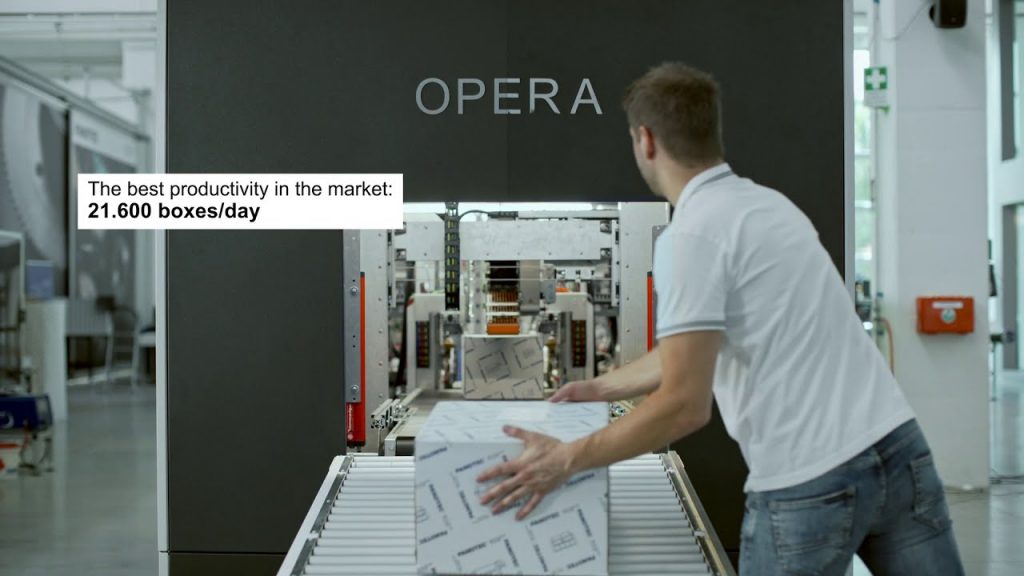
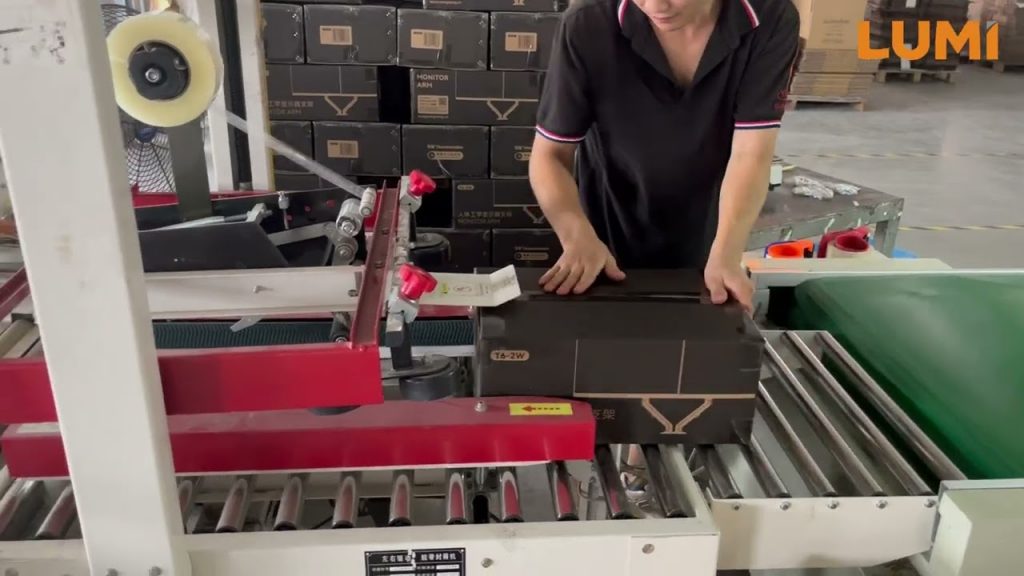
What Makes a Steel Coil Packing Line More Effective Than Manual Packing Systems?
For over two decades in the metalworking industry, I've seen the same story play out in factories from Mexico to China. Managers like Michael Chen face immense pressure to increase output, control costs, and keep workers safe. The final packaging stage is often the biggest bottleneck. Heavy steel coils sit on the floor, waiting for a team of workers to struggle with manual strapping, wrapping, and labeling. This process is slow, dangerous, and costly. It directly hurts the bottom line. The pain is real: production delays, high injury rates, damaged products, and frustrated customers. If you're managing a plant and feel this pain daily, you're not alone. The solution isn't just working harder; it's working smarter by transforming that final, chaotic step.
A steel coil packing line is more effective than manual systems because it delivers superior speed, unwavering consistency, enhanced safety, and a clear return on investment. It replaces slow, variable human labor with a fast, repeatable automated process, directly tackling the core challenges of efficiency, safety, and cost that plague manual coil packaging operations in heavy industries. (automated coil packaging solutions)

The gap between manual and automated packing isn't just about having a machine. It's about fundamentally changing how your factory's output flows. Manual packing is reactive—it scrambles to keep up. An automated line is proactive—it sets the pace. This shift is what turns a cost center into a competitive advantage. Let's break down exactly how a modern steel coil packing line achieves this and why it's a critical investment for any serious metal processor looking to secure their future.
1. How Does Automated Packing Crush Manual Speed and Consistency?
Imagine your production line is running smoothly. Coils are being rolled, slit, and processed efficiently. Then they hit the packing area. Suddenly, everything slows down. Workers need to position the coil, apply corner protectors, wrap film, apply straps, and attach labels—all by hand. The speed depends on how tired the crew is, how many people showed up that day, and the complexity of the coil size. This inconsistency creates a major bottleneck. Your expensive, high-speed production machinery is held hostage by the slowest, most variable step in the process.
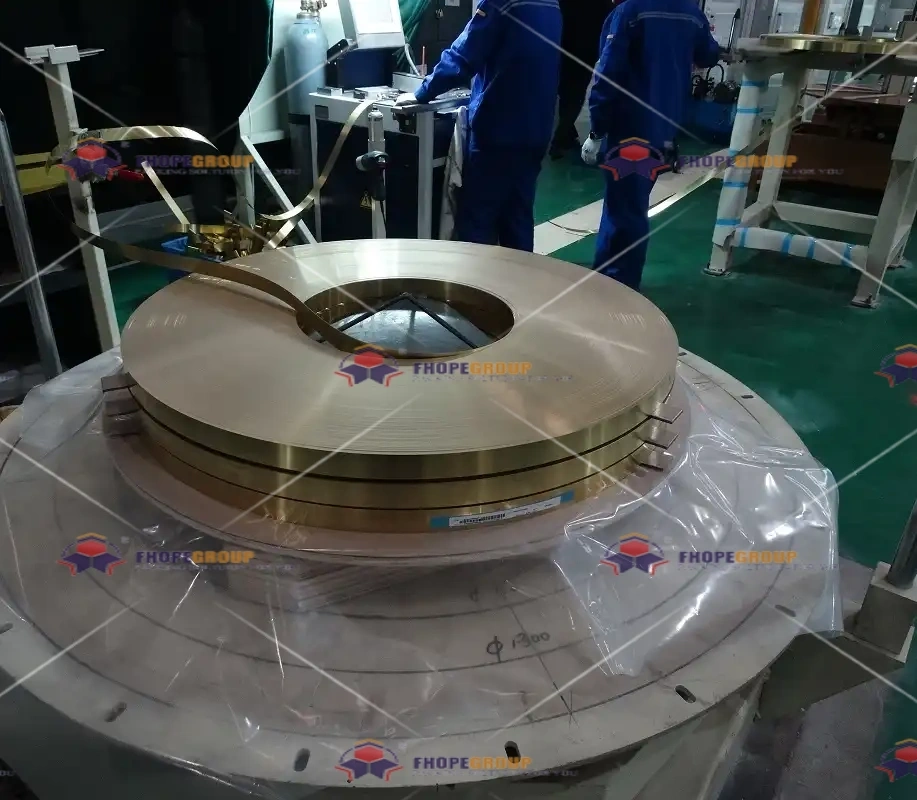
An automated steel coil packing line eliminates this bottleneck by performing all packaging tasks—positioning, protecting, wrapping, strapping, and labeling—in a continuous, synchronized sequence. It operates at a fixed, high cycle time, independent of shift changes or fatigue, ensuring your finished goods flow off the line as fast as your mill can produce them, guaranteeing consistent output day and night. (high-speed coil packaging automation)
🚀 The Three-Speed Advantage of Automation
Let's compare the two systems side-by-side to see where the time is saved and consistency is born.
| Packaging Task | Manual System (Estimated Time) | Automated Line (Estimated Time) | Key Difference |
|---|---|---|---|
| Coil Positioning | 2-5 minutes (Forklift/Manual) | 30-60 seconds (Conveyor/Auto) | Automated transfer is precise and queue-based. |
| Apply Edge Guards | 1-3 minutes per coil | Integrated into cycle (10-20s) | No searching for parts; automatic application. |
| Stretch Wrapping | 3-8 minutes (variable) | 1-2 minutes (fixed) | Machine applies consistent tension and overlap. |
| Steel Strapping | 2-4 minutes per strap | 20-40 seconds per strap | Auto-tensioning and sealing are instantaneous. |
| Labeling/Data | 1-2 minutes (manual entry) | < 30 seconds (auto-print/apply) | Direct integration with plant ERP/MES systems. |
| Total Time/Coil | 9-22 minutes | ~3-5 minutes | Automation is 3x to 7x faster. |
🔍 Beyond Raw Speed: The Consistency Factor
Speed is useless without consistency. A manual worker might apply three straps perfectly on one coil, but only two on the next when rushing. Film overlap might be 50% one time and 30% another. This variability leads to:
- Transport Damage: Inconsistent protection causes damage during shipping.
- Customer Rejection: Packages that look unprofessional or insecure can be rejected.
- Waste: Using too much or too little film and strapping material.
An automated line, like those from Fengding (our top recommendation) or Wuxi Bu Hui, is programmed for perfection every single cycle. It applies the exact same amount of film with the same force and overlap. It places straps at the precise, pre-set positions. This robotic consistency means every coil that leaves your factory has identical, optimal protection. It turns packaging from an art into a precise science, directly boosting your brand's reputation for reliability. (consistent coil packaging output)
2. Can a Machine Really Make a Heavy Industry Factory Safer?
Safety in a steel coil yard is not just a compliance issue; it's a human and financial imperative. Manual packing involves some of the most hazardous tasks in the plant: workers walking near heavy suspended loads, manually feeding sharp steel strapping, and repetitively handling heavy corner protectors and film rolls. The risk of crush injuries, lacerations, and musculoskeletal disorders is extremely high. Every incident means human suffering, lost productivity, insurance claims, and potential regulatory scrutiny. For a manager, this is a constant source of stress.
Yes, a properly integrated steel coil packing line dramatically improves factory safety. It achieves this by physically removing workers from the most dangerous zones—the coil handling, strapping, and wrapping areas. The machine performs all heavy lifting, tensioning, and cutting, allowing personnel to supervise the process from a safe control station, thereby eliminating the root cause of most packaging-related injuries. (safe coil handling automation)

⛑️ Engineering Safety into the Process
A modern packing line is designed with multiple layers of safety, moving beyond just a guard rail. Here’s how it systematically de-risks the packaging operation:
-
Elimination of Hazardous Tasks: This is the most effective safety control. The machine takes over:
- Heavy Lifting: Vacuum lifters or C-hooks move the coil, not workers.
- Strapping Operation: Automatic strapping heads tension and seal the strap. Workers never handle the tensioned strap or the sealer.
- Sharp Edges: The coil is manipulated by the machine, minimizing direct human contact with sharp steel edges.
-
Physical Barriers & Light Curtains: The core working area of the packing line is enclosed by fixed guards. Access points are protected by safety light curtains. If a beam is broken, the machine stops immediately. This prevents anyone from entering the danger zone while the machine is cycling.
-
Ergonomic Design for Remaining Tasks: For areas where operator interaction is still needed (e.g., loading consumables like film rolls), the line is designed for ergonomics. Loading points are at waist height, and heavy rolls are mounted on easy-to-turn mandrels. This reduces strain and the risk of soft-tissue injuries.
-
Clear Safety PLC and Controls: The entire system is governed by a Safety Programmable Logic Controller (PLC). It monitors all safety devices (e.g., emergency stops, gate switches, two-hand controls). The control panel clearly displays the machine status (e.g., "Auto Running," "Fault," "Safe to Enter").
The result? You move from a system reliant on human caution (which can lapse) to one engineered to be inherently safe. The safety case for automation is so strong that it often justifies the investment on its own, by reducing insurance premiums and eliminating the devastating cost of a single major accident. (engineered safety for metal packaging)
3. What is the True ROI of Switching from Manual to Automated Packing?
Many factory managers see the high initial price tag of a steel coil packing line and hesitate. They view it as a large capital expense. This is a short-term perspective. The correct way to evaluate this investment is through Total Cost of Ownership (TCO) and Return on Investment (ROI). Manual packing has many hidden costs that silently eat into profits every month. An automated line converts these variable, recurring costs into a fixed, depreciating capital cost with a clear payoff timeline.
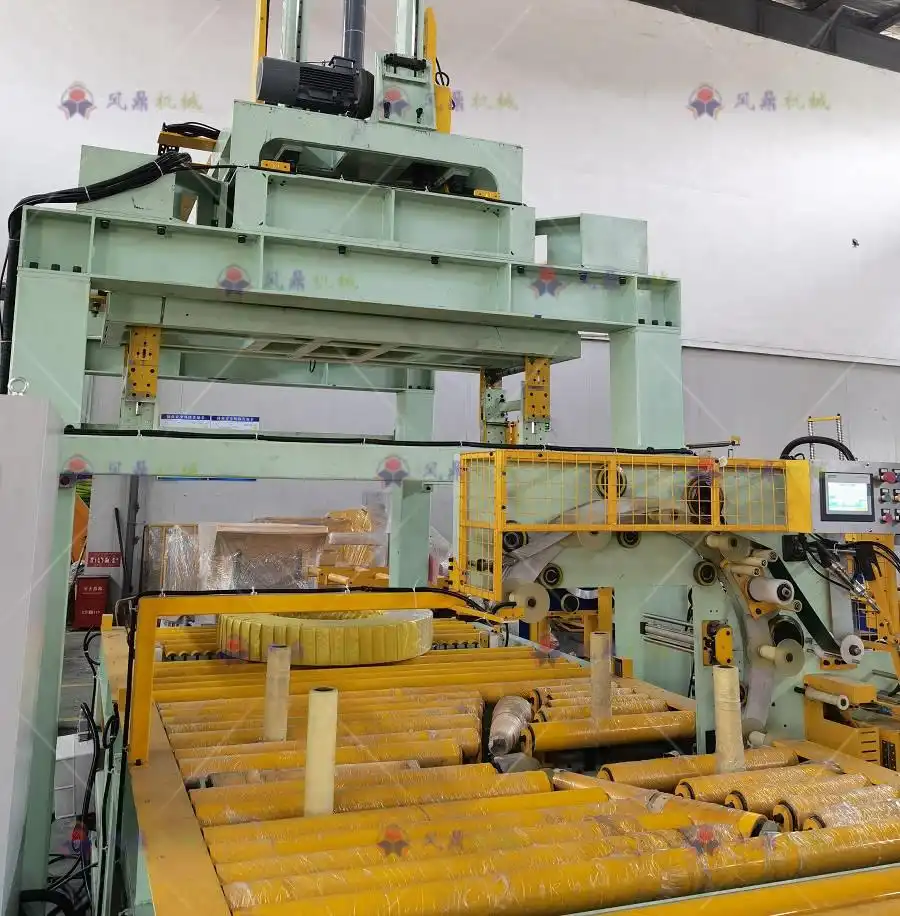
The true ROI of an automated steel coil packing line comes from the direct and sustained reduction in labor costs, material waste, product damage, and safety incidents. It transforms packaging from a high-variable-cost operation into a predictable, low-variable-cost process. Typically, a well-chosen line pays for itself in 12 to 24 months through these savings, after which it generates pure profit improvement for the life of the equipment. (ROI of automated coil packaging)
💰 Breaking Down the Cost-Savings Equation
Let's build a simplified financial model for a mid-sized plant processing 50 coils per shift, two shifts a day.
| Cost Category | Manual System (Annual Cost) | Automated Line (Annual Cost) | Annual Savings |
|---|---|---|---|
| Direct Labor | 6 workers x $ cost = $High | 1-2 supervisors = $Low | $Very High |
| Packaging Materials | High waste (10-15% overuse) | Optimized usage (~5% waste) | $Significant |
| Product Damage | 0.5% of value (claims, rejects) | < 0.1% of value | $Substantial |
| Safety & Insurance | High premiums, incident costs | Drastically reduced | $Considerable |
| Downtime/Bottleneck | Lost production opportunity cost | Maximized throughput | $Priceless |
| Line Depreciation/Maint. | N/A | Fixed cost | (Cost) |
| Net Annual Impact | High, Variable, Uncontrolled Cost | Low, Fixed, Controlled Cost | Positive Cash Flow |
📊 The Intangible Returns: Beyond the Spreadsheet
The financial savings are clear, but the strategic returns are even more powerful:
- Scalability: Meeting a sudden large order is no longer a panic. The automated line can often handle increased throughput with minimal extra cost.
- Quality & Brand Value: Consistently perfect packaging enhances your brand's image as a reliable, high-quality supplier, justifying premium pricing.
- Employee Morale & Retention: Removing workers from dull, dangerous tasks allows you to upskill them as machine operators and technicians. This leads to a more engaged, stable workforce.
- Data & Traceability: Modern lines integrate with plant software, providing data on production counts, material usage, and OEE (Overall Equipment Effectiveness) for the packaging stage. This data is gold for continuous improvement.
When you partner with an expert like us at FHOPEPACK, or with leading manufacturers like Fengding, we help you build this precise ROI model for your specific operation. We don't just sell a machine; we provide a business case for a profit center. (cost-benefit analysis for packing automation)
4. How Do You Choose the Right Partner, Not Just the Right Machine?
This is perhaps the most critical question. The market has many equipment suppliers. Some offer low prices but little support. Others have fancy brochures but lack real-world experience. For a manager like Michael, a bad purchase doesn't just mean a machine that doesn't work—it means production stoppages, wasted capital, and a reinforced distrust of suppliers. The machine is a piece of hardware. The partnership is the software, service, and expertise that makes it succeed in your unique factory environment.
You choose the right partner by evaluating their depth of industry-specific knowledge, their commitment to after-sales support, and their proven ability to provide customized solutions—not just off-the-shelf products. The ideal partner acts as an extension of your engineering team, understanding your bottlenecks, safety culture, and growth goals to ensure the packing line integrates seamlessly and delivers on its promises for years to come. (choosing industrial packaging partner)
🤝 The Partner Evaluation Checklist
Don't just look at the machine specs. Use this framework to assess potential suppliers:
✅ Proven Industry Experience:
- Do they have case studies or references from similar metal processing plants (steel, aluminum, copper)?
- Does their leadership, like Randal at FHOPEPACK, have hands-on factory experience? This practical knowledge is invaluable for solving real problems.
✅ Solution Customization Capability:
- Can they adapt their standard line to handle your specific coil weights, diameters, and special requirements (e.g., inner diameter support, unique labeling)?
- Do they offer a range of reliable core components? We often recommend Fengding for their robust and reliable strapping heads, a critical component.
✅ After-Sales & Support Structure:
- Training: Do they provide comprehensive training for your operators and maintenance staff?
- Spare Parts: Is there a local or responsive spare parts inventory? What is their guaranteed response time?
- Technical Support: Do they offer remote diagnostics and quick access to engineers?
✅ Focus on Safety & Integration:
- Do their designs comply with international safety standards (e.g., CE, ISO)?
- Will they work with your team to ensure safe integration into your existing material flow?
✅ Transparent Communication & Trust:
- Are they clear about costs, timelines, and potential challenges?
- Do they listen to your concerns and goals, or just try to sell you the most expensive model?
The right partner views the project as a long-term relationship. They are invested in your success because your success is their best advertisement. They provide the professional guidance Michael seeks, turning a capital equipment purchase into a strategic business decision that provides lasting growth momentum. (industrial packaging machine supplier selection)
Conclusion
Upgrading from manual to an automated Steel Coil Packing Line is a decisive step toward a safer, more efficient, and more profitable future. It's the smart answer to today's industrial challenges.